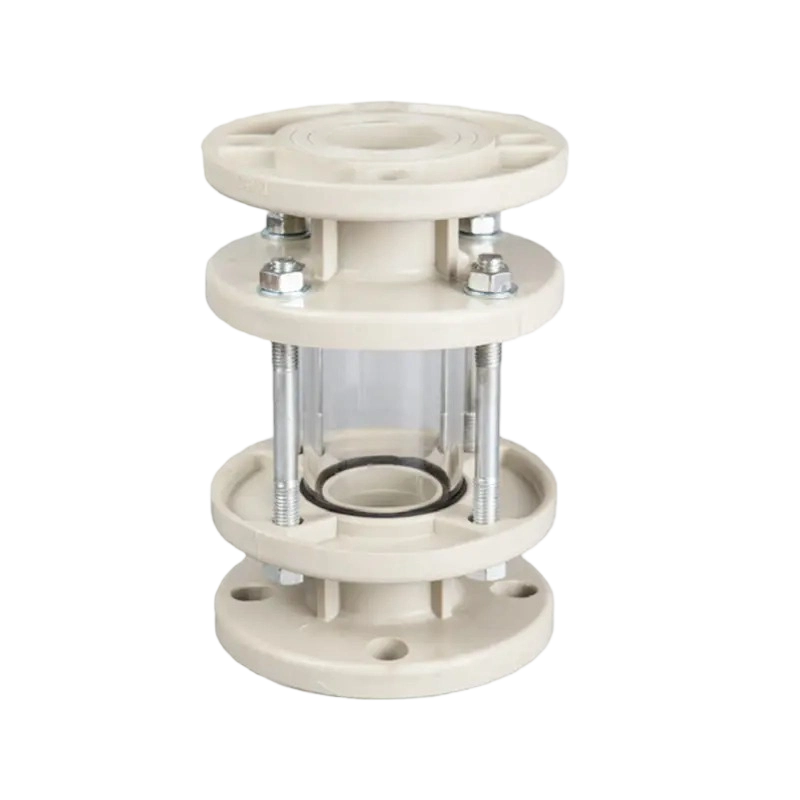
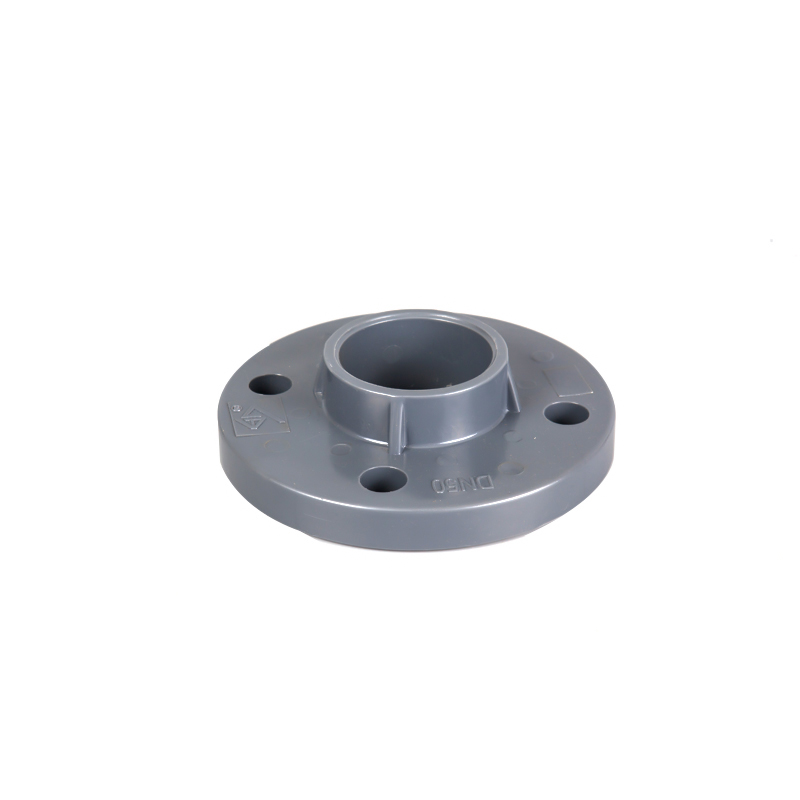
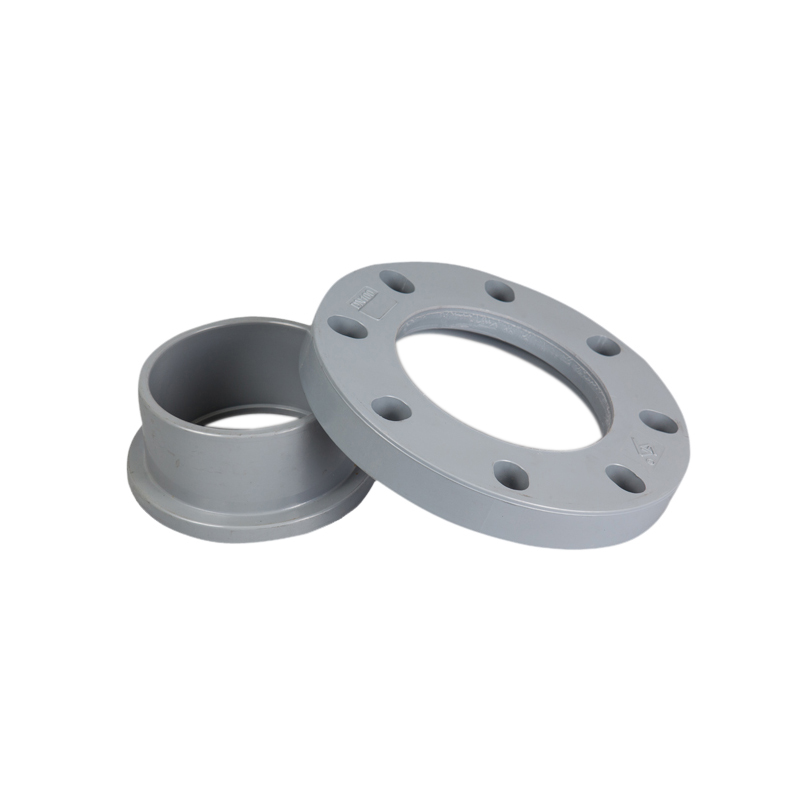
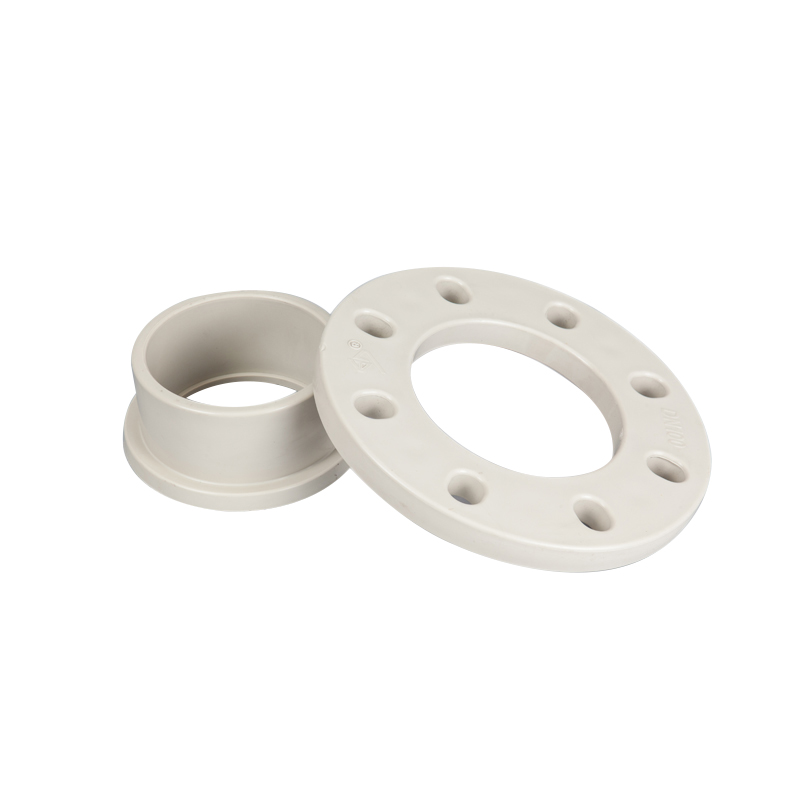
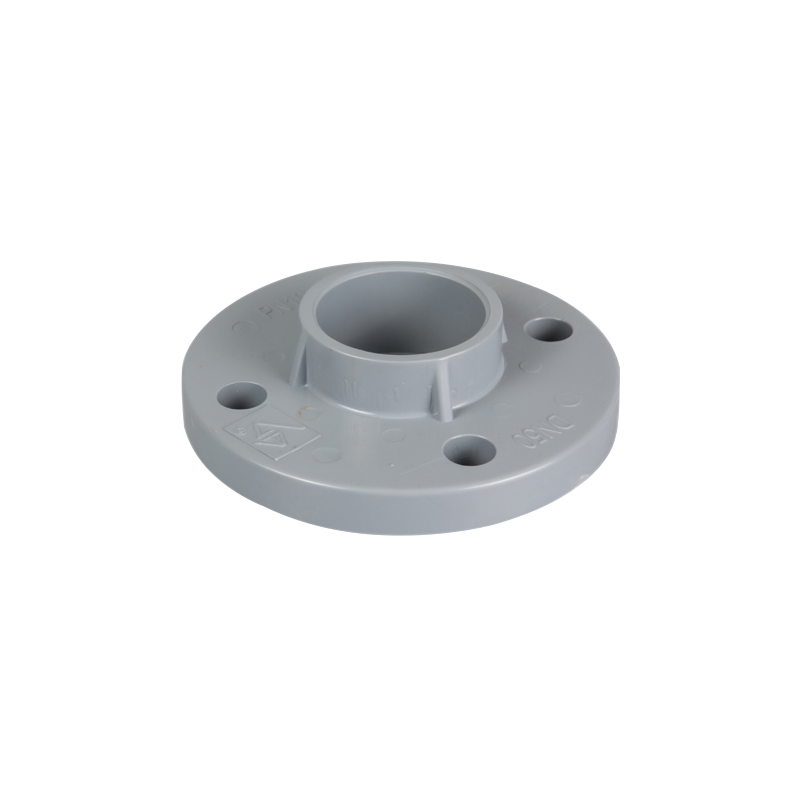
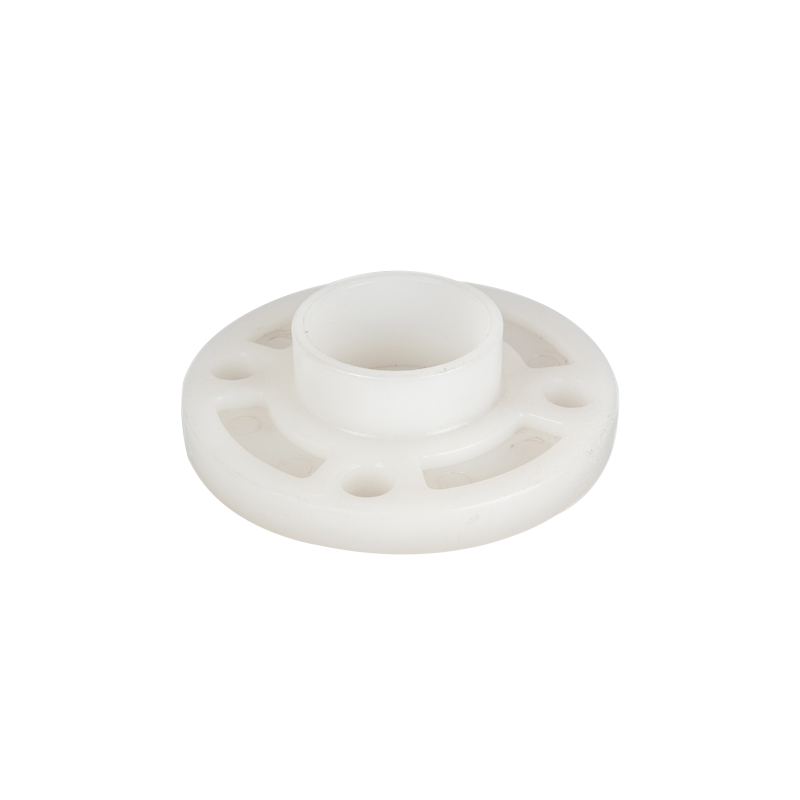
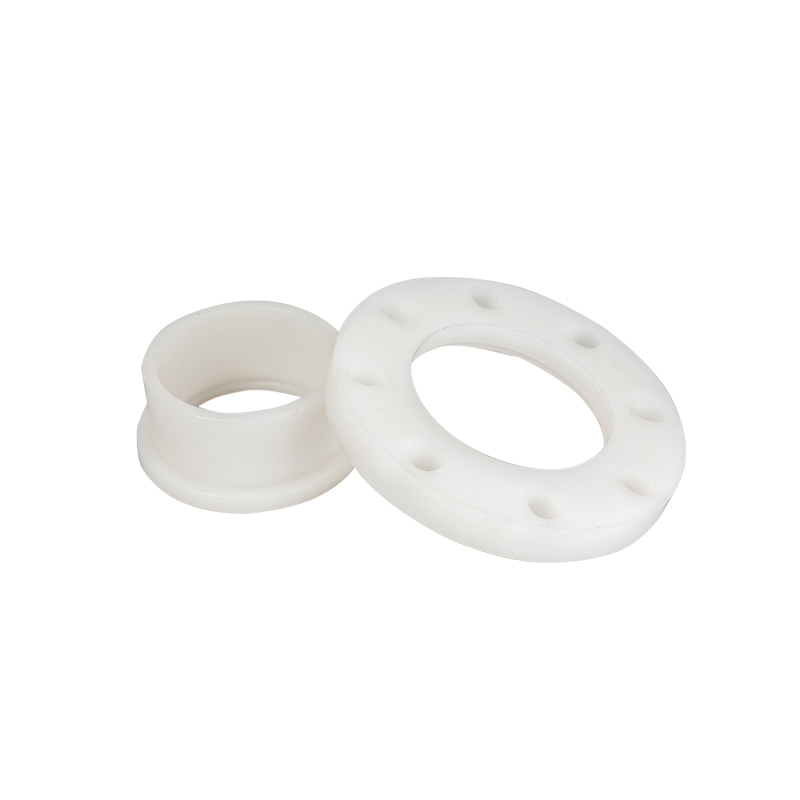
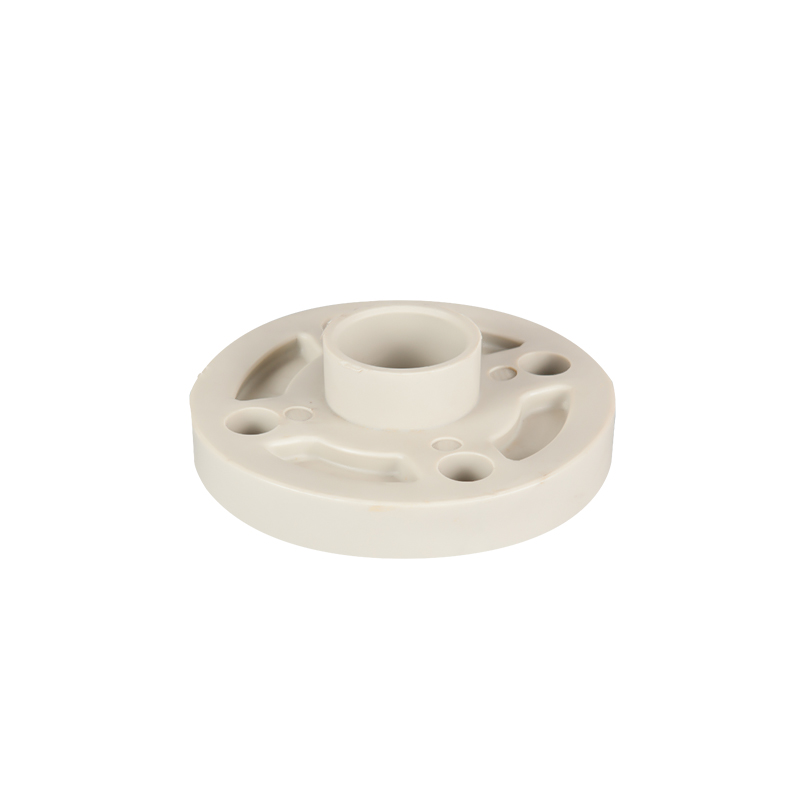
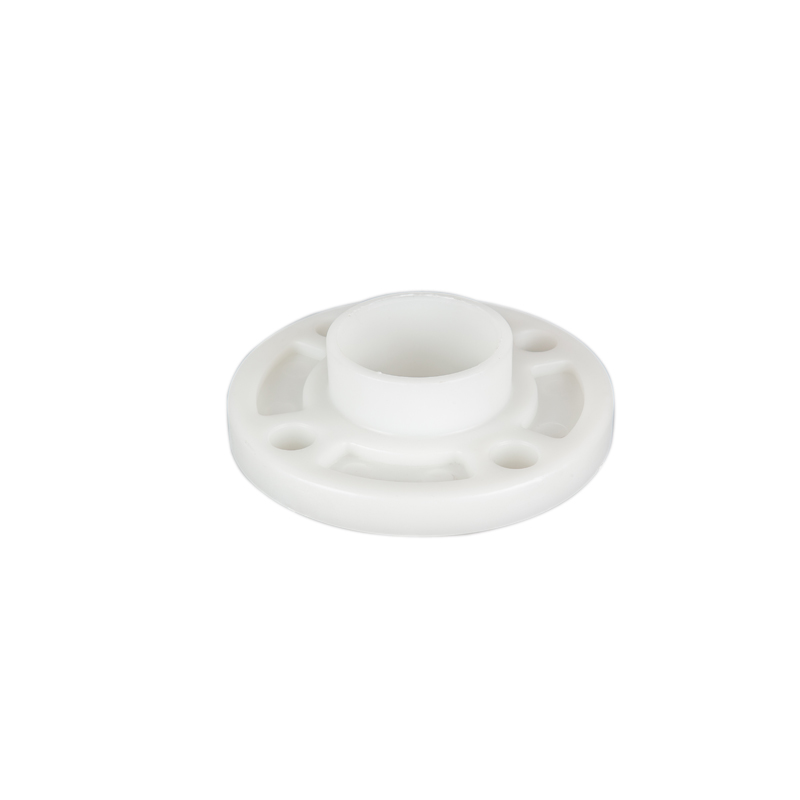
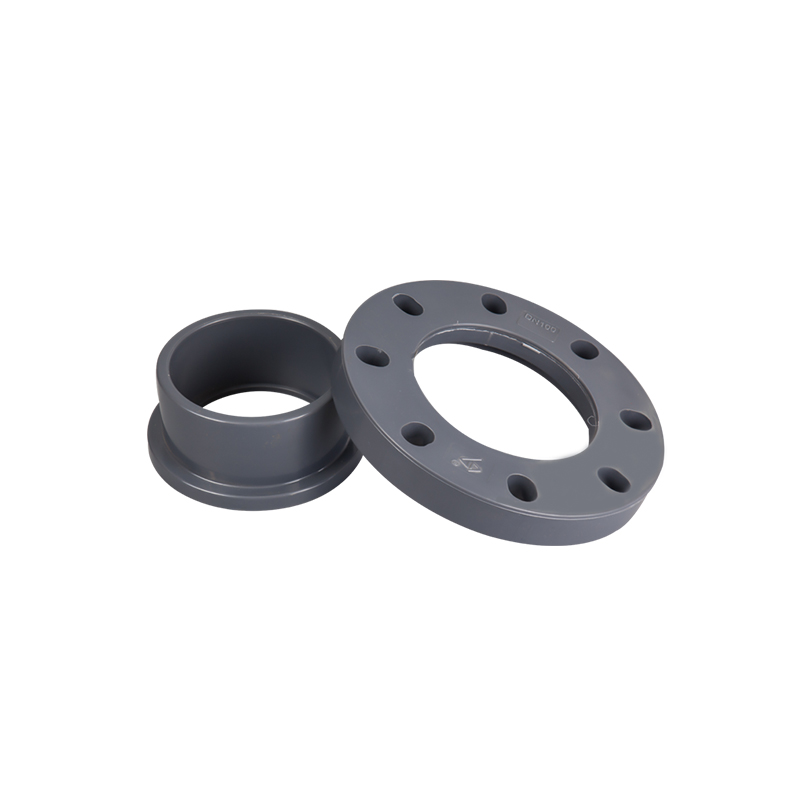
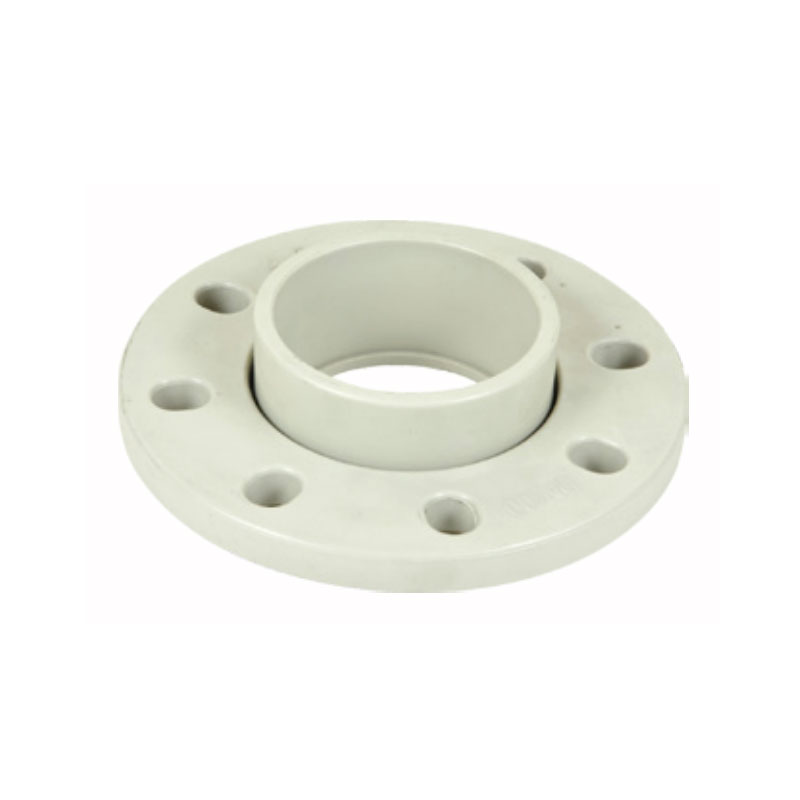
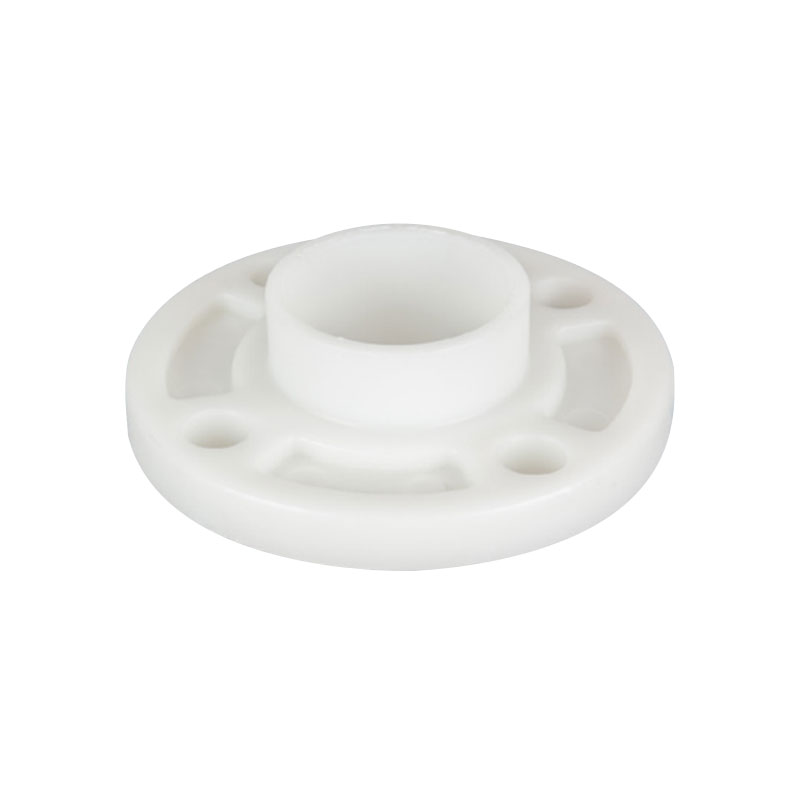
Nominal pipe size is a labelling convention, not a manufacturing dimension. A Plastic Pipe Fitting Flange ordered at the same nominal size can be produced correctly to several different international standard families, and only one of them will match a given piece of mating equipment. Bolt-circle diameter, hole count and pressure class — not the nominal size number — are what determine whether a flange connection is physically compatible. This distinction sits behind more procurement disputes in international piping trade than almost any other single specification issue, precisely because it is invisible on a simple purchase order line that only lists size and material.
Ningbo Baodi Plastic Valve Co., Ltd. traces its origins to 1979, when its predecessor workshops produced China's first plastic diaphragm valve, a product that passed appraisal by the Ministry of Chemical Industry in 1983. That early manufacturing discipline around dimensional accuracy and pressure-component reliability carried forward as the company later expanded into industrial plastic pipes and fittings, including flanged connection components, in 2006.
Major Flange Standard Families
Four standard families account for the large majority of flanged connections encountered in international industrial piping trade, and each has its own logic for how pressure rating and bolt pattern are expressed.
| ANSI/ASME B16.5 |
Common across the Americas and in many international EPC specifications. Uses Class ratings (150, 300, etc.), where the class number does not correspond directly to a pressure value but to a rating system tied to temperature and material. |
| DIN/EN 1092 |
Common across Europe and Middle East projects. Uses PN ratings (PN6, PN10, PN16), expressed as a nominal pressure figure. Not dimensionally interchangeable with ANSI at the same nominal size, even where the numbers appear superficially close. |
| JIS B2220 |
Common in Japan and parts of Asia. Uses its own K-series pressure designation (5K, 10K, 16K), often with a different bolt-hole count than ANSI or DIN at the same nominal size — a detail that is easy to overlook when comparing tables side by side. |
| GB/T 9119 |
Chinese domestic standard, widely used for projects within China. Should not be assumed dimensionally equivalent to DIN or JIS without verification, despite some superficial similarity in numbering convention. |
A Class rating and a PN rating are answers to two different questions and are not directly interchangeable numbers, even where they appear numerically close. Treating "Class 150" and "PN16" as roughly the same thing, because both sound like moderate-pressure designations, is one of the more common and costly assumptions made by buyers unfamiliar with cross-standard procurement.
Dimensional Parameters That Must Be Verified
Beyond the standard family itself, several specific dimensions determine whether a flange will physically function as intended, and each deserves independent verification rather than being inferred from the nominal size alone.
Bolt-circle diameter (BCD): the diameter of the circle passing through the center of each bolt hole. This is the primary dimension determining whether bolts will align — two flanges with the same nominal size and outside diameter can still have different BCDs under different standards, and a BCD mismatch of even a few millimeters will prevent the bolts from lining up at all.
Bolt-hole count and size: standards differ in how many bolt holes are specified at a given nominal size and pressure class, and in the hole diameter itself. A flange with eight holes cannot mate cleanly with one drilled for four, even if the BCD happens to coincide.
Flange outside diameter and thickness: secondary to BCD for basic fit-up, but relevant for gasket seating and clearance in confined installations, particularly where the flange sits close to adjacent piping, structural steel, or insulation.
Raised face or flat face: the sealing face geometry must match the gasket type and the mating flange design; mixing raised-face and flat-face flanges without an appropriate gasket can result in an uneven seal and, in some cases, a cracked flange face under bolt load, particularly with plastic materials that are less tolerant of localized stress concentration than metal.
Bore diameter: the internal opening should match the connecting pipe's actual outside or inside diameter depending on the connection method (socket, spigot or butt-weld style), which itself varies by material and by manufacturer convention.
Material and Pressure Rating Considerations
Flange standard compatibility is only half the specification question; the material and its pressure-temperature rating form the other half, and the two are not independent. A PVC flange, an CPVC flange, a PP flange and a PVDF flange rated to the same nominal pressure class will not necessarily perform identically at the same operating temperature, because each thermoplastic has its own temperature-dependent pressure derating curve.
PVC flanges are the most widely specified option for ambient-temperature water treatment, general industrial water transfer, and moderate-strength chemical service, offering a favorable balance of cost, corrosion resistance and mechanical strength within their rated temperature range.
CPVC flanges extend the usable temperature range significantly above standard PVC, making them the standard choice where hot water or elevated-temperature chemical service is involved, while retaining much of PVC's chemical resistance profile.
PP flanges are selected primarily for their resistance to a broad range of acids, alkalis and solvents, and are commonly used in wastewater treatment, industrial effluent handling and general chemical processing where PVC's chemical resistance is insufficient.
PVDF flanges represent the upper tier of chemical and thermal resistance among common thermoplastics, and are typically specified for aggressive chemical service, semiconductor-grade or pharmaceutical-grade fluid handling, and applications where both high purity and broad chemical compatibility are required simultaneously.
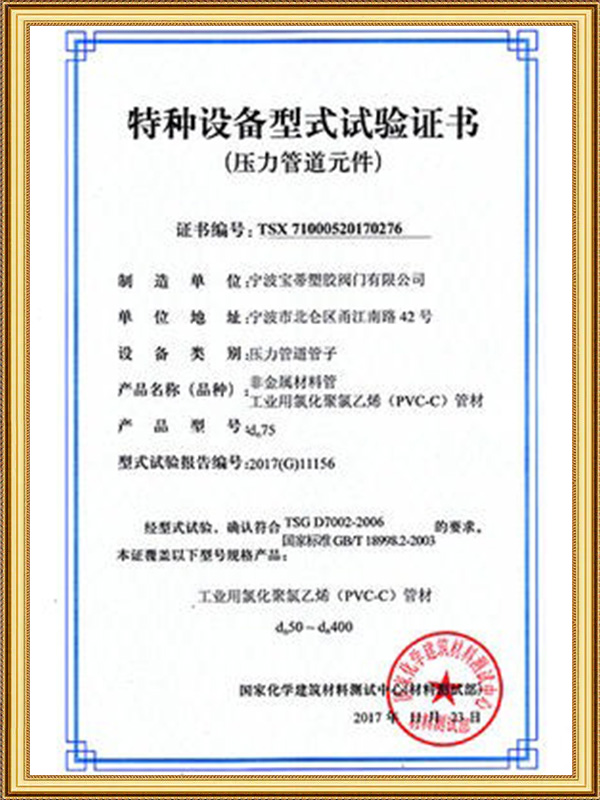
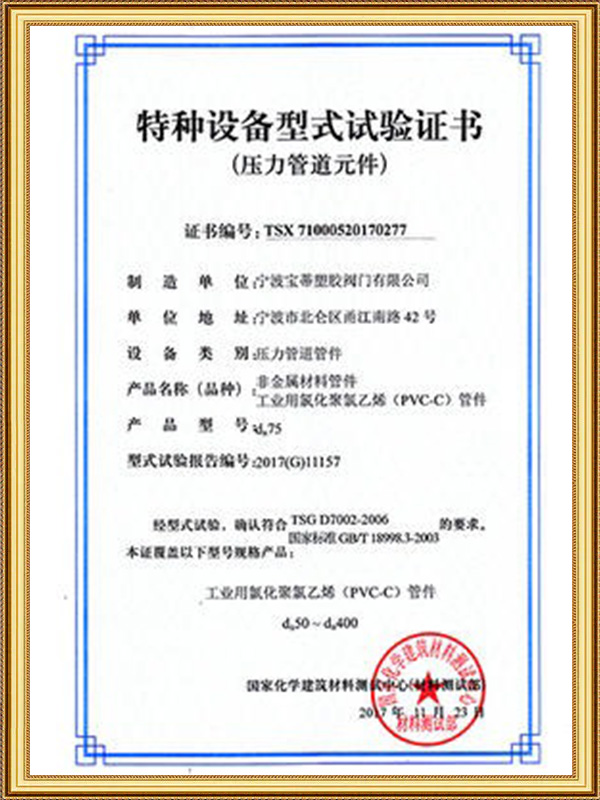
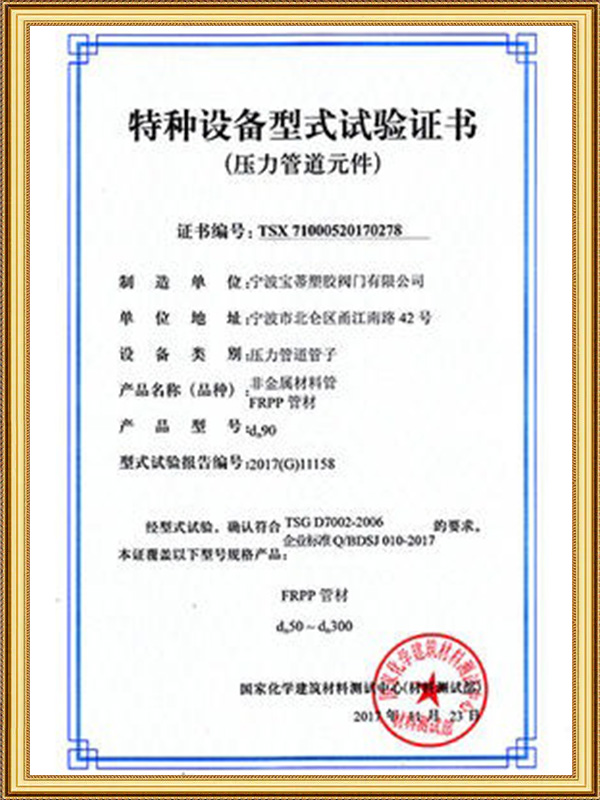
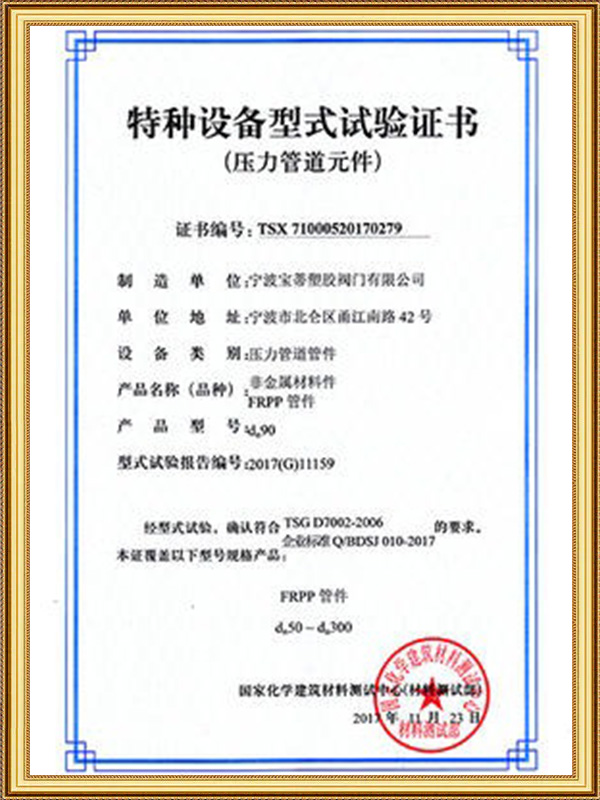
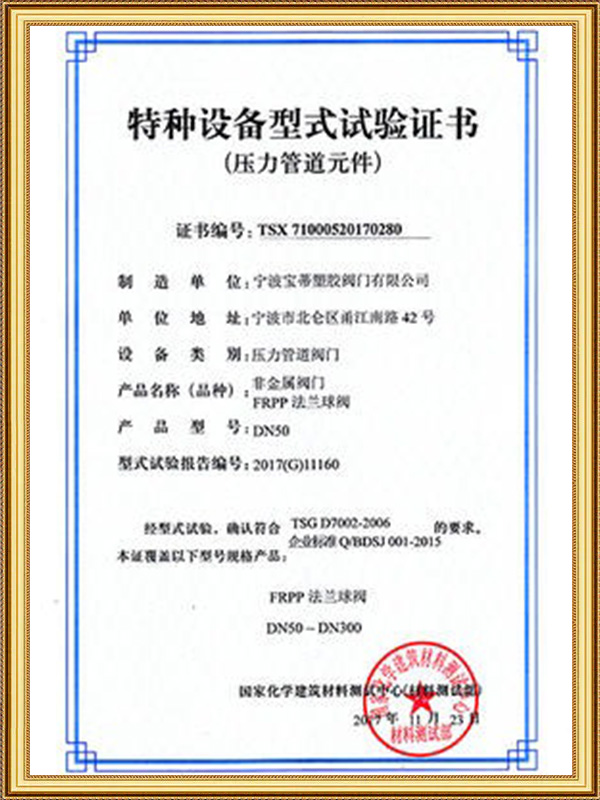
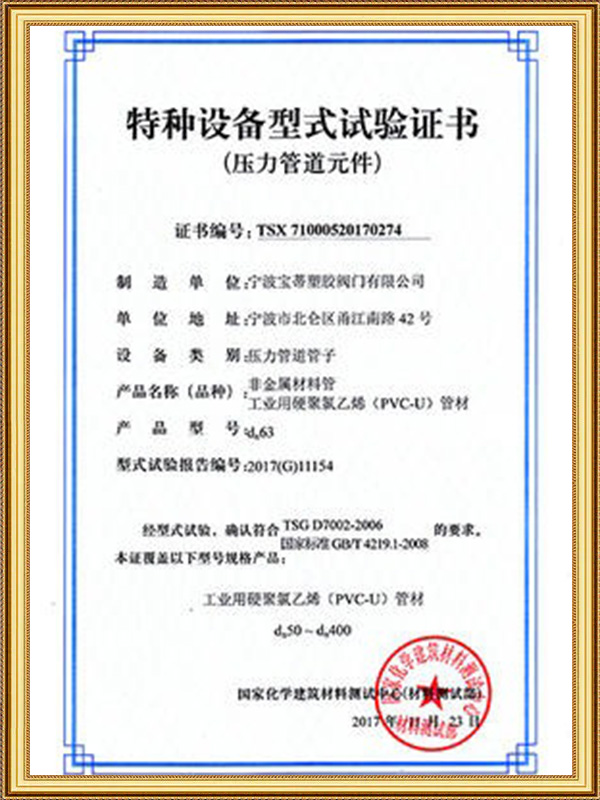
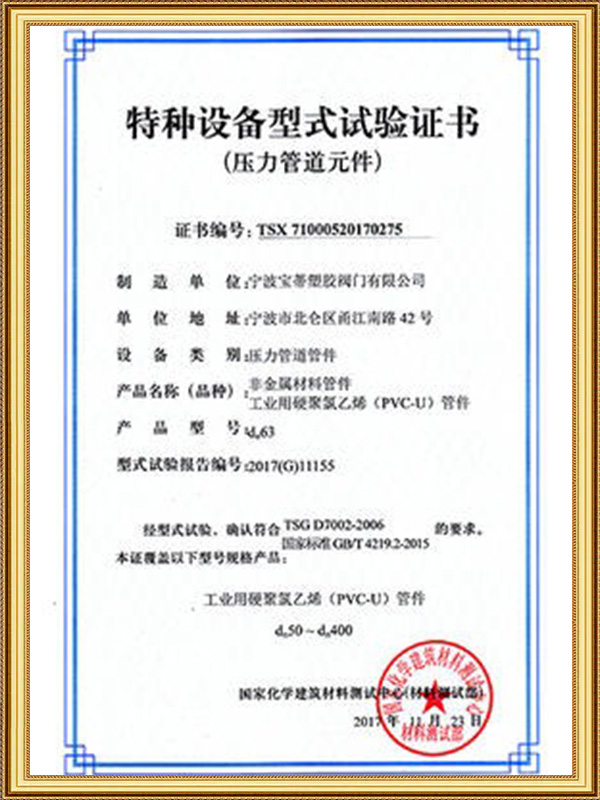
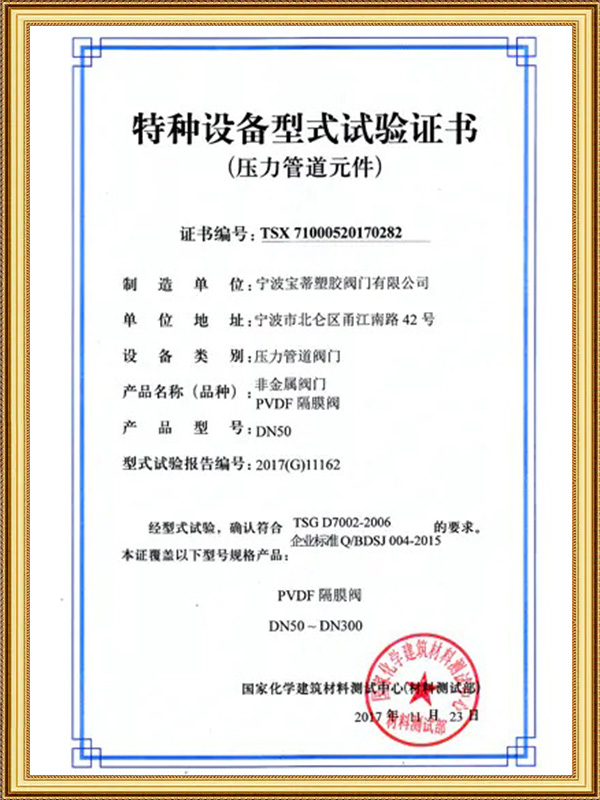
Ningbo Baodi Plastic Valve Co., Ltd. holds a national special equipment pressure piping component manufacturing license, a qualification specifically tied to the production of pressure-rated piping components including flanged connections, and produces flanges across this full material range to support projects with differing chemical and thermal requirements.
Verification Reference Priority
When the applicable standard is uncertain — a common situation when a buyer is sourcing a replacement or expansion component for equipment installed years earlier, or equipment originally supplied by a different manufacturer — several reference sources carry different levels of reliability, and buyers should understand the hierarchy among them.
The most reliable reference is the mating equipment manufacturer's dimensional drawing, since it reflects the flange as actually produced rather than as theoretically specified by a general standard. Where a drawing is unavailable, physical measurement of an existing installed flange — bolt-circle diameter, hole count, hole diameter, and outside diameter — provides direct, verifiable data. The project's piping specification document is the next most reliable source, particularly for new-build projects where the specification was written to govern the entire piping system. The country or region of the installation should be treated as only a general indicator, never a sole reference, since equipment sourced internationally does not always follow the standard most common to its installation region — a European-standard vessel might well be installed at a project site in a region where ANSI is otherwise dominant.
Custom and OEM Drilling
Where mating equipment is non-standard, region-specific, or no longer matches a current published table — a frequent situation with older or discontinued equipment — flanges can be produced against a customer-supplied dimensional drawing or physical sample rather than a catalogue standard. This requires tooling feasibility confirmation before quoting, since custom bolt patterns may require dedicated drilling fixtures depending on production volume and flange size, and is common for retrofit projects where original equipment is no longer in production and no catalogue part will fit.
For private-label or OEM-branded distribution — an arrangement Ningbo Baodi Plastic Valve Co., Ltd. supports for a number of its international distributor partners — standard designation marking requirements should also be confirmed at the outset, since some export markets require the applicable standard to be visibly marked on the flange face or packaging for customs clearance and installation traceability, and retrofitting this marking after production has begun is more difficult than specifying it up front.
Testing and Documentation Expectations
International buyers, particularly those sourcing for regulated industries or large infrastructure projects, typically expect a documentation package to accompany a flange order beyond the physical components themselves. This commonly includes dimensional inspection reports confirming bolt-circle diameter, hole count and bore against the stated standard; material certification confirming the resin grade and batch; and, for pressure-critical applications, hydrostatic or burst-pressure test data demonstrating the flange meets its rated pressure class at the specified temperature.
Ningbo Baodi Plastic Valve Co., Ltd. maintains ISO 9001, ISO 14001 and ISO 45001 certification, a framework that supports consistent quality documentation, environmental management and occupational safety practice across production runs — relevant not only to the buyer's own quality assurance process but often to their own downstream customers or regulatory bodies who may request evidence of the manufacturer's quality system as part of project approval.
Bolting and Installation Considerations Specific to Plastic Flanges
Plastic flanges behave differently under bolt load than metal flanges, and installers accustomed to metal piping sometimes carry over torque habits that are inappropriate for thermoplastic components. Because plastic has a lower modulus of elasticity and is more prone to creep under sustained load than metal, over-torquing a plastic flange bolt does not simply create a tighter seal — it can crack the flange face, distort the sealing surface, or cause long-term stress relaxation that eventually reduces bolt tension below the level needed for a reliable seal.
Manufacturer-specified torque values, generally provided per nominal size and material, should be followed rather than a generic torque figure applied uniformly across all flange sizes and materials. Bolts should be tightened gradually in a cross (star) pattern rather than sequentially around the circle, so that gasket compression develops evenly across the full face rather than concentrating unevenly on one side while the opposite side remains under-compressed. A second tightening pass, performed after the gasket has had time to settle — often 24 hours after initial installation, particularly for elevated-temperature service — helps compensate for the gasket relaxation that is more pronounced in the first day of service than afterward.
Support immediately adjacent to a flanged joint is also more important on plastic piping than on metal piping of comparable size, since plastic pipe has less inherent stiffness to resist the weight and thermal-expansion loads that would otherwise be carried partly by the pipe itself. An unsupported or under-supported flange connection is more likely to develop a leak from uneven gasket loading over time, independent of whether the flange and gasket were correctly specified in the first place.
Common Specification Errors Worth Checking For Directly
Several recurring errors account for a disproportionate share of flange-related project delays, and each is straightforward to check for before an order is placed rather than after a shipment arrives. The first is assuming nominal size alone guarantees compatibility, discussed at length above, which remains the single most frequent cause of mismatched shipments in international trade. The second is specifying a pressure class based on the system's normal operating pressure without margin, when many project specifications require a safety factor above normal operating conditions, and without an explicit margin requirement stated by the buyer, a manufacturer will typically size to the stated pressure exactly rather than assume additional margin. The third is overlooking gasket compatibility as a separate question from flange material compatibility — a chemically resistant PVDF flange paired with an incompatible gasket material will still fail at the gasket, and gasket material selection deserves the same chemical-compatibility review as the flange body itself. The fourth is failing to specify sealing face type (raised versus flat) when ordering a mating pair from different sources, which can result in two technically correct flanges that nonetheless do not seal properly together without an appropriate transition gasket.
Procurement Confirmation Checklist
Before placing a flange order, the following should be confirmed and documented in writing between buyer and supplier, ideally as part of the purchase order or an accompanying technical annex rather than left to verbal understanding: the exact standard family and pressure class required by the project specification or mating equipment; bolt-circle diameter and hole count, cross-checked independently of nominal size rather than assumed from a catalogue table; whether the project specification permits standard substitution (for example, accepting a DIN-equivalent where ANSI was originally specified) or requires an exact named standard with no substitution allowed; material traceability and inspection documentation required for customs clearance or engineering acceptance at the destination; the sealing face type (raised or flat) and its compatibility with the intended gasket; and, for large or critical orders, whether a sample or first-article approval should precede full production, particularly where the order quantity is large enough that a drilling error would affect many units simultaneously.
For distributors and EPC contractors managing multiple flange types across a single project — spanning several nominal sizes, pressure classes and sometimes multiple materials — consolidating the order with a single manufacturer capable of producing the full range reduces the risk of dimensional inconsistency between batches from different sources. Ningbo Baodi Plastic Valve Co., Ltd. exports to more than 60 countries and has supplied flanges alongside its broader plastic valve and piping fitting range to distributors and project contractors managing exactly this kind of multi-specification order, drawing on manufacturing experience that spans back to 1979 and a product range that has grown substantially since the company's move into industrial plastic pipes and fittings in 2006.