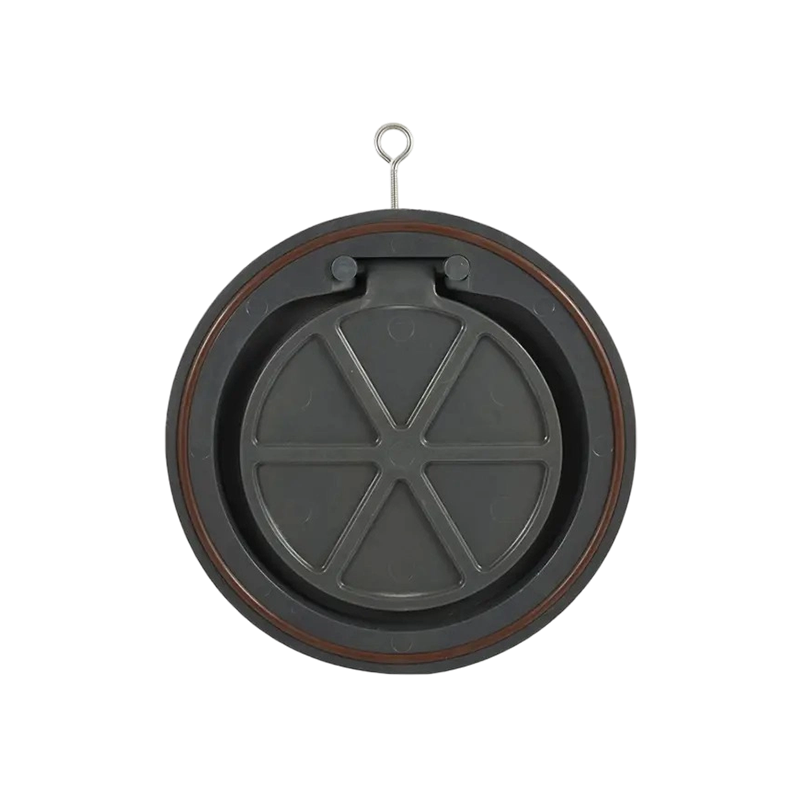
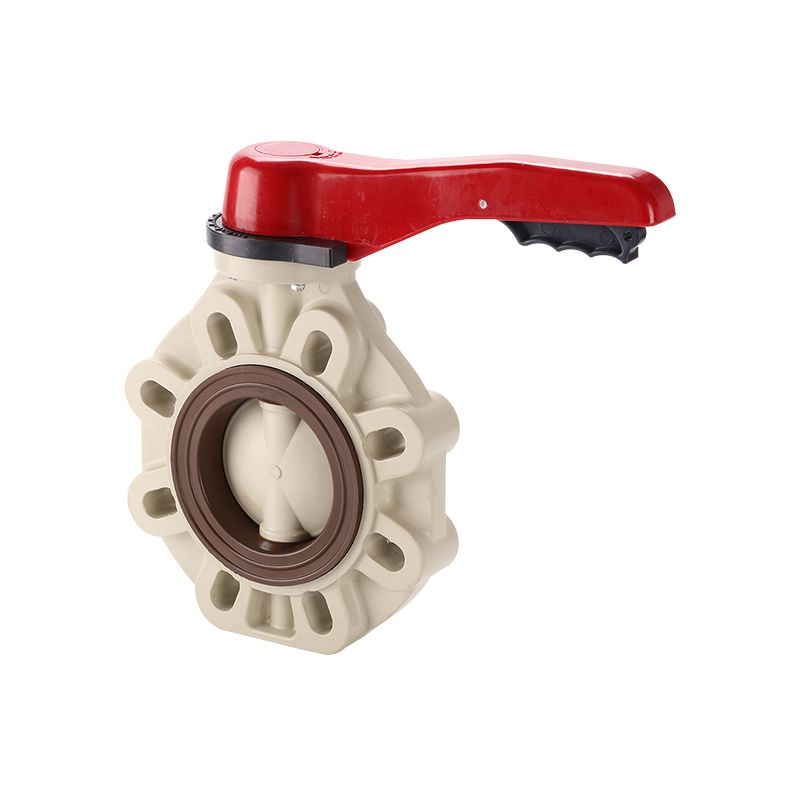
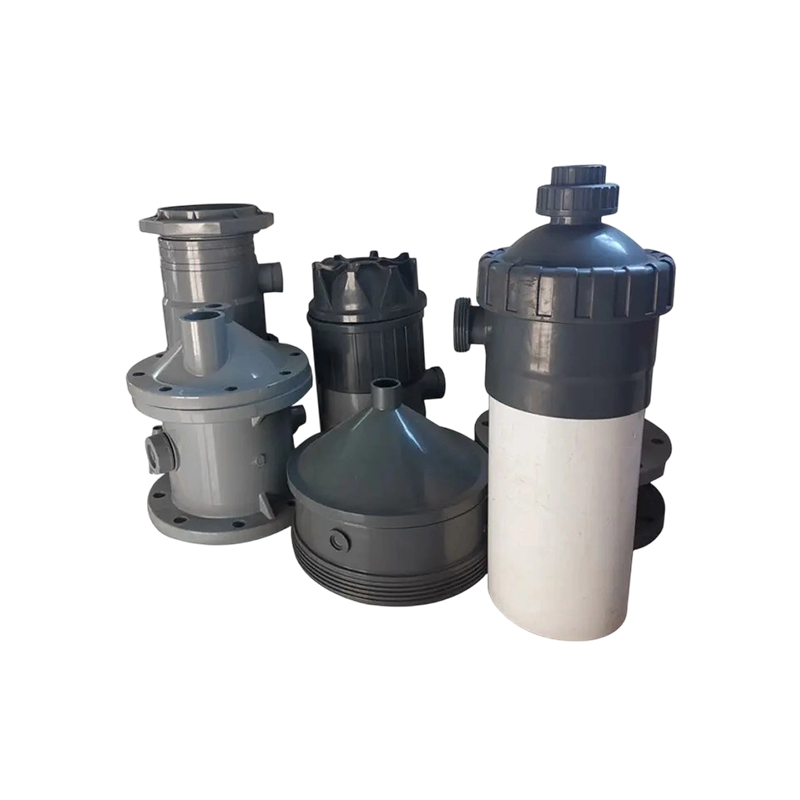
A maintenance engineer walks into the pump room and hears a rhythmical clicking noise coming from the discharge line. The pump is running normally, the pressures look correct, and the flow rate is steady. But the sound is unmistakable: the check valve is chattering. Two weeks later, the same valve fails to hold backflow, the pump loses prime, and the line has to be drained for replacement. Experiences like this happen in thousands of plants every year, and they all point to the same conclusion: check valves have real disadvantages, and ignoring them costs money.
This article explains the disadvantages of check valves in plain engineering language. It covers pressure drop, water hammer, chattering, fluid limitations, maintenance problems and sizing risks. More importantly, it explains why these weaknesses exist, when they become dangerous, and how to reduce them through better selection and installation.
What a Check Valve Does and Why Engineers Accept Its Flaws
A check valve is a self-acting valve that allows flow in one direction only and automatically prevents reverse flow. It needs no actuator, no electric power, no control loop and no operator. The medium itself moves the closing element: flow pushes it open, and gravity or a spring returns it to the seat when flow stops. That autonomous operation is the main reason check valves are installed by the millions in water supply, chemical processing, wastewater, mining and general industry.
The acceptance of check valve disadvantages comes from the functional value they offer. A failed check valve can lead to a destroyed pump, a contaminated batch of chemicals or an empty suction line. Compared with the cost of such events, the trade-offs described below are usually manageable. But they become manageable only when the engineer knows which disadvantage matters most in a particular installation.
Different closing mechanisms create different behaviors. A swing check valve swings a hinged disc; a ball check valve lifts a spherical ball; a lift check valve moves a guided disc or piston; a wafer check valve uses a compact disc assembly between flanges; and a foot valve combines a check function with a strainer at the bottom of a suction pipe. If you need a more fundamental explanation of the operating principle, this article about how check valves only allow flow in one direction is a good starting point.
The Main Disadvantages of Check Valves at a Glance
When engineers search for the disadvantages of check valves, they are usually trying to solve a specific problem: a noisy valve, a leaking valve, a valve that wears out too fast, or a system that loses too much pressure. Six weaknesses come up repeatedly in field experience, in maintenance records and in valve selections. The cards below give a quick overview, and the rest of this article analyzes each one in detail.
Pressure drop
The closing element blocks part of the flow path, so the valve consumes energy even when fully open.
Water hammer
A fast-closing disc converts the energy of moving liquid into a pressure spike that can damage pipes and pumps.
Chattering
Under unstable or low flow, the disc vibrates between open and closed states, wearing out the seat area.
Fluid limitations
Viscous, dirty, solid-laden or extreme-temperature media prevent reliable seating of some designs.
Maintenance burden
Most check valves have no external position indicator, and internal inspection requires a line shutdown.
Sizing sensitivity
A valve one size too large or too small creates chattering, pressure loss, or unreliable closing.
These disadvantages are not independent. For example, oversizing a valve often leads to chattering, and chattering accelerates seat wear until the valve loses its sealing function. Engineers therefore need to treat the check valve as a component of the whole system, not as an isolated fitting.
Table 1. Main check valve disadvantages and the parts of a piping system they affect most.
| Disadvantage |
What changes in the system |
Where the impact is strongest |
| Pressure drop |
Downstream pressure falls and pump power demand rises |
Long pipelines, gravity-fed lines, low-pressure circuits |
| Water hammer |
Pressure spikes appear at the moment of valve closing |
Pump discharge lines with short pump run-down times |
| Chattering |
Repeated impacts produce noise, vibration and seat wear |
Lines with pulsating flow from reciprocating machines |
| Fluid limitations |
The valve fails to seat or opens only partially |
Slurries, viscous media, polymerizing chemicals |
| Maintenance burden |
The line must be taken out of service for inspection |
Buried, confined or hard-to-reach installations |
| Sizing sensitivity |
The disc hovers unstably and contact surfaces wear unevenly |
Systems with strongly varying flow rates |
Disadvantage 1: Pressure Drop and Energy Loss
Pressure drop is the most universal of all check valve disadvantages. There is no such thing as a check valve with zero pressure loss, because the closing element must be present in the flow path. The fully open area inside the valve is never identical to the pipe bore. In a flanged ball check valve, the ball sits in a cage and the fluid has to flow around it. In a swing check valve, the lifted disc reduces the upper part of the cross-section. The result is an extra velocity increase and a measurable pressure loss.
For the system designer, the practical consequence is that the pump has to produce more head. That lost pressure becomes a permanent operating cost over the life of the plant. The relationship is not linear: if the flow rate doubles, the pressure drop through the valve multiplies by approximately four. Reducing the flow velocity through the valve is the most direct way to reduce this loss.
Wafer check valves generally produce the lowest pressure drop because the disc mechanism is thin and the bore remains nearly unobstructed. Swing check valves are also acceptable in straight horizontal lines, since the disc moves almost completely out of the flow stream when fully lifted. Ball, lift and piston types impose greater losses because the closing element constantly stays inside the flow path.
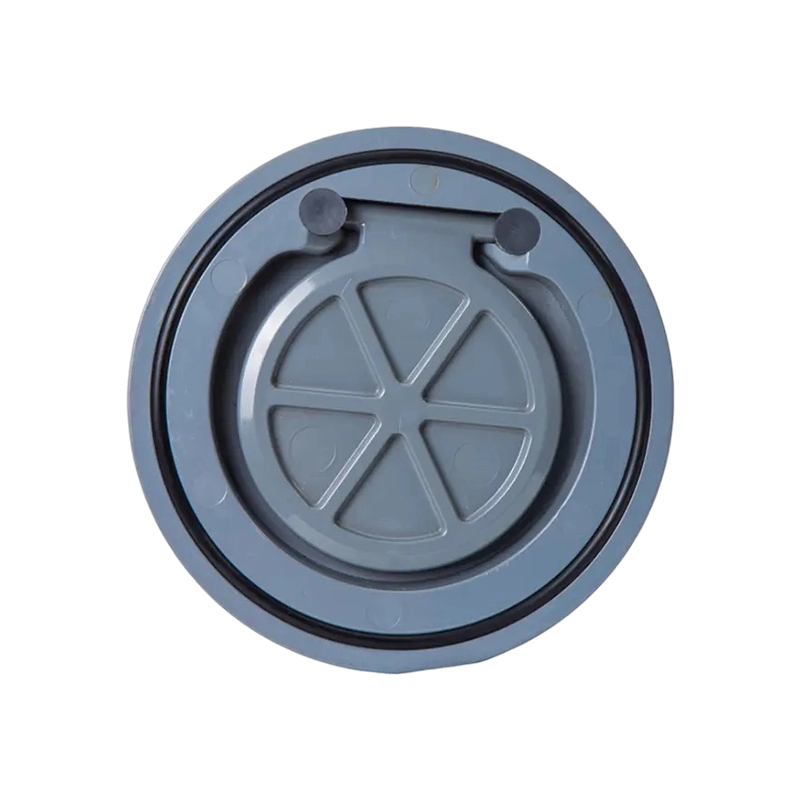 Corrosion-Resistant Wafer Check Valve for Compact InstallationsThis wafer check valve offers a thin profile that keeps flow resistance low, with UPVC and CPVC options suited to water and chemical service. Its short face-to-face length simplifies mounting in tight lines.View Product →
Pressure drop is also the easiest disadvantage to quantify. Every reliable manufacturer publishes a flow coefficient, usually written as Cv, or a pressure-drop table. A valve with a higher Cv means less resistance at the same flow rate. When working with plastic valves, the wall thickness and the internal bore geometry vary from one brand to another, so comparing measured Cv values is the only dependable way to estimate the actual pressure loss before purchase.
Disadvantage 2: Water Hammer and Valve Slamming
Water hammer is probably the most destructive problem related to check valves. It is a pressure surge created when a liquid column changes velocity suddenly. In a pumping system, the usual sequence is this: the pump stops, the liquid loses its forward momentum, backflow begins, and the check valve closes. When the valve closes, the moving liquid stops abruptly, and its kinetic energy is converted into a pressure spike. The spike travels through the piping as a wave and reflects from fittings and closed ends. Peak values of five to ten times the normal working pressure are not unusual in unfavorable conditions.
The mechanical consequences in a plastic piping system are serious. Flanged joints can be forced apart, valve bodies can crack, pump shafts can bend, and pipe supports can suffer repeated blows. Even when the spike is not strong enough to break anything instantly, each event progressively loosens joints and fatigues the pipe material.
The closing speed of the valve determines how much of the kinetic energy is converted into pressure. A swing check valve with a heavy disc and a long travel path often slams exactly at the moment of maximum reverse velocity. A ball check valve or a spring-assisted wafer check valve has a much shorter closing stroke and returns to the seat sooner, which limits the build-up of reverse velocity. This is why non-slam and silent check valve designs were developed.
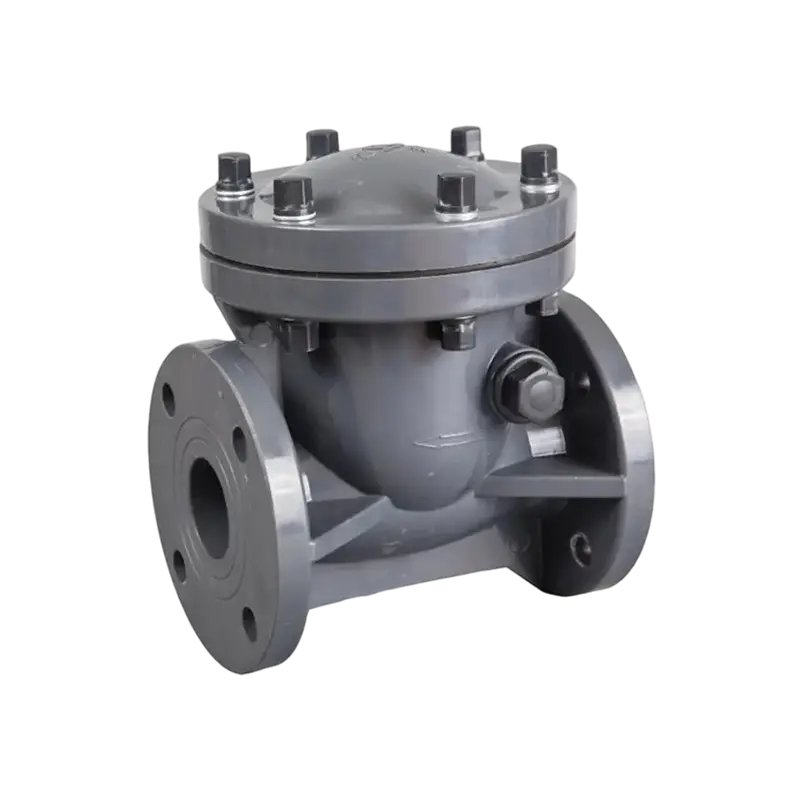
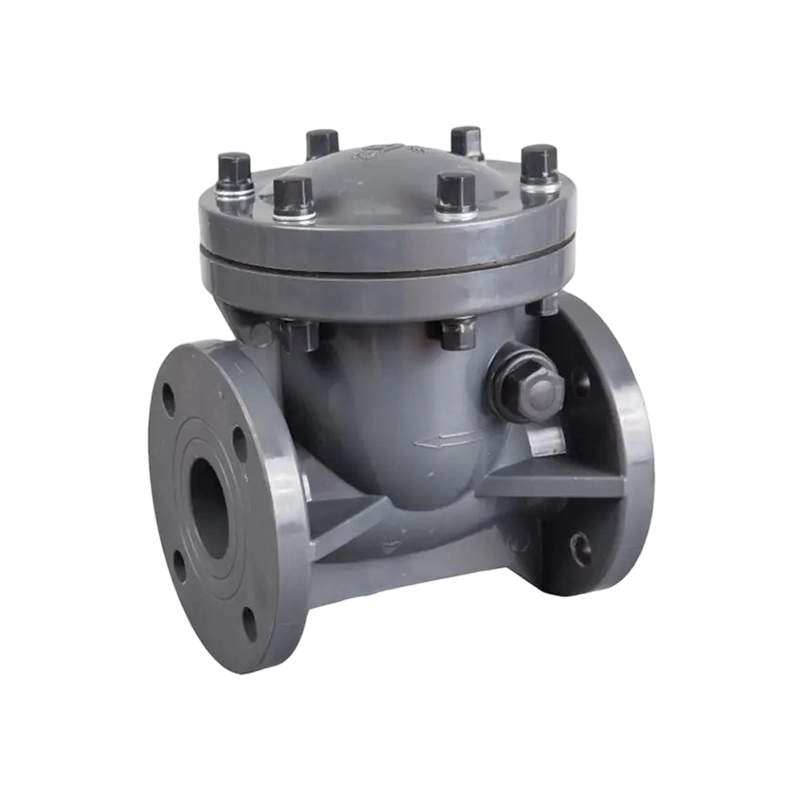 Swing Check Valve with Low-Flow Resistance and Easy Bonnet AccessDesigned with a swing disc that lifts nearly clear of the flow stream, this valve minimizes pressure drop in horizontal pipelines. Maintenance is quick because the bonnet lid can be removed without taking the valve body out of the line.View Product →
Mitigation is a system task, not only a valve task. The best approach combines several measures: choose a check valve with a short closing stroke or a spring return, keep the pipe velocity inside the recommended range, avoid rapid pump shutdowns, add a flywheel or a soft starter to extend the pump run-down time, and locate the check valve away from the pump outlet so the pressure wave has a longer path and a lower peak. In severe cases, a surge vessel or a pressure-relief device is the correct solution.
Disadvantage 3: Chattering, Vibration and Premature Wear
Chattering is a condition in which the closing element opens and closes rapidly without reaching a stable position. It usually produces a loud clicking or hammering noise and a noticeable vibration in the pipe. Chattering damages the valve in two ways: the repeated impacts flatten or crack the seat, and the constant movement of the disc wears the guide surfaces. In a plastic check valve, where the seat may be a softer elastomer, the damage can become visible after only a few hundred hours.
The conditions that trigger chattering are well documented:
- Flow velocity below the minimum opening velocity of the valve design
- Pulsating flow from a reciprocating pump or compressor
- Flow rates that change continuously around the valve opening threshold
- Strong turbulence immediately upstream of the valve
The most common cause on site is an oversized valve. The pipe is often specified for a future expansion, so the valve is oversized as well, and the current flow is too small to hold the disc fully open. The disc hovers near the seat and vibrates. A smaller valve would create more pressure drop but would operate reliably.
Chattering should never be ignored. The loss of sealing performance that follows seat damage allows reverse flow, which is exactly the event the valve was installed to prevent. When chattering appears, the options are to replace the valve with a correctly sized model, add a spring-assisted closing mechanism, or change the pump operating point so that the flow remains well above the valve minimum opening requirement.
Disadvantage 4: Fluid and Application Limitations
A check valve that works perfectly with clean water may fail completely with another medium. The behavior of the closing element depends on the viscosity, density, abrasiveness and chemical nature of the fluid. This is why experienced engineers always specify the full medium description before choosing a check valve design.
- High-viscosity liquids: A ball or a disc moves more slowly in a viscous fluid. The valve may not close before reverse flow has already started. Lift check valves are especially sensitive to viscosity because the guided disc relies on gravity and differential pressure to seat.
- Slurries and particle-laden liquids: Solids can prevent full seating, so the valve leaks even when it looks closed. A ball check valve usually handles moderate particles better than a lift valve, but no check valve is suitable for a heavy slurry without careful sizing and frequent cleaning.
- Crystallizing or polymerizing media: If the product forms deposits, the hinge area of a swing valve and the guide bore of a lift valve become clogged. The valve can freeze in the open or closed position.
- Temperature limits: Thermoplastic valves have distinct upper service temperatures. UPVC is typically limited to roughly 60°C in continuous service, CPVC extends that range, PPH offers a higher margin, and PVDF is used for the most demanding hot and corrosive services.
- Orientation constraints: Swing check valves generally require horizontal installation with the cover facing up. Spring-loaded types are more flexible and can operate in vertical lines. Foot valves are limited by nature to the lower end of a vertical suction pipe.
These fluid limits matter when a plant plans to use one standard valve type for many services. Standardization is tempting from a storage and maintenance point of view, but it multiplies the risk of failure across an entire site. The more rational approach is to group services by viscosity, solid content and temperature, then select the check valve design for each group.
Disadvantage 5: Maintenance and Inspection Difficulties
Compared with a gate valve or a ball valve, a check valve gives the maintenance team almost no information from the outside. There is no handle, no stem position and no opening indicator. A check valve can be stuck fully closed, stuck fully open, or leaking through its seat, and in all three cases the external appearance is identical. The first sign of a stuck-open valve is often a secondary incident, such as a pump losing prime or a storage tank overflowing.
Inspection requires taking the line out of service and disassembling the valve. In a flanged installation, that means loosening at least two flanges and lifting the valve out. In a fusion-welded thermoplastic line, the valve may even need to be cut out of the line. These considerations push many maintenance departments toward a replace-on-condition strategy: the valve is changed at a fixed interval or after a failure is detected, rather than being inspected progressively.
The maintenance burden is also a hidden cost. Every hour of line shutdown has a value, and in continuous production that value can be high. Choosing a design that simplifies access is therefore a legitimate engineering decision. Union-type check valves have a clear advantage because the union nut releases the internal assembly without moving the end connections. For a plant that handles fluids prone to deposits, the ability to open, clean and reassemble a valve in twenty minutes instead of two hours changes the entire maintenance plan.
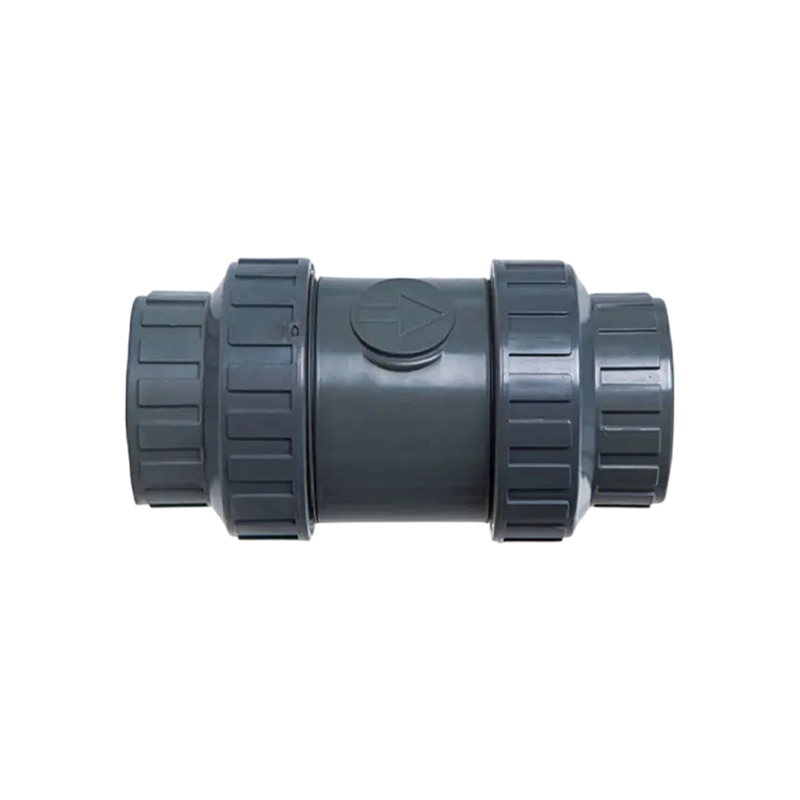 Union-Type Ball Check Valve for Fast Maintenance in Limited SpacesThis compact ball check valve lets you release the internal assembly via the union nut without disturbing end connections, ideal for frequent cleaning. Suitable for clean fluids, but avoid live connections in high-temperature or demanding corrosive service.View Product →
A practical maintenance schedule for a check valve in continuous clean service is an internal inspection every one to two years. For dirty, abrasive or pulsating service, inspection should happen at every planned shutdown. In critical lines, a second check valve in series or a leakage monitoring device can provide early warning of seat wear.
Disadvantage 6: Sizing and Selection Risks
Perhaps the most common mistake in piping design is matching the check valve size to the pipe bore without checking the flow velocity through the valve. The nominal pipe size is only the starting point. The real requirement is that the closing element must be held fully open by the flow during normal operation, and it must return to the seat quickly enough when flow stops.
An oversized check valve is a classic source of chattering. At low flow, the disc floats near the seat and vibrates. This situation is common in lines designed for future expansion: the pipe is oversized, the valve is oversized, and the current flow is too small to provide a stable opening force. A smaller valve would create additional pressure drop but would operate reliably.
An undersized check valve creates an entirely different set of problems: high velocity, high pressure drop, noise, erosion of the seat, and in some cases cavitation. The maximum flow that a valve can pass is physically limited by its flow coefficient, but passing that flow in a stable manner is another question.
The quadratic nature of the flow-pressure relationship is helpful to remember. If the designer doubles the flow rate through a given valve, the pressure drop rises by a factor of about four. This means the valve should be selected not on the average flow alone, but on the expected range of flow, including the minimum flow at which the disc stays stable and the maximum flow at which the pressure drop is still acceptable.
Manufacturers with a full range of check valve types can help translate these requirements into a concrete selection. For a practical decision path, this guide to selecting the right check valve type for your fluid and operating conditions is a useful reference.
Common Failure Modes and Their Warning Signs
Knowing the failure modes of check valves helps maintenance teams catch problems before they cause a process incident. The following patterns cover the majority of real cases.
Table 2. Common check valve failure modes, visible signs and recommended actions.
| Failure mode |
What you observe |
Likely cause |
Recommended action |
| Leaking seat |
Downstream pressure rises and the pump cycles more often |
Debris on the seat, worn elastomer, chemical attack |
Open and inspect; clean or replace the seat |
| Stuck closed |
Flow stops completely and the pump may cavitate |
Large particle wedged in the closure area |
Remove the valve and clear the line |
| Chattering |
Rapid clicking or vibration from the valve |
Oversizing, pulsating flow, low differential pressure |
Re-size the valve or use a spring-loaded design |
| Slamming |
Strong banging when the pump stops |
Long closing stroke, high reverse velocity |
Use a non-slam type and slow down the pump stop |
| Body crack |
Moisture, dripping or a visible fracture |
Freezing, chemical attack, overpressure |
Replace the valve and review material and protection |
The warning signs in the middle column are often subtle at first. An operator may notice an unusual sound before any pressure reading changes. Regular rounds, a simple checklist and the habit of placing a hand on the pipe near the valve are cheap but effective monitoring practices for existing installations.
Comparing Check Valve Types: Which Disadvantage Can You Accept?
Every application has a dominant disadvantage that engineers must live with. The trick is to choose the valve type whose weakness is least harmful for the specific service.
Table 3. Comparison of common check valve designs by their main weaknesses.
| Type |
Pressure drop |
Water hammer risk |
Solids handling |
Maintenance access |
Recommended service |
| Swing check |
Medium |
Higher |
Fair |
Moderate |
Horizontal lines with steady flow |
| Wafer check |
Low |
Low to moderate |
Fair |
Poor |
Compact installations, low-pressure-drop lines |
| Ball check, flanged |
Medium to high |
Low |
Fair |
Requires disassembly |
Clean liquids, vertical or horizontal |
| Ball check, union |
Medium to high |
Low |
Good |
Very good |
Lines requiring regular cleaning |
| Lift check |
High |
Very low |
Poor |
Moderate |
High-pressure clean service |
| Foot valve |
Medium |
Low |
Fair |
Screen requires cleaning |
Pump suction lines |
Swing check valves are the oldest and simplest design. They are robust and inexpensive, and in a stable horizontal line with moderate velocity they work for years. Their weakness is the long travel path of the disc: when the pump stops, the disc falls back and the closure can be violent. Where water hammer is an existing concern, the swing type should be applied with caution.
Wafer check valves are compact and usually the best choice when pressure drop is the priority. They fit between two flanges and add very little length to the line. The mechanism is exposed to the medium and cannot be serviced without removing the valve from between the flanges. Their internal parts are small, which makes them more sensitive to debris.
Ball check valves use a ball that rises and falls with the flow. The closing stroke is short, so they handle flow reversal more gently than swing valves. A flanged ball check valve works well in both horizontal and vertical rising flow, but inspection requires loosening the flange bolts. A union-type ball check valve removes that barrier: the internal assembly is accessible through the union nut, which explains why this layout is increasingly preferred in plastic piping systems where corrosion and deposits are the main threats.
Lift check valves are the most predictable in terms of closing speed, but they have the highest head loss and the most sensitive guiding parts. They belong in clean, steady, high-pressure services, not in slurry lines or systems with pulsating flow.
How a Manufacturer Reduces Check Valve Disadvantages
A valve manufacturer sees the disadvantages of check valves from a different angle. The goal is not to claim that check valves have no weaknesses, but to reduce the consequences through material choice, precision manufacturing and intelligent design.
Material selection is the first line of defense. Thermoplastic valves made of UPVC, CPVC, PPH, PVDF and FRPP weigh a fraction of their metal equivalents, and they eliminate the corrosion that is the most common cause of internal seat damage in metal valves. For a plant handling acids, alkalis or salt solutions, a plastic check valve often holds its sealing performance far longer than a metal valve with an elastomer seat.
Precision of the molded parts is the second factor. The ball, disc, seat and guide surfaces must be consistent from one production batch to the next. Ningbo Baodi Plastic Valve has manufactured industrial plastic valves since 1979, and its first plastic diaphragm valve passed the technical evaluation of the Ministry of Chemical Industry in 1983. That accumulated production experience translates directly into longer valve life and more repeatable sealing performance.
The third factor is the product range. A manufacturer that builds complete plastic piping systems, including valves, pipes, fittings and glass-fiber-reinforced composite lines, can match the check valve to the exact pressure and temperature environment of the line. The one-piece flanged ball valve developed in 1992, the early application of CPVC to industrial pipe and valve production in 2006, and the ISO 9001, ISO 14001 and ISO 45001 certifications all point in the same direction: the correct answer to a check valve problem is rarely the cheapest valve, but the valve that has been verified for the actual service.
For unusual services, custom configurable products fill the last gap. Non-standard valves, corrosion-resistant plastic pneumatic actuators and T-type strainers can reduce some of the operational risks associated with check valves, because the entire fluid-handling package is coordinated by one supplier.
Practical Tips to Minimize Check Valve Disadvantages
The following practices have proven effective in real industrial installations and are easy to apply during design.
- Size the check valve by flow velocity, not only by pipe diameter. Keep the velocity high enough to hold the disc fully open, and low enough to avoid erosion and excessive pressure drop.
- Choose a spring-assisted or non-slam design wherever pump run-down is short and water hammer is a known risk.
- Install the check valve in a straight pipe run, preferably five pipe diameters away from any elbow, pump outlet or flow meter.
- Match the valve design to the flow regime. Pulsating flow and steady flow require different internal mechanisms.
- Plan maintenance access while the piping is being designed. Use union-type check valves, flanges or spool pieces that can be removed without cutting the line.
- Monitor pressure on both sides of the valve. A rising pressure drop indicates internal fouling or a partially blocked valve.
- Listen for unusual sounds during routine rounds. Chattering and slamming have very characteristic acoustic signatures and should be treated as alarms.
Applying these tips does not remove the inherent trade-offs of a check valve, but it moves a system from a problem-prone condition to a controlled one.
Frequently Asked Questions About Check Valve Disadvantages
Here are the questions that buyers and maintenance teams most frequently ask about the weaknesses of check valves.
Do all check valves create pressure drop?
Yes. Any closing element inside the bore is an obstacle to the flow. The magnitude ranges from less than one percent of the total pipeline loss in a well-designed wafer valve to a much larger share in a lift valve. The flow coefficient published by the manufacturer is the number to compare when pressure loss matters.
Why does my check valve chatter even though the pipe size seems correct?
The pipe size and the operating point are different things. Chattering means the disc is hovering near the seat rather than staying in a fully open position. The usual causes are a valve whose minimum opening velocity is higher than the actual flow, a pulsating flow, or a valve installed too close to a disturbance such as a pump discharge elbow.
Can a special check valve eliminate water hammer completely?
No. A non-slam check valve reduces the contribution of the valve, but water hammer is a system phenomenon. The pressure wave depends on pipe length, fluid velocity, pump stop time and pipe stiffness. A complete solution may combine a fast-closing valve, pump run-down control and surge protection.
Are plastic check valves less reliable than metal check valves?
Reliability is a function of material compatibility, not simply of metal versus plastic. In corrosive chemical lines, a PVDF or CPVC check valve can last many times longer than a metal valve because corrosion no longer attacks the sealing surfaces. The important condition is to select the plastic material according to the chemical, temperature and pressure of the service.
Which check valve type handles dirty fluids best?
For particle-laden liquids, a ball check valve generally behaves better than a lift check valve because the ball tends to push debris out of the seating area. Swing check valves can also pass moderate solids. In every case, an upstream strainer is the most direct protection for the valve.
How often should a check valve be inspected?
In continuous clean service, an internal inspection every one to two years is a reasonable baseline. In dirty, corrosive or pulsating service, inspect at every scheduled shutdown. If the line is critical and the cost of failure is high, use a redundant valve with a monitoring device to detect leakage early.
Check valve disadvantages are not a reason to avoid check valves; they are a reason to select them knowingly. Pressure drop, water hammer, chattering, fluid limits, maintenance effort and sizing risk can each be predicted and managed when the valve is chosen on the basis of real operating conditions rather than habit.
A manufacturer with a long production history in plastic valves and a complete range of valve, pipe and fitting products can help translate those conditions into a concrete specification. When the material, the closing mechanism, the connection type and the maintenance strategy are aligned with the application, a check valve can work reliably for decades.