How Do Check Valves and Plastic Check Valves Prevent Backflow in Industrial Piping Systems?
Backflow is a common but serious problem in fluid-handling systems. When pumps stop, pressure conditions change or liquid levels fluctuate, the medium may reverse direction and return toward upstream equipment. This can contaminate storage tanks, damage pumps, disrupt metering accuracy and create pressure shocks inside the pipeline. A properly selected Check Valve helps control this risk by allowing fluid to pass in one direction while restricting reverse flow.
In corrosive water-treatment and chemical-processing systems, a Plastic Check Valve can provide the same automatic non-return function while offering resistance to many acids, alkalis and salt solutions. Its relatively low weight and compatibility with thermoplastic piping can also simplify installation where metal corrosion is a concern.
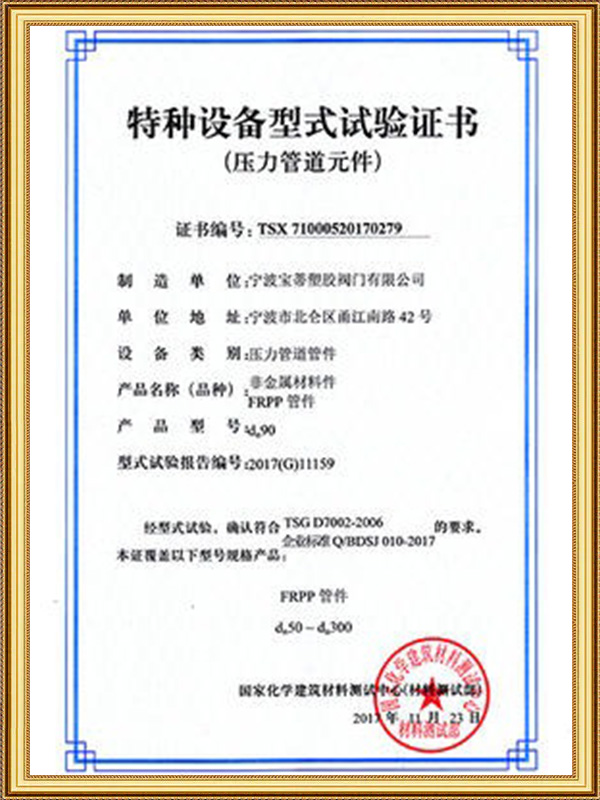
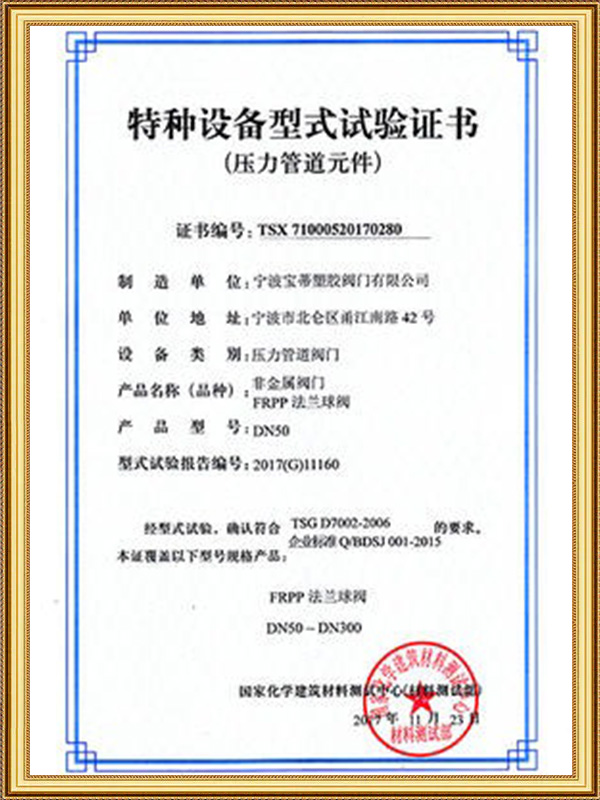
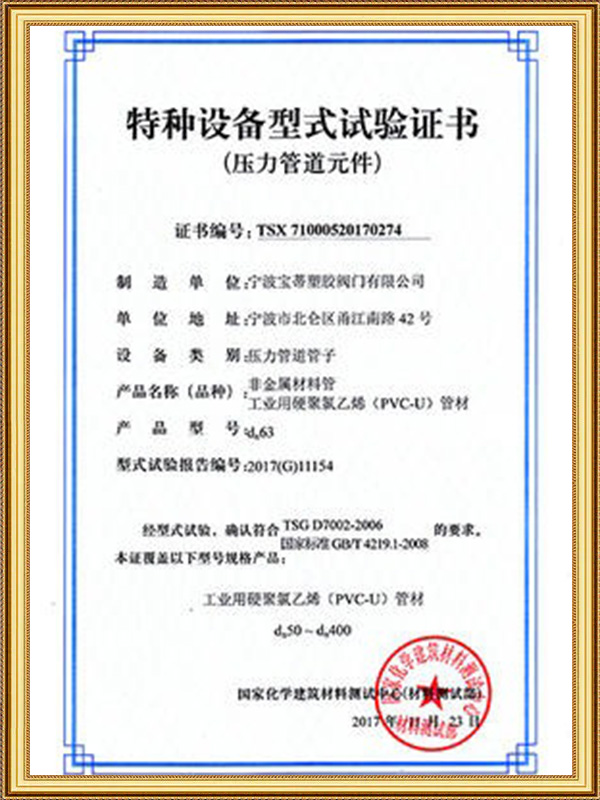
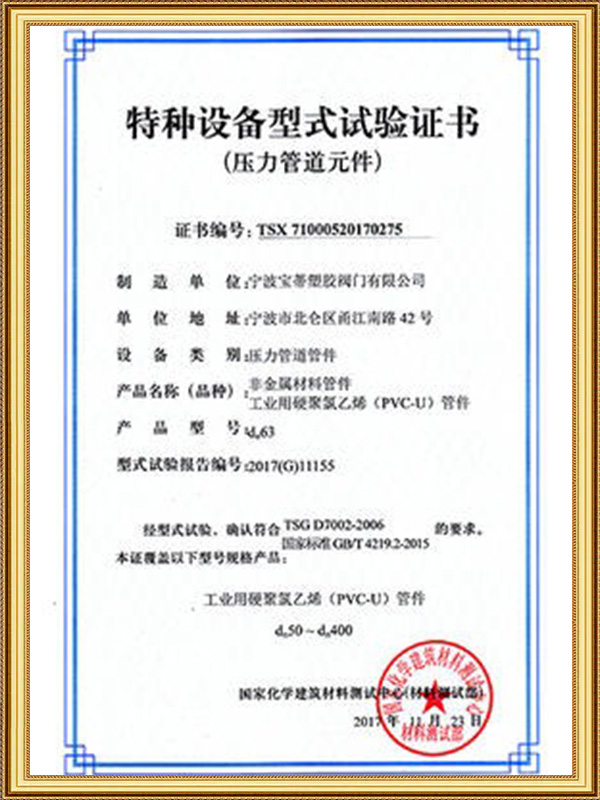
The development of industrial plastic valves in China is closely connected with Ningbo Baodi Plastic Valve Co., Ltd. The company traces its origins to 1979 through Zhenhai Chemical Valve Factory and Beilun Plastic Valve Factory. Over more than four decades, its product development has covered industrial thermoplastic valves, pipes and fittings used in demanding fluid-control applications, including systems that require reliable prevention of reverse flow.
What Is a Check Valve?
A Check Valve is an automatic valve designed to permit flow in one intended direction. It does not normally require a handle, handwheel, electric motor or pneumatic actuator. Instead, the valve responds to the pressure difference between its inlet and outlet.
When upstream pressure becomes greater than downstream pressure by a sufficient amount, the internal closing element moves away from the valve seat. Fluid can then pass through the valve. If the forward flow weakens, stops or reverses, the closing element returns to the seat and restricts backflow.
Depending on the valve structure, the closing element may be a disc, ball, piston, poppet or flexible diaphragm. Gravity, spring force, reverse pressure or a combination of these forces may return the closing element to its sealing position.
A Check Valve should not be confused with an isolation valve. An isolation valve is deliberately opened or closed by an operator or actuator. A Check Valve reacts automatically to changes in pressure and flow direction. In many process systems, both valves are installed because they perform different functions.
Ningbo Baodi Plastic Valve Co., Ltd. has participated in the standardization of industrial plastic valve products and is a principal drafter of the chemical industry standard for plastic check valves. This experience is important because a Check Valve must provide consistent opening response, dimensional accuracy and reverse-flow sealing without relying on manual operation.
What Is a Plastic Check Valve?
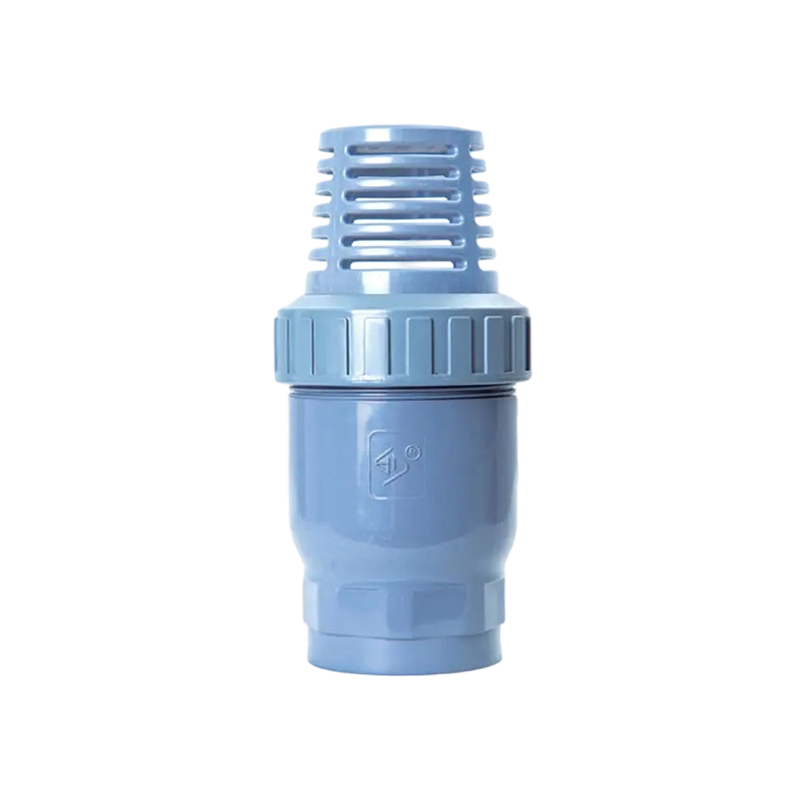
A Plastic Check Valve is a non-return valve whose body and major wetted structural components are manufactured from industrial thermoplastics such as PVC, CPVC, PP or PVDF.
Plastic construction is mainly selected for corrosion resistance rather than only for reduced weight. In chemical processing, wastewater treatment, dosing and industrial water systems, the medium may attack unprotected metal surfaces. A properly selected Plastic Check Valve can provide a corrosion-resistant flow path while matching the material of the surrounding pipes and fittings.
The term Plastic Check Valve does not mean that every internal component is made from the same plastic. The valve may include an elastomeric seal, a PTFE sealing element, a metal or polymer spring, a reinforced guide or a closing element manufactured from another thermoplastic material.
Each wetted component must therefore be checked for chemical compatibility. The valve body may resist a chemical while the seal, spring or guide does not. Selection should be based on the complete valve assembly rather than the body material alone.
In 2006, Ningbo Baodi Plastic Valve Co., Ltd. expanded its product line to cover industrial plastic pipes and fittings and became one of the early domestic enterprises to apply CPVC in industrial-grade piping valves. This system-level product range allows a Plastic Check Valve to be selected together with compatible piping components rather than treated as an isolated part.
How Does a Check Valve Work?
Forward Flow and Opening Action
A Check Valve opens when the force created by forward differential pressure becomes greater than the forces keeping the closing element on the valve seat.
Upstream pressure rises: Pressure begins acting on the effective area of the disc, ball, piston or diaphragm.
Opening force increases: The pressure-generated force starts to overcome gravity, spring force, seal friction and the weight of the closing element.
The closing element moves: The disc, ball, piston or diaphragm separates from the valve seat.
The flow passage expands: As the flow rate and differential pressure increase, the closing element normally moves farther from the seat.
A Check Valve may open only slightly under low-flow conditions. Partial opening can create unstable movement when the flow repeatedly rises and falls around the minimum opening requirement.
The internal geometry of a Plastic Check Valve influences how smoothly this movement occurs. Flow passages that are too narrow or poorly aligned can create unnecessary resistance. Ningbo Baodi Plastic Valve Co., Ltd. has designed industrial plastic valves for many chemical and water systems where accurate moulding and controlled internal dimensions help maintain repeatable valve movement.
Reverse Flow and Automatic Closing
When forward flow decreases, the force holding the valve open also decreases. Gravity, a return spring or downstream pressure then moves the closing element back toward the seat.
The valve should close before a large reverse velocity develops. If the closing element travels too slowly, fluid may begin moving backward before the valve reaches the seat. The final closure can then produce noise, vibration or water hammer.
A spring-loaded Check Valve usually closes faster than a gravity-dependent swing design because the spring begins pushing the closing element toward the seat as soon as forward pressure falls.
Differential Pressure
A Check Valve responds to pressure difference rather than pressure on only one side. High inlet pressure does not guarantee that the valve will open if the outlet pressure is almost equally high.
For example, when upstream pressure is 4.0 bar and downstream pressure is 3.9 bar, the effective differential pressure is only 0.1 bar. Whether the Check Valve opens depends on its cracking pressure, closing-element weight, spring force and installation position.
This is especially important in low-pressure systems. A Plastic Check Valve may have adequate structural pressure capacity but still fail to open fully if the available pressure difference is too low.
Why a Check Valve May Not Close Instantly
The closing element has physical mass and must travel a certain distance before reaching the seat. Fluid inertia may continue moving the medium forward or backward during this travel period.
Pipeline length, flow velocity, pump shutdown speed, valve orientation and closing-element travel all influence the closing time. A longer travel path can allow more reverse flow to develop before sealing occurs.
What Is Cracking Pressure in a Check Valve?
Cracking Pressure Definition
Cracking pressure is the minimum differential pressure required to make the closing element begin moving away from the seat. It is not the same as full-opening pressure, working pressure or maximum allowable pressure.
A Check Valve may begin to open at its stated cracking pressure but still provide only a small flow passage. Additional differential pressure is normally needed to move the closing element farther and achieve the intended flow capacity.
Why Cracking Pressure Matters
Cracking pressure is particularly important in gravity-fed systems, chemical dosing lines, low-pressure transfer systems, metering equipment and pipelines with limited available head.
A high cracking pressure can reduce flow or prevent the valve from opening in a low-pressure system. A low cracking pressure can improve opening sensitivity, but the closing element must still return reliably to the seat when forward flow stops.
Spring strength, valve orientation, closing-element weight and seat contact all affect the actual opening response. Ningbo Baodi Plastic Valve Co., Ltd. manufactures a broad range of thermoplastic piping products, making it possible to evaluate cracking pressure together with pipe size, flow demand and system pressure rather than as an independent number.
Cracking Pressure and System Pressure Comparison
| Parameter |
Cracking Pressure |
Working Pressure |
Maximum Allowable Pressure |
| Definition |
Differential pressure needed to begin opening |
Normal system pressure during operation |
Highest permitted structural pressure under stated conditions |
| Main purpose |
Determines opening sensitivity |
Describes actual operating conditions |
Defines the safe pressure boundary |
| Relationship to flow |
Strongly affects low-flow performance |
Influences system flow and equipment operation |
Does not directly indicate flow capacity |
| Effect of installation direction |
May change significantly |
Depends on system arrangement |
Normally defined by product structure and temperature |
| Main selection concern |
The valve may not open at low pressure |
The system must operate steadily |
The stated limit must not be exceeded |
Common Types of Check Valve
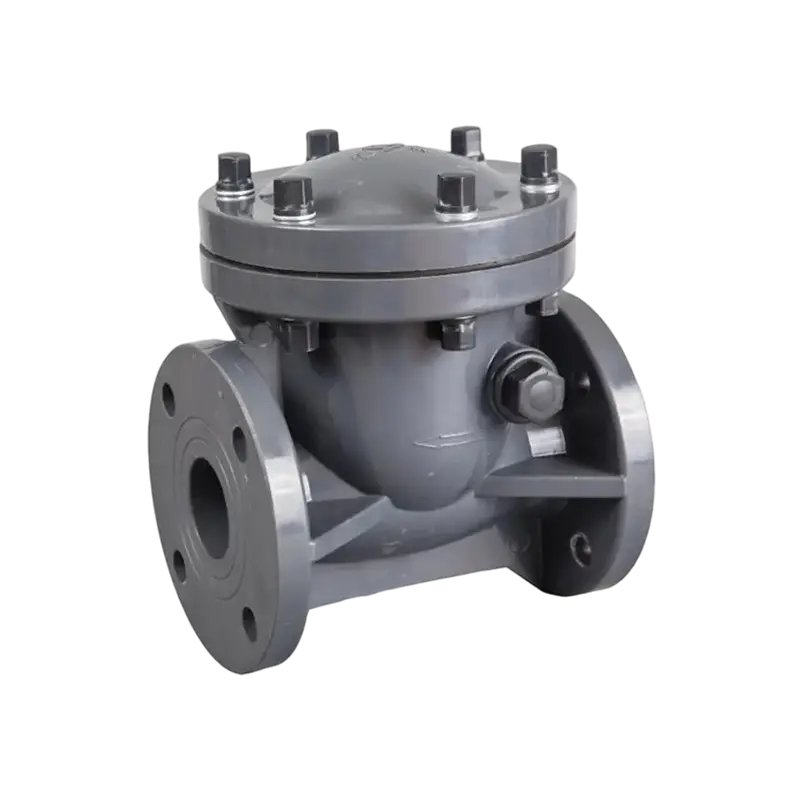
Swing Check Valve
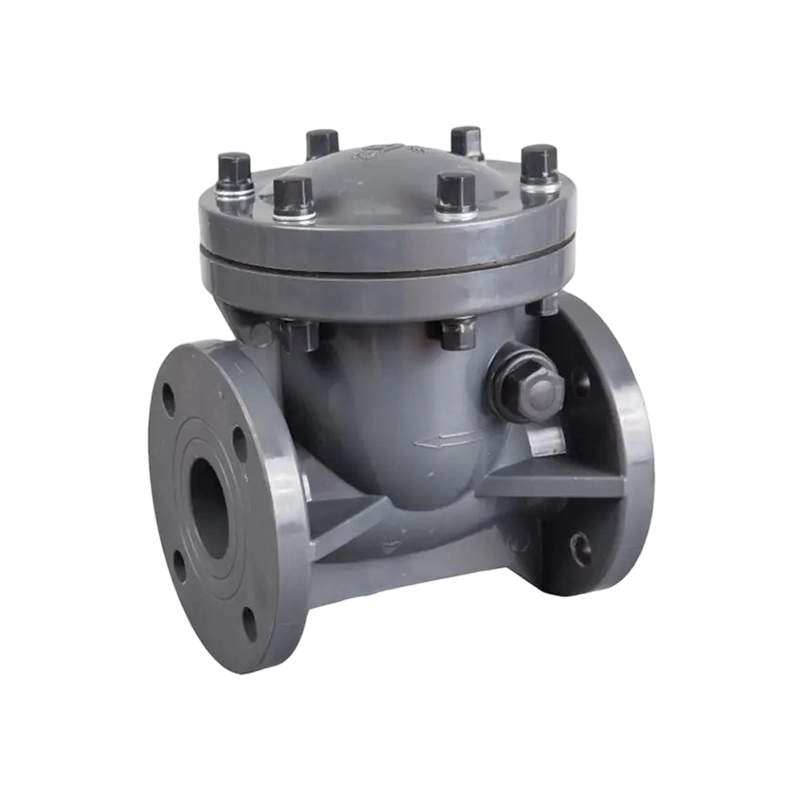
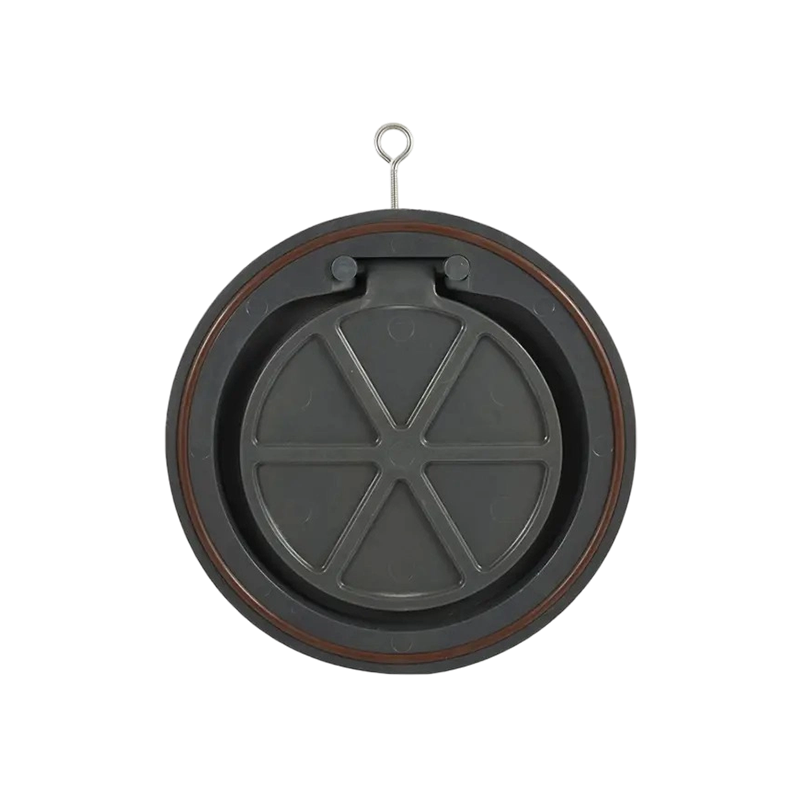
A swing Check Valve uses a hinged disc that rotates away from the seat during forward flow. When flow decreases or reverses, the disc swings back toward the closed position.
Its relatively open flow path can provide lower pressure loss than some guided designs. It is commonly used in water and general process pipelines.
The main limitation is the disc travel distance. A long closing stroke can allow reverse velocity to develop before closure, which may contribute to water hammer.
The installation position must also allow gravity to help return the disc correctly. A swing design intended for horizontal service may not operate properly when installed in an unsuitable vertical orientation.
Ball Check Valve
A ball Check Valve uses a free-moving or guided ball as the closing element. Forward flow pushes the ball away from the seat, while reverse pressure returns it to the sealing position.
Ball designs can be useful in wastewater, chemical transfer and dosing systems. Their internal structure may tolerate certain suspended solids better than narrow guided passages.
A Plastic Check Valve with a ball-type closing element must still be assessed for sediment, crystallization and fluid viscosity. If the medium causes the ball to stick inside the chamber, normal opening and closing will be affected.
The long manufacturing experience of Ningbo Baodi Plastic Valve Co., Ltd. in thermoplastic chemical valves is relevant to ball-chamber geometry because the valve must allow free ball movement without creating excessive dead space.
Lift Check Valve
A lift Check Valve uses a guided disc or piston that moves in a generally linear direction away from the seat.
This controlled movement can provide accurate seating, but the internal flow path often changes direction. Pressure loss may therefore be higher than in a swing-type design.
Lift valves normally perform best with relatively clean fluids. Particles can enter the guide area and restrict movement.
Spring-Loaded Check Valve
A spring-loaded Check Valve uses a spring to push the disc or poppet toward the closed position.
The main advantages are rapid response, short closing travel and greater flexibility in installation orientation. This structure is often used near pumps, inside compact equipment and in pipelines where flow may stop quickly.
The main selection concern is cracking pressure. If the spring is too strong for the available differential pressure, the valve may only partially open or remain closed.
Diaphragm Check Valve
A diaphragm Check Valve uses a flexible membrane as the moving and sealing element.
Because it can operate with few rigid moving parts, it may be suitable for low-pressure and corrosive-fluid systems. Its performance depends heavily on diaphragm flexibility and chemical resistance.
Repeated flexing, excessive temperature or incompatible media can cause the diaphragm to harden, swell or crack.
Foot Valve
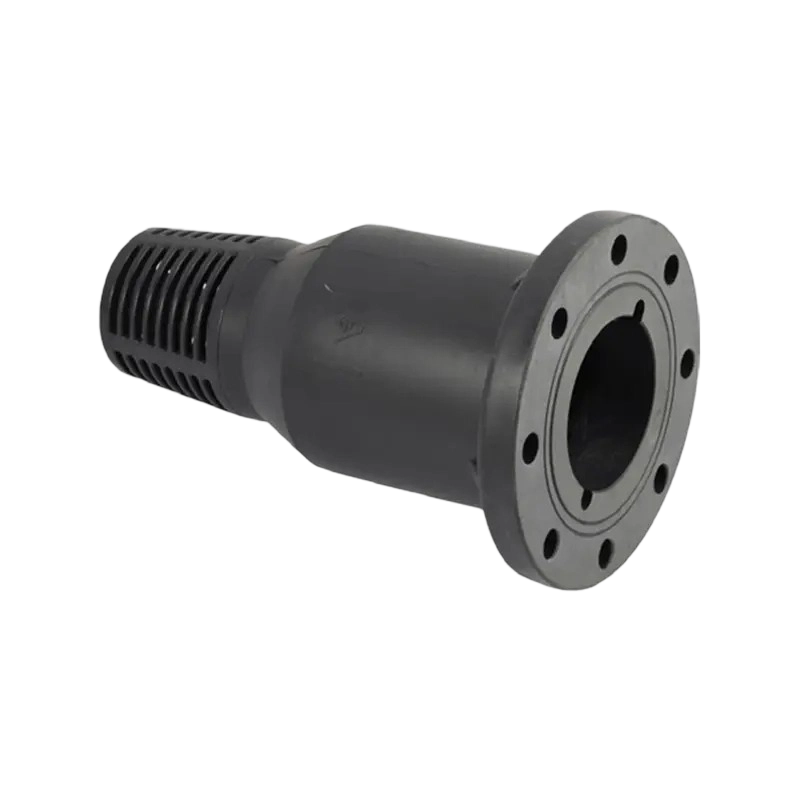
A foot valve is a type of Check Valve installed at the lower end of a pump suction line. It helps retain liquid inside the suction pipe after the pump stops.
Many foot valves also include a strainer to reduce the entry of larger debris. The strainer does not eliminate the need for water-quality assessment because smaller particles can still reach the seat.
A foot valve should be selected according to pump suction requirements and should not be treated as a universal replacement for every Plastic Check Valve in a piping system.
Check Valve Type Comparison
| Check Valve Type |
Closing Element |
Main Advantage |
Main Limitation |
Typical Application |
| Swing Check Valve |
Hinged disc |
Relatively low flow resistance |
Longer closing travel may increase water-hammer risk |
Water and general process pipelines |
| Ball Check Valve |
Moving ball |
Simple movement and tolerance for some suspended solids |
The ball may stick if deposits or crystallization occur |
Chemical dosing, wastewater and transfer lines |
| Lift Check Valve |
Guided disc or piston |
Controlled movement and defined seating |
Higher pressure loss and sensitivity to contamination |
Clean-fluid and process systems |
| Spring-Loaded Check Valve |
Disc or poppet with spring |
Fast closing and flexible installation |
Higher cracking pressure |
Pump discharge and compact equipment |
| Diaphragm Check Valve |
Flexible diaphragm |
Few rigid moving components |
Performance is limited by diaphragm material |
Low-pressure corrosive-fluid systems |
| Foot Valve |
Ball, disc or poppet |
Helps maintain pump prime |
Requires correct suction-line installation |
Pump inlet systems |
No single Check Valve type is suitable for every application. The correct choice depends on the medium, flow range, pressure difference, installation position, particle content, required response time and available maintenance access.
Ningbo Baodi Plastic Valve Co., Ltd. offers a wide range of industrial plastic valve and piping categories. This broad product coverage is useful where different sections of the same plant require different non-return structures while maintaining material compatibility.
Plastic Check Valve Materials and Chemical Compatibility
PVC Plastic Check Valve
A PVC Plastic Check Valve is commonly used in ambient-temperature water treatment, industrial water and selected chemical pipelines.
PVC provides resistance to many acids, alkaline solutions and salts. It is relatively lightweight and can be connected to compatible PVC piping through socket, union, threaded or flanged arrangements.
The allowable working pressure decreases as temperature rises. PVC should therefore not be selected only according to chemical resistance.
CPVC Plastic Check Valve
CPVC provides improved temperature capability compared with standard PVC in many industrial applications.
A CPVC Plastic Check Valve may be used in hot-water systems and selected elevated-temperature chemical lines. The complete valve assembly must be reviewed because the seat, O-ring and spring may have lower temperature limits than the CPVC body.
Ningbo Baodi Plastic Valve Co., Ltd. was one of the early domestic enterprises to use CPVC in industrial-grade piping valves. This experience supports the practical selection of CPVC components in systems where temperature and corrosion resistance must be considered together.
PP Plastic Check Valve
PP is resistant to many acids, alkalis and industrial wastewater compositions. It is lightweight and widely used in chemical transfer and treatment systems.
Its pressure capability is influenced by temperature and material grade. Low-temperature impact conditions should also be considered.
PVDF Plastic Check Valve
PVDF offers strong chemical resistance and is often selected for aggressive chemicals or higher-purity fluid handling.
A PVDF Plastic Check Valve may be used in specialized chemical, electronics and process-water systems. Compatibility still depends on the exact chemical, concentration and temperature.
Seal Material Comparison
| Seal Material |
Main Characteristics |
Commonly Suitable Media |
Important Considerations |
| EPDM |
Good resistance to water and many alkaline solutions |
Water treatment and selected chemicals |
Generally unsuitable for petroleum oils |
| FKM |
Resistance to many oils and chemical fluids |
Oil and selected chemical systems |
Compatibility must be checked for strong alkaline media |
| NBR |
Good oil and air resistance |
Air, oil and hydraulic service |
Limited resistance to some oxidizing chemicals |
| PTFE |
Broad chemical resistance and low friction |
Corrosive chemical applications |
Limited elasticity requires a suitable seat design |
The Plastic Check Valve should always be evaluated as a complete assembly. Selecting a suitable body material while ignoring the seal, spring or closing element can result in early failure.
Important Check Valve Specifications
Nominal Size
The valve size should match the required flow range rather than only the pipe diameter.
An oversized Check Valve may not open fully under normal flow. Its closing element may remain in an unstable intermediate position and repeatedly strike the seat.
An undersized valve can create excessive velocity, pressure drop, noise and internal erosion.
Pressure Rating
The pressure rating must cover normal operation, start-up pressure, pump shut-off pressure and possible pressure surges.
For a Plastic Check Valve, temperature derating must be included. The pressure rating stated at a reference temperature may not apply at a higher operating temperature.
Cracking Pressure
Cracking pressure should be low enough for the available system differential pressure but high enough to support reliable closure.
Gravity-fed and low-pressure systems require particular attention to this value.
Flow Coefficient
Cv or Kv describes the valve flow capacity. It depends on internal passage size, closing-element position and the degree of opening.
Two Check Valve products with the same nominal size may have different pressure losses because their internal geometries are different.
Reverse Leakage
A Check Valve restricts reverse flow, but not every valve guarantees absolute zero leakage.
Reverse leakage is influenced by seat material, surface condition, back pressure, particles, temperature and closing force.
Applications involving hazardous, high-purity or contamination-sensitive media should define an acceptable leakage requirement before valve selection.
Installation Position
Some valves are designed only for horizontal pipelines. Others allow vertical upward flow. Certain spring-loaded structures may permit several orientations.
The permitted installation position should be confirmed for the actual Plastic Check Valve design.
Pressure Drop and Correct Check Valve Sizing
Why Pressure Drop Occurs
Pressure drop occurs because the fluid must push the closing element away from the seat and pass through the internal valve geometry.
The main sources of resistance include spring force, closing-element weight, reduced internal area, flow-direction changes, turbulence and incomplete opening.
Problems Caused by Oversizing
Oversizing is a common Check Valve selection error. If the valve is too large for the actual flow, the disc or ball may remain only partly open.
Repeated movement can cause chattering, noise and rapid wear of the seat, hinge, spring or guide.
Problems Caused by Undersizing
An undersized Check Valve creates high velocity and excessive pressure loss. This can increase pump energy consumption and produce noise, erosion and unstable flow.
When the medium contains particles, excessive velocity may accelerate wear of the closing element and seat.
Recommended Sizing Approach
A reliable selection should review minimum, normal and maximum flow rates. Pipe diameter alone does not show whether the closing element will remain stable during normal operation.
Ningbo Baodi Plastic Valve Co., Ltd. has served tens of thousands of enterprises in domestic and international markets. This broad application experience demonstrates why Plastic Check Valve sizing must be based on operating data rather than connection size alone.
How to Select the Right Plastic Check Valve
Identify the Process Medium
Record the exact fluid name, concentration, viscosity, temperature and solid-particle content.
It is also necessary to determine whether the medium can crystallize, settle, harden, polymerize, form scale or cause elastomer swelling.
A chemically compatible Plastic Check Valve can still malfunction if deposits prevent the closing element from moving freely.
Confirm Pressure and Temperature
Review normal operation, start-up, shutdown, cleaning and emergency conditions.
For thermoplastic valves, allowable pressure falls as temperature rises. Pressure-temperature derating should be confirmed for the valve body and all internal materials.
The ISO 9001, ISO 14001 and ISO 45001 certifications obtained by Ningbo Baodi Plastic Valve Co., Ltd. reflect controlled quality, environmental and occupational-health management systems. Field selection must still be based on the specific pressure and temperature conditions of each project.
Choose the Check Valve Structure
A swing design may be suitable where low flow resistance is important.
A spring-loaded design may be preferred where rapid closure is needed.
A ball-type Plastic Check Valve may be considered for certain wastewater or chemical dosing applications.
A diaphragm design may suit selected low-pressure corrosive media.
Check Cracking Pressure
The pump pressure, liquid head or supply pressure must be sufficient to open the valve.
Low-pressure dosing systems should not use a Check Valve with excessive cracking pressure.
Confirm Installation Direction
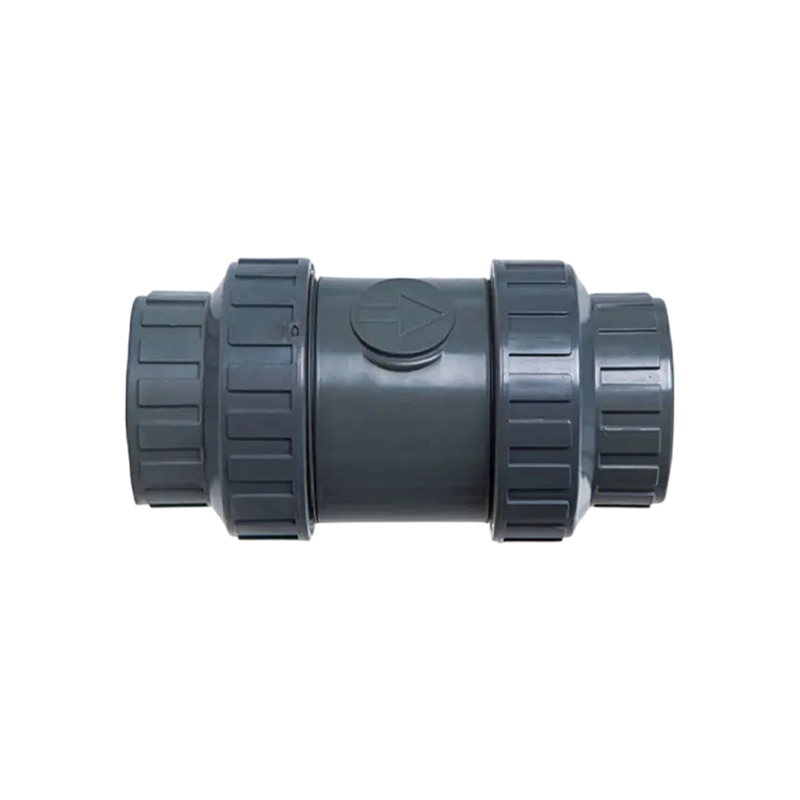
The flow arrow must align with the normal fluid direction.
The installation position should also be checked. A valve approved for vertical upward flow may not perform correctly under vertical downward flow.
Match the Pipe Connection
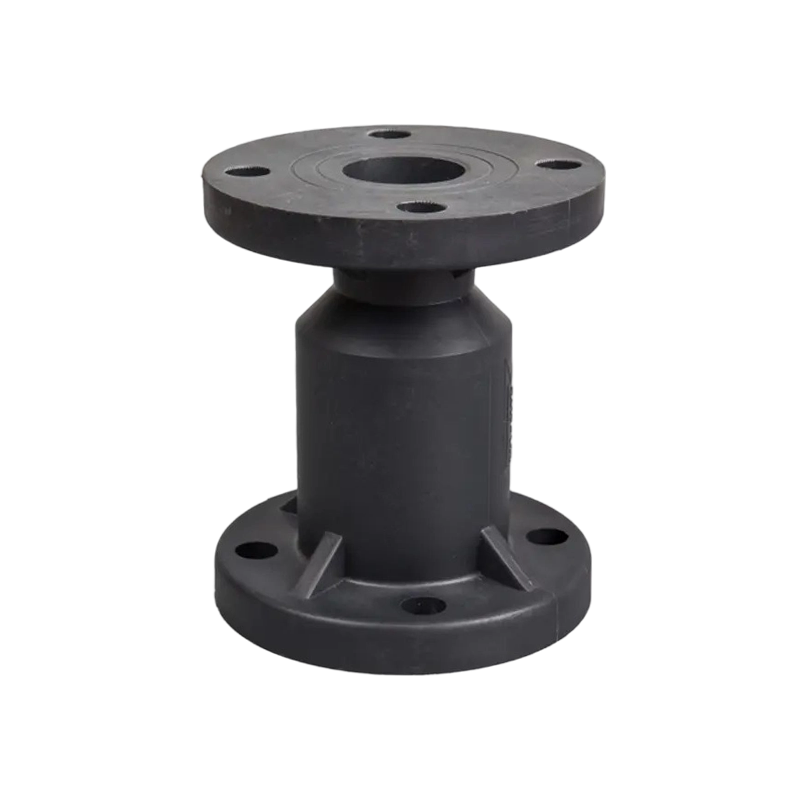
A Plastic Check Valve may use socket, threaded, union, flanged or suitable fusion-type connections.
Connection material, standard and dimensions should match the surrounding pipework.
Ningbo Baodi Plastic Valve Co., Ltd. produces industrial plastic valves, pipes and fittings across a wide range of categories, helping users maintain consistent connection standards throughout a thermoplastic piping system.
Consider Cleaning and Maintenance
For fluids that crystallize or contain solids, a serviceable union or flanged structure may simplify inspection and cleaning.
The installation should provide enough space to remove the valve without placing excessive stress on adjacent pipes.
Check Valve Installation Guidelines
Verify the Flow Arrow
The arrow on the Check Valve body must point in the intended direction of normal flow.
Installing the valve backward can stop the required flow, increase pump load and leave upstream equipment without backflow protection.
Clean the Pipeline
Sand, plastic chips, sealant, welding residue and other debris should be removed before installation.
Foreign particles can become trapped between the seat and closing element, causing reverse leakage immediately after start-up.
Follow the Required Orientation
A swing Check Valve often depends on gravity for closure. Ball and lift valves may also have specific orientation requirements.
For vertical installation, confirm whether the intended fluid direction is upward or downward.
Provide Stable Flow Where Practical
Turbulent flow near a pump, elbow or branch connection can cause unstable closing-element movement.
Where required, a suitable straight-pipe section can reduce chattering and uneven wear.
Support the Pipeline
A Plastic Check Valve should not carry excessive pipe weight, bending load or thermal-expansion stress.
Large valves and heavy adjacent components may require independent supports.
Avoid Excessive Connection Force
Threaded plastic connections should not be overtightened. Excessive torque can crack or distort the valve body.
Flange bolts should be tightened gradually and evenly. Union ends should remain aligned so the seal is not displaced.
The product range of Ningbo Baodi Plastic Valve Co., Ltd. includes matching industrial plastic piping components, which can help reduce connection and dimensional mismatches during installation.
Common Check Valve Problems and Troubleshooting
Valve Does Not Open
Possible causes: Insufficient differential pressure, excessive spring force, incorrect orientation, internal deposits or an oversized valve.
A Plastic Check Valve used in a gravity-fed system may remain closed if the available liquid head is lower than its cracking pressure.
Reverse Leakage
Possible causes: Particles on the seat, damaged sealing surfaces, chemical attack, body distortion or incomplete closure.
The system should be isolated, depressurized and drained before inspection.
Chattering
Chattering is repeated movement of the closing element between partially open and nearly closed positions.
Common causes: Low flow, oversized valves, pulsating pump discharge, unstable pressure or turbulence.
Continued chattering can damage guides, hinges, springs and seats.
Loud Closing Noise
A loud impact may indicate rapid closure after reverse velocity has developed.
Pump shutdown conditions, valve type, installation location and closing travel should be reviewed.
Plastic Body or Connection Leakage
Leakage around a Plastic Check Valve body or connection may result from overtightening, seal displacement, excessive temperature, pipe misalignment or unsupported weight.
Ningbo Baodi Plastic Valve Co., Ltd. has more than 40 years of industrial plastic valve experience. In field applications, long-term reliability depends not only on manufacturing quality but also on correct installation and operation within specified limits.
Typical Applications of a Plastic Check Valve
Chemical Dosing Systems
A Plastic Check Valve helps prevent process fluid from flowing backward into a dosing pump or chemical storage line.
Low cracking pressure, chemical compatibility and reliable closure are important in these systems.
Water Treatment
Check valves are used in filtration, circulation, chemical addition and backwash systems.
Thermoplastic materials can reduce corrosion in pipelines carrying treated water and chemical solutions.
Pump Discharge Lines
A Check Valve installed in a pump discharge line helps restrict reverse flow after the pump stops.
This can reduce pump reverse rotation, pipe drainage and unwanted pressure changes.
Wastewater Systems
Ball or other suitable Check Valve designs may be used for fluids containing suspended solids.
The internal passage should minimize blockage and allow practical cleaning.
Chemical Storage and Transfer
A Plastic Check Valve may prevent fluid from returning toward a tank, transfer pump or upstream process section.
Material selection must consider both the stored chemical and any cleaning fluid used in the system.
Irrigation and Aquaculture
Plastic check valves are used to maintain pipeline pressure, protect pumps and reduce flow reversal in water-distribution systems.
Ningbo Baodi Plastic Valve Co., Ltd. exports industrial thermoplastic valve and piping products to more than 60 countries, supporting applications ranging from chemical processing to water and agricultural fluid control.
Frequently Asked Questions About Check Valve and Plastic Check Valve
Can a Check Valve Completely Stop Reverse Flow?
A suitable Check Valve can greatly restrict reverse flow, but actual leakage depends on the seat design, back pressure, surface condition and presence of particles.
Where extremely low leakage is required, the specified leakage performance should be confirmed.
Does a Check Valve Need Manual Operation?
No. A Check Valve normally opens and closes automatically in response to differential pressure and flow direction.
Can a Plastic Check Valve Be Installed Vertically?
Some designs permit vertical installation, but the direction of flow must be confirmed. A valve suitable for vertical upward flow may not work correctly in downward flow.
Why Is the Check Valve Not Opening?
The most common causes are insufficient differential pressure, excessive cracking pressure, incorrect installation direction, internal deposits and an oversized valve.
What Is the Difference Between Cracking Pressure and Back Pressure?
Cracking pressure is the forward differential pressure needed to begin opening the valve.
Back pressure is the pressure acting from the downstream side and tending to keep or push the valve closed.
Can a Check Valve Be Installed Directly After a Pump?
A Check Valve is commonly installed in pump discharge systems. However, highly turbulent flow immediately after a pump or elbow may affect closing-element stability.
The installation requirements for the selected valve should be followed.
How Long Does a Plastic Check Valve Last?
Service life depends on chemical compatibility, temperature, flow velocity, pressure fluctuation, particle content, operating frequency and installation quality.
A valve used in clean water may remain operational much longer than the same structure used with abrasive or crystallizing chemicals.
How Can Reverse Leakage Be Reduced?
Reverse leakage can be reduced by selecting the correct valve type and size, cleaning the pipeline, installing the valve in the proper direction and choosing compatible sealing materials.
Periodic inspection of the seat and closing element can also help identify wear or deposits before leakage becomes serious.
What Information Is Needed When Selecting a Plastic Check Valve?
The required information includes nominal size, minimum flow, normal flow, maximum flow, cracking pressure, operating pressure, back pressure, temperature, medium composition, chemical concentration, particle content, body material, seal material, connection type and installation orientation.
Providing complete operating information allows the Check Valve or Plastic Check Valve to be matched to actual system conditions instead of being selected only by pipe diameter.