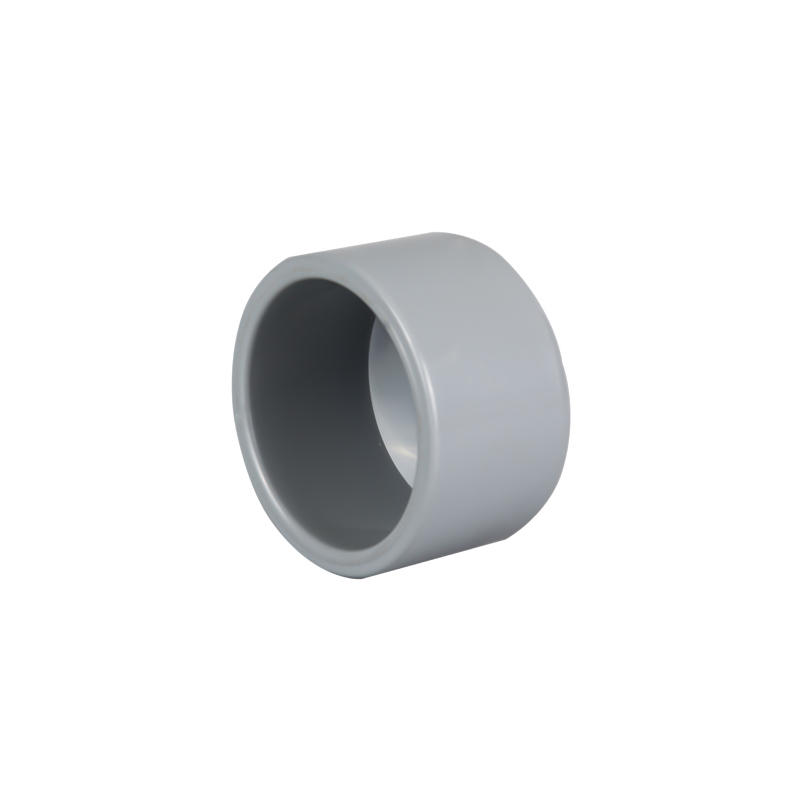
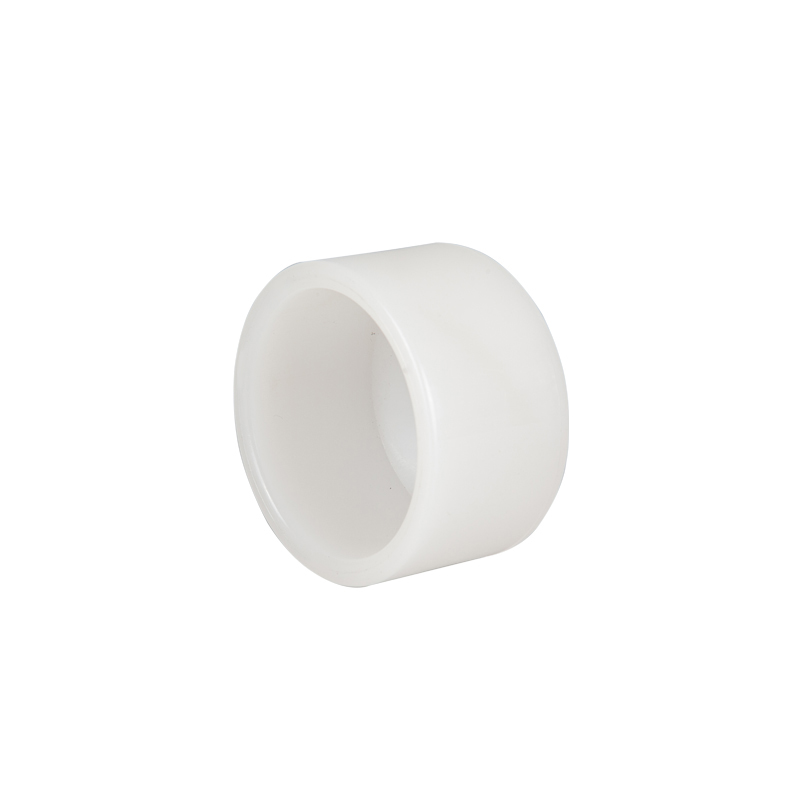
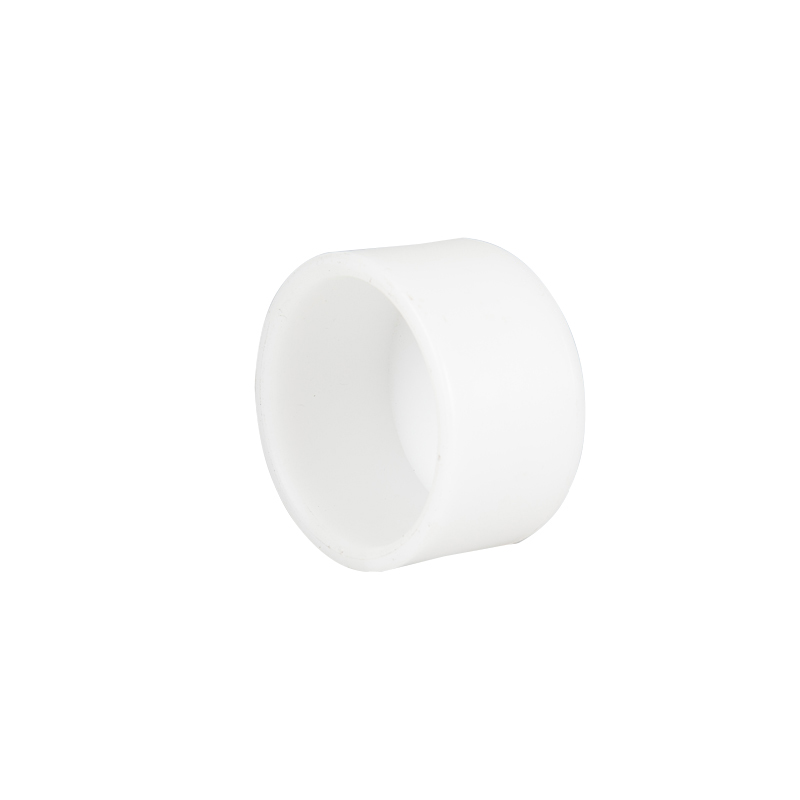
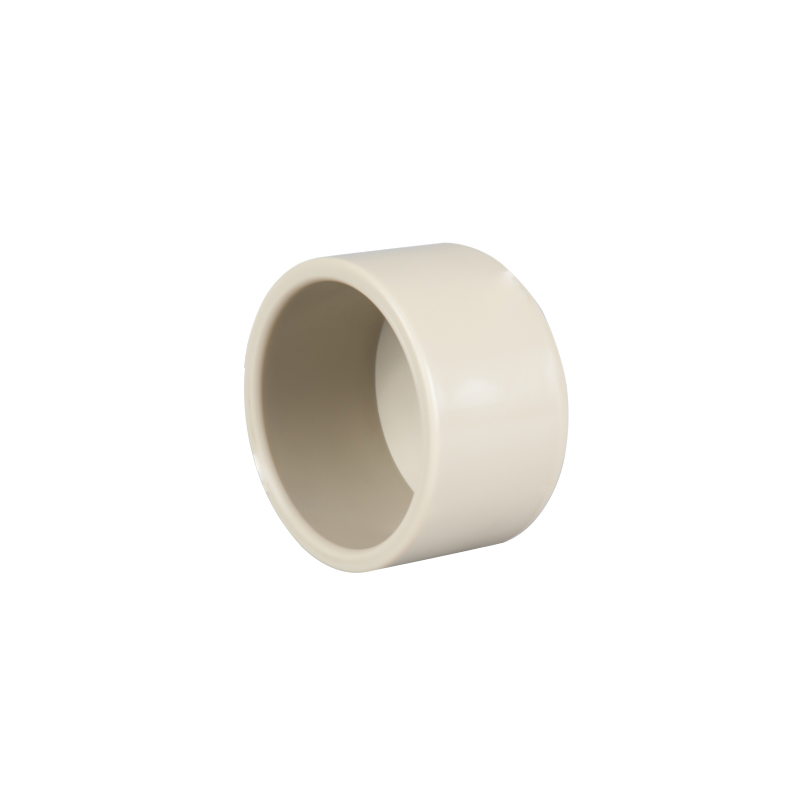
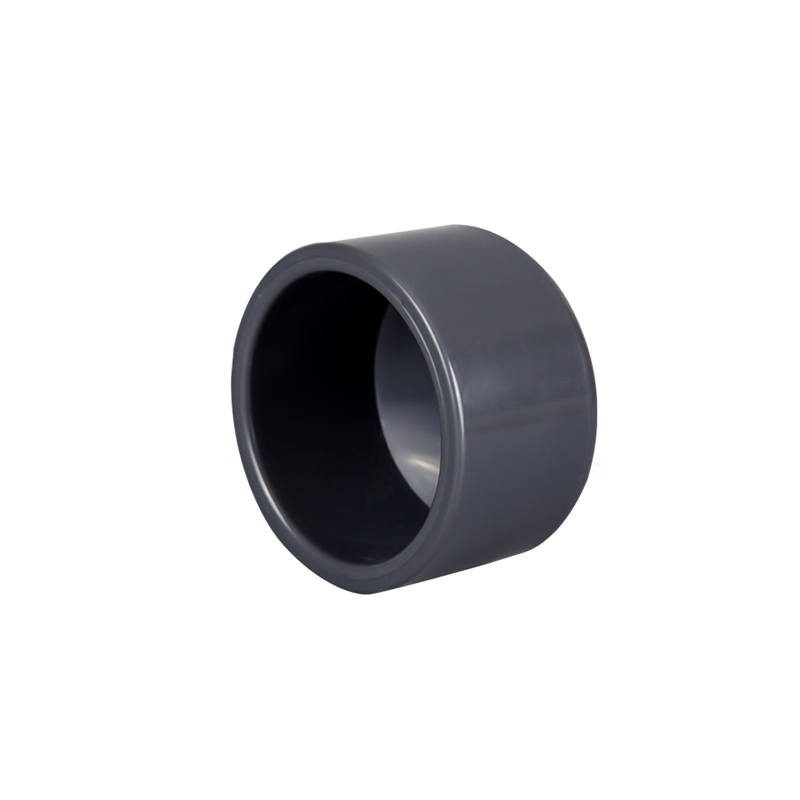
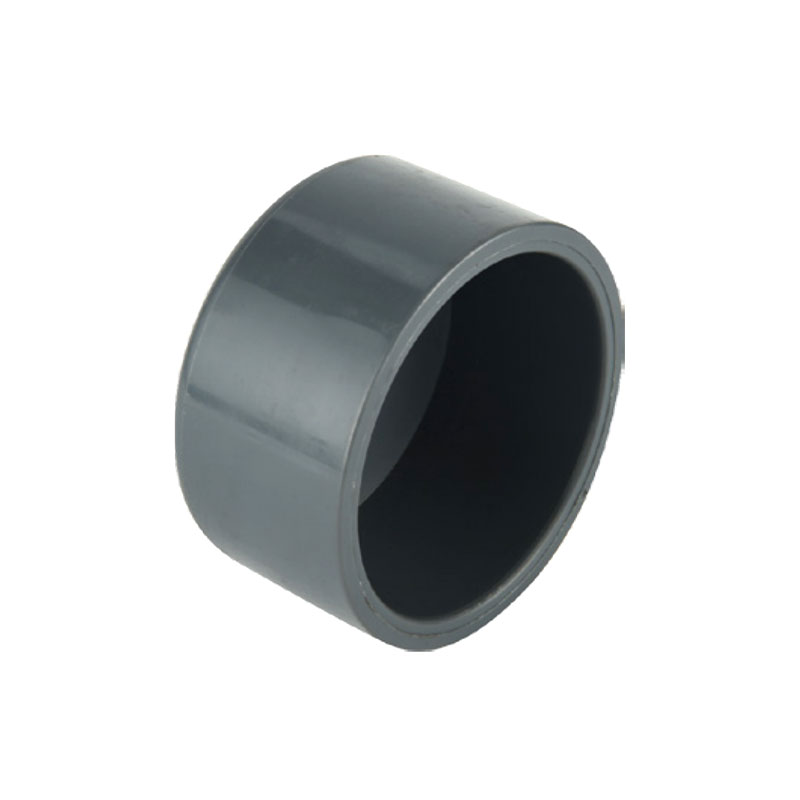
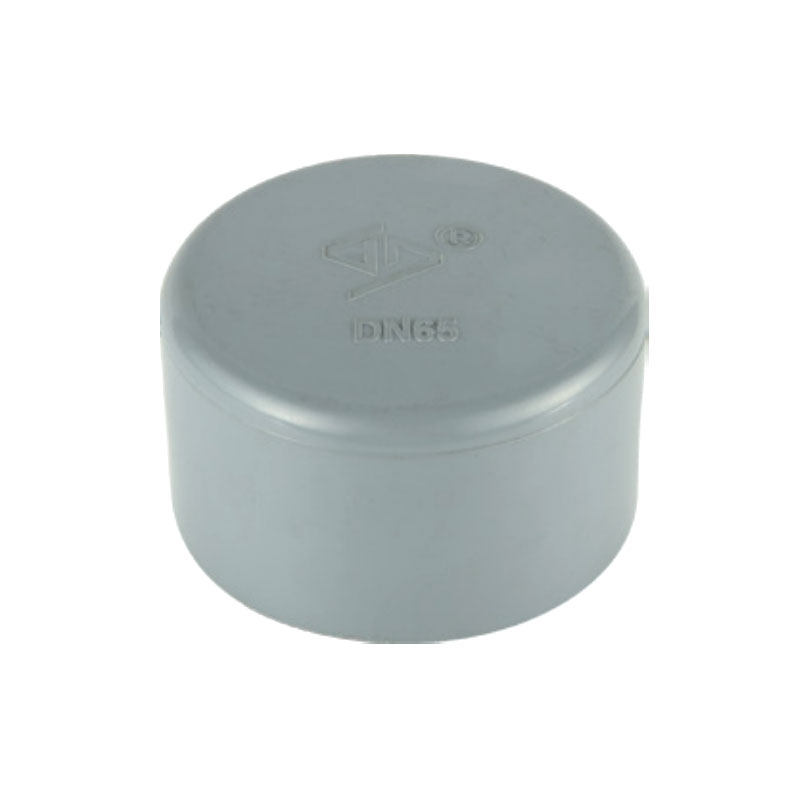
A Plastic Pipe Fitting Cap is mechanically simple, but any capped section beyond the last active flow point becomes a dead leg, and dead legs introduce three specific, well-documented engineering risks independent of the cap fitting's own reliability. These risks should inform where and how a line is capped, not just the fitting's pressure rating, and understanding them changes how a buyer or engineer approaches what might otherwise seem like the most straightforward fitting in the entire product range.
Ningbo Baodi Plastic Valve Co., Ltd. has manufactured industrial thermoplastic piping components since expanding into industrial plastic pipes and fittings in 2006, and has supplied caps for line termination, future-expansion stubs and temporary isolation points across water treatment, chemical processing and general industrial projects for its international distributor and contractor clients, where the dead-leg considerations discussed below have repeatedly informed specification decisions on real installations.
Risk One: Water Quality Degradation
Fluid inside a dead leg does not circulate with the rest of the system. In potable water and process water lines, this stagnation can support microbial growth and allow disinfectant residual to decline over time, since no fresh flow replenishes it. The mechanism behind this risk is straightforward: disinfectant residual, whether chlorine-based or otherwise, is consumed gradually through reaction with organic matter and biofilm that naturally develops on any wetted pipe surface, and in an actively flowing line this consumed residual is continuously replenished from the main supply. In a dead leg, no such replenishment occurs, and residual can decline to a level inadequate to control microbial growth well before it would in an actively circulating section of the same system.
Mitigation: limiting dead-leg length relative to pipe diameter is the most widely applied general guideline, since a shorter dead leg contains a smaller stagnant volume and allows any residual disinfectant present at the time of capping to remain effective for longer relative to the volume it must protect. Where feasible, positioning caps to allow periodic flushing, rather than permanent isolation, provides an active mitigation rather than relying solely on passive length limitation — a capped section with a nearby valve or connection point that allows scheduled flushing avoids the worst of the stagnation risk even where a genuinely dead-end configuration cannot be entirely avoided by the layout.
Risk Two: Sediment Accumulation
Particulates in the fluid settle in a dead-leg section because there is no ongoing flow to maintain suspension — the same mechanism causing sediment buildup in any low-velocity section, concentrated at a point with zero flow. Over time, this accumulated sediment can itself become a secondary problem beyond simple blockage: settled organic material can further support microbial activity, compounding the water-quality risk discussed above, and in some services, settled inorganic sediment can create localized corrosion or degradation conditions at the pipe wall beneath the sediment layer that differ from conditions in the actively flowing portion of the line.
Mitigation: minimizing dead-leg length and, where periodic service is anticipated, locating the cap to allow flushing or draining without major disruption follows the same general approach as the water-quality mitigation above, since the two risks share a common root cause in the absence of active flow and often respond to the same corrective measures.
Risk Three: Temperature Stratification
In hot or cold water systems, a non-circulating dead leg can settle to a different temperature than the actively flowing line, relevant specifically in applications with strict temperature-uniformity requirements — certain process applications, and some regulated environments such as pharmaceutical or food-processing water systems, specify maximum allowable temperature deviation across the system, and an unaddressed dead leg can represent a point of non-compliance even where the actively flowing portion of the system meets specification comfortably.
Mitigation: follows the same length-limiting and flushing-access principles as the risks above; in temperature-critical applications specifically, some designs incorporate a small continuous bleed flow through what would otherwise be a fully dead-end section, trading a modest continuous flow loss for elimination of the stratification risk entirely — a design choice that should be evaluated against the specific temperature-uniformity requirement governing the application rather than applied as a universal default.
Cap Application Classification
| Application |
Connection Method |
Specification Requirement |
| Permanent line termination |
Solvent-cement or fusion cap |
Confirm no future extension is required before committing to a permanent joint |
| Future expansion stub |
Cap positioned for accessibility |
Document on as-built drawings to prevent oversight during later work |
| Temporary isolation for construction/testing |
Threaded or mechanical cap |
Rated for at least the intended test pressure, which can exceed normal operating pressure |
A stub reserved for future expansion should be positioned where it can be reached without disturbing completed work and clearly recorded, since an undocumented stub can be mistaken for a permanent dead end during later construction — this is a documentation and project-management risk layered on top of the physical dead-leg risks discussed above, and it is worth treating as a distinct action item during project handover and as-built documentation review, rather than assuming the original design intent will be self-evident to whoever eventually works on the system years later.
Joint Integrity Independent of Stagnation Risk
Because a cap is often the final point of a pipe run, its joint requires the same preparation and curing/cooling attention as any mid-line connection; a leak at a capped termination is equally disruptive as one elsewhere in the system, and in some respects can be more difficult to detect promptly, since a capped dead-end section is by definition not part of the actively monitored flow path and a slow leak there may go unnoticed longer than a leak on an actively used section where reduced flow or pressure would more quickly draw attention. An unsupported cantilevered cap, particularly on larger pipe sizes, can place bending stress on the joint without adequate nearby support — a mechanical risk independent of the stagnation risks described above, and one that applies regardless of whether the cap serves a permanent, future-expansion, or temporary-testing function.
Caps Used for Hydrostatic Testing: A Separate Set of Considerations
During construction and commissioning, caps are frequently used to seal a line segment temporarily for hydrostatic pressure testing before permanent connections are made elsewhere in the system. In this use, the cap and its joint must be rated for at least the test pressure, which can sometimes meaningfully exceed the system's normal operating pressure — many piping design standards call for a test pressure at some multiple of the operating pressure, commonly in the range of 1.3 to 1.5 times normal operating pressure depending on the applicable code and application, and a cap sized only for normal operating conditions may be inadequately rated for the higher test pressure even though it would perform entirely adequately once the system moves into normal service.
Caps used for temporary isolation during testing should be clearly identified — through tagging, marking, or documentation — so they are not mistaken for a permanent termination during later construction phases, particularly on larger projects where different crews may work on different sections of the same system at different times, and a cap installed by one crew purely for testing purposes could otherwise be assumed by a later crew to be a permanent design feature rather than a temporary test closure awaiting removal and replacement with the final connection.
Common Specification Errors
A frequent error is specifying a permanent bonded or fused cap at a location that later turns out to require future access, resulting in the line needing to be cut rather than simply reopened when the anticipated future connection is finally required — this is precisely the scenario where a removable threaded or mechanical cap, or in some cases a blind flange rather than a cap at all, would have been the more appropriate original specification. Distinguishing between a genuinely permanent termination and a reserved future connection point at the design stage, rather than defaulting to whichever cap type is simplest or most economical in the moment, avoids this costly reclassification later in the project's life.
A second common error is applying a uniform cap specification across an entire project without considering that different capped locations may serve genuinely different functions — some purely permanent, some reserved for future use, and some purely temporary test closures — each of which, per the application classification discussed above, calls for a different connection method and potentially a different pressure rating. Treating cap specification as a single project-wide decision rather than a location-by-location one is a variant of the same specification-consistency error that appears across other fitting categories, and it is avoided by classifying each capped location's actual function individually before finalizing the order.
Ningbo Baodi Plastic Valve Co., Ltd. has supported project buyers in working through exactly this kind of location-by-location cap classification exercise before finalizing a bulk order, an approach informed by the company's broader experience supplying piping fittings across water treatment, chemical processing and general industrial projects since 2006, helping ensure that cap type, connection method and pressure rating are matched correctly to each location's actual function rather than applied as a single blanket specification across a project with genuinely varied requirements at different termination points.
Determining Acceptable Dead-Leg Length
Various industry guidelines and regulatory frameworks, particularly in pharmaceutical, food and beverage, and high-purity water applications, express acceptable dead-leg length as a ratio relative to pipe diameter, commonly expressed as a maximum length-to-diameter (L/D) ratio beyond which the dead leg is considered a water-quality risk requiring mitigation. The specific ratio applied varies by industry, application and governing standard, and buyers working in regulated industries should confirm the applicable ratio for their specific application rather than relying on a general industrial guideline that may be considerably more permissive than what a pharmaceutical or food-grade application actually requires.
For general industrial and municipal water applications without a specific regulatory L/D requirement, the practical guidance remains consistent with the mitigation principles discussed above: shorter is generally better, and where a longer dead leg cannot be avoided due to layout constraints, incorporating flushing access becomes correspondingly more important as the unavoidable dead-leg length increases.
Material Options
PVC caps serve ambient-temperature water systems and general chemical-line terminations, representing the most commonly specified material for standard municipal and general industrial applications. CPVC extends this into hot water and higher-temperature terminations while retaining a broadly similar solvent-cement installation approach to PVC. PP caps, generally fusion-joined, suit acid, alkaline and wastewater terminations, where the fusion joint provides a continuous connection well suited to chemically aggressive service at the line's termination point. PVDF caps serve aggressive chemical and high-purity terminations, frequently specified in specialty chemical and pharmaceutical-adjacent applications where both the dead-leg water-quality considerations discussed above and broad chemical resistance are simultaneously important.
The dead-leg risks described above apply consistently across all four materials, since they result from stagnant fluid behavior rather than pipe material properties — a PVDF cap does not mitigate the water-quality risk of a dead leg any more effectively than a PVC cap would, because the underlying mechanism is about flow and residence time rather than the chemical properties of the pipe wall itself. Ningbo Baodi Plastic Valve Co., Ltd. produces caps across this full material range, supporting projects where the same dead-leg design principles apply regardless of which material has been selected for chemical or temperature compatibility reasons elsewhere in the system.
Procurement Specification
Buyers and contractors should confirm the connection method (solvent socket, fusion spigot or threaded), pressure rating — particularly where the cap will see hydrostatic test pressure above normal operating conditions — and whether the cap should be removable (threaded/mechanical) or permanent (bonded/fused), a decision that should be made deliberately based on the application classification above rather than defaulted to whichever cap type happens to be readily available in stock. For projects in regulated industries, buyers should also confirm the applicable dead-leg length guidance with the appropriate standard or regulatory body before finalizing cap placement in the piping design.
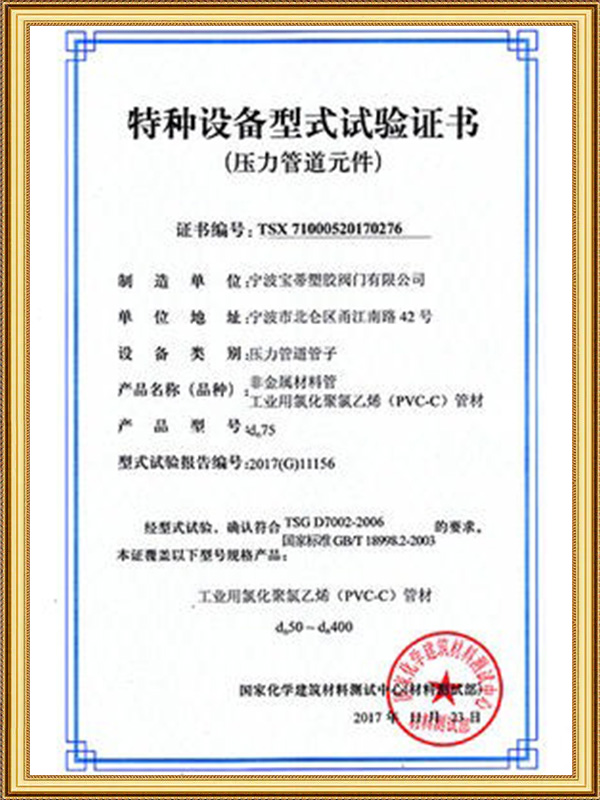
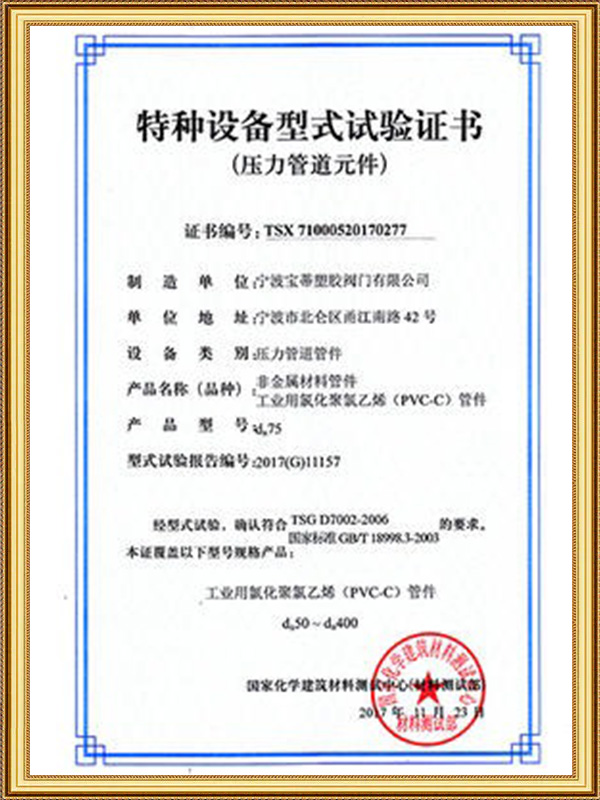
Distributors supplying water treatment and industrial piping contractors typically stock caps across the full range of common pipe sizes, given the frequency of termination points across nearly every project, and Ningbo Baodi Plastic Valve Co., Ltd. exports to more than 60 countries with ISO 9001, ISO 14001 and ISO 45001 certification supporting consistent cap dimensions and joint reliability for both permanent terminations and temporary test closures, drawing on manufacturing experience that spans the company's history since its 1979 founding and its subsequent expansion into a full plastic piping fitting range.