How Do Plastic Blind Flanges Provide Reliable Pipeline Isolation?
Industrial piping systems often include reserved branches, equipment nozzles, test sections and temporarily unused connections. These openings must be closed securely to prevent process leakage, contamination and accidental contact with hazardous fluids. A simple cover may keep out dust, but it may not withstand internal pressure or temperature changes.
Plastic Pipe Fitting Blind Flanges provide a removable method for closing flanged pipe ends, valve outlets, tank nozzles and equipment connections. Unlike an ordinary pipe cap, a blind flange is installed with bolts and a gasket. It becomes part of the system pressure boundary and must remain stable under operating pressure, gasket compression and external piping loads.
The blind flange material, drilling dimensions, gasket type and tightening procedure must match the connected piping system. This is particularly important in chemical processing, water treatment, wastewater handling and industrial fluid-transfer projects.
Ningbo Baodi Plastic Valve Co., Ltd. traces its origins to 1979 and has more than four decades of experience in industrial plastic valves. After expanding into industrial plastic pipes and fittings in 2006, the company developed a broader product range for complete corrosion-resistant piping networks, including components used around flanged isolation points.
Plastic Pipe Fitting Blind Flanges
What Are Plastic Pipe Fitting Blind Flanges?
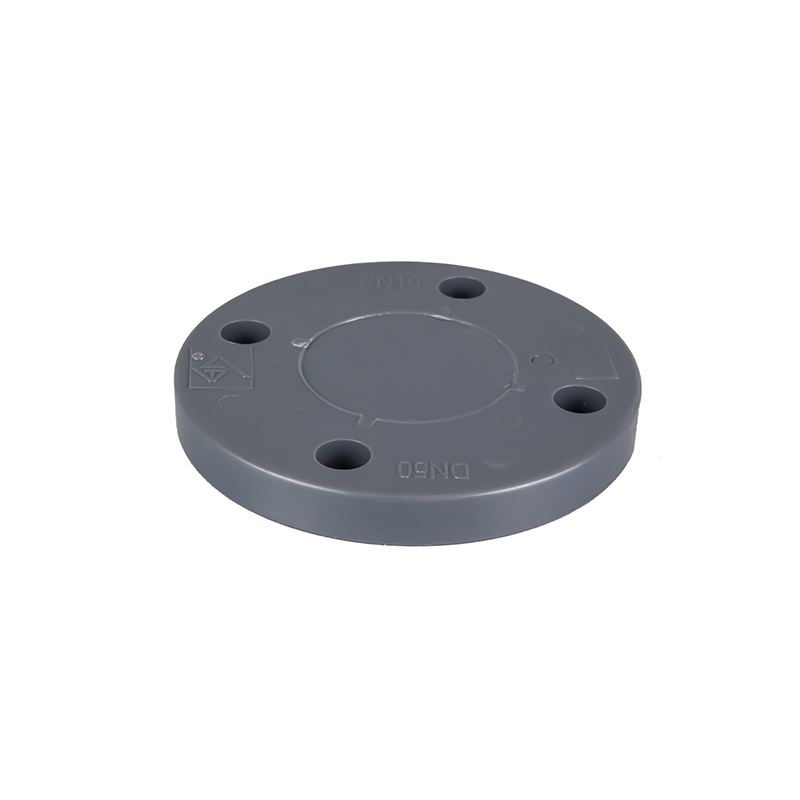
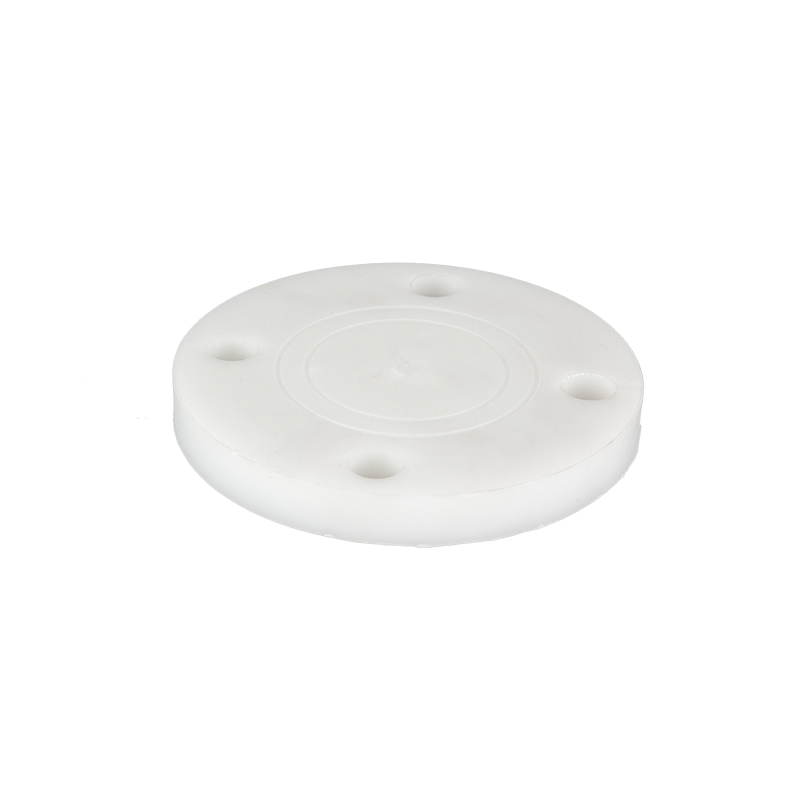
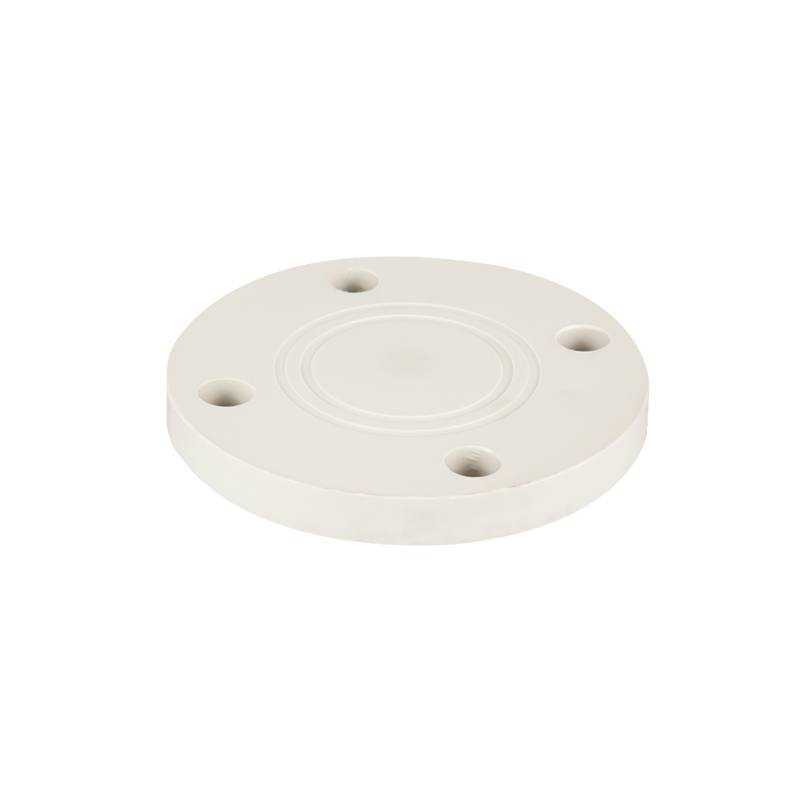
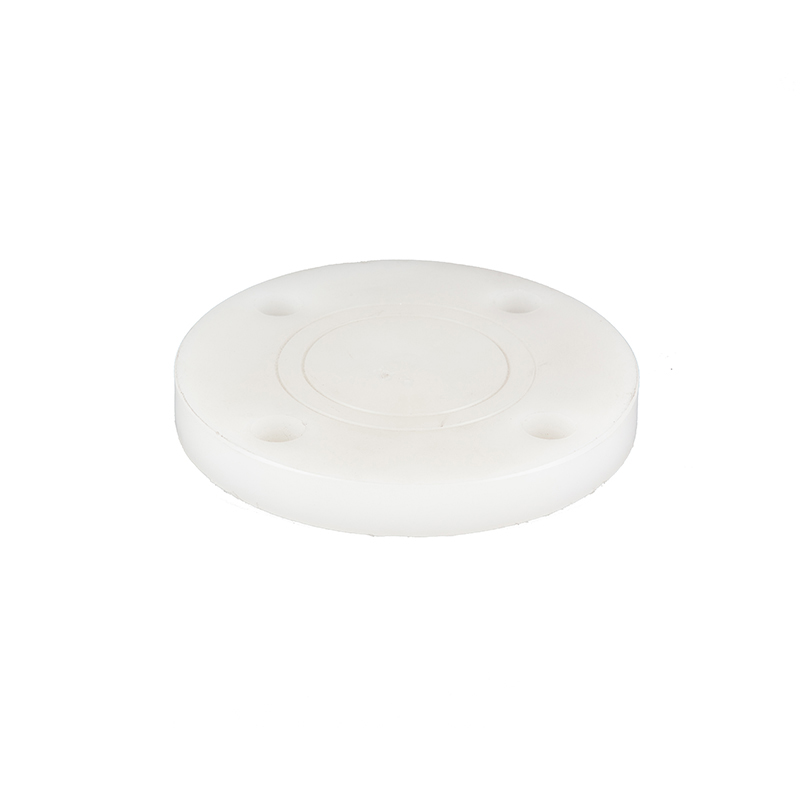
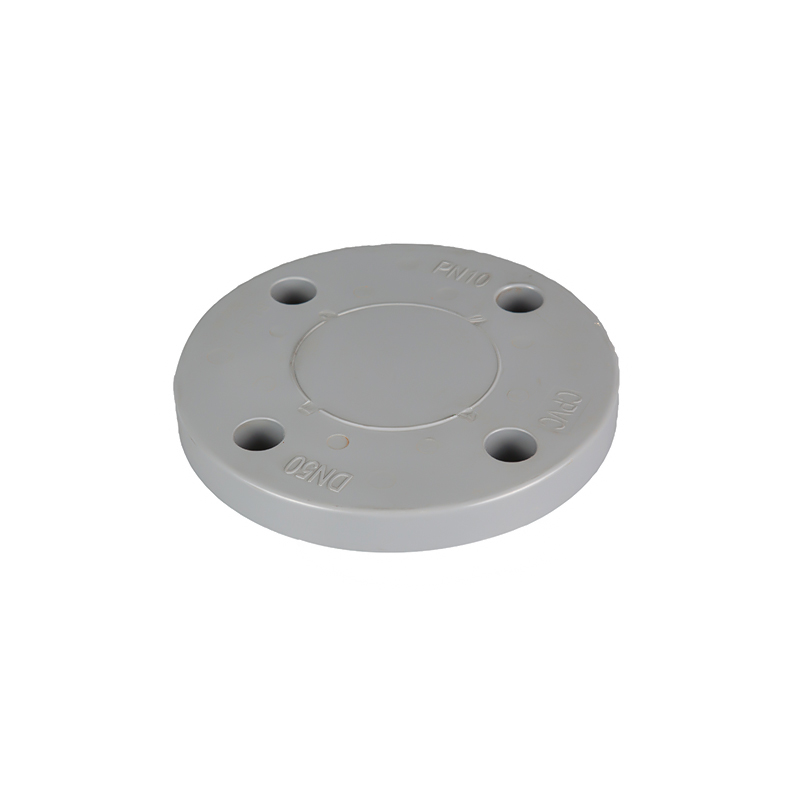
Plastic Pipe Fitting Blind Flanges are solid thermoplastic flanges without a central flow opening. They are bolted to a matching pipe flange, valve flange, tank nozzle or equipment connection to close the fluid passage.
A gasket is placed between the two flange faces. When the bolts are tightened, the gasket is compressed and forms a seal around the closed opening.
Common materials include PVC, CPVC, PP and PVDF. The correct material depends on the process fluid, concentration, pressure, temperature and installation environment.
Pipeline closure: Plastic Pipe Fitting Blind Flanges close unused or temporarily inactive pipe branches.
Equipment isolation: They can close pump, filter, tank and valve connections during maintenance.
Future expansion: A reserved flanged branch can remain sealed until additional equipment is installed.
Pressure testing: Blind flanges can close the ends of pipe sections during hydrostatic testing.
Contamination prevention: They prevent dust, rainwater and foreign materials from entering unused connections.
The main advantage is removability. After the system is depressurized, the flange can be removed and the original opening can be connected to a new pipe, valve or processing unit.
Ningbo Baodi Plastic Valve Co., Ltd. developed from Zhenhai Chemical Valve Factory and Beilun Plastic Valve Factory. Its early work with industrial plastic valves created practical experience in flange sealing, pressure resistance and chemical compatibility, which are also important for Plastic Pipe Fitting Blind Flanges.
Plastic Blind Flanges and Other Pipeline Closure Methods
Blind flanges and pipe caps can both close a pipeline, but they are designed for different installation and maintenance requirements.
A pipe cap is normally attached through solvent cement, fusion or threads. It provides a compact closure, but reopening the pipeline may require cutting or replacing part of the pipe.
A blind flange uses bolts and a gasket. It needs more installation space but can normally be removed without damaging the connected pipeline.
| Closure Method |
Main Advantage |
Main Limitation |
Typical Application |
| Plastic blind flange |
Removable and suitable for pressure isolation |
Requires bolts, gasket and working space |
Reserved branches, testing and equipment isolation |
| Socket cap |
Compact and simple |
Removal may require pipe cutting |
Permanent PVC or CPVC closure |
| Fusion cap |
Strong continuous closure |
Requires fusion equipment and is difficult to remove |
Permanent PP or PVDF pipe ends |
| Threaded plug |
Convenient for small ports |
Thread stress and leakage risk |
Drain and instrument connections |
| Blind plate between flanges |
Can isolate an existing flanged line |
Requires a suitable plate and gasket arrangement |
Maintenance isolation |
Plastic Pipe Fitting Blind Flanges are generally preferred when an interface may need to be reopened, inspected or expanded. The closure method should be selected according to system pressure, fluid risk, dismantling frequency and available maintenance space rather than purchase price alone.
How Does a Plastic Blind Flange Seal a Pipeline?
Internal Pressure Force
When the piping system is pressurized, the process fluid pushes directly against the solid center of the blind flange.
The total axial force increases with both pressure and flange diameter. A large-diameter flange can therefore experience substantial loading even when the operating pressure appears moderate.
The flange thickness, material strength and bolt arrangement must resist this force without excessive bending or permanent deformation.
An ordinary plastic sheet should not be cut into a circle and used as a pressure blind. Industrial Plastic Pipe Fitting Blind Flanges require suitable thickness, drilling geometry and pressure performance.
Gasket Compression
The gasket sits between the blind flange and the mating flange. Bolt tightening compresses the gasket and fills minor irregularities on the sealing surfaces.
Insufficient compression can leave leakage paths. Excessive compression can deform the plastic flange, damage the gasket or reduce long-term sealing reliability.
The gasket should remain centered and should not extend into an area where it interferes with the intended sealing face.
Bolt Load Distribution
Several bolts share the total clamping load. If one side is tightened completely before the opposite side, the flange can tilt and compress the gasket unevenly.
A cross-pattern tightening sequence distributes the load more uniformly. Larger Plastic Pipe Fitting Blind Flanges may require several tightening stages.
Flange Alignment
The blind flange and mating flange should be parallel before tightening. Bolts should not be used to pull a misaligned pipe or equipment nozzle into position.
Forced alignment can create continuous bending stress, leading to flange warping, cracks around bolt holes and repeated gasket leakage.
Ningbo Baodi Plastic Valve Co., Ltd. invented a one-piece flange ball valve in 1992, a structure that became widely used in chemical-related industries. This development reflects the importance of integrated flange strength and controlled sealing in industrial plastic piping.
Main Structural Features of Plastic Pipe Fitting Blind Flanges
Solid Central Section
The center has no flow opening and receives the direct pressure load from the process medium.
Its thickness and geometry influence how much the flange bends under pressure. Excessive center deflection can reduce gasket compression around the sealing area.
Bolt Circle
The bolt holes are arranged around a defined pitch circle. The number of holes, hole diameter and bolt-circle diameter must match the mating flange.
Similar outside diameters do not confirm compatibility. Field enlargement of bolt holes may weaken the flange and should be avoided.
Sealing Face
Many plastic blind flanges use a flat sealing face. The surface should be clean, level and free from deep scratches.
Damage in the gasket-contact area may create a direct leakage path.
Outer Edge
The outer edge carries bolt loads and helps maintain flange stiffness. Larger products may require increased thickness or reinforced geometry.
Impacts around the edge and bolt holes should be avoided during handling and transportation.
Product Identification
Clear identification helps prevent installation errors. Useful markings include material, nominal size, pressure class and flange standard.
This information is particularly important for distributors and industrial buyers storing several sizes and materials in the same warehouse.
Materials Used for Plastic Pipe Fitting Blind Flanges
PVC Blind Flanges
PVC Plastic Pipe Fitting Blind Flanges are commonly used in ambient-temperature water treatment and selected chemical systems.
PVC offers relatively low weight and resistance to many acids, alkalis and salt solutions. Its main limitations are elevated temperature and incompatibility with certain organic solvents.
The allowable pressure normally decreases as operating temperature rises.
CPVC Blind Flanges
CPVC provides improved temperature capability compared with standard PVC. It can be used in selected hot-water lines and industrial chemical systems.
The blind flange should be coordinated with CPVC pipes, valves, mating flanges and compatible gasket materials.
Ningbo Baodi Plastic Valve Co., Ltd. became one of the early domestic enterprises to apply CPVC in industrial-grade piping valves after expanding its pipe and fitting range in 2006.
PP Blind Flanges
PP is suitable for many acid, alkaline and wastewater applications. Its low density makes larger flanges easier to handle.
Flange stiffness and pressure derating should be reviewed at elevated temperature. Large PP blind flanges may require careful bolt loading and additional support.
PVDF Blind Flanges
PVDF is selected for aggressive chemicals and selected high-purity fluids. It provides broad chemical resistance and useful temperature performance.
Clean handling, material traceability and suitable gasket selection are particularly important in high-purity applications.
Material Comparison
| Parameter |
PVC |
CPVC |
PP |
PVDF |
| Temperature capability |
Moderate |
Higher than PVC |
Moderate |
Relatively high |
| Chemical resistance |
Suitable for many general chemicals |
Suitable for many chemicals at elevated temperature |
Strong resistance to many acids and alkalis |
Broad resistance to aggressive chemicals |
| Typical application |
Water treatment and general chemical piping |
Hot water and selected chemical service |
Wastewater and acid-alkali systems |
High-purity and demanding chemical service |
| Installation weight |
Low |
Low |
Very low |
Low |
| Main limitation |
Temperature and solvent restrictions |
Requires complete CPVC compatibility |
Pressure derating and flange stiffness |
Higher installation requirements |
The correct material should be selected according to the full operating condition. A more expensive material is not automatically the most suitable choice for every pipeline.
Flange Dimensions and Drilling Standards
Nominal Diameter
Nominal diameter identifies the general pipe size but does not provide enough information to confirm flange compatibility.
Two blind flanges with the same nominal size may follow different drilling standards.
Outside Diameter
The flange outside diameter affects equipment clearance, bolt placement and handling space.
Large Plastic Pipe Fitting Blind Flanges require enough room for installation tools and future removal.
Bolt-Hole Quantity and Diameter
The number and diameter of bolt holes must match the mating flange.
An incorrect hole size may prevent assembly or create poor load distribution around the fastener.
Bolt-Circle Diameter
The bolt-circle diameter determines the location of every bolt hole. Different flange systems may use different pitch circles for the same nominal pipe size.
Flange Thickness
Thickness affects pressure resistance and rigidity. Buyers should confirm whether the stated dimension applies to the complete flange or only to the central section.
Ningbo Baodi Plastic Valve Co., Ltd. exports industrial thermoplastic products to more than 60 countries. Because dimensional practices vary by market, project documents should clearly state flange standard, pressure class and drilling dimensions before production.
Gasket Structures and Sealing Arrangements
Full-Face Gasket
A full-face gasket covers most of the flange face and normally includes openings for the bolts.
It can help distribute compression over a larger area, which is useful for many plastic flange structures.
Inner-Ring Gasket
An inner-ring gasket covers only the central sealing area inside the bolt circle.
It uses less material but requires accurate alignment and suitable flange-face stiffness.
O-Ring Seal
Some specialized flange designs use an O-ring installed in a machined groove.
The O-ring dimensions must match the groove. A flat gasket should not replace a specifically designed O-ring seal without engineering confirmation.
Gasket Thickness
A gasket that is too thin may not compensate for minor surface irregularities. A gasket that is too thick may creep, extrude or lose compression.
The selection should balance chemical resistance, compressibility and flange stiffness.
Gasket Material Selection
EPDM Gaskets
EPDM is widely used with water and many water-based chemical solutions. It performs well in many alkaline environments but is generally unsuitable for petroleum oils.
FKM Gaskets
FKM provides resistance to many oils and industrial chemicals. It can be suitable for some higher-temperature applications but is not compatible with every strong alkaline fluid.
NBR Gaskets
NBR is commonly used with oil, compressed air and selected industrial fluids. Its resistance to strong oxidizing chemicals is limited.
PTFE Gaskets
PTFE offers broad chemical resistance and is often selected for corrosive process media.
It requires controlled compression because long-term creep can reduce gasket loading.
Gasket Comparison
| Gasket Material |
Main Strength |
Typical Application |
Main Limitation |
| EPDM |
Water and alkaline resistance |
Water treatment and selected chemicals |
Generally unsuitable for petroleum oils |
| FKM |
Resistance to many oils and chemicals |
Oil and selected chemical systems |
Not suitable for every alkaline fluid |
| NBR |
Oil resistance |
Air, oil and industrial fluids |
Limited resistance to oxidizing chemicals |
| PTFE |
Broad chemical resistance |
Corrosive chemical isolation |
Requires controlled compression |
Ningbo Baodi Plastic Valve Co., Ltd. has served tens of thousands of enterprises in domestic and international markets. Practical experience shows that many flange leaks are related to gasket selection rather than the main plastic component.
Pressure Rating and Blind-Flange Loading
Plastic Pipe Fitting Blind Flanges must be selected for the actual combination of pressure and temperature.
The total force on the blind flange increases with the closed area. A large flange can therefore experience high axial loading even in a moderate-pressure system.
Normal operating pressure: The flange must withstand continuous process conditions.
Maximum pump pressure: Pump shut-off pressure may exceed normal operating pressure.
Pressure surge: Rapid valve movement can create temporary pressure peaks.
Cleaning pressure: Flushing and cleaning may expose the connection to different operating conditions.
Hydrostatic test pressure: The flange and all connected components must be suitable for the planned test.
Vacuum conditions: Negative pressure may also require structural evaluation.
The blind flange, mating flange, gasket, bolts and connected pipe must all satisfy the requirement. The lowest-rated component determines the system limit.
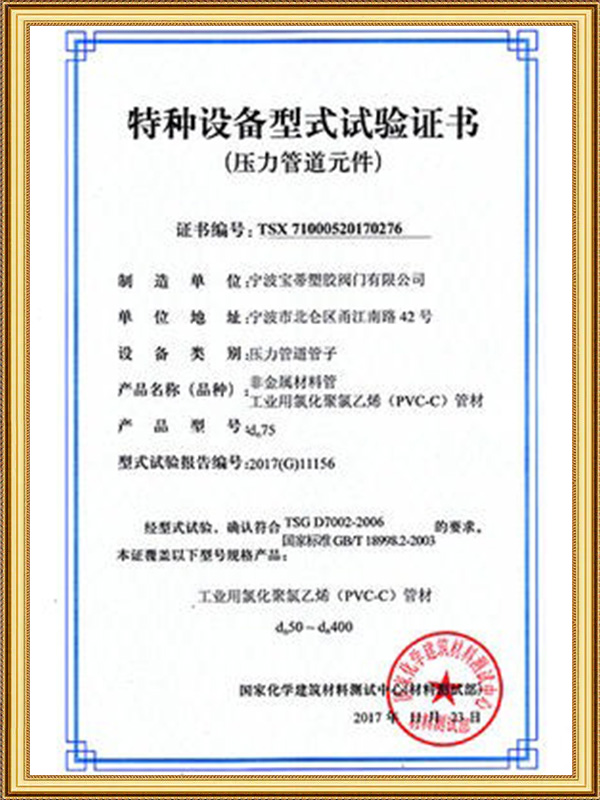
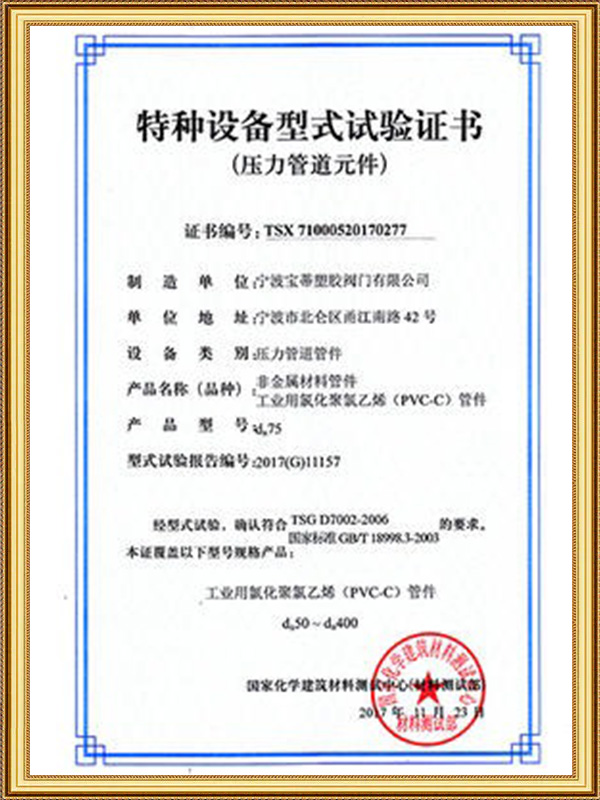
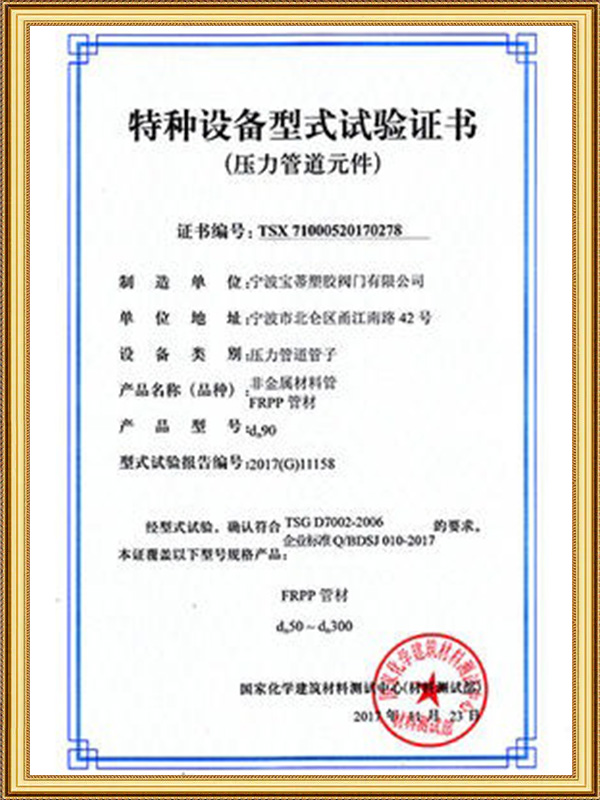
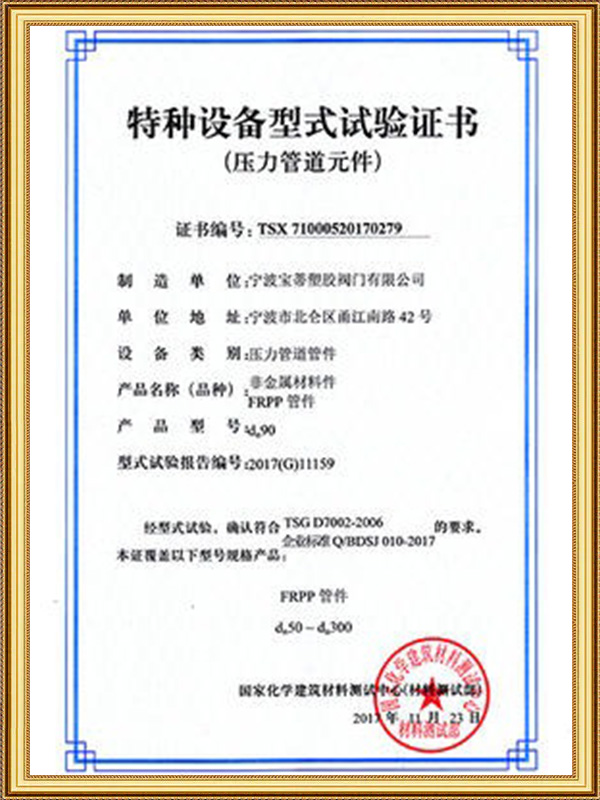
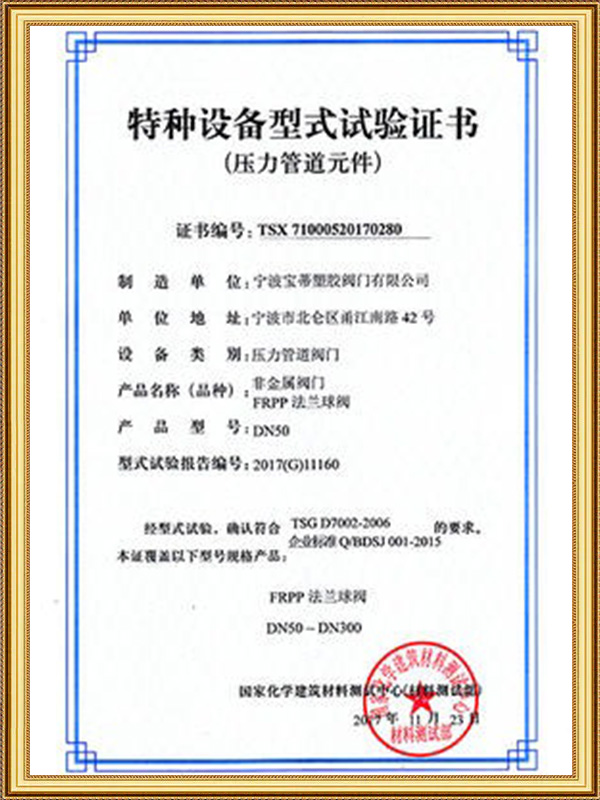
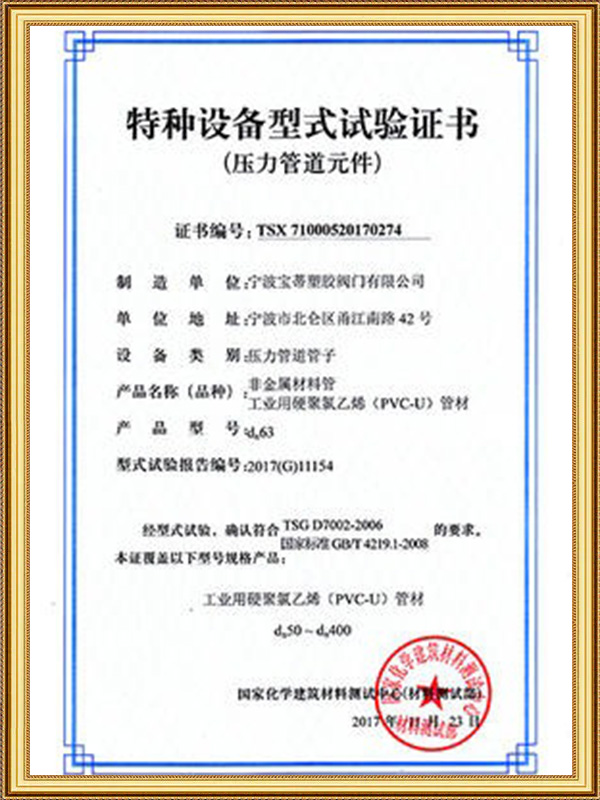
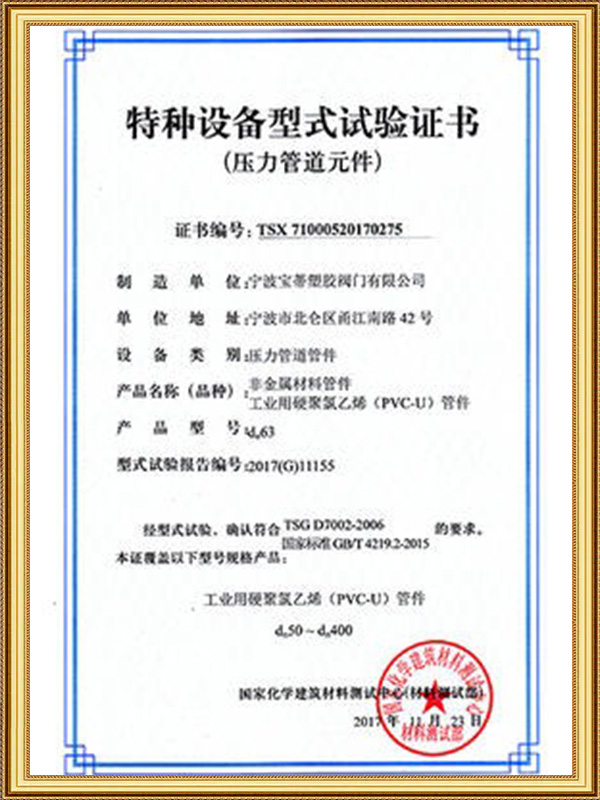
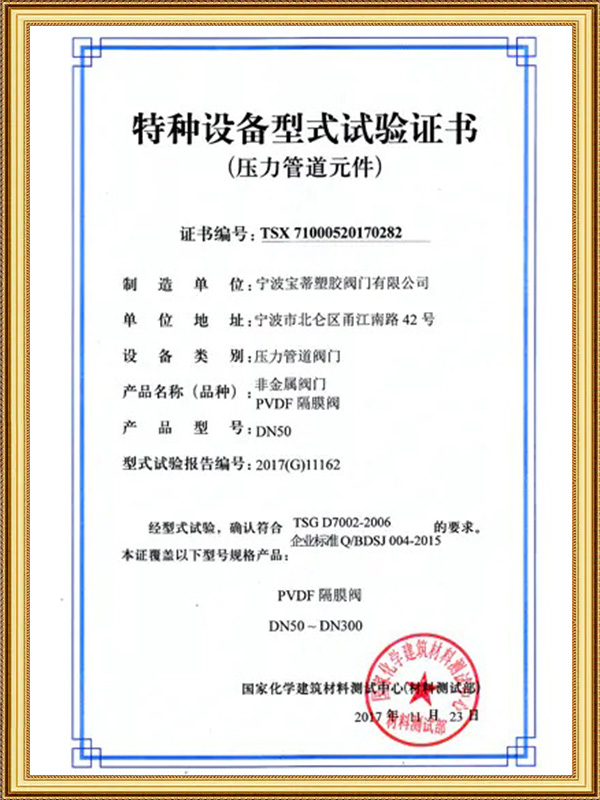
Ningbo Baodi Plastic Valve Co., Ltd. holds a national special equipment pressure piping component manufacturing license, reflecting the importance of controlled pressure performance and dimensional consistency.
Temperature Derating and Long-Term Plastic Creep
Thermoplastic materials lose stiffness and pressure capability as temperature rises.
A Plastic Pipe Fitting Blind Flange rated for a specific pressure at ambient temperature may require a lower allowable pressure in hot service.
Temperature also affects the gasket. Elastomeric materials may soften, harden or develop permanent compression set.
Plastic creep is another concern. Under continuous bolt and pressure loading, the flange may gradually deform.
This can reduce gasket compression and contribute to long-term leakage. Where required, the connection condition may be inspected after the initial operating period.
Temperature evaluation should include normal process temperature, equipment start-up, shutdown, hot cleaning, outdoor exposure and seasonal changes.
Temporary and Permanent Pipeline Isolation
Temporary Isolation
Plastic Pipe Fitting Blind Flanges are often installed during maintenance, equipment replacement and pipeline modification.
They allow an interface to be closed and later reopened without cutting the pipe.
Before removal, the system must be depressurized, drained and cleaned. Residual pressure behind a blind flange can create serious operating risk.
Permanent Closure
A blind flange can also close a branch for an extended period.
Long-term closure does not remove the need for inspection. The connection may still experience pressure, temperature cycling, ultraviolet exposure and bolt corrosion.
Future Expansion Points
Blind flanges are useful for planned expansion. A reserved interface can later connect to a tank, valve or processing unit.
The original material, size, drilling pattern and pressure class should remain documented.
Plastic Blind Flanges for Hydrostatic Testing
Plastic Pipe Fitting Blind Flanges can close pipe ends during hydrostatic pressure testing.
The blind flange, gasket, bolts and mating flange must all be rated for the test pressure. The test condition should not be selected from the pipe rating alone.
The system should be filled slowly with the approved test liquid. Air must be released from high points because trapped compressed air increases testing risk.
Pressure should be raised in controlled stages. During each stage, inspectors should check for gasket leakage, bolt movement, flange separation, center bulging and support displacement.
Pressure gauges, filling points, vents and drains should be planned before testing.
Drilling an unapproved hole through the center of the blind flange for a pressure gauge can weaken the structure. Test ports should use properly designed connections.
After testing, the system must be fully depressurized before any bolts are loosened.
Installation Guidelines for Plastic Pipe Fitting Blind Flanges
Inspect the Flange
Check the fitting for cracks, warping, deep scratches and damage around the bolt holes.
Confirm the material, nominal size, pressure class and drilling standard.
Check the Gasket
The gasket should match the process medium, temperature and flange structure.
It should be clean, undamaged and correctly sized.
Align the Flange Faces
The two flange faces should be parallel and naturally aligned before the bolts are tightened.
Bolts should not be used to pull an offset pipe or equipment nozzle into position.
Install Bolts and Washers
Bolts, nuts and washers should have suitable dimensions and environmental resistance.
Washers help distribute load across the plastic surface and reduce local damage around bolt holes.
Tighten Gradually
All bolts should first be installed loosely. Tightening should then proceed in a cross pattern and in several stages.
One bolt should not be fully tightened while the opposite side remains loose.
Complete the Final Inspection
Check that the gasket has not shifted and that the flange gap is reasonably uniform.
The Plastic Pipe Fitting Blind Flange should not show visible warping after installation.
Ningbo Baodi Plastic Valve Co., Ltd. has obtained ISO 9001, ISO 14001 and ISO 45001 certifications. Controlled manufacturing supports product consistency, while correct installation determines actual sealing performance.
Pipe Supports and External Loads
A blind flange closes a pipeline but should not act as the primary support for a long pipe section.
The pipe near the closed end should be supported to prevent excessive bending moment at the flange connection.
Large Plastic Pipe Fitting Blind Flanges may require additional support during installation and removal. Workers should not rely only on the bolts to hold the flange while aligning it.
Thermal expansion can push or pull the connection if supports and anchors are not arranged correctly.
Blind ends near walkways, construction zones or moving equipment may also require protection against impact.
Common Problems with Plastic Pipe Fitting Blind Flanges
Gasket Leakage
Possible causes: Incompatible gasket, incorrect gasket dimensions, contaminated sealing faces, insufficient compression or flange misalignment.
Flange Warping
Possible causes: Excessive bolt force, uneven tightening, elevated temperature or insufficient flange stiffness.
Cracks Around Bolt Holes
Possible causes: Concentrated bolt loads, missing washers, incorrect hole alignment, impact or external bending force.
Repeated Bolt Loosening
Possible causes: Temperature cycling, plastic creep, vibration and uneven initial loading.
Center Bulging
Possible causes: Excessive pressure, high temperature, inadequate thickness or use of an unsuitable non-pressure plate.
A visibly damaged blind flange should normally be replaced rather than returned to pressure service without evaluation.
Purchasing Considerations for Industrial Buyers
Material Confirmation
Procurement teams should specify PVC, CPVC, PP or PVDF and provide the fluid, concentration, pressure and temperature.
Material should not be identified only by color or appearance.
Dimensional Documentation
Buyers should confirm the outside diameter, thickness, bolt-hole quantity, bolt-hole diameter, bolt-circle diameter, flange standard and pressure class.
An approved drawing or sample can reduce risk before bulk production.
Pressure and Temperature Data
Quotations should clearly distinguish products with different pressure and temperature capabilities.
Products of the same nominal size may not have the same thickness or pressure class.
Batch Consistency
For project orders and distributor inventory, drilling accuracy and thickness should remain consistent between production batches.
Stable dimensions reduce site modification and installation delays.
Gasket and Bolt Requirements
Purchasers should confirm whether gaskets, bolts and washers are included or supplied separately.
Required materials and dimensions should be recorded in the purchasing specification.
Packaging
The sealing face and outer edge should be protected from scratches and impact.
Large Plastic Pipe Fitting Blind Flanges should be stored flat or properly supported to reduce deformation.
Complete-System Coordination
Projects benefit when pipes, valves, flanges and related fittings come from compatible product ranges.
Ningbo Baodi Plastic Valve Co., Ltd. ranks among manufacturers with broad industrial thermoplastic valve and piping categories. Its products serve tens of thousands of enterprises and are exported to more than 60 countries, supporting project buyers, distributors and engineering contractors that need coordinated specifications and repeat supply.
Inspection, Maintenance and Reuse
Routine inspection should cover leakage, discoloration, cracks, warping and gasket extrusion.
Bolt holes and outer edges should be checked for local damage. Fasteners should be inspected for corrosion and thread wear.
A connection should not be casually retightened while pressurized. The operating procedure should define whether tightening is allowed and under what conditions.
After removal, the gasket should be inspected for permanent compression, swelling, hardening and chemical degradation.
Before reusing a blind flange, check the sealing face, center flatness and bolt-hole condition.
Maintenance records should include the installation location, process medium, pressure, temperature, gasket material, installation date and leakage history.
Typical Applications of Plastic Pipe Fitting Blind Flanges
Chemical Processing
Plastic Pipe Fitting Blind Flanges close unused chemical branches, reactor connections and maintenance interfaces.
Material and gasket compatibility are the main selection concerns.
Water Treatment
They are used around filtration, dosing, backwash and future expansion pipelines.
They can also close pipe sections during testing and equipment replacement.
Wastewater Treatment
Plastic blind flanges isolate corrosive wastewater branches and unused equipment nozzles.
Deposits and cleaning requirements should be considered before removal.
Tank and Vessel Connections
They close unused tank nozzles while preserving the option for later connection.
The nozzle and blind flange should not carry excessive external piping loads.
Pump and Filter Stations
During equipment removal, a blind flange can temporarily close the remaining flanged pipeline.
The system must be fully depressurized before installation or removal.
Industrial Test Lines
Plastic blind flanges close hydrostatic test sections, flushing lines and temporary process branches.
Suitable vents and drains should be provided.
Frequently Asked Questions About Plastic Pipe Fitting Blind Flanges
What Are Plastic Pipe Fitting Blind Flanges Used For?
They close flanged pipe ends, tank nozzles, valve outlets and reserved equipment connections. They can be used for isolation, maintenance and pressure testing.
Is a Blind Flange the Same as a Pipe Cap?
No. A blind flange uses bolts and a gasket and can normally be removed. A pipe cap is usually bonded, fused or threaded directly to the pipe.
Can Plastic Blind Flanges Handle Pressure?
Industrial-grade products can handle pressure within their specified material and temperature limits. The flange, gasket, bolts and mating connection must all be compatible.
Why Does a Blind Flange Leak?
Common causes include gasket mismatch, flange misalignment, contaminated sealing surfaces, uneven bolt loading and material deformation.
Can Plastic Pipe Fitting Blind Flanges Be Used for Hydrostatic Testing?
Yes, provided the test pressure does not exceed the allowable rating of the blind flange or any connected component.
Which Gasket Should Be Used?
The gasket should be selected according to the fluid, concentration, pressure, temperature and flange design. Common options include EPDM, FKM, NBR and PTFE.
Can Metal Bolts Be Used with Plastic Blind Flanges?
Suitable metal bolts can be used. Washers and controlled tightening help distribute load and protect the plastic surface.
Why Do Cracks Appear Around Bolt Holes?
Common causes include excessive tightening, incorrect hole alignment, missing washers, impact and continuous bending loads.
Can Different Flange Standards Be Connected?
They should not be forced together. The outside diameter, bolt-circle diameter, hole quantity and sealing face must match.
Can a Blind Flange Be Reused?
It may be reused when the sealing face remains flat and free from cracks, chemical degradation and excessive deformation.
Does a Large Blind Flange Need Additional Support?
Large products may require support during installation and service. The connected pipe should also be supported so excessive bending does not reach the flange.
What Information Should Buyers Provide Before Ordering?
Required information includes material, fluid, concentration, temperature, pressure, nominal size, flange standard, bolt-hole details, gasket requirement, quantity, packaging and technical-document requirements.