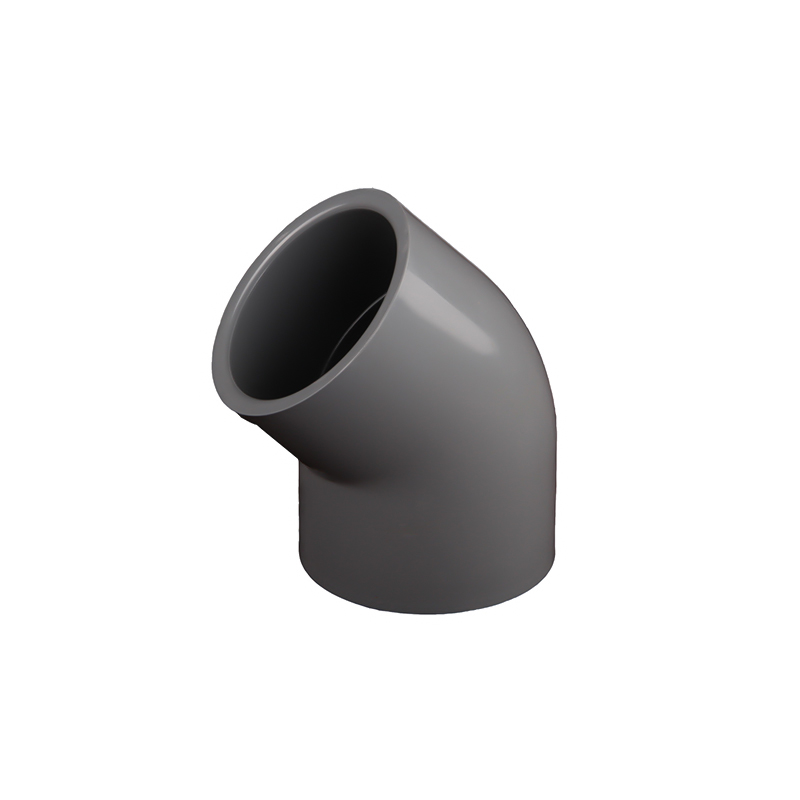
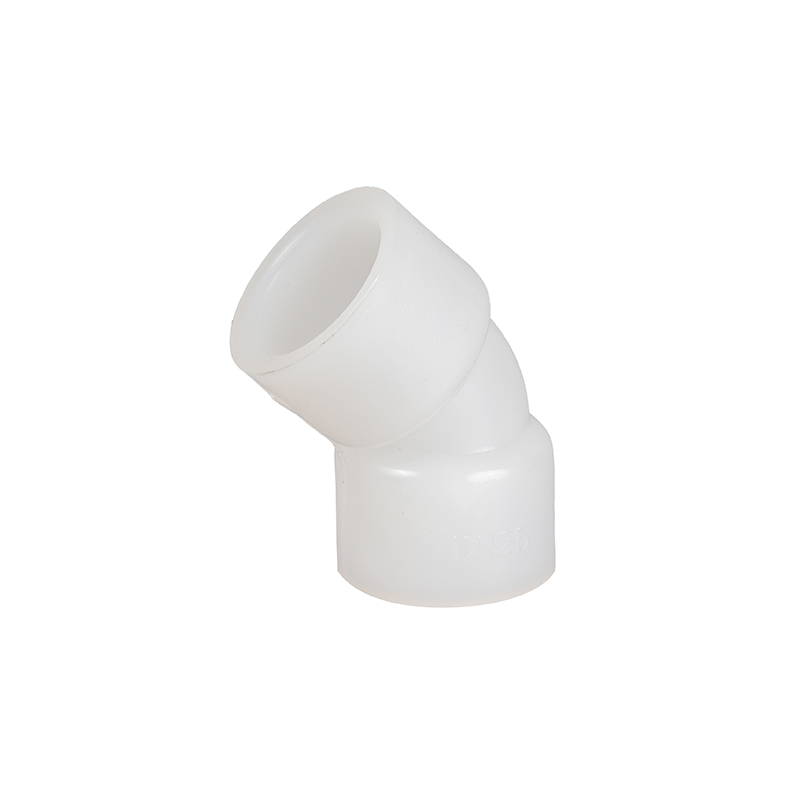
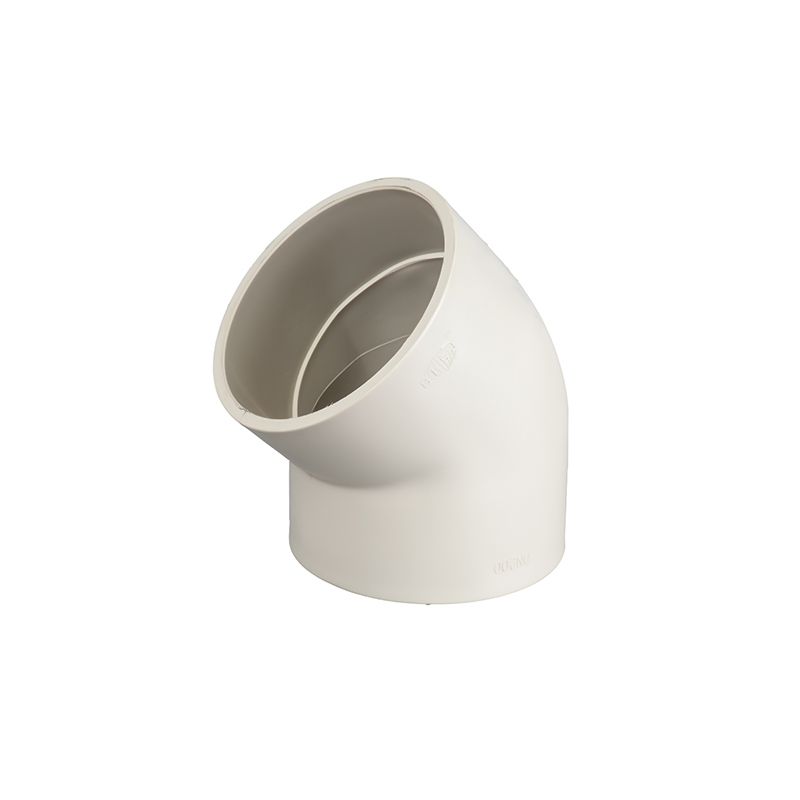
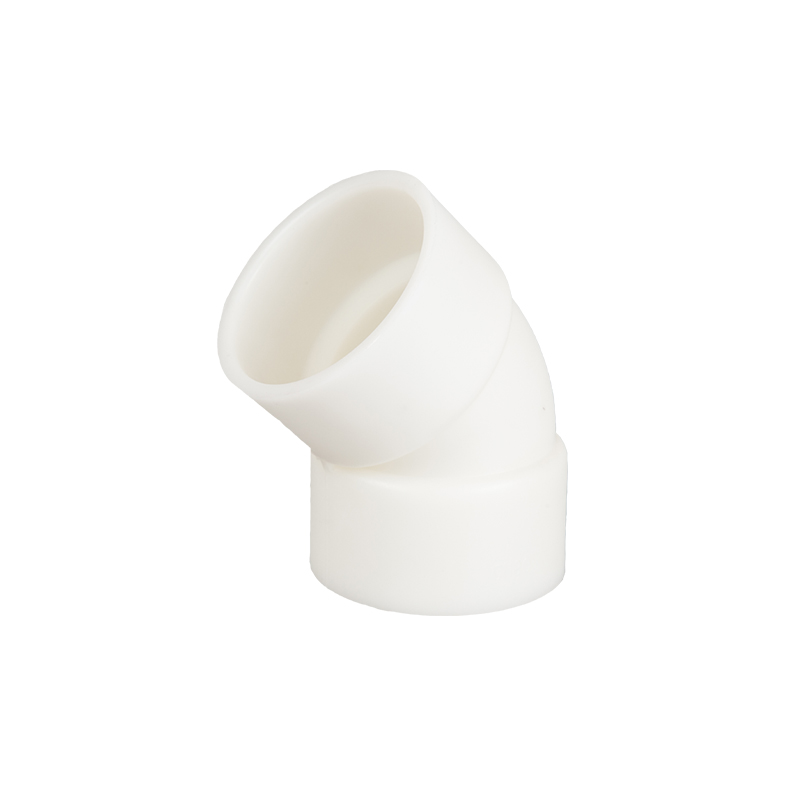
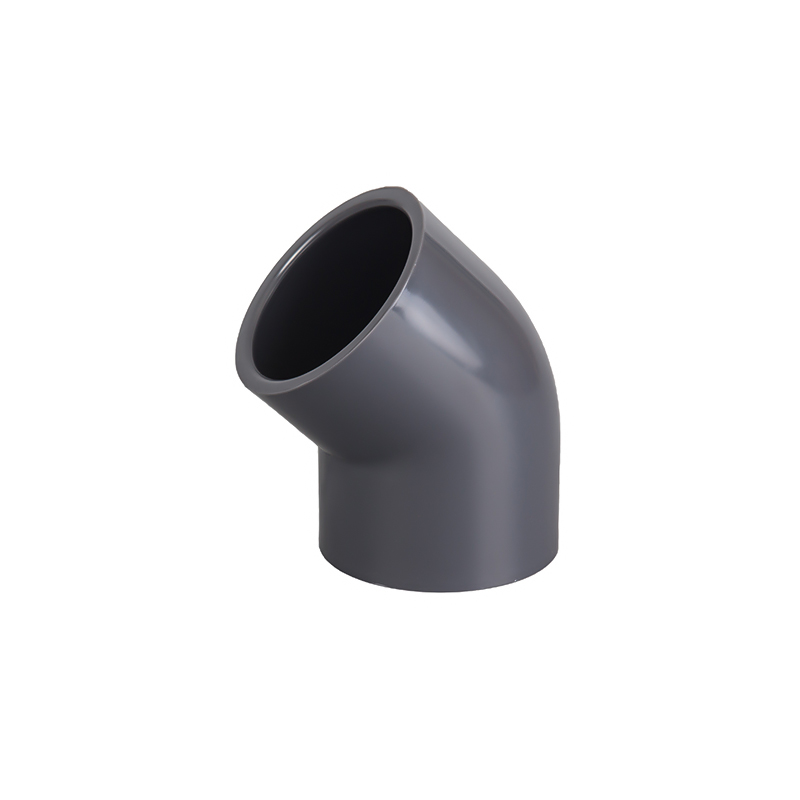
A Plastic Pipe Fitting 45°Elbow serves three distinct engineering functions that a 90° elbow does not handle as effectively: gradient control in gravity drainage, offset routing around obstructions without a sharp turbulence point, and cumulative pressure-loss reduction across multi-turn systems. Each function has its own technical requirements, and specifying a 45° elbow correctly means understanding which of these three functions the fitting is actually being asked to perform at that specific point in the layout.
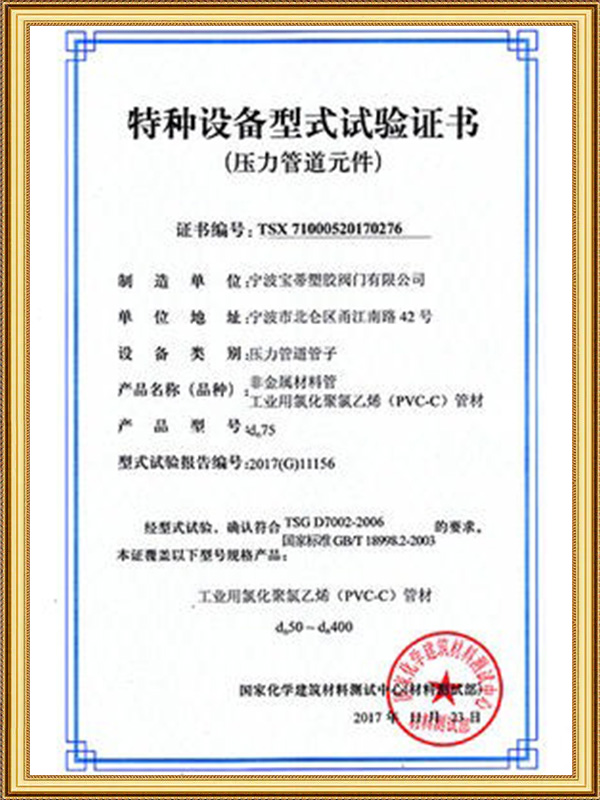
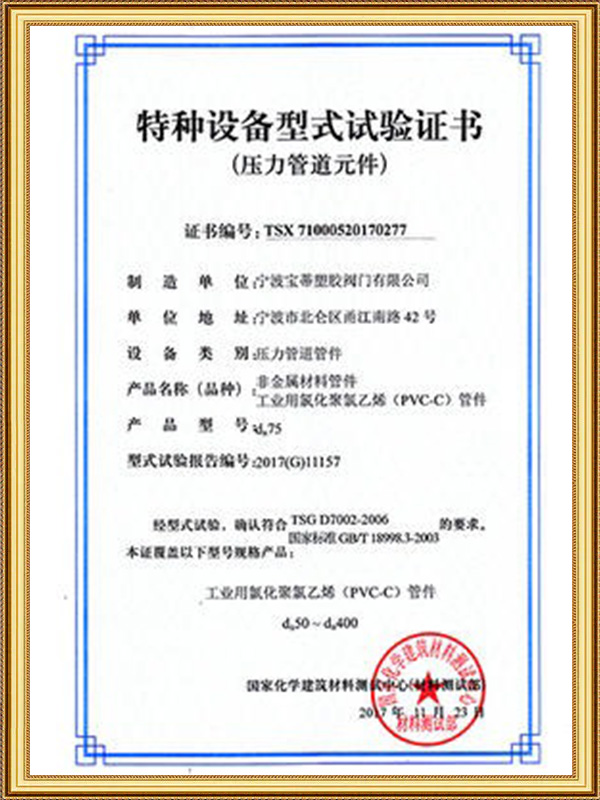
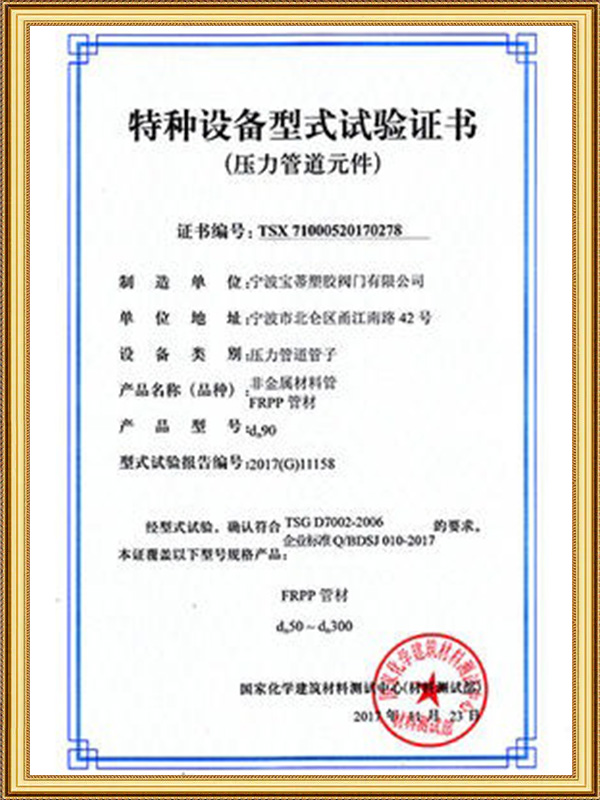
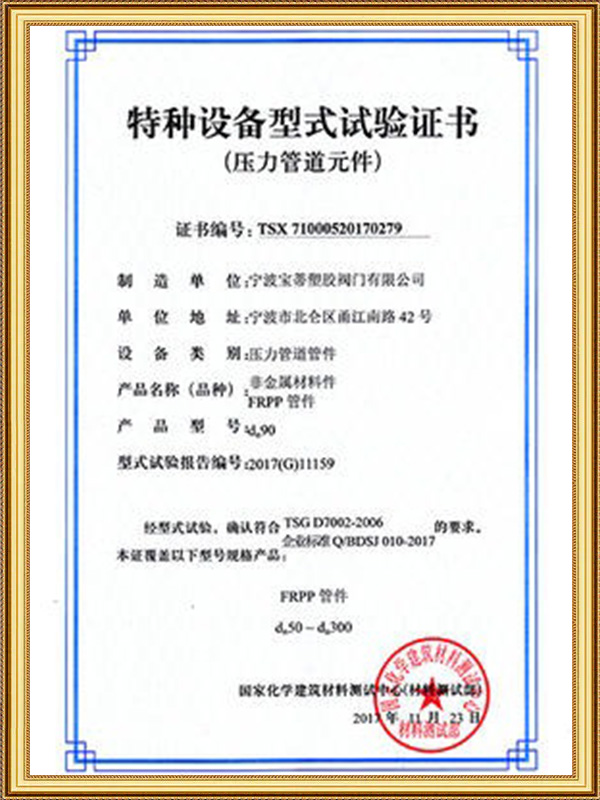
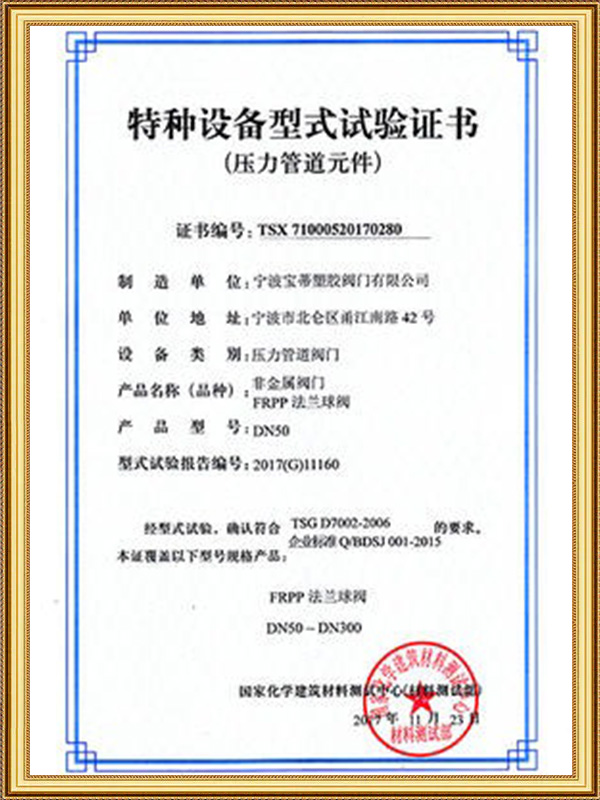
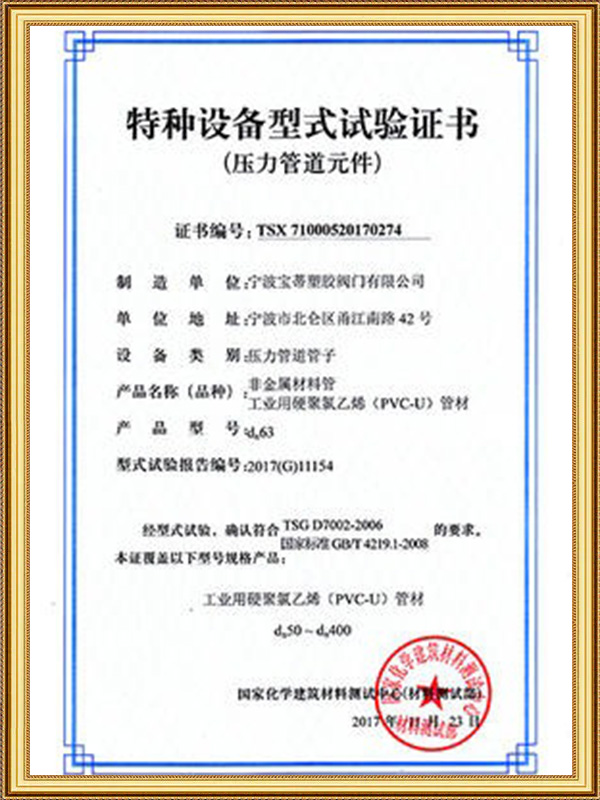
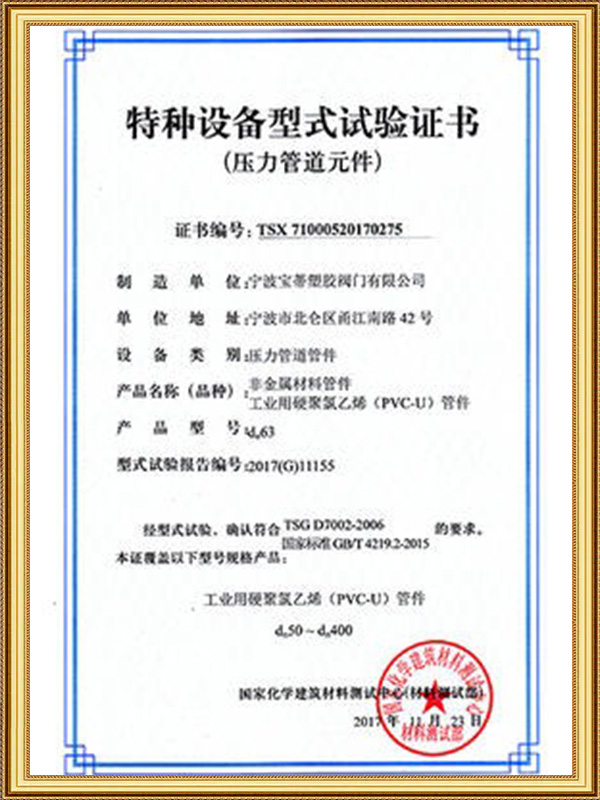
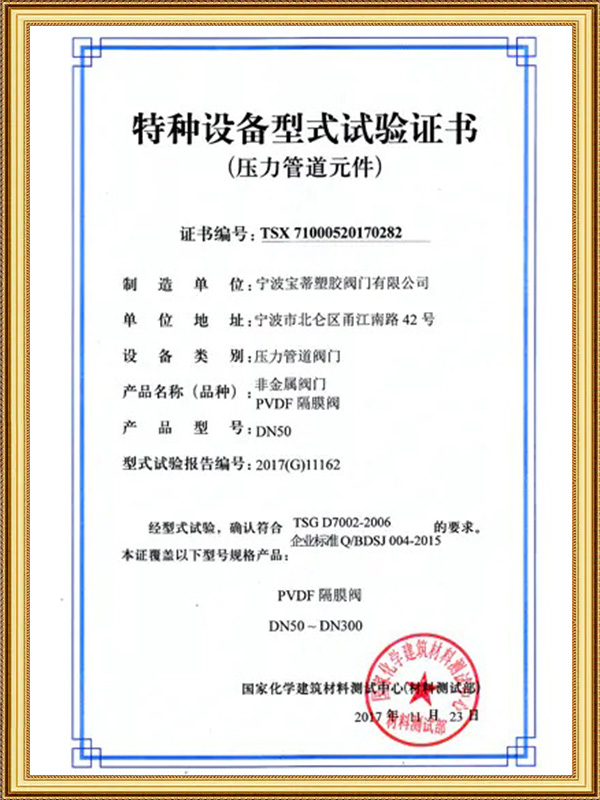
Ningbo Baodi Plastic Valve Co., Ltd. has supplied plastic piping fittings alongside its valve product ranges since expanding into industrial plastic pipes and fittings in 2006, with 45° elbows commonly specified across both drainage-gradient projects and process-line offset routing for a range of industrial and water treatment clients across the company's export markets.
Function One: Gradient Control in Gravity Drainage
Gravity drainage requires a consistent, controlled slope to keep solids moving and prevent standing liquid from accumulating at low points along the run. A 45° elbow allows a horizontal direction change while preserving a gradual transition, which is why it is standard in plumbing and wastewater drainage layouts rather than a stylistic choice made for its own sake. A 90° elbow, by contrast, forces an abrupt change in direction that makes maintaining a consistent gradient through that exact point in the layout considerably more difficult, since the fitting's own geometry does not naturally accommodate a smooth slope transition the way a 45° elbow's gentler angle does.
Specification requirement: achieved slope through and after the elbow should be verified with a level rather than assumed from the fitting's nominal angle, since installation tolerance — how the fitting is actually oriented and joined in the field — affects real gradient independent of the fitting's design angle. Some 45° elbows are manufactured with a marking to indicate correct rotational orientation for gradient-critical work, and this marking should be followed during installation rather than left to the installer's visual judgment, particularly on longer drainage runs where a small per-fitting error compounds across many connections.
Material: PVC is the standard choice for ambient-temperature drainage and general water transfer, offering solvent-cement joints that are straightforward to install correctly in the field. CPVC is specified where the drain line carries higher-temperature discharge, such as commercial kitchen or industrial process drainage where discharge temperature exceeds what standard PVC is rated to handle reliably over its service life.
Function Two: Offset Routing Around Obstructions
Two 45° elbows used as an offset pair route a pipeline laterally around structural beams, other pipe runs or fixed equipment while avoiding the sharp turbulence point a single 90° elbow would introduce at that location. This is a relevant consideration specifically upstream of instruments or control valves sensitive to flow uniformity, where introducing a high-turbulence 90° turn immediately before a sensitive measurement or control point could bias its performance in the way discussed in relation to elbow-to-equipment spacing generally.
The offset itself is achieved by positioning the two 45° elbows a calculated distance apart, with a short section of straight pipe between them, such that the combined effect of the two angled turns shifts the pipeline's centerline laterally by the required distance while the pipe continues in its original overall direction on either side of the offset. The exact spacing between the two elbows depends on the lateral shift required and the pipe size, and is typically calculated using standard offset-fitting geometry tables provided by piping design references or fitting manufacturers.
Specification requirement: each elbow in the offset pair requires independent support, since the combined assembly changes both direction and, in many layouts, elevation — relying on the straight pipe beyond the offset pair to carry the assembly's load, rather than supporting each elbow individually, increases the risk of sagging or joint stress developing at the offset over time, particularly in longer runs or where the pipe carries significant weight from its contents.
Material: PP, typically fusion-joined, is common for acid, alkaline and wastewater process routing where an offset is needed to navigate around existing plant infrastructure. PVDF is selected where the obstruction-routed line carries aggressive or high-purity chemicals, maintaining the same offset-routing logic while providing the broader chemical resistance those services require.
Function Three: Cumulative Loss Reduction in Multi-Turn Systems
In systems with several direction changes across their length — a common characteristic of process piping navigating a congested equipment room or a multi-level facility — turbulence losses from individual fittings accumulate across the total run, and the cumulative effect can become a meaningful contributor to overall system pressure loss even when no single fitting, considered in isolation, appears significant. Replacing 90° turns with 45° elbows wherever the layout allows reduces this cumulative pressure loss, since each individual 45° turn contributes less turbulence than the 90° turn it replaces, even though achieving the same net directional change may require using the 45° elbows in pairs.
In some liquid systems, using 45° elbows instead of 90° turns can also reduce the severity of pressure surges, commonly referred to as water hammer, compared with abrupt direction changes, particularly at higher flow velocities where the rate of momentum change at a sharp turn is greater and the resulting pressure transient correspondingly more severe. This is a secondary benefit beyond the steady-state pressure-loss reduction, relevant specifically in systems where rapid valve closure or pump start/stop events are a routine part of operation.
Trade-off: achieving the same net offset with 45° elbows requires more layout length than a single 90° elbow occupying the same space — this is an efficiency gain in exchange for additional routing length, applicable specifically where floor or ceiling space allows the longer path. In a genuinely space-constrained layout, this trade-off may not be available, and the system designer must accept the higher turbulence of a 90° turn as a cost of fitting within the available footprint.
Distributors and EPC contractors evaluating a proposed piping layout for cumulative pressure loss often request a fitting-by-fitting breakdown before committing to a design, particularly on longer or more complex process runs where the total loss across many fittings is not obvious from a simple visual review of the drawing. Ningbo Baodi Plastic Valve Co., Ltd. has supported project buyers with this kind of layout review as part of its broader piping fitting supply relationship, drawing on the same manufacturing and application experience that has informed its plastic valve production since 1979.
Function Comparison
| Function |
Primary Benefit |
Design Constraint |
| Gravity drainage gradient |
Consistent, controllable slope |
Standard approach — no significant trade-off |
| Obstruction offset routing |
Avoids sharp turbulence upstream of sensitive equipment |
Requires independent support at each elbow |
| Multi-turn cumulative loss |
Lower total pressure loss across system |
Requires more layout length than 90° turns |
When a 90° Elbow Remains Preferable
None of the three functions above applies universally, and a 90° elbow remains the correct choice in a substantial share of installations. Where floor space is constrained, where a quick direction change in a tight equipment room is required, or where drainage gradient is not a factor at all — for example, in a pressurized process line with no gravity-flow requirement — a 90° elbow remains more compact and typically more economical on a per-fitting basis. Selection should follow the specific constraint present at each individual point in the layout rather than a fixed, project-wide preference for either angle, since the same project may reasonably use 90° elbows in some locations and 45° elbows in others depending on local conditions at each junction.
Installation Verification Across All Three Functions
Regardless of which function a 45° elbow is serving at a given location, several installation checks apply consistently. The pipe should be inserted to the fitting's full socket depth, marked before joining, to ensure adequate bonded or fused contact area — an under-inserted joint reduces both the pressure rating and the mechanical strength of the connection regardless of how correctly the elbow angle itself was selected for its intended function. Curing or cooling time appropriate to the joining method and ambient temperature should be observed before the joint is subjected to pressure or mechanical load, since a joint loaded before it has achieved full strength can fail even when every other aspect of the specification was correct.
Common Installation and Specification Errors
A frequent error on drainage projects is treating the 45° elbow's angle as a guarantee of correct slope without independently verifying the installed gradient, discussed above — the fitting provides the geometric basis for a controlled slope, but installation tolerance, pipe sag between supports, and cumulative rotational error across multiple fittings in a run can all cause the achieved slope to differ from what the fitting's nominal angle would suggest on paper. This is particularly relevant on longer drainage runs with multiple 45° elbows in sequence, where small errors at each fitting can compound into a meaningfully incorrect overall gradient by the time the run reaches its termination point.
On offset-routing applications, a common error is calculating the offset distance using a generic rule of thumb rather than the specific geometry tables applicable to the pipe size and elbow type actually being installed, resulting in an offset pair that does not achieve the intended lateral shift precisely, requiring field adjustment or an additional short coupling to correct the discrepancy. Confirming offset spacing against manufacturer-published dimensional data before cutting pipe to length avoids this rework.
A third common error, relevant to the cumulative-loss function specifically, is applying 45° elbows inconsistently across a project — using them in some locations to reduce turbulence while retaining 90° elbows elsewhere in the same run where space would have allowed a 45° pair — without a clear rationale for which locations received which treatment. A consistent, documented approach to elbow selection across a project, based on the actual space and turbulence-sensitivity considerations at each junction, produces a more predictable overall system pressure-loss profile than an inconsistent mix driven by installer preference at the time of construction.
Material Comparison Across the Three Functions
The choice of PVC, CPVC, PP or PVDF for a given 45° elbow is generally governed by the same chemical and temperature compatibility considerations that apply to any pipeline fitting, independent of which of the three functions described above the elbow is serving at that location. A drainage project, for example, may use PVC 45° elbows throughout for gradient control in ambient-temperature runs, while a nearby process area within the same facility uses PP 45° elbows for offset routing around equipment in a chemically aggressive line — both applications draw on the same fitting geometry principles, but the material selection responds to entirely separate service requirements. Buyers managing multi-area projects should specify material on a per-area or per-line basis rather than assuming a single material choice applies uniformly across an entire facility.
Procurement Specification
Buyers should confirm the connection method (solvent socket, fusion spigot or threaded) matching the rest of the pipeline, the pressure and temperature rating for the intended service, and — for drainage contractors ordering in volume — dimensional consistency across production batches, since fitting tolerance affects achieved gradient on repeat residential and commercial projects where many identical drainage assemblies are installed across multiple units or floors. Where both 45° and 90° elbows are used within the same system, which is common given that a single project frequently requires both gradient-controlled drainage runs and general process routing, sourcing both fitting types from a single supplier helps maintain consistent wall thickness and socket depth across the pipe spool, simplifying quality verification and reducing the risk of subtle dimensional mismatches between fittings sourced from different manufacturers.
Ningbo Baodi Plastic Valve Co., Ltd. exports to more than 60 countries and maintains ISO 9001, ISO 14001 and ISO 45001 certification, supporting consistent fitting dimensions for drainage and process contractors internationally, and produces 45° elbows across the same PVC, CPVC, PP and PVDF material range used for the company's 90° elbows and other pipeline fittings, allowing distributors to source a matched set of angle fittings from a single production source for projects requiring both types across different parts of the same system.