What Are Other Plastic Valve Products? Architecture Analysis in Industrial Piping Systems
In complex fluid handling environments, standard ball, butterfly, and diaphragm valves manage the primary directional flow. However, maintaining system integrity, preventing pump cavitation, and enabling precise diagnostics require specialized auxiliary components. This technical category, defined as Other Plastic Valve Products, encompasses essential manual fluid control devices designed to fulfill these highly specific operational niches within a piping network.
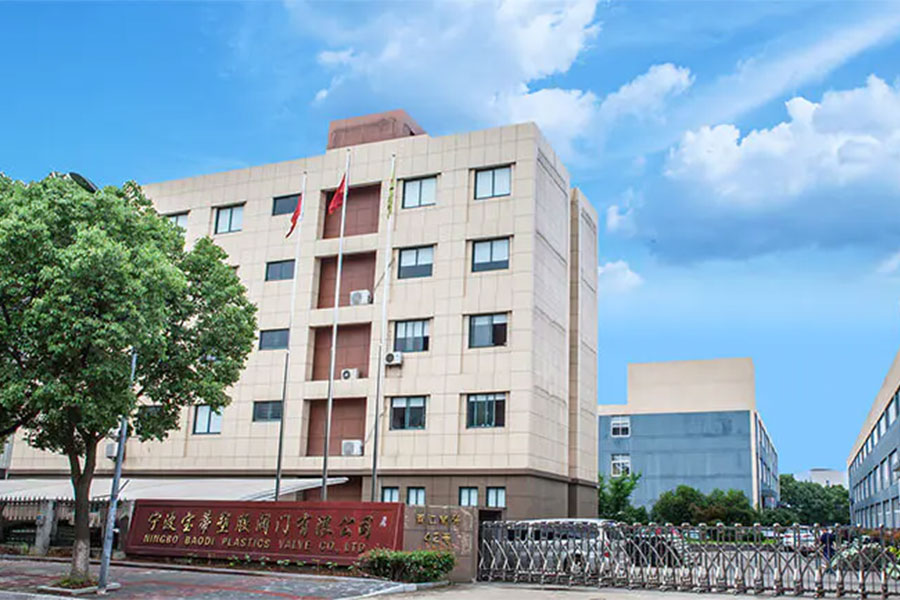
The manufacturing and structural integrity of these auxiliary valves are critical to overall system safety. Tracing its origins back to 1979, Ningbo Baodi Plastic Valve Co., Ltd. is one of the earliest enterprises in China to design and produce industrial plastic valves. Having manufactured its first plastic diaphragm valve in 1979 and invented the one-piece flange ball valve in 1992, the company has consistently focused on resolving complex fluid control challenges. As a principal drafter of national standards for plastic valves, Ningbo Baodi Plastic Valve Co., Ltd. engineers its Other Plastic Valve Products to meet the exact same pressure ratings and chemical resistance protocols as its primary flow control pipeline components. This ensures that every point in the fluid network maintains consistent material compatibility.
The Supplementary Role of Auxiliary Valves in Fluid Circuits
Other Plastic Valve Products function as the protective and diagnostic layer within an industrial piping architecture. They do not typically regulate main volumetric flow; instead, they address the physical variables that arise during fluid transport. For example, plastic sampling valves (labcocks) allow operators to extract micro-volumes of aggressive chemicals for laboratory analysis without depressurizing the mainline. Foot valves operate at the intake point of suction pumps to prevent the loss of prime, while air release valves automatically expel accumulated gas pockets that could otherwise cause severe pressure spikes or water hammer effects.
Core Physical Advantages: Plastic Polymers vs. Metal Alloys
When selecting auxiliary manual valves for highly corrosive or ultrapure environments, thermoplastic polymers offer distinct physical and thermodynamic advantages over traditional metal components. The table below outlines the specific parameter differences in industrial applications.
| Technical Parameter |
Other Plastic Valve Products (UPVC/CPVC/PP/PVDF) |
Traditional Metal Auxiliary Valves (Carbon/Stainless Steel) |
| Chemical Resistance |
Inert to broad-spectrum acids, alkalis, and halogens; no galvanic corrosion. |
Susceptible to oxidation, pitting, and galvanic corrosion in aggressive media. |
| Internal Surface Roughness (Hazen-Williams C-Factor) |
C=150 (Consistently smooth, preventing scaling and biofilm formation). |
C=100-130 (Subject to scaling, rust accumulation, and friction loss over time). |
| Thermal Conductivity |
Low thermal conductivity (0.14 - 0.22 W/m·K); minimizes condensation. |
High thermal conductivity (15 - 50 W/m·K); requires external insulation. |
| Specific Gravity (Weight Density) |
0.90 - 1.78 g/cm³ (Lightweight, reducing mechanical stress on piping supports). |
7.80 - 8.00 g/cm³ (Heavy, requiring robust structural bracing). |
| Dielectric Strength |
Excellent insulators; prevents stray electrical currents in the piping system. |
Conductive; requires grounding in specific industrial plant layouts. |
Since expanding its product line in 2006 to cover comprehensive industrial plastic pipes and fittings, Ningbo Baodi Plastic Valve Co., Ltd. has utilized advanced materials like CPVC to ensure these auxiliary components can withstand elevated processing temperatures. By integrating thermoplastic Other Plastic Valve Products into the system, facilities can eliminate the maintenance overhead associated with rust removal and metal fatigue, thereby extending the lifecycle of the entire fluid handling operation.
Core Structures and Operating Mechanisms of Other Plastic Valve Products
The operational reliability of industrial fluid networks depends heavily on the internal mechanisms of auxiliary components. As a recognized National High-Tech Enterprise and a Ningbo City Specialized and Sophisticated Enterprise, Ningbo Baodi Plastic Valve Co., Ltd. designs its Other Plastic Valve Products to withstand demanding hydrodynamic forces and aggressive chemical environments. Below is a detailed breakdown of the internal structures and operating principles of these critical fluid control devices.
Industrial Plastic Foot Valves: Anti-Backflow and Pump Protection
Installed at the intake point of a suction pipeline, plastic foot valves perform a dual mechanical function: filtering debris and preventing backflow. The internal mechanism typically features a weighted or spring-assisted check element (such as a ball or poppet) that opens under negative suction pressure generated by a pump. When the pump shuts down, the fluid column's weight forces the internal element to seal instantly against an elastomer O-ring (typically EPDM or FPM). This mechanism traps fluid in the suction line, preventing the pump from experiencing a dry run or "loss of prime."
A critical structural component of the foot valve is the integrated strainer (suction screen). Ningbo Baodi Plastic Valve Co., Ltd. engineers these strainers to maximize the open area ratio, which minimizes pressure drop while effectively blocking solid particulates that could damage centrifugal pump impellers.
Air Release and Vacuum Breaker Valves: System Pressure Regulation
Gas accumulation in industrial pipelines can lead to flow restriction, increased pump energy consumption, and destructive water hammer. Plastic air release valves utilize a precision-engineered internal float mechanism within a vertical chamber. When air accumulates at the high points of a system, the fluid level in the valve chamber drops. This lowers the internal float, opening an orifice to vent the trapped gas. As fluid displaces the expelled air, the float rises to seal the orifice.
Conversely, vacuum breaker valves protect pipelines from negative pressure collapse. If the system is drained rapidly, the valve opens to admit ambient air, breaking the vacuum. Manufacturing these components requires precise dimensional tolerances, reflecting the strict quality control processes maintained under the ISO 9001, ISO 14001, and ISO 45001 system certifications at Ningbo Baodi Plastic Valve Co., Ltd.
Labcock and Sampling Valves: High-Precision Micro-Flow Control
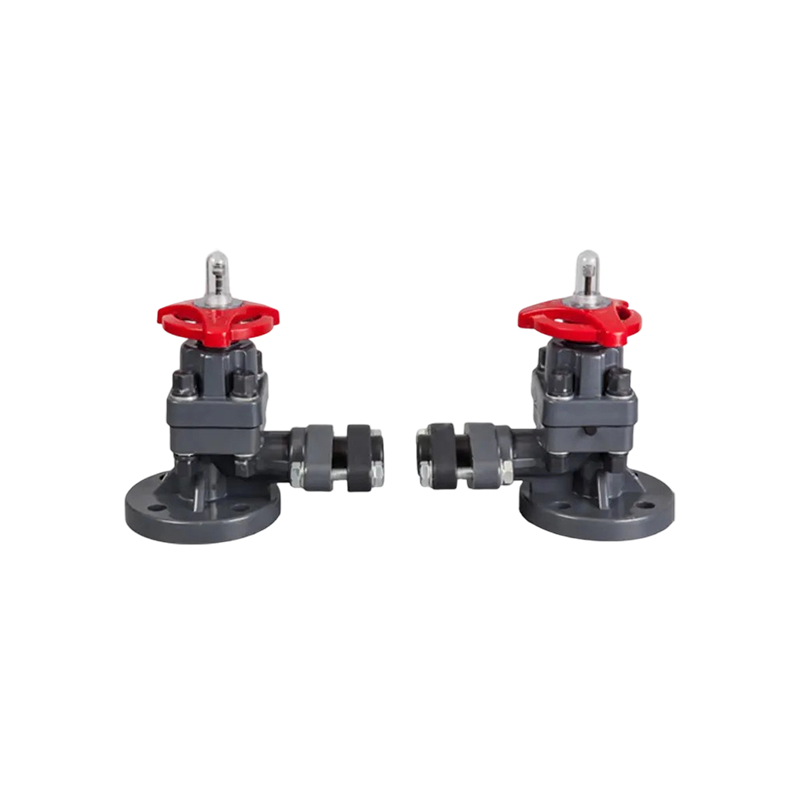
In chemical dosing and water treatment facilities, operators must extract media samples without interrupting the main process flow or altering system pressure. Plastic labcocks and sampling valves are compact, quarter-turn or needle-style valves designed for micro-volume fluid extraction. The internal structure minimizes dead space (cavities where fluid can stagnate), ensuring that the extracted fluid is a true, representative sample without cross-contamination.
Because sampling often involves highly concentrated acids or alkalis, material integrity is paramount. These valves are molded entirely from thermoplastic compounds without any exposed metal wetted parts, ensuring complete resistance to corrosive media during manual operation.
Plastic Sight Glasses and Level Indicators: Visual Fluid Diagnostics
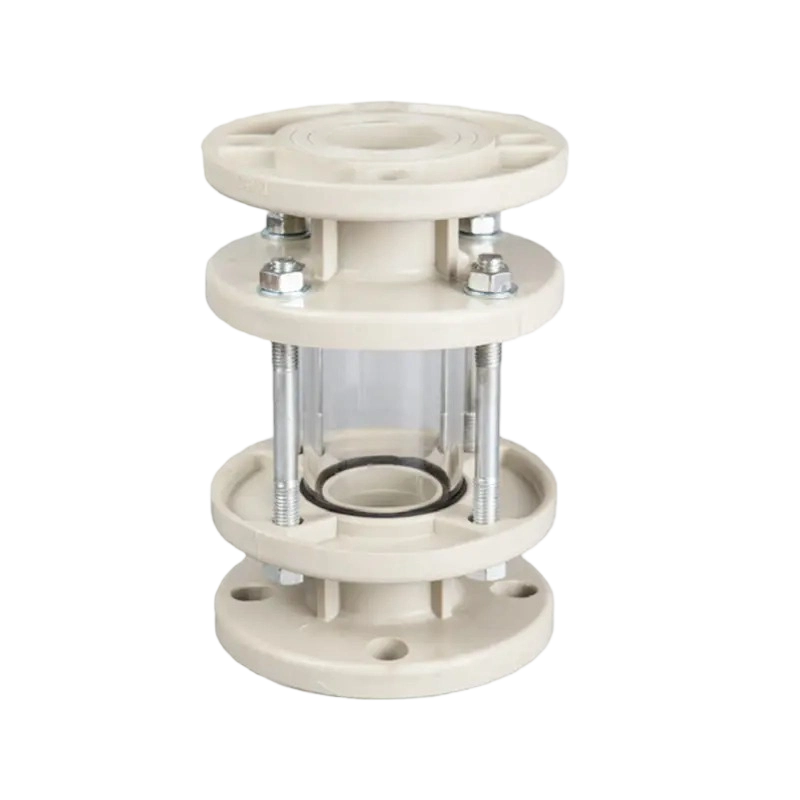
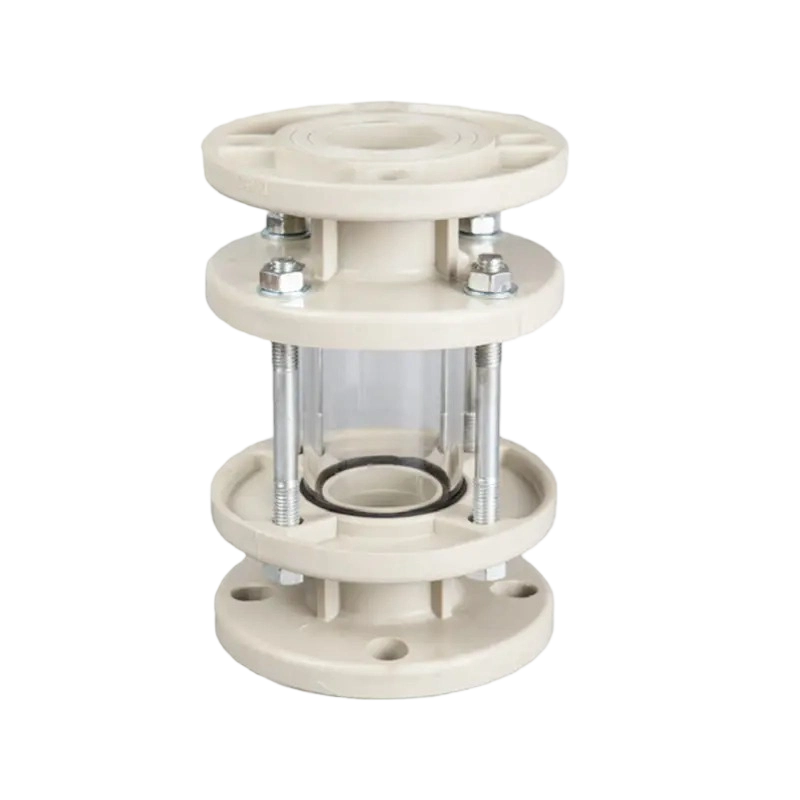
While not actively regulating physical flow, sight glasses are vital Other Plastic Valve Products for real-time fluid monitoring. They consist of a transparent structural section—often extruded from high-clarity polycarbonate or clear PVC—flanked by standard thermoplastic connecting ends. This layout allows operators to visually confirm fluid flow direction, media color, turbidity, and the presence of entrained air bubbles without dismantling the pipeline.
To provide a clear technical reference for piping system design, the following table outlines the mechanical parameters and standard operating limits of these core auxiliary components.
| Product Category |
Primary Internal Mechanism |
Standard Actuation/Cracking Pressure |
Typical Maximum Operating Pressure (at 20°C) |
Core System Function |
| Plastic Foot Valves |
Gravity or Spring Check + Integrated Strainer |
0.01 - 0.03 MPa |
1.0 MPa (150 PSI) |
Maintain suction pump prime; gross filtration of debris. |
| Air Release Valves |
Buoyancy Float and Vent Orifice |
Automatic venting at >0 MPa |
1.0 MPa (150 PSI) |
Expel trapped gas pockets; prevent air locks and water hammer. |
| Vacuum Breaker Valves |
Pressure-sensitive Poppet |
Opens at negative pressure (<0 MPa) |
1.0 MPa (150 PSI) |
Admit ambient air to prevent pipeline collapse during draining. |
| Labcock / Sampling Valves |
Micro-machined ball or needle stem |
Manual quarter-turn or rotation |
1.0 MPa (150 PSI) |
Safe chemical extraction and precise micro-dosing. |
| Plastic Sight Glasses |
Transparent tubular body |
N/A (Passive structural monitoring) |
0.6 - 1.0 MPa (90 - 150 PSI) |
Visual flow confirmation and media condition inspection. |
Polymer Material Comparison for Manufacturing Other Plastic Valve Products
The operational longevity and safety of any fluid handling network dictate that all auxiliary components must match or exceed the chemical and thermal resistance of the main pipeline. When engineering Other Plastic Valve Products, selecting the appropriate thermoplastic resin is the most critical step in preventing premature material degradation, permeation, or structural failure under pressure.
Ranking among the global leaders in the number of product categories, Ningbo Baodi Plastic Valve Co., Ltd. is capable of fully covering industrial plastic pipe and valve requirements. By utilizing a wide spectrum of advanced molecular polymers, the factory ensures that every specific industrial environment—from ambient water transport to extreme chemical processing—has a precisely matched auxiliary valve solution.
UPVC (Unplasticized Polyvinyl Chloride)
UPVC is the foundational material for most standard industrial water and wastewater applications. Because it lacks plasticizers, its rigid molecular structure provides high tensile strength and excellent dimensional stability at ambient temperatures. UPVC Other Plastic Valve Products exhibit strong inertness to broad-spectrum inorganic acids, alkalis, and salt solutions. However, its thermal threshold is relatively low, making it unsuitable for continuous processes exceeding 60°C (140°F).
CPVC (Chlorinated Polyvinyl Chloride)
By subjecting standard PVC resin to a post-chlorination reaction, the chlorine content is increased from approximately 57% to up to 74%. This molecular alteration significantly raises the glass transition temperature of the polymer. CPVC can maintain its mechanical strength and pressure-bearing capabilities in fluid environments up to 90°C (194°F). In 2006, Ningbo Baodi Plastic Valve Co., Ltd. became one of the first domestic enterprises to apply CPVC material in the production of industrial-grade piping valves, providing robust auxiliary solutions for high-temperature commercial chemical dosing and metal finishing lines.
PP (Polypropylene) and PPH (Homopolymer Polypropylene)
Polypropylene is a semi-crystalline thermoplastic known for its exceptional resistance to highly corrosive alkalis, organic solvents, and degreasing agents—media that often attack PVC-based polymers. PPH (a modified homopolymer variant) offers a finer crystalline structure, resulting in superior impact strength and better long-term creep resistance. PP-based sight glasses, labcocks, and foot valves are widely deployed in the chemical processing industry (CPI) and fertilizer manufacturing, comfortably operating in temperatures up to 95°C (203°F).
PVDF (Polyvinylidene Fluoride)
PVDF is a highly non-reactive thermoplastic fluoropolymer engineered for extreme industrial conditions. Its carbon-fluorine bonds make it virtually immune to degradation from aggressive halogens (such as wet chlorine and bromine), strong oxidants, and intense ultraviolet (UV) radiation. Furthermore, PVDF does not require the addition of thermal stabilizers or processing aids, meaning it will not leach contaminants into the fluid. This makes PVDF Other Plastic Valve Products the absolute standard for Ultrapure Water (UPW) systems in semiconductor manufacturing and critical pharmaceutical processing, with a continuous operating temperature threshold up to 120°C (248°F).
To assist piping engineers and procurement teams in material selection, the following table details the comparative thermodynamic and mechanical parameters of these four core polymers used in manufacturing auxiliary valves.
| Polymer Material |
Maximum Operating Temp. (°C / °F) |
Tensile Strength at Yield (approx. MPa) |
Chemical Resistance Profile |
Primary Industrial Application |
| UPVC |
60°C / 140°F |
50 - 55 MPa |
Inorganic acids, alkalis, salts. Poor against organics. |
Standard water treatment, agricultural irrigation. |
| CPVC |
90°C / 194°F |
55 - 60 MPa |
High-temperature acids, bases, aliphatic hydrocarbons. |
Hot corrosive chemical processing, electroplating. |
| PP / PPH |
95°C / 203°F |
30 - 35 MPa |
Excellent against organic solvents, strong alkalis. |
Chemical manufacturing, aggressive wastewater. |
| PVDF |
120°C / 248°F |
45 - 50 MPa |
Halogens, strong oxidants, extreme pH fluctuations. |
Ultrapure water (UPW), semiconductors, pharmaceuticals. |
Key Industrial Application Scenarios for Other Plastic Valve Products
The strategic placement of auxiliary fluid control devices directly impacts the efficiency and safety of a processing plant. Over more than 40 years since its establishment, Ningbo Baodi Plastic Valve Co., Ltd. has designed and manufactured various plastic valves for the most demanding industries. Having exported to more than 60 countries and served tens of thousands of enterprises globally, the factory's Other Plastic Valve Products are deeply integrated into diverse industrial sectors.
Water and Wastewater Treatment (WWT) Networks
In municipal and industrial WWT facilities, maintaining consistent fluid flow is critical. Plastic foot valves are systematically deployed at the bottom of suction lift stations to prevent the backflow of sludge and maintain the centrifugal pump's prime. Furthermore, long-distance water transport pipelines are susceptible to air pocket formation, which restricts fluid passage cross-sections. Installing plastic air release valves at system high-points ensures continuous venting, thereby optimizing hydrodynamic efficiency and preventing mechanical shock waves.
Chemical Processing and Dosing Systems
Chemical plants handling hazardous reagents—such as sulfuric acid, sodium hypochlorite, and caustic soda—require strict leakage prevention. Within these environments, Other Plastic Valve Products like PVDF or PP sampling valves (labcocks) are integrated into bypass lines or main headers. They allow chemical engineers to safely extract micro-samples for titration and quality control without exposing the broader environment to toxic vapors.
Agricultural Irrigation and Aquaculture
Open-air fluid networks face the dual challenges of massive volume management and ultraviolet (UV) exposure. High-capacity thermoplastic auxiliary valves used in these sectors are compounded with UV stabilizers. Large-diameter plastic check valves and vacuum breakers are utilized in irrigation manifolds to prevent siphonage and protect water sources from fertilizer or pesticide cross-contamination during system shutdowns.
Industrial Piping Integration: Installation Specifications and Operational Tolerance
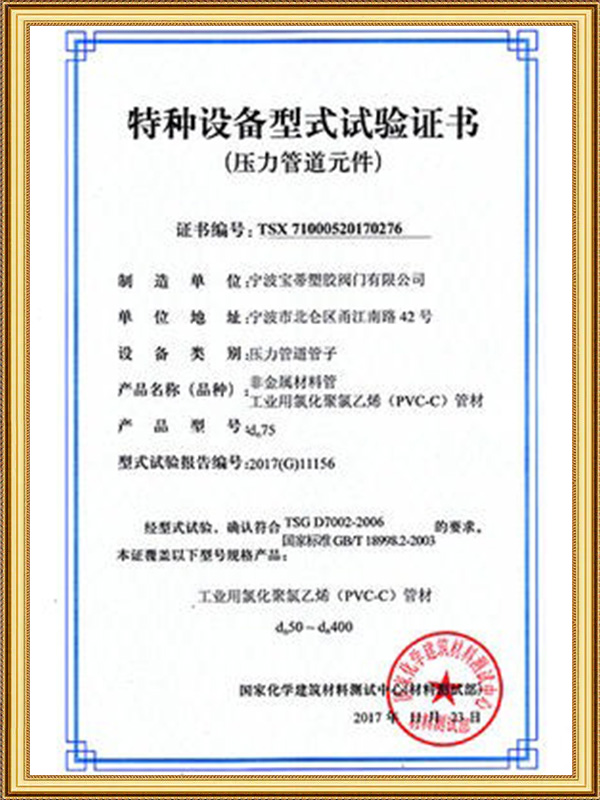
Improper installation is the primary cause of premature failure in thermoplastic piping systems. Unlike metal components, plastic polymers possess a lower modulus of elasticity, meaning they are more susceptible to overtightening and mechanical stress. Holding the national special equipment pressure piping component manufacturing license, Ningbo Baodi Plastic Valve Co., Ltd. produces Other Plastic Valve Products with exact dimensional tolerances that align with international piping connection standards.
When integrating these auxiliary valves into a broader fluid network, engineers must select the appropriate connection method based on the system's pressure rating, fluid media, and required maintenance frequency.
Socket Fusion and Solvent Cementing
Socket connections create a seamless, permanent bond between the pipe and the valve end. For UPVC and CPVC, chemical solvent cements dissolve the surface layer of the polymer, fusing the components together. For PP and PVDF, thermal socket fusion is utilized. This method provides the highest pressure tolerance but eliminates the ability to easily dismantle the valve for future maintenance.
Threaded Connections (NPT / BSPT)
Threaded connections are common for smaller Other Plastic Valve Products, such as labcocks and ½-inch to 2-inch sight glasses. Installers must use compatible PTFE (Teflon) sealing tape to ensure a watertight joint. Liquid thread sealants should be avoided unless explicitly rated for the specific plastic polymer, as some chemical bases can cause environmental stress cracking (ESC) in PVC or polycarbonate structures.
Flanged Connections
Flanging is the standard method for large-diameter valves and for mating plastic components to metal pipelines or heavy machinery. Because thermoplastic flanges can warp or crack if excessive force is applied, utilizing a torque wrench and following a strict star-pattern tightening sequence is mandatory. Proper alignment is crucial to avoid imparting bending moments onto the valve body.
The following table outlines the standard integration parameters and recommended torque limits for installing thermoplastic auxiliary valves.
| Connection Standard |
Suitable Polymer Materials |
Common Size Range |
Installation Specification & Stress Control |
| Solvent Cement Socket |
UPVC, CPVC |
DN15 - DN100 (½" - 4") |
Requires primer and specific cement. Curing time relies on temperature and relative humidity. Permanent bond. |
| Thermal Socket Fusion |
PP, PPH, PVDF |
DN15 - DN100 (½" - 4") |
Requires calibrated heating tools (e.g., 260°C for PP). Creates homogeneous molecular bond. |
| Threaded (NPT/BSPT) |
All Plastics |
DN8 - DN50 (¼" - 2") |
Hand-tighten plus 1 to 1.5 turns with a strap wrench. Maximum torque: typically 15-25 N·m. |
| Flanged (ANSI/DIN/JIS) |
All Plastics |
DN15 - DN300 (½" - 12") |
Use full-face elastomeric gaskets. Tighten bolts in a crisscross pattern. Max torque: 15-40 N·m depending on flange size. |
Frequently Asked Questions (FAQ) on Other Plastic Valve Products
When engineering complex fluid handling systems, procurement teams and plant operators frequently encounter specific technical challenges regarding the integration of auxiliary manual valves. Below is a detailed technical breakdown of the most common inquiries related to Other Plastic Valve Products.
Q1: Under what circumstances must a foot valve be installed in a pumping system instead of a standard check valve?
While both components prevent reverse fluid flow, a foot valve is strictly required at the lowest point of a negative suction lift system (where the pump is located above the fluid reservoir). A standard check valve lacks an integrated strainer. If used at a suction intake, debris could easily bypass the valve and destroy the pump's impeller. The foot valve's specialized design combines backflow prevention to hold the prime with a coarse filtration screen to protect downstream mechanical assets.
Q2: How do temperature fluctuations affect the pressure rating (PSI/PN) of thermoplastic auxiliary valves?
The pressure rating of any plastic valve is intrinsically linked to the fluid temperature. Standard nominal pressure (such as PN10 or 150 PSI) is always calculated at an ambient temperature of 20°C (68°F). As the temperature increases, the tensile strength of the polymer decreases, requiring a pressure derating factor to be applied. Engineering teams at Ningbo Baodi Plastic Valve Co., Ltd. emphasize that selecting Other Plastic Valve Products must account for the maximum continuous operating temperature to prevent catastrophic rupture. The table below illustrates the basic pressure derating behavior of core polymers.
| Operating Temperature |
UPVC Pressure Derating |
CPVC Pressure Derating |
PP Pressure Derating |
PVDF Pressure Derating |
| 20°C (68°F) |
100% of Max Rating |
100% of Max Rating |
100% of Max Rating |
100% of Max Rating |
| 40°C (104°F) |
Approx. 60% |
Approx. 80% |
Approx. 75% |
Approx. 85% |
| 60°C (140°F) |
Not Recommended (0%) |
Approx. 55% |
Approx. 50% |
Approx. 70% |
| 80°C (176°F) |
N/A |
Approx. 25% |
Approx. 25% |
Approx. 50% |
Q3: Can UPVC sampling valves be used in fluid systems containing organic solvents?
No. While UPVC offers exceptional resistance to inorganic acids (like hydrochloric or sulfuric acid) and alkalis, it is highly vulnerable to most organic solvents, including aromatics, ketones, and chlorinated hydrocarbons. Exposure to these media will cause the UPVC to swell, soften, and eventually dissolve, leading to immediate leaks at the sampling node. For organic solvent extraction, Ningbo Baodi Plastic Valve Co., Ltd. recommends utilizing PP or PVDF labcocks, which possess the requisite molecular density to withstand organic chemical attacks.
Q4: Will plastic air release valves become brittle or leak under long-term outdoor UV exposure?
Standard UPVC and PP materials will undergo photo-oxidation when exposed to prolonged ultraviolet (UV) radiation. This degradation causes the polymer to discolor (usually turning chalky white or brown) and lose its impact resistance, making it brittle. However, this primarily affects the surface layer. For outdoor irrigation or open-air WWT applications, piping components can be shielded with a coat of UV-resistant latex paint. Alternatively, choosing PVDF—which is inherently UV-stable—eliminates the risk of solar degradation entirely.
Q5: Are auxiliary valves susceptible to damage if water hammer occurs in the pipeline?
Yes. Water hammer (hydraulic shock) occurs when a fluid in motion is forced to stop or change direction suddenly, such as rapidly closing a main pipeline ball valve. The resulting pressure wave can temporarily spike to over ten times the system's normal operating pressure. This extreme force can shatter plastic sight glasses, rupture the internal floats of air release valves, or blow out the O-ring seals on sampling valves. To protect Other Plastic Valve Products, operators must ensure proper actuation speeds on primary valves, and properly sized air release/vacuum breaker valves should be installed to act as system shock absorbers by venting excess entrained gases.