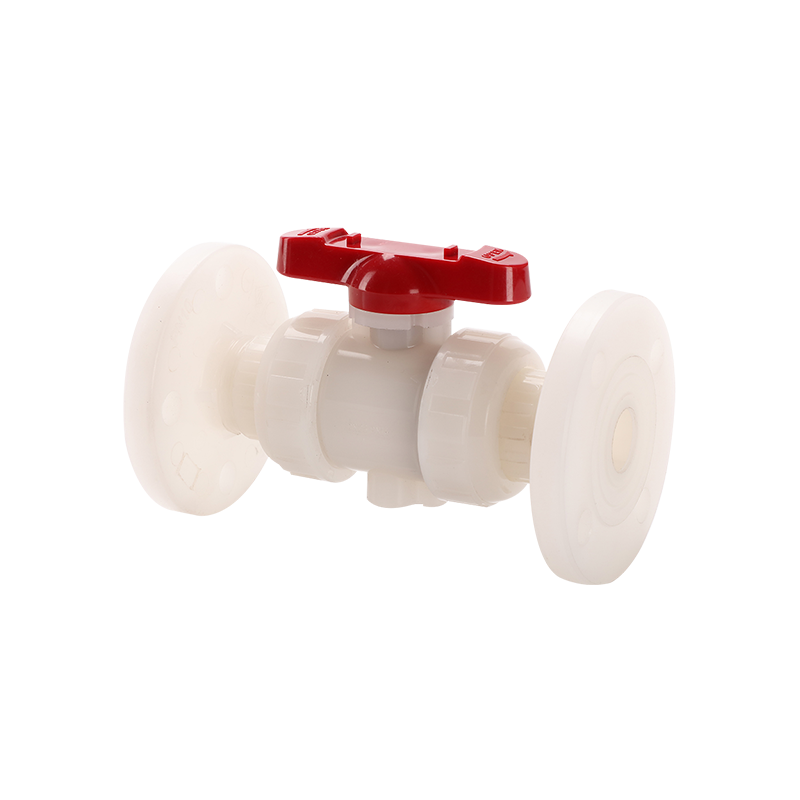
Two PVC ball valves can leave the same warehouse, carry the same DN50 marking, the same 16 bar figure printed on the handle, and still behave like two completely different products. One of them holds bubble-tight through ten years of caustic dosing. The other starts weeping at the stem in year two and seizes solid by year four. Nothing on the outside tells you which one you bought.
That single gap is what sits behind the question, "are all PVC ball valves the same quality?" The honest answer is no, and the reasons are not mysterious. They live in the resin, the mold, the seat compound, the stem seal, the wall thickness, and whether anybody actually pressure-tested the valve before it went into the carton. Below is a manufacturer's view of what changes between a commodity valve and an industrial one, how to tell them apart before you buy, and where the real cost of a cheap valve ends up.
Resin Grade Is the First and Largest Quality Variable
PVC ball valves are molded from a small family of thermoplastics: UPVC, CPVC, PPH, PVDF and FRPP. Inside each of those names, the resin itself varies far more than most buyers expect. A converter can purchase virgin compound with a documented K-value and a batch certificate, or it can purchase regrind from a reprocessing plant for a fraction of the price. Both materials mold into a valve that looks correct on a shelf.
The difference shows up later. Regrind has already been through at least one heat history. Polymer chains have shortened, the stabilizer and lubricant package is unpredictable, and the regrind stream is rarely sorted cleanly by grade. Impact strength can fall by 30 to 50 percent compared with virgin resin of the same nominal type. A regrind valve passes a factory test at room temperature. It does not survive five years of pump cycling and water hammer.
Virgin compound also matters for chemical resistance. Regrind is frequently contaminated with residues from whatever the previous product was: a pipe extrusion line, a cable jacket, a recycled fitting. Those residues create weak sites where aggressive media attack the wall. For clean water duty this is rarely visible. For sodium hypochlorite, sulfuric acid or ferric chloride, it decides how long the valve lasts.
Practical check: ask for the resin batch certificate and the incoming inspection record. A manufacturer buying virgin compound will have both. A manufacturer running regrind will usually have a purchase order and not much else.
Molding Tolerance, Wall Thickness and Ball Geometry
A PVC ball valve body is not a solid lump of plastic. It is a pressure vessel with a calculated wall thickness, a gate location designed to move the weld line away from the highest stress zone, and a cooling cycle that determines whether the part shrinks evenly or warps. Cut the wall thickness by 12 percent to save resin and the valve still passes a 1.5x shell test at room temperature. It fails at 55 degrees Celsius under the same pressure.
Wall thickness is the easiest specification to verify and the one most often left out of a purchase order. A caliper on the body wall and on the end connection tells you within a minute whether you received the product you believed you bought.
The ball is a precision part, and it is where inexpensive valves quietly lose their performance. Ball roundness on a good industrial valve is held to roughly 0.05 mm across the sealing band. Surface roughness on the sealing area is typically specified at Ra 0.8 micrometres or finer. A valve with a ball that is 0.2 mm out of round still seals when new, because the seat is soft enough to conform. After a few thousand cycles the seat takes a permanent set and the valve starts to drip.
Stem runout and operating torque belong in the same conversation. A stem that is not concentric puts uneven load on the O-rings every time the handle turns. That is why one valve feels stiff out of the box and gets worse, while another valve of the same size still turns with two fingers after five years of service.
Resin
Virgin compound with a batch certificate versus unsorted regrind. This single decision sets the ceiling on impact strength and chemical resistance.
Geometry
Wall thickness, weld line placement, ball roundness and stem concentricity. None of them are visible, all of them are measurable.
Sealing
PTFE or TPE seat, twin or single stem O-ring, bearing support at the bottom of the stem. This is where leaks begin.
Testing
Sampling inspection versus 100 percent shell and seat testing. The test record is the only proof that the valve was actually checked.
Seat Compound and Stem Sealing Decide Whether the Valve Really Shuts Off
The seat is the part that actually stops flow, and it is the part most exposed to a cost-cutting decision. A PTFE seat costs several times what a general-purpose TPE seat costs. On a parts tray, both look like a white ring.
PTFE is the default choice for chemical service because it resists almost everything and has a low coefficient of friction, which keeps operating torque down. It is also harder, so it needs a better-finished ball to seal properly. A soft TPE seat will seal against a rough ball, which is why some low-cost valves appear to work fine at first. TPE also swells in contact with solvents and oils, and a swollen seat pushes the ball off its centreline, which increases torque and accelerates wear.
Stem sealing is a separate design decision. A single O-ring in a plain groove is the minimum. Industrial valves generally use a twin O-ring arrangement with a backup, sometimes with a bottom trunnion or secondary bearing surface so the stem is supported in two places rather than one. This detail is visible on a sectioned drawing, and it is one of the first things to disappear when a valve is reverse-engineered to hit a price point.
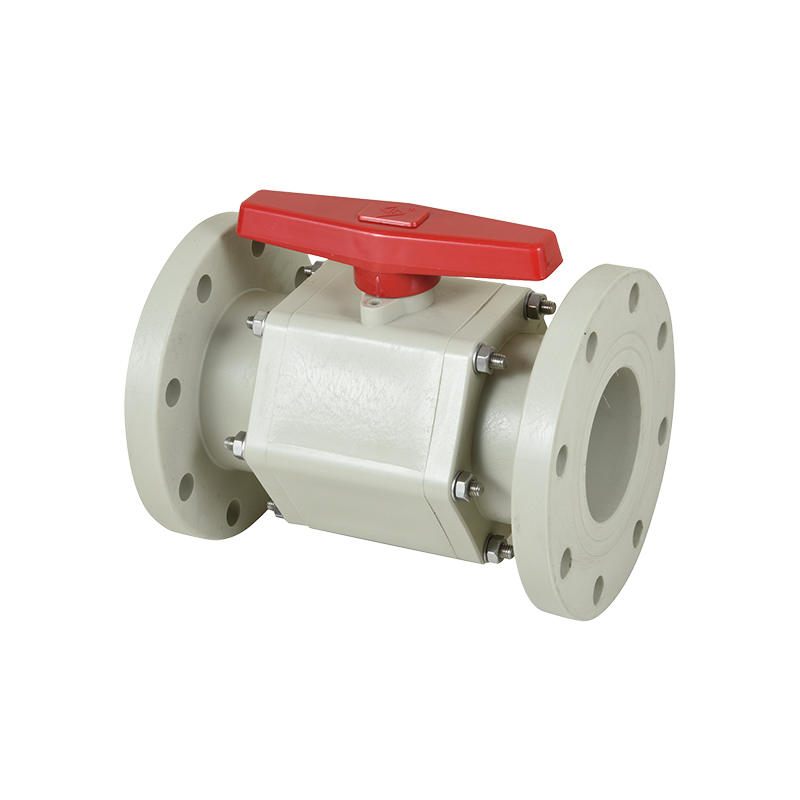
Body construction matters as well. A one-piece valve has no body joint to leak, which is why the one-piece flanged design became the standard for chemical duty after it was introduced in the early 1990s. A three-piece valve can be serviced in place without cutting pipe, which matters on skids and manifolds where dismantling the line is expensive. Both are legitimate engineering choices. What is not legitimate is a two-piece body with a solvent-welded joint being presented as equivalent to a one-piece molding.
Specifications to Compare Side by Side Before You Approve a Sample
When two quotations differ by 40 percent on the same nominal part number, the gap is almost never in the machining labour. It is in these parameters. Print the table, hand it to the supplier, and ask them to fill in the actual values with supporting records.
Table 1. Parameters that separate a commodity PVC ball valve from an industrial-grade valve. Values shown are typical ranges; confirm against the supplier's drawing and test records.
Parameter
Economy valve
Industrial-grade valve
Why it matters
Resin source
Mixed regrind, no batch record
Virgin compound with K-value and batch certificate
Impact strength and repeatable chemical resistance
Body wall thickness
10 to 15 percent below drawing
As per drawing, verified by incoming inspection
Burst pressure and long-term creep resistance
Ball roundness
0.15 to 0.25 mm out of round
0.05 mm or better across the sealing band
Seat contact and leak-free shutoff over thousands of cycles
Ball surface finish
Ra 1.6 to 3.2 micrometres
Ra 0.8 micrometres or finer
Seat wear rate and operating torque
Seat material
TPE, grade not verified
PTFE, density and dimension checked
Swelling, chemical attack and sealing consistency
Stem seal
Single O-ring, plain groove
Twin O-ring with backup, bottom bearing support
Stem weeping and side load resistance
Pressure test
AQL sampling at 1.0x rated pressure
100 percent shell and seat test at 1.5x and 1.1x
Field failure rate and warranty exposure
Traceability
None
Cavity number, batch code, test record
Ability to investigate and resolve a claim
A supplier who cannot produce values for the right-hand column is not necessarily lying. They may simply not know, because they buy finished valves from a trading intermediary rather than molding them. That is useful information on its own.
Pressure Ratings Fall With Temperature, and Most Buyers Never Apply the Correction
A valve stamped 16 bar is rated 16 bar at 20 degrees Celsius, with water, in a static condition. That number is not valid at 60 degrees. Thermoplastic pressure ratings follow a derating curve, and the curve is steep. For UPVC, the usable working pressure at 60 degrees Celsius is roughly 35 to 40 percent of the 20-degree figure. CPVC extends the usable range upward, but the same shape of curve applies.
The practical consequence is simple. If a line runs at 55 degrees Celsius and the system is protected by a relief valve set at 10 bar, a standard 16 bar UPVC valve is not adequate. The correct selection is either a higher-rated body or a different material. Choosing on the 20-degree figure alone is one of the most common specification errors in thermoplastic piping.
There is a second effect that is easy to overlook. Repeated thermal cycling loosens the seat preload. A valve that seals perfectly on day one at ambient temperature can begin to pass a small amount of media after two hundred heating and cooling cycles, even though nothing has visibly failed. Industrial valve designs compensate by using a spring-energised seat or a deeper seat pocket that maintains contact pressure as the material relaxes.
Chemical Compatibility Is a Curve, Not a Yes-or-No Answer
Resistance charts that list a material as "resistant" to a chemical are a starting point, not a specification. Actual performance depends on concentration, temperature, and exposure time. UPVC handles dilute sulfuric acid at ambient temperature comfortably. Raise the temperature to 60 degrees Celsius and the same material begins to soften and lose pressure capability. Sodium hypochlorite is a good example of a medium that attacks some grades at concentrations above 12 percent while leaving them untouched below that threshold.
Two failure modes matter most in thermoplastic valves. The first is chemical attack on the polymer itself, which shows up as swelling, discoloration, or loss of mechanical strength. The second is permeation and environmental stress cracking, where the medium diffuses into the material and the part cracks under load, often at a fitting or a stress concentration rather than in the middle of a wall.
A responsible supplier will ask four questions before recommending a valve: what is the medium, at what concentration, at what temperature, and at what pressure. If a supplier quotes a valve without asking those questions, they are selling a part number rather than a solution. Values for the industrial thermoplastic ball valve range should always be confirmed against a manufacturer's chemical resistance data at the actual operating temperature, not at ambient.
What Decades of Thermoplastic Valve Manufacturing Actually Teach You
Some quality differences only become obvious after you have watched valves operate in the field for twenty or thirty years. Ningbo Baodi Plastic Valve Co., Ltd. traces its history to 1979, when its predecessor plants built one of the first plastic diaphragm valves produced in China; that design passed a technical appraisal organised by the former Ministry of Chemical Industry in 1983. In 1992 the company developed the one-piece flanged ball valve, a body design that later became one of the most widely used plastic valve formats in chemical processing because it removes the body joint entirely.
The lessons from that period still shape what a well-built valve looks like today. The one-piece flanged construction exists because bolted and solvent-welded body joints were the dominant leak path in aggressive service. Twin stem sealing exists because single O-rings failed at the stem far more often than at the seat. Wall thickness margins exist because plant engineers kept reporting creep failures in lines that had been running for a decade.
In 2006 the company extended into industrial thermoplastic pipe and fittings and became one of the earliest domestic manufacturers to apply CPVC to industrial-grade piping and valves. That combination — valves, pipe and fittings from one production system — matters more than it sounds, because the interface between a valve end connection and a pipe fitting is where a large share of field leaks originate.
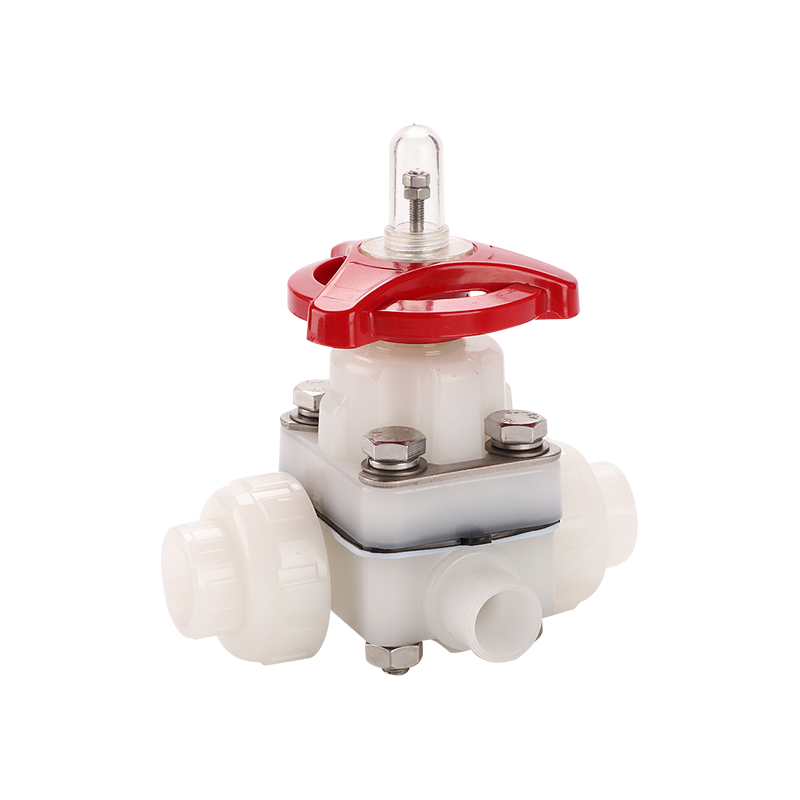
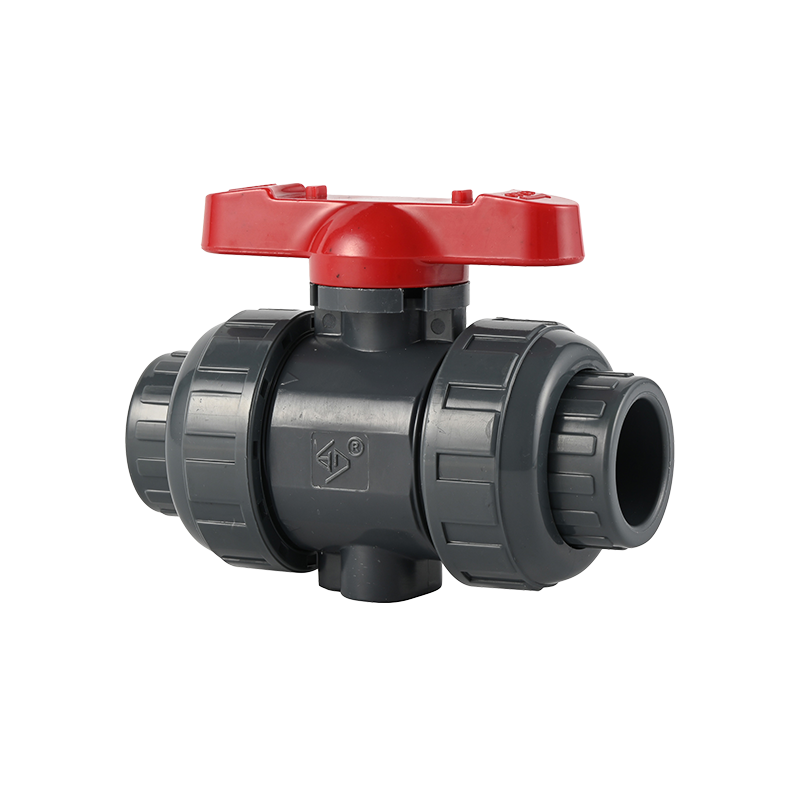
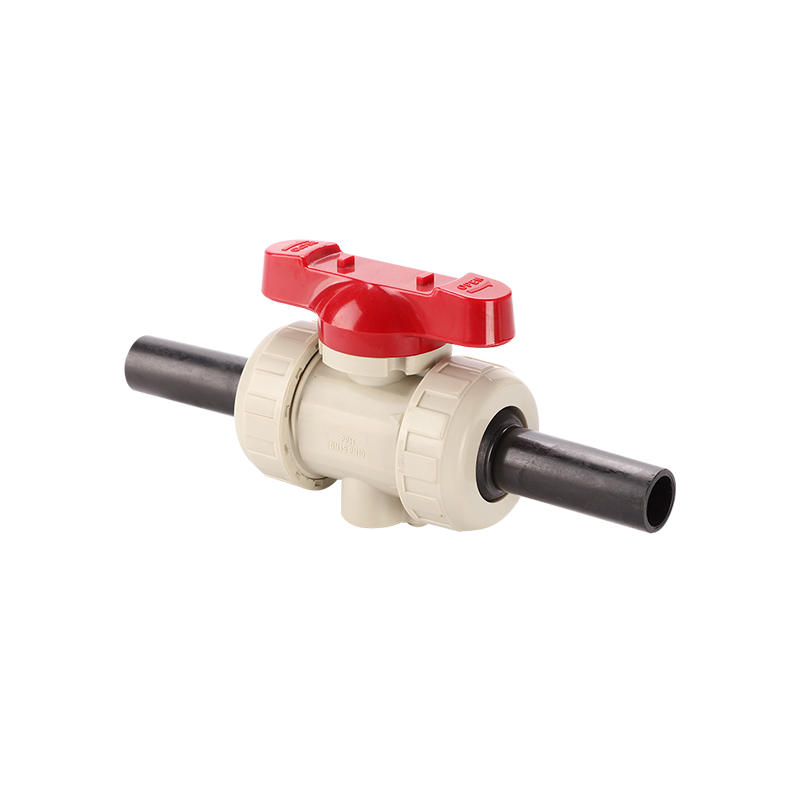
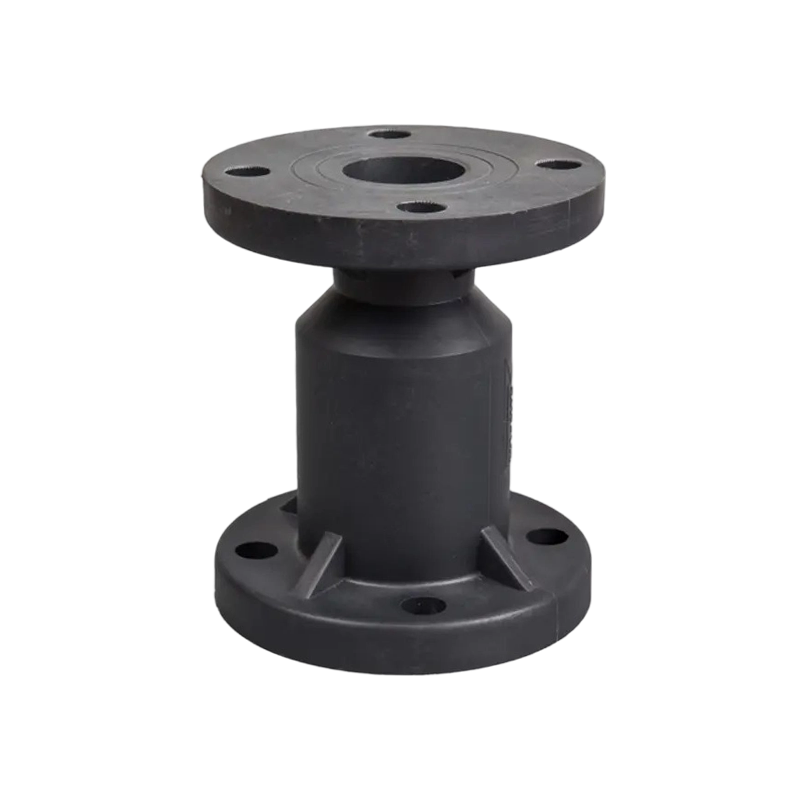
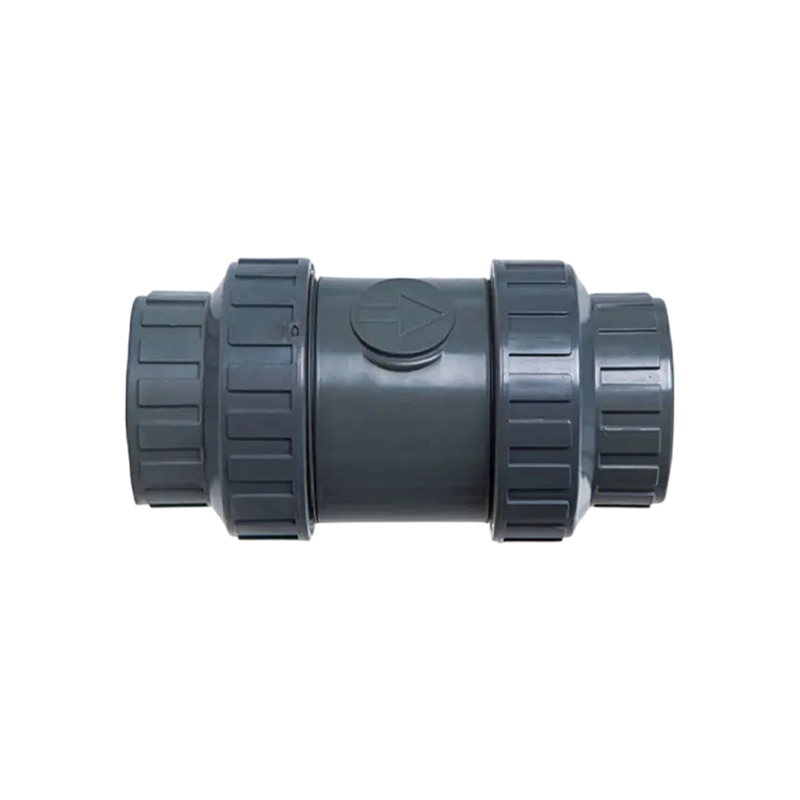
Those three body styles cover most industrial duty. The flanged format is the default for permanent chemical lines. The true union format allows the valve to be removed and serviced without cutting pipe, which shortens maintenance windows on skids. The three-piece format exposes the ball and seats for inspection without removing the body from the line.
Pressure Test Data Separates Industrial Valves From Catalog Copies
Every PVC ball valve should be shell tested at 1.5 times its rated pressure and seat tested at 1.1 times rated pressure. The question is whether every valve is tested, or only a sample from each batch. Sampling inspection is a legitimate production strategy, but it is not the same product as 100 percent testing, and the price difference reflects that.
Test parameters also matter. A common shortcut is to shorten the hold time from the specified duration to a few seconds, which allows a valve with a marginal leak to pass. Another is to test with air instead of water, because air leaks are harder to detect at low pressure and easier to dismiss. Ask for the test record format and the hold time before you assume the certificate means what you think it means.
Relevant standards for thermoplastic valves include ISO 9393 for industrial valves, DIN 3441 for plastic valves in piping systems, and ASTM D1599 and D3139 for plastic pipe and pressure testing. A manufacturer that references these standards should be able to show you the specific clause they test against, not just the standard number on a certificate.
Traceability closes the loop. A cavity number stamped on the body tells you which mold produced it. A batch code on the carton tells you which resin lot was used. Without those two pieces of information, a field failure cannot be investigated, and it will be attributed to "installation error" by default. That is a real commercial risk, not just a technical one.
Supplier and Factory Checks That Reduce Sourcing Risk
A supplier's certificate folder is a starting point, not a substitute for looking at the production line. Quality management system certificates such as ISO 9001, ISO 14001 and ISO 45001 confirm that a system exists. They do not confirm that the system is applied to the valve you are buying.
What to look at during a factory visit or a remote audit:
How many injection molding machines serve the valve line, and whether the molds are owned by the manufacturer or by a third party.
Whether incoming resin is inspected and recorded, with a retained sample per batch.
Whether there is an in-house pressure test bench with a calibration record, or whether the supplier leans on a verbal assurance.
Whether ball and stem components are produced in-house or bought from a subcontractor, and how that subcontractor is qualified.
Whether finished valves are stored in a controlled environment, because UV exposure degrades PVC over time.
Whether the manufacturer holds a national pressure piping component manufacturing licence, which is a regulatory requirement in some markets for products used in pressure systems.
Where a factory does not have these controls, the sourcing risk shifts entirely to the buyer. That risk is not always visible in the unit price. It generally appears as a line stoppage, a batch rejection at the port, or a warranty claim eighteen months after installation — costs that are rarely reflected in the purchase order.
Purchasing Mistakes That Cost More Than the Valve Itself
The first mistake is buying on appearance. A valve that is dimensionally identical to a reference sample can still differ in resin, seat compound and wall thickness. Appearance-based approval is how a low-cost valve enters a specification.
The second mistake is skipping the retained sample. Keep an approved golden sample with the batch code, and compare each delivery against it. This is a ten-minute process that eliminates most arguments about whether a product has changed.
The third mistake is treating the cheapest quotation as the baseline and negotiating everything else down to it. This forces honest suppliers to remove exactly the features that make their valve work: seat grade, stem seal design, and full pressure testing. The resulting product often looks the same and behaves completely differently.
The fourth mistake is switching suppliers without re-qualifying the product. A new source with the same part number is a new product. Run the same sample approval process, including a pressure test and a chemical compatibility check if the application is aggressive.
The fifth mistake is ignoring the difference between a manufacturer and a trading company. A manufacturer can answer a technical question about seat material and stem sealing. A trading company typically forwards the question and returns an approximate answer. Where the application is critical, that difference determines whether you receive a solution or a shipment.
Frequently Asked Questions
Are all PVC ball valves the same quality?
No. Quality varies considerably between sources, even when the part numbers and dimensions match. The main variables are resin grade, wall thickness, ball roundness and finish, seat material, stem sealing design, and whether the valve was individually pressure tested. Two valves can look identical on a bench and behave completely differently after two years in service.
Why does virgin PVC matter in a ball valve?
Virgin compound has a known molecular weight, a controlled additive package, and no contamination from previous processing. Regrind has been through at least one heat cycle, which shortens the polymer chains and reduces impact strength. In aggressive chemical service, regrind also introduces weak points where the medium attacks the wall. The difference is not visible, but it shortens service life in pressure and cycling applications.
How can I tell whether the valve I received was made from regrind?
Visual inspection rarely gives a definitive answer, because good regrind molding can look acceptable. The reliable route is documentation: ask for the resin batch certificate and the incoming inspection record. You can also compare impact behaviour by dropping a sample valve body onto a hard floor from a controlled height and comparing the result with a known virgin sample. The test is crude but revealing when the difference is large.
Is PTFE always the best seat material?
PTFE is the right default for chemical service because of its broad resistance and low friction, but it requires a well-finished ball to seal. In clean water applications at moderate temperatures, a properly specified TPE seat can perform adequately for years. The problem is that many low-cost valves use TPE without specifying the grade, which means the seat can swell or harden unpredictably in contact with oils and solvents.
Why does my valve leak at the stem instead of at the seat?
Stem leakage usually points to a sealing design issue or to side load on the stem. A single O-ring in a plain groove has limited capacity to compensate for stem runout, thermal cycling and repeated operation. Twin O-rings with a backup, combined with a bearing surface at the bottom of the stem, distribute the load and maintain contact pressure. Stem leaks are more common in valves that were built to a price than in valves that were built to a drawing.
Does a higher pressure rating always mean better quality?
No. The rating printed on the handle is a nominal figure at 20 degrees Celsius. A valve can carry a high nominal rating and still perform poorly if the wall thickness is thin, the seat is soft, or the stem seal is minimal. The rating should be read together with the derating curve, the test record and the material specification.
Why does the pressure rating on my valve not match what the line actually sees?
Thermoplastic pressure ratings fall as temperature rises. A valve rated at 16 bar at 20 degrees Celsius may only be usable at 6 bar at 60 degrees Celsius. Many specification errors come from comparing the valve rating against the system pressure without applying the temperature correction. Always check the manufacturer's derating table for the actual medium and temperature.
How do I compare two suppliers fairly?
Send both the same technical questionnaire covering resin source, wall thickness, ball roundness, seat material, stem seal design, test method and traceability. Then request an approved sample from each and run the same pressure and cycling test. Price should be the last variable you compare, not the first, because a 20 percent saving on the unit price is meaningless if the valve has to be replaced twice as often.
Do installation practices affect how long a PVC ball valve lasts?
Yes, substantially. Solvent welding too much cement into the socket can push adhesive into the ball chamber and lock the valve. Overtightening a threaded connection cracks the body at the thread root. Supporting pipe runs poorly puts bending load directly on the valve body. Installing a valve with the stem pointing downward traps media around the stem seal. None of these are manufacturing defects, but all of them are commonly reported as quality problems.
What is the most useful thing to ask a supplier before ordering?
Ask them what medium, concentration, temperature and pressure the valve will see, and then ask which of their products they recommend and why. A supplier who asks those questions before quoting understands the application. A supplier who quotes immediately is selling a part number, and the risk of a mismatch stays with you.