How Do Composite Piping Networks Handle Corrosive Industrial Fluids?
Industrial plants that handle acids, alkalis, brine, wastewater and other corrosive process liquids need piping materials that can maintain structural strength without frequent corrosion-related repair. In many large-diameter systems, unprotected metal pipe may suffer from internal corrosion, scaling, coating damage or repeated maintenance.
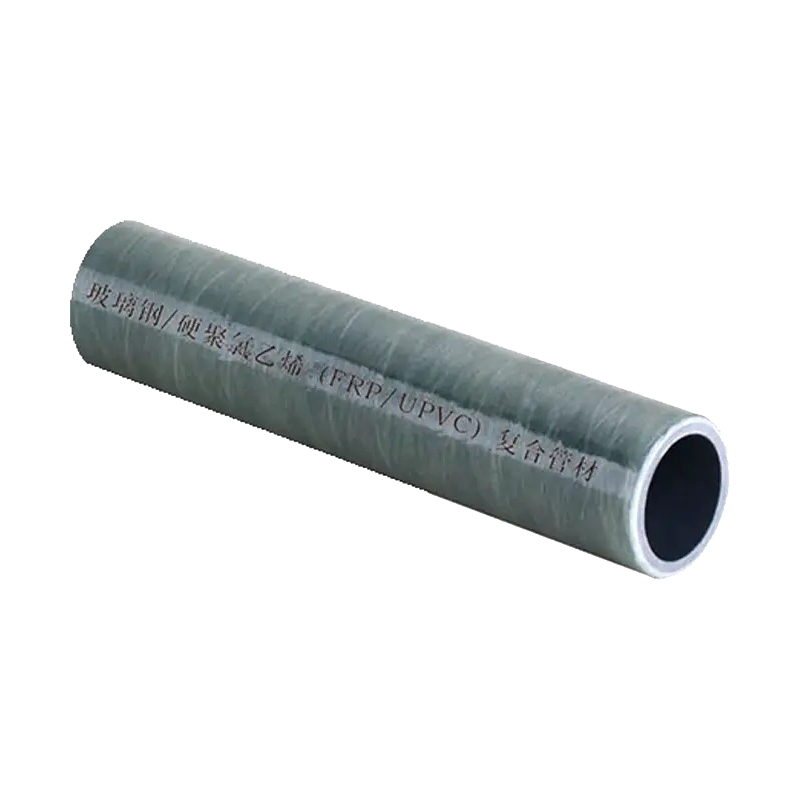
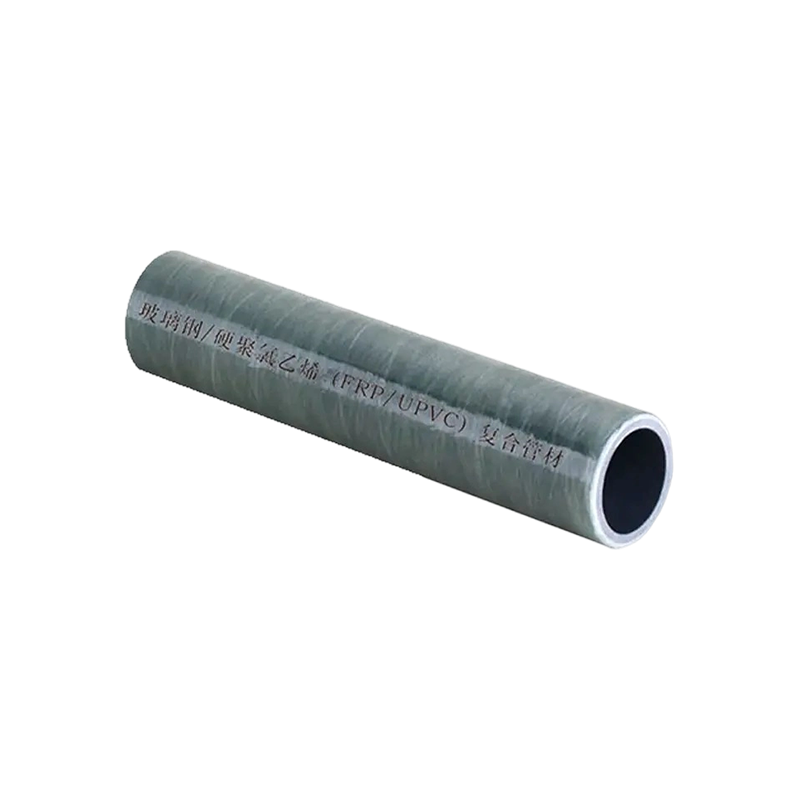
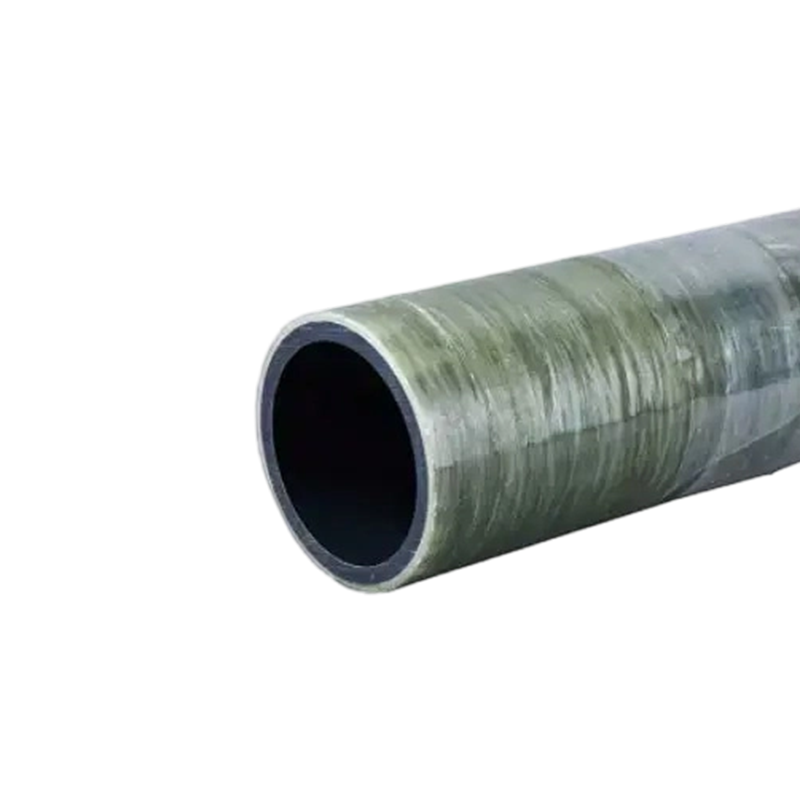
Fibreglass-reinforced plastic piping systems provide an alternative by combining a corrosion-resistant resin matrix with glass-fibre reinforcement. The resin protects the pipe wall from chemical attack, while the glass fibres provide the strength and stiffness needed to resist internal pressure, external loads and installation forces.
Unlike ordinary homogeneous plastic pipe, composite pipe is constructed in several functional layers. Each layer performs a different task, and the finished system depends on resin selection, fibre orientation, manufacturing quality, joint design and field installation.
Ningbo Baodi Plastic Valve Co., Ltd. has worked with corrosion-resistant industrial fluid-control products for more than four decades. Its experience with thermoplastic valves, pipes and fittings is relevant when Fibreglass-reinforced plastic piping systems must connect with plastic valves, pumps, tanks and other process equipment.
What Are Fibreglass-reinforced Plastic Piping Systems?
Fibreglass-reinforced plastic piping systems are composite fluid-transport networks made from thermosetting resin reinforced with glass fibres. They are also commonly described as FRP or GRP piping systems.
A complete system can include straight composite pipes, elbows, reducers, tees, flanged connections, adhesive joints, laminated joints, mechanical couplings, valve connections, supports, anchors and equipment interfaces.
The resin matrix binds the fibres together and forms the main chemical barrier. The glass fibres provide structural reinforcement and can be arranged in different directions according to the expected internal and external loads.
Corrosive-fluid transport: Composite piping can carry selected acids, alkalis, salts, brine and industrial wastewater.
Large-diameter service: Its relatively low weight can simplify handling compared with many metallic pipes of similar size.
Equipment connection: The system can connect pumps, storage tanks, filters, treatment towers and process units.
Above-ground and underground installation: Fibreglass-reinforced plastic piping systems may be installed on racks, inside buildings, in trenches or below ground.
The product range of Ningbo Baodi Plastic Valve Co., Ltd. covers numerous industrial plastic valves and piping components. This is useful when composite pipes require compatible valve materials, flange dimensions and sealing arrangements at isolation and control points.
How Is the Composite Pipe Wall Constructed?
Corrosion Barrier
The inner surface of the pipe is the first layer exposed to the process medium. It normally contains a high percentage of resin and selected glass reinforcement.
Chemical protection: The corrosion barrier resists direct attack from the transported fluid.
Permeation control: A continuous resin-rich surface helps limit fluid penetration into the structural laminate.
Smooth flow path: A properly formed liner can reduce internal resistance and material accumulation.
Structural protection: The liner separates the glass-rich structural layers from the process medium.
The corrosion barrier must remain continuous through pipes, fittings and field joints. A strong outer laminate cannot compensate for an inner liner containing cracks, pinholes or resin-starved areas.
Structural Laminate
The structural laminate is positioned outside the corrosion barrier. It contains a higher proportion of glass-fibre reinforcement and provides most of the pipe strength.
Its design depends on internal pressure, pipe diameter, external load, support spacing, installation method and required axial strength.
The ratio between resin and glass must be controlled. Excessive resin may reduce structural efficiency, while excessive fibre content can create poor wetting, air pockets and weak bonding between layers.
External Surface Layer
The outer layer protects the structural laminate from moisture, weather and light mechanical damage.
Outdoor Fibreglass-reinforced plastic piping systems may require ultraviolet-resistant protection. Special installations may also need flame-retardant, conductive or anti-static surface treatments.
Ningbo Baodi Plastic Valve Co., Ltd. has long experience with valves used in corrosive industrial environments. When thermoplastic valves are connected to composite piping, the pipe liner, valve body and flange gasket should form a continuous corrosion-resistant fluid boundary.
Resin Systems Used in Composite Piping
Polyester Resin
Polyester resin provides a practical balance between processing, cost and general performance. It may be suitable for water, wastewater and selected industrial fluids.
Its chemical resistance is more limited than higher-performance resin systems. Strong acids, aggressive solvents or elevated temperatures may require another formulation.
Vinyl Ester Resin
Vinyl ester resin is widely selected for corrosive chemical applications. It provides good resistance to many acids, alkalis and salts while maintaining useful mechanical performance.
Fibreglass-reinforced plastic piping systems based on vinyl ester resin are commonly used in chemical plants, wastewater treatment and flue-gas scrubbing systems.
Epoxy Resin
Epoxy resin provides strong adhesion and useful mechanical performance. It can be selected for pressure applications and systems requiring higher structural strength.
Curing control is important. An incorrect resin-to-hardener ratio, low temperature or insufficient curing time can reduce laminate and joint quality.
Resin Comparison
| Parameter |
Polyester Resin |
Vinyl Ester Resin |
Epoxy Resin |
| General chemical resistance |
Moderate |
High for many industrial chemicals |
Depends on formulation |
| Mechanical performance |
Moderate |
Good |
Good to high |
| Processing requirements |
Relatively simple |
Moderate control required |
Closer curing control required |
| Typical application |
Water and general industrial service |
Corrosive chemical service |
Structural and selected pressure service |
| Main concern |
Limited resistance to aggressive media |
Correct formulation and curing |
Mixing ratio, curing conditions and cost |
Resin selection should be based on the exact chemical, concentration, temperature and exposure period. Cleaning agents and temporary process fluids must also be included.
Ningbo Baodi Plastic Valve Co., Ltd. serves customers in more than 60 countries. Different operating environments demonstrate why pipe resin and valve material should be selected according to specific process data rather than only the general chemical name.
Glass-Fibre Reinforcement and Fibre Orientation
Chopped Strand Mat
Chopped strand mat consists of short glass fibres distributed in several directions. It is often used in corrosion barriers, transition layers and manually fabricated fittings.
This reinforcement helps create a relatively uniform laminate and supports resin-rich layers.
Woven Roving
Woven roving contains glass-fibre bundles arranged in crossing directions. It can provide higher strength and is commonly used in fittings, flanges and local reinforcement areas.
The direction of the woven material influences the loads it can carry most effectively.
Continuous Filament Winding
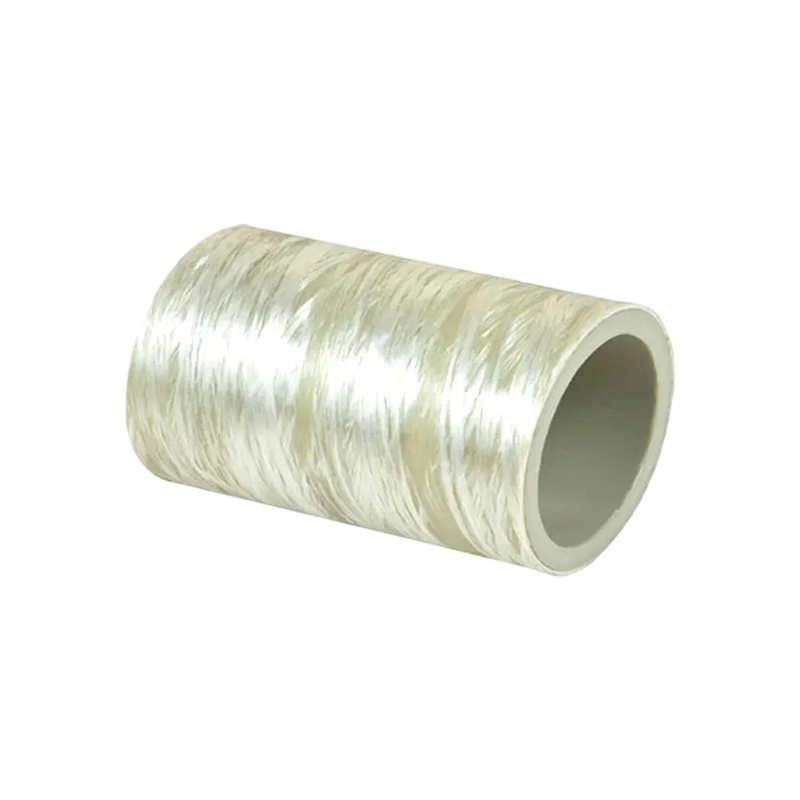
During filament winding, continuous glass fibres are coated with resin and wound around a rotating mandrel at controlled angles.
Fibres placed mainly around the circumference improve resistance to internal pressure. Fibres arranged closer to the pipe axis improve longitudinal strength and bending resistance.
Why Fibre Direction Matters
Fibreglass-reinforced plastic piping systems do not behave like uniform materials. Their strength is directional.
Circumferential reinforcement: This mainly carries hoop stress created by internal pressure.
Axial reinforcement: This helps resist bending, longitudinal loads, thermal movement and forces at anchors or equipment connections.
A pipe with sufficient hoop strength may still perform poorly if it lacks axial reinforcement at an unsupported span or restrained connection.
The pressure-piping manufacturing experience of Ningbo Baodi Plastic Valve Co., Ltd. reflects the importance of matching component strength to actual loading. The same principle applies when composite pipes, thermoplastic valves and heavy actuators are installed together.
Manufacturing Methods
Filament Winding
Filament winding is widely used for straight composite pipes. Continuous glass fibres are impregnated with resin and wound onto a mandrel.
Fibre angle, fibre tension, resin content, winding speed, wall thickness and curing temperature must be controlled.
The reinforcement pattern can be adjusted according to pressure, stiffness and axial-load requirements.
Centrifugal Casting
Centrifugal casting uses a rotating mould to distribute resin and reinforcement materials.
This method can produce relatively smooth internal and external surfaces and is suitable for selected large-diameter pipe products.
Hand Lay-Up
Hand lay-up is used for complex fittings, flanges, field joints and repairs. Glass reinforcement is placed manually and saturated with resin.
The method is flexible but strongly dependent on workmanship. Poor wetting, trapped air, uneven thickness and insufficient overlap can weaken the finished laminate.
Manufacturing Method Comparison
| Method |
Main Advantage |
Main Limitation |
Typical Product |
| Filament winding |
Controlled fibre direction and pressure performance |
Requires dedicated equipment |
Straight pipe and standard sections |
| Centrifugal casting |
Smooth surface and controlled wall formation |
Limited by mould geometry |
Selected large-diameter pipe |
| Hand lay-up |
Flexible for complex shapes and field work |
Strong dependence on workmanship |
Fittings, joints and repairs |
Ningbo Baodi Plastic Valve Co., Ltd. has obtained ISO 9001, ISO 14001 and ISO 45001 system certifications. Controlled production and traceability are also important in composite pipe manufacturing because variations in resin content or curing can affect long-term performance.
Pressure Classes, Stiffness and Mechanical Performance
Internal Pressure Rating
The pressure capacity of Fibreglass-reinforced plastic piping systems depends on pipe diameter, resin formulation, fibre content, fibre angle, structural-layer thickness, joint design and operating temperature.
Pressure class should not be judged only by the visible wall thickness. Fittings and joints must provide pressure capability equal to or higher than that of the connected pipe.
Ring Stiffness
Ring stiffness describes the ability of the pipe to resist external deformation. It is particularly important for underground installations.
A large-diameter low-pressure pipe may need high stiffness to resist soil and traffic loads even when internal pressure is relatively low.
Trench width, bedding and backfill quality all influence buried pipe performance.
Axial Strength
Axial strength is required to resist bending, thermal movement, longitudinal pressure forces and equipment loads.
Long above-ground spans, fixed anchors and pump connections can create substantial axial stress.
Impact and Concentrated Loads
Composite pipe should not be exposed to sharp point loads. Chains, narrow cables and metal edges can damage the external laminate.
Wide lifting straps and smooth support surfaces should be used during handling and installation.
Comparison with Ordinary Thermoplastic Pipe
| Parameter |
Fibreglass-reinforced Plastic Piping Systems |
Ordinary Thermoplastic Piping |
| Wall structure |
Fibre-reinforced composite laminate |
Relatively uniform plastic wall |
| Strength direction |
Designed through fibre orientation |
More uniform material behaviour |
| Large-diameter stiffness |
Generally higher |
May require thicker walls or closer supports |
| Typical field joining |
Adhesive, laminated, flanged or mechanical |
Solvent cement, fusion, union or flange |
| Main damage concern |
Delamination and fibre damage |
Cracking, softening and deformation |
Chemical Resistance and Permeation Control
Chemical compatibility in composite pipe depends mainly on the resin-rich liner and the continuity of the corrosion barrier.
The resin must be checked against the chemical name, concentration, normal temperature, maximum temperature, exposure duration, chemical mixtures and cleaning fluids.
A resin may resist a chemical at ambient temperature but deteriorate more rapidly at elevated temperature.
The corrosion barrier should be reviewed carefully at fittings, branch connections and field joints. These areas may be manufactured differently from the main pipe.
Surface whitening: This may indicate resin degradation or chemical attack.
Blistering: Bubbles beneath the surface can indicate fluid permeation or poor bonding.
Resin softening: Soft or sticky surfaces may indicate incompatibility.
Fibre exposure: Visible fibres show that the protective resin layer has been damaged.
Delamination: Separation between layers may reduce structural strength.
Cut pipe ends and modified sections must be resealed. Exposed fibres can allow moisture or chemicals to enter the laminate.
Ningbo Baodi Plastic Valve Co., Ltd. is a principal drafter of several plastic-valve industry standards. When its valves are connected to Fibreglass-reinforced plastic piping systems, valve seats, gaskets and pipe liners must remain compatible with the same process medium.
Joint Types for Fibreglass-reinforced Plastic Piping Systems
Adhesive-Bonded Joint
An adhesive-bonded joint normally uses a prepared socket or tapered connection with a compatible adhesive.
The surface must be abraded, cleaned and kept dry. Adhesive mixing, layer thickness and curing time should follow the approved procedure.
Laminated Butt Joint
A laminated butt joint connects pipe ends and forms an external laminate around the connection.
The glass-fibre layers and resin must restore both hoop and axial strength. The corrosion barrier should remain continuous across the internal joint area.
This method is commonly used for large-diameter pipes and field modifications.
Flanged Joint
Flanged connections are used for valves, pumps, tanks and removable equipment.
The gasket must match the medium and flange design. Bolts should be tightened gradually in a cross pattern.
Excessive bolt force can damage the composite flange or cause local laminate cracking.
Mechanical Coupling
Mechanical couplings can simplify installation and maintenance. Their pressure capacity, seal material and resistance to axial movement must be confirmed.
Joint Comparison
| Joint Type |
Main Advantage |
Main Limitation |
Typical Use |
| Adhesive bonded |
Compact connection |
Sensitive to preparation and curing |
Standard straight-pipe connections |
| Laminated butt joint |
Adaptable for large diameters |
Quality depends on field workmanship |
Main pipe runs and repairs |
| Flanged joint |
Removable and suitable for equipment |
Requires controlled bolt loading |
Valves, pumps and tanks |
| Mechanical coupling |
Fast installation and serviceability |
Requires correct sealing and restraint |
Maintenance and selected field connections |
The one-piece flange ball valve invented by Ningbo Baodi Plastic Valve Co., Ltd. in 1992 became widely used in chemical-related industries. Integrated flange valve structures can simplify equipment connections where composite piping requires reliable isolation points.
Flow Design and Hydraulic Performance
Internal Diameter
The actual internal diameter should be used for hydraulic calculations. Nominal size alone may not represent the effective flow area.
Surface Condition
The resin-rich internal surface is normally smooth, which can reduce friction. However, joint misalignment, internal resin buildup and field repairs may create local resistance.
Flow Velocity
Flow velocity should be selected according to the medium. High velocity can increase vibration, erosion and pressure shock. Low velocity may allow solids to settle.
Fibreglass-reinforced plastic piping systems carrying slurry require a balance between sedimentation and abrasion.
Local Pressure Loss
The system calculation should include straight-pipe friction, elevation difference, elbows, tees, reducers, valves, strainers, flowmeters and equipment nozzles.
Ningbo Baodi Plastic Valve Co., Ltd. supplies industrial valves in a wide range of categories. Matching valve flow capacity with pipe diameter can prevent the valve from becoming an unnecessary restriction in the composite piping network.
Thermal Expansion and Support Design
Composite pipe expands and contracts with temperature, although its movement differs from both metal and ordinary thermoplastic pipe.
Thermal behaviour depends on resin type, glass content and fibre direction. Expansion in the axial direction may differ from movement around the circumference.
Support spacing: This should be selected according to pipe diameter, wall construction, fluid weight and operating temperature.
Support surface: Supports should be wide and smooth to avoid concentrated pressure on the laminate.
Anchors: Fixed points control the direction of thermal movement.
Guides: Guides allow axial movement while limiting lateral displacement.
Heavy components: Valves, actuators, filters and instruments should be supported independently.
The broad piping and valve range of Ningbo Baodi Plastic Valve Co., Ltd. allows support planning to consider both the composite pipe and connected thermoplastic flow-control components.
Valves, Pumps and Equipment Connections
Valve Connections
Valves normally connect through composite flanges, transition flanges or suitable couplings.
The valve weight and actuator torque should be independently supported. A large automatic valve can create bending stress at a composite flange.
Pump Connections
Pump vibration and nozzle loads should be controlled. Pipe alignment should be achieved naturally rather than by forcing the flange into position.
Tank and Vessel Connections
Thermal movement and equipment settlement should not be transferred directly to tank nozzles. Guides, anchors or flexible connections may be needed.
Mixed-Material Interfaces
Composite piping may connect to metal pumps, thermoplastic valves or lined equipment.
Different stiffness and thermal-expansion behaviour should be considered. Bolt tightening procedures should protect the more sensitive flange material.
Ningbo Baodi Plastic Valve Co., Ltd. expanded into industrial plastic pipes and fittings in 2006, helping industrial users coordinate valve materials and equipment connections across mixed composite and thermoplastic systems.
Installation Quality Control
Material Identification
Pipe, fittings, resin, reinforcement and pressure class should be checked before installation.
Components with different resin systems or laminate structures should not be mixed without engineering review.
Handling and Storage
Wide lifting straps should be used. Pipes should not be dragged across rough ground or lifted with chains.
Pipe ends should be protected to prevent damage to the corrosion barrier.
Surface Preparation
Bonding and laminate areas must be ground to the required condition. Dust, oil and moisture should be removed.
Curing Conditions
Resin curing depends on temperature, mixing ratio and humidity. A joint should not be moved, loaded or pressure-tested before adequate curing has been achieved.
Alignment
Pipes should connect without forced bending. Bolts and couplings should not be used to pull severely misaligned sections together.
Ningbo Baodi Plastic Valve Co., Ltd. is recognized as a National High-Tech Enterprise and a Ningbo City Specialized and Sophisticated Enterprise. Stable product quality must be supported by controlled field installation when valves and composite piping are assembled into one system.
Inspection and Pressure Testing
Visual Inspection
The surface should be checked for bubbles, dry fibres, cracks, exposed reinforcement and uneven resin coverage.
Field joints should have the required width, thickness and overlap.
Dimensional Inspection
Wall thickness, diameter, flange dimensions, pipe alignment and fitting angles should be checked.
Large internal steps at joints can increase pressure loss and collect solids.
Barcol Hardness Testing
Barcol hardness testing can provide information about resin cure. The acceptable range depends on the resin system and project requirements.
Pressure Testing
Pressure testing should begin only after all joints have cured.
The system should be filled slowly, and trapped air should be released from high points. Pressure should then be increased in stages.
Joints, flanges and supports should be checked for leakage or unusual movement. The test pressure must not exceed the limit of the lowest-rated component.
Common Problems in Fibreglass-reinforced Plastic Piping Systems
Delamination
Possible causes: Poor fibre wetting, contamination between layers, incomplete curing, impact or excessive bending stress.
Surface Cracking
Possible causes: Chemical incompatibility, excessive temperature, concentrated loads or forced installation.
Joint Leakage
Possible causes: Inadequate preparation, incorrect adhesive mixing, insufficient laminate thickness, poor curing or uneven flange tightening.
Fibre Exposure
Possible causes: Abrasion, chemical attack, impact or excessive grinding during repair.
Pipe Deflection
Possible causes: Inadequate support spacing, poor underground backfill, high external loads or insufficient ring stiffness.
Increased Pressure Loss
Possible causes: Internal joint steps, resin buildup, process deposits or partially closed valves.
Ningbo Baodi Plastic Valve Co., Ltd. has served tens of thousands of domestic and international enterprises. Practical project experience shows that many piping problems result from installation and support conditions rather than the basic corrosion resistance of the material.
Repair and Maintenance Methods
Routine Inspection
Routine inspection should focus on joints, flanges, supports and equipment connections.
Discoloration, blistering, cracking, leakage and unusual pipe movement should be investigated.
Local Laminate Repair
A local laminate repair normally requires removal of damaged material, controlled surface preparation and rebuilding of both the corrosion barrier and structural layers.
A superficial resin coating should not be used to hide deeper delamination or structural damage.
Support Adjustment
Support positions may require adjustment if settling, thermal movement or equipment modification changes the pipe alignment.
Maintenance Records
Records should include the damage location, repair dimensions, resin system, reinforcement type, curing conditions, inspection results and return-to-service time.
Ningbo Baodi Plastic Valve Co., Ltd. supplies corrosion-resistant valves and piping components for demanding industries. Planned inspection of valves, composite joints and supports can reduce unplanned shutdowns.
Typical Applications of Fibreglass-reinforced Plastic Piping Systems
Chemical Processing
Composite piping can transport acids, alkalis, salt solutions and corrosive process liquids when the resin and liner are suitable.
Water and Wastewater Treatment
Fibreglass-reinforced plastic piping systems are used for raw water, industrial wastewater, chemical dosing and sludge-handling systems.
Seawater and Brine
Composite pipe is suitable for many seawater and high-salt applications where metal corrosion is a concern.
Flue-Gas Treatment
The piping can carry corrosive scrubbing liquid between tanks, pumps and treatment towers.
Mining and Mineral Processing
Composite systems may transport process water, selected slurry and corrosive liquids. Particle abrasion must be evaluated.
Industrial Utility Systems
Large-diameter composite pipe can be used for cooling water, circulation water and process drainage.
Frequently Asked Questions About Fibreglass-reinforced Plastic Piping Systems
Are Fibreglass-reinforced Plastic Piping Systems the Same as Ordinary Plastic Pipe?
No. Composite pipe uses a resin matrix reinforced with glass fibres, while ordinary thermoplastic pipe normally has a more uniform plastic wall.
Can Composite Piping Handle Internal Pressure?
Yes. Pressure capacity depends on pipe diameter, wall structure, fibre orientation, resin, temperature and joint design.
Which Resin Is Best for Chemical Service?
No single resin is suitable for every chemical. The medium, concentration, temperature and exposure period must be reviewed.
Can Fibreglass-reinforced Plastic Piping Systems Be Installed Underground?
Yes. Ring stiffness, trench preparation, bedding, backfill and external loads must be considered.
How Are Large Composite Pipes Joined?
Common methods include adhesive bonding, laminated butt joints, flanges and mechanical couplings.
Why Is Fibre Orientation Important?
Circumferential fibres resist internal pressure, while axial fibres support bending and longitudinal loads.
Can Composite Pipe Be Cut on Site?
It can be cut, but the exposed edge must be resealed. Structural reinforcement may also need to be restored.
What Causes Delamination?
Common causes include poor resin wetting, contamination, inadequate curing, impact and excessive mechanical stress.
Can Composite Pipe Connect to Plastic Valves?
Yes. Suitable flanges or transition connections can be used. Valve weight, bolt loading and material compatibility must be considered.
How Should the Pipe Be Supported?
Supports should be wide, smooth and spaced according to pipe size, fluid weight, temperature and stiffness. Heavy equipment requires independent support.
Is Pressure Testing Required?
Yes. Testing should begin after full joint curing. The system should be filled slowly, vented and pressurized in controlled stages.
What Information Is Needed Before Selection?
Required information includes the fluid, concentration, temperature, pressure, flow rate, pipe size, installation method, external loads, resin requirements, joining method, support arrangement and inspection requirements.