Why a check valve and a backflow valve are not interchangeable
Consider a chemical dosing pump that draws from a storage tank and injects into a water line. If the pump stops and pressure on the discharge side becomes higher than the pump side, the media will try to flow backward. A check valve can close that reverse path, but it will not prove to a code inspector that the drinking water supply is protected. A backflow valve, in the sense of a backflow preventer assembly, is built for exactly that proof: two independent closing elements, test ports, and an isolation strategy that allows verification without entering the pipe. The difference matters long before the valve is ordered.
In engineering discussions, a check valve is sometimes called a backflow valve because both devices stop reverse flow. That loose wording creates real procurement risk. A check valve is a single valve body with one moving element. A backflow preventer is an assembly designed to keep non-potable or process media from entering a potable supply. They are different levels of protection, with different pressure loss, installation, testing, and cost. For industrial plastic piping systems, knowing which one is actually required depends on the fluid, the connection point, and the local cross-connection control rules.
What a check valve actually does
A check valve is an automatic two-port valve that permits flow in one direction and closes when flow reverses. It has no external handle, no electric actuator, and no manual override in its simplest form. The closing element, whether a ball, a hinged disc, or a set of plates, moves off the seat when forward pressure overcomes the cracking pressure, then returns to the seat when forward flow stops or reverses.
How a thermoplastic check valve is built
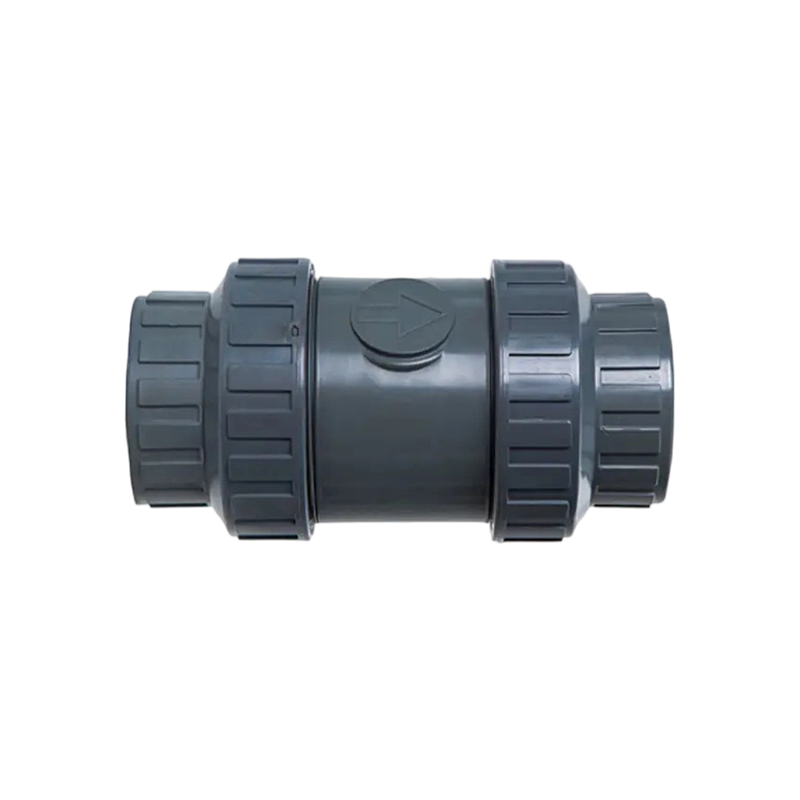
In industrial thermoplastic piping, the wetted parts are machined or moulded from materials such as UPVC, CPVC, PPH, PVDF, or FRPP. A plastic check valve is attractive because it does not rust, does not introduce metallic ions into the fluid, and resists aggressive chemicals. The internal design is still similar to a metal check valve: a body, a seat, a disc or ball, and a spring or gravity return mechanism.
- Ball check valves use a free-floating ball that settles on a curved seat when reverse flow appears.
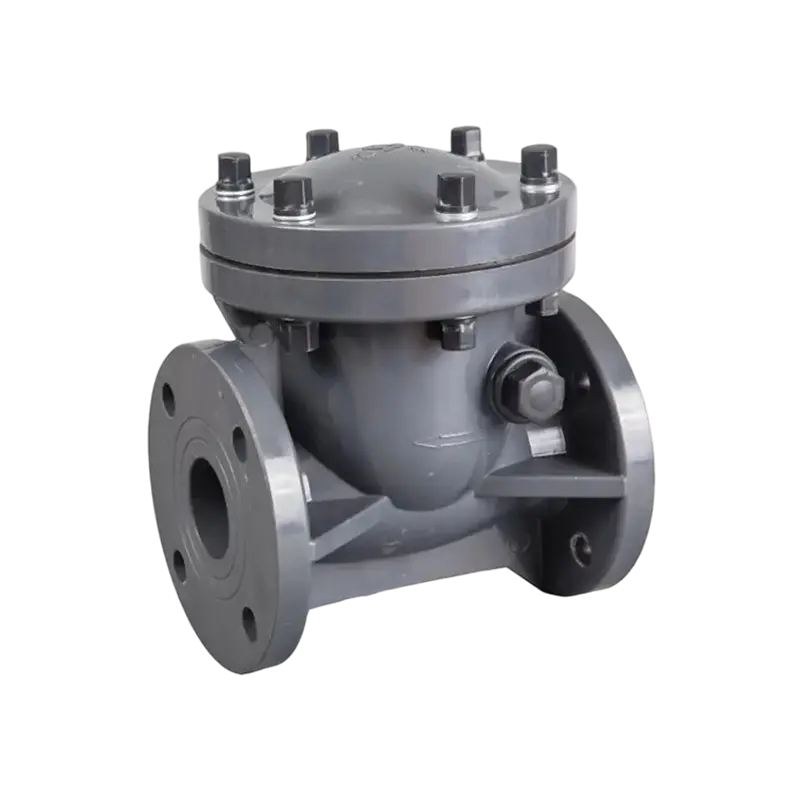
- Swing check valves use a hinged disc that opens like a door and closes by gravity or reverse pressure.
- Wafer check valves sit between two flanges and use a short body with two half-discs or a single tilting disc.
- Foot valves are check valves placed at the bottom of a suction line to hold the pump prime.
What a check valve cannot do
A check valve is not a positive mechanical seal when closed. It is a dynamic device and can chatter, stick, or pass small amounts of fluid during closure. It also does not provide a testable barrier between a potable supply and a contaminant source. In a cross-connection control program, a check valve is usually considered a component, not a complete protective assembly.
Check valve designs and typical service
Common thermoplastic check valve designs and the service they suit best
| Design |
Opening element |
Main strength |
Typical fluid condition |
| Ball check valve |
Moulded plastic ball |
Handles some solids, tight seating, simple maintenance |
Liquids with particles, slurries, chemical transfer |
| Swing check valve |
Hinged disc |
Low pressure drop, stable forward flow |
Clean liquids, water, dosing lines |
| Wafer check valve |
Spring-assisted plate or disc |
Compact face-to-face dimension, light weight |
Space-limited manifold and pump discharge systems |
| Foot valve |
Ball or disc with strainer |
Keeps suction line full, prevents pump prime loss |
Pump suction, tanks, wells, sumps |
Each design has a different response speed. A spring-loaded wafer check valve tends to close faster than a gravity swing check valve, which affects water hammer in fast pump systems. A ball check valve can tolerate dirty fluid better than a hinge design, but the ball action can be slower in low-viscosity service. When a plant engineer asks which check valve to install, the answer starts with the fluid, the flow rate, the pressure profile, and the allowable pressure drop, not with brand preference.
What a backflow valve and backflow preventer really mean
The term backflow valve is used in different ways. In plumbing and municipal water work, a backflow valve usually refers to a backflow preventer assembly, which is a device that protects a potable water connection. In drainage work, a backwater valve is a different product used to keep sewage from backing up into a building. In process industry language, some engineers call any check valve a backflow valve because it stops reverse flow. Those terms should be separated before a specification is written.
Backflow preventer assembly components
A typical backflow preventer contains more than one check function. A reduced pressure zone assemblies includes two check valves and a differential pressure relief valve between them. A double check valve assembly contains two check valves in series. Both designs allow field testing with test cocks and isolation valves. The extra valve creates a measurable zone that protects the upstream potable supply even if the downstream side becomes contaminated.
This is why a single plastic check valve is not usually accepted as a backflow preventer. The check valve may close, but there is no way to test the seal under real conditions. A backflow preventer is designed for verify its performance. The distinction is not theoretical; it is written into cross-connection control standards and plumbing codes. For more detail on how these terms are treated in code language, see this guide to backflow prevention terminology.
Backwater valve versus check valve
A backwater valve is a gate-like fitting installed on a drainage outlet. It is designed to close automatically when the downstream sewer water rises, preventing sewage from flowing into the building. A backwater valve is not intended to stop process fluids from reversing inside a chemical line. A check valve is used in pressure piping to prevent backflow of the pumped fluid. Both have "reverse flow" in common, but the materials, standard, and installation logic are entirely different.
Key differences between a backflow valve and a check valve
High-level comparison between a single check valve and a backflow preventer assembly
| Comparison point |
Check valve |
Backflow preventer assembly |
| Primary purpose |
Prevent reverse flow in a process or pump line |
Prevent contamination of a potable water supply |
| Number of closing elements |
One |
Two or more, plus relief or test ports |
| Testability |
Not typically field-tested while installed |
Testable with attached test cocks |
| Regulatory status |
A component, not a cross-connection control assembly |
A recognized backflow prevention assembly |
| Pressure loss |
Generally low in swing and wafer types |
Higher because of multiple check modules |
| Maintenance |
Inspect disc, ball, seat, and spring |
Test both checks and service relief valve |
| Typical thermoplastic availability |
Common in UPVC, CPVC, PPH, PVDF |
Less common; often metal-bodied in municipal water |
The pressure loss difference is often the first clue to what is installed. A single swing check valve may have a pressure drop similar to a short length of pipe. A reduced pressure zone assembly can create a pressure drop several times larger, which is why engineers must recalculate the available head when a backflow preventer is added to a line. A check valve alone is easier to install and costs less, but it does not give the same level of safety or code compliance.
Thermoplastic check valve types used in industrial piping
As a manufacturer of thermoplastic valves and piping systems, we classify check valves by body, ball, and connection type. The flanged design is common in larger lines where bolted access is needed for maintenance. The union design allows the valve to be removed without dismantling the whole pipe section. Wafer designs reduce weight and fit between existing flanges. Foot valves are selected for suction lines. If you are choosing a valve for a chemical line, compatibility of the wetted parts matters more than the brand sticker on the handle.
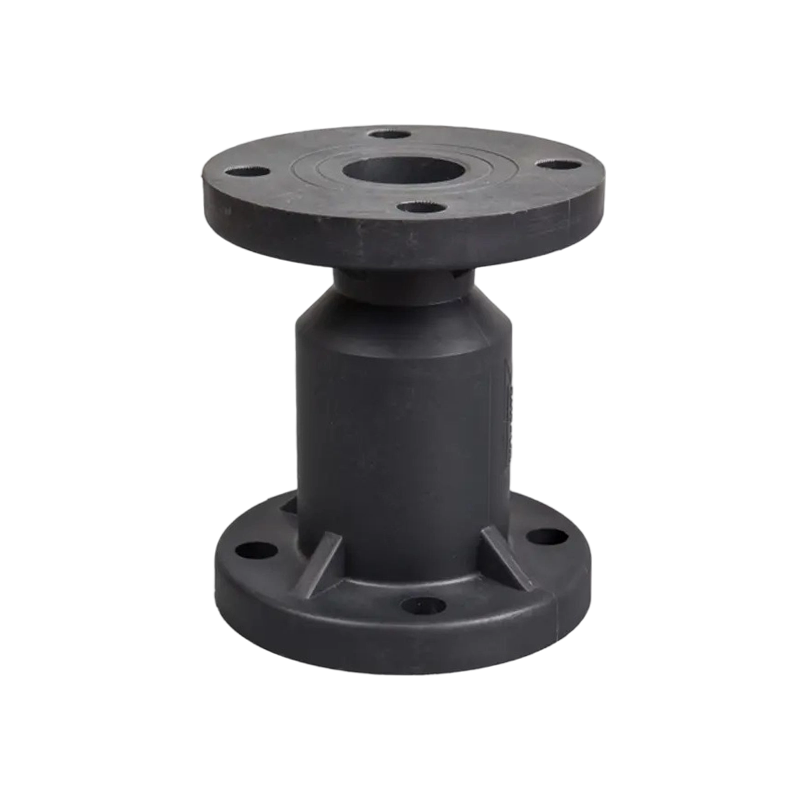
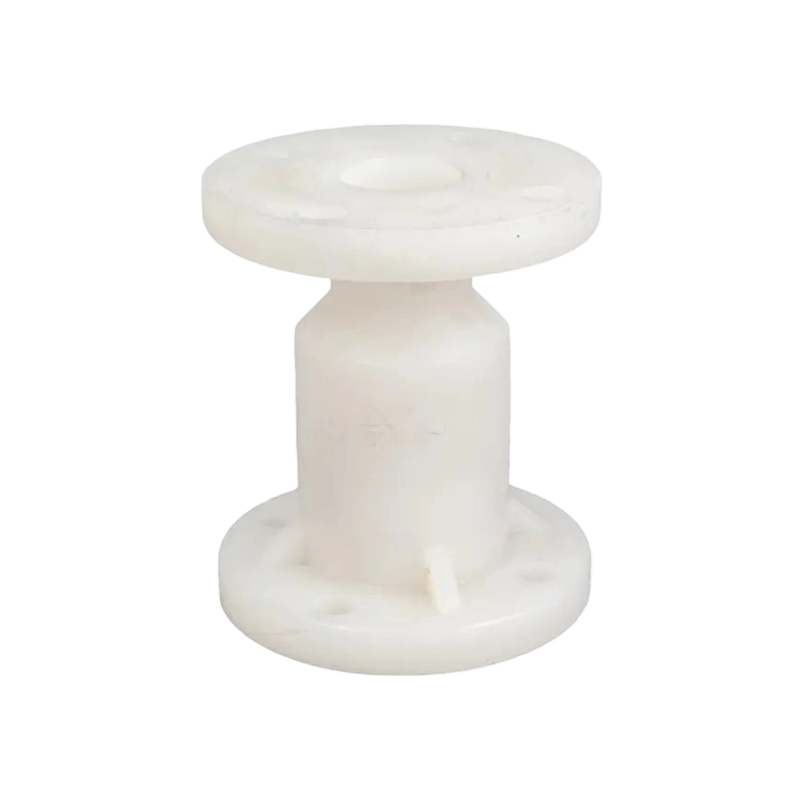 Flanged Ball Check Valve for Corrosive Chemical LinesThis full-spherical flanged check valve prevents clogging with particulates and offers PTFE ball options, making it a reliable fit for corrosive chemical service.View Product →
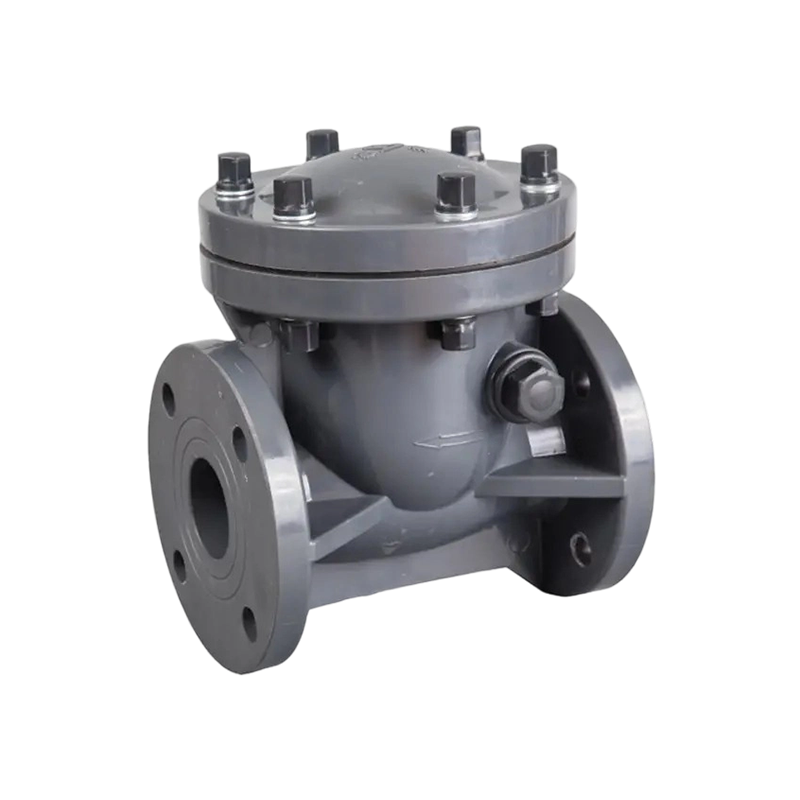 Swing Check Valve with Low Flow Resistance and Easy MaintenanceA swing-arm check valve that provides minimal flow resistance and simple bonnet access for maintenance, ideal for demanding plastic piping systems handling corrosive media.View Product →
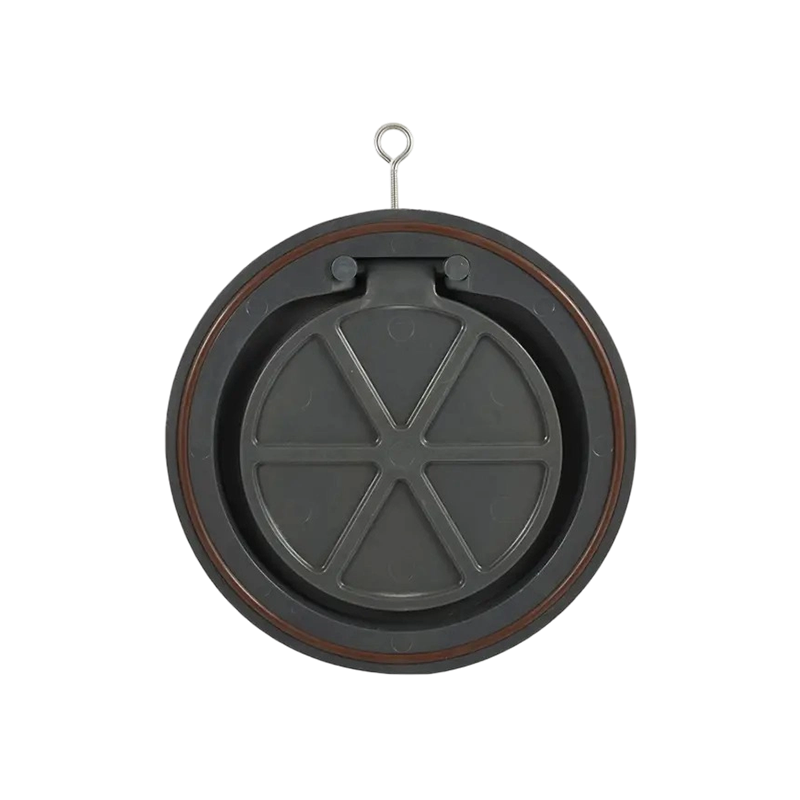
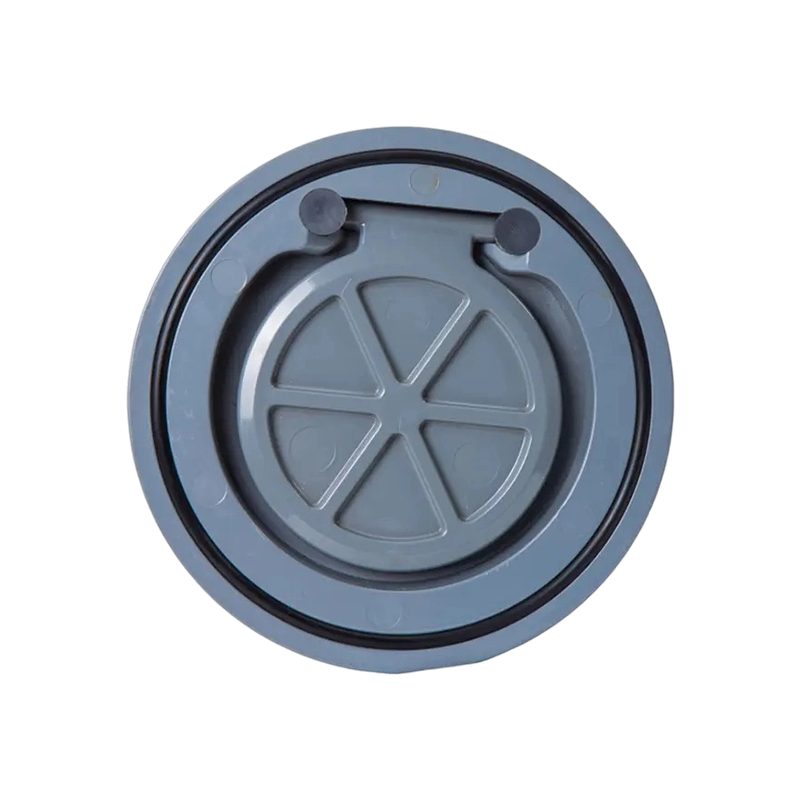 Lightweight Wafer Check Valve for Compact InstallationThis corrosion-resistant wafer check valve features a short face-to-face length, simplifying installation between flanges while remaining cost-effective for industrial plastic lines.View Product →
When a check valve is enough
- Pump discharge lines where the only concern is preventing reverse rotation of the pump.
- Chemical transfer lines where backflow would mix incompatible process fluids.
- Pressure relief and bypass lines where a simple one-way barrier is accepted by the operating procedure.
- Non-potable industrial water loops where the system does not connect to a public drinking water supply.
When a backflow assembly is mandatory
- Connections between process water and municipal drinking water.
- Chemical feed systems that inject additives into potable water.
- Irrigation lines with fertilizer or pesticide injection.
- Boiler feed or cooling tower connections that need a testable separation.
For most corrosive chemical applications, a single thermoplastic check valve is the practical engineering choice. If the same line also creates a potential cross-connection with drinking water, the design must include a proper backflow prevention assembly at the point of connection. The two jobs should not be combined into one valve. A comparison of different plastic check valve options is available in the industrial plastic check valves section of this site.
Pressure drop and flow behaviour
Pressure drop is the most direct way to compare a check valve and a backflow assembly because it affects pump sizing. A check valve opens when the differential pressure exceeds cracking pressure. The disc or ball stays partly lifted while flow continues. The shape of the flow path and the weight of the closing element decide the head loss. A swing check valve with a wide body has a lower head loss than a spring-loaded ball check valve in a smaller bore.
Relative pressure drop in typical plastic check valve designs, with the swing type as the reference point.
These values are schematic and should be confirmed with the valve manufacturer for each size and flow rate.
A backflow preventer assembly has two check modules and sometimes a relief valve, so the flow path is more complex. The head loss is not simply double that of one check valve; it can be three or four times higher depending on the internal reduction in bore size. For this reason, a pump discharge that currently works with a check valve cannot simply be replaced with a backflow preventer unless the available pump head is rechecked.
Material and chemical compatibility
Plastic check valves are selected because the fluid attacks metal. The wetted material must withstand the chemical concentration, temperature, and pressure of the application. Common thermoplastic materials are not all equal. UPVC is rigid and cost-effective for many acids and water applications but has a lower temperature ceiling. CPVC extends the temperature range and is used for hot corrosive media. PPH provides good chemical resistance and weldability. PVDF is used for high-purity and high-temperature chemical service. FRPP adds glass fibre reinforcement for higher strength in some pipe systems.
Typical thermoplastic materials used for industrial check valves and their usual service conditions
| Material |
Temperature range guidance |
Typical service |
Selection point |
| UPVC |
Up to 60°C |
Water, many acids, plating lines |
Low cost and good rigidity |
| CPVC |
Up to 95°C |
Hot corrosive liquids, industrial water |
Higher temperature resistance than UPVC |
| PPH |
Up to 80°C |
Chemical process, waste treatment |
Good weldability and impact resistance |
| PVDF |
Up to 120°C |
High-purity chemicals, aggressive acids |
Excellent chemical resistance and purity |
| FRPP |
Up to 90°C |
Corrosive slurry and structured pipework |
Fibre-reinforced strength for demanding loads |
The difference between a backflow valve and a check valve is also visible at the material level. Most backflow preventers used in drinking water protection are made from brass, bronze, or stainless steel. They are not selected for chemical compatibility; they are selected for mechanical reliability and code acceptance. A plastic check valve, on the other hand, can be made from the same polymer family as the pipe, giving a truly all-plastic process line. This matters in a plant where corrosion resistance is the main priority and where metallic ions cannot be introduced into the process liquid.
Installation orientation and space requirements
Orientation is a frequent source of check valve failure. A swing check valve relies on gravity for the disc to return to the seat. If it is installed upside down or with the hinge in the wrong plane, the disc may not close completely and the valve will leak in reverse-flow conditions. A spring-loaded check valve can be installed in more orientations, but the spring adds resistance and can fatigue over time. A ball check valve is less sensitive to gravity because the ball is pushed back onto the seat by the spring, but the ball should still be installed in the orientation indicated on the body.
Basic orientation rules
- Install the valve so the arrow or flow marking points in the direction of permitted flow.
- Use a vertical riser for ball check valves that need the ball to lift cleanly away from the seat.
- Support the pipe on both sides of the valve to avoid bending stress on the plastic body.
- Leave enough space for the lid or union to be removed for cleaning and inspection.
- Do not install a check valve immediately against a pump discharge without considering the length of straight piping needed to stabilise flow.
A backflow preventer assembly requires more space because it has multiple check modules and test cocks. It must remain accessible for annual testing. Many owners prefer to install it above grade in a heated enclosure if the climate can freeze the line. A single check valve inside an equipment skid can be buried in the piping, reducing the risk of mechanical damage but also making maintenance harder. If the system needs frequent cleaning, a union-type plastic check valve is easier to remove than a flanged assembly with long bolt sets.
Maintenance and common failure modes
A check valve is often forgotten until a pump starts to rotate backward, a line loses prime, or a mixing tank receives the wrong chemical. Because a check valve has no moving external parts, its internal disc, seal, or spring can fail without being visible from the outside. Regular inspection is the only way to catch the problem early.
Common failure signals for thermoplastic check valves and what they usually mean
| Failure signal |
Likely cause |
Recommended action |
| Line loses prime after shutdown |
Ball or disc is not seating completely |
Clean the seat and check the seal surface |
| Water hammer on pump shutdown |
Check valve closes too slowly |
Replace with spring-assisted or faster-closing type |
| Chattering or vibration during operation |
The flow is too low for the valve size |
Use a smaller valve or a different check design |
| External leakage at the body joint |
Seal or gasket damage from thermal cycling |
Replace gasket and check bolt torque |
Backflow preventers are maintained differently. They need a certified test to confirm that both check valves hold pressure and that the relief valve opens at the correct differential. The test interval is usually set by the local water supplier. A backflow preventer is not just cleaned; it is verified with a calibrated meter. This is one more reason a check valve cannot be treated as a backflow valve in a regulated water connection, even if it is physically capable of stopping reverse flow on the day it is installed.
Choosing the right product for the application
The quickest way to choose between a backflow valve and a check valve is to identify exactly what needs to be protected. If the boundary is a process line between two non-potable services, a check valve is usually enough. If the boundary involves drinking water, a compliant backflow preventer is required by cross-connection control rules. If the boundary is the drainage exit of a building, a backwater valve is the correct product, not a check valve.
Use a check valve when
You need to stop reverse process flow, maintain pump prime, or prevent reverse rotation of a pump. The line does not connect to a public potable water supply, or the connection is already protected by a separate backflow assembly.
Use a backflow preventer when
You have a physical connection between process water, irrigation, boiler feed, chemical feed, or any non-potable system and a drinking water supply. The assembly must be testable and installed in an accessible location.
Use a backwater valve when
You are protecting a building entry from sewer back-up. This is a drainage fixture, not a pressure piping valve, and should not be used to control process fluid reversal.
For a typical industrial plastic piping system, the selection sequence should be: identify the fluid, identify the connection type, confirm the required level of protection, calculate pressure drop, and then choose a check valve or a backflow assembly. An experienced thermoplastic valve manufacturer can supply a check valve in the correct material and connection style, but the decision to install a backflow preventer is usually controlled by the project specification and local regulations, not by valve preference.
Frequently asked questions
Can I use a check valve as a backflow preventer?
A check valve cannot be used as a substitute for a testable backflow preventer when the application is regulated by a drinking water cross-connection code. A check valve has only one closing element and no test ports. It may stop reverse flow, but it does not provide the verified double-barrier protection that a backflow preventer assembly is designed to provide.
Is a backwater valve the same as a check valve?
No. A backwater valve is installed in a drainage line to keep sewage from backing up into a building. A check valve is installed in a pressure line to stop reverse flow of the pumped or process fluid. The operating principles are similar, but the products are not interchangeable.
Do I need a backflow valve for a chemical pump discharge?
If the chemical pump discharge line is isolated from a potable water supply and the only concern is reverse flow of the process fluid, a thermoplastic check valve is normally sufficient. If the pump suction or a rinse water connection is linked to a drinking water supply, the system also needs a proper backflow preventer at that connection point.
Why do backflow preventers have two check valves?
Two check valves create redundancy. If the downstream check fails, the upstream check still closes. The space between the two checks can also be tested or monitored with a relief valve or test cock. A single check valve cannot provide the same level of assurance because it has no backup and no test point.
Which plastic check valve has the lowest pressure drop?
A swing check valve generally has the lowest pressure drop among plastic check valves because the full bore remains open when the disc is lifted. Wafer spring check valves are compact but the spring creates some resistance. Ball check valves can have a higher pressure drop because the ball partially obstructs the flow path. The exact value depends on valve size, flow rate, and body design, so request the manufacturer's flow curve before finalising the pump duty.