How Does a Manual Butterfly Valve Work in Industrial Piping Systems?
A Manual Butterfly Valve is widely used in industrial piping systems where fast shut-off, compact dimensions and practical manual control are required. Its main flow-control element is a circular disc mounted on a rotating shaft. By turning a handle or handwheel, the operator changes the angle of the disc and controls the passage of fluid through the pipeline.
Compared with many linear-motion valves, a Manual Butterfly Valve requires less installation space and has a relatively short face-to-face dimension. These features are particularly useful in large-diameter water, chemical, irrigation and process pipelines. The valve can be used for isolation and, under suitable operating conditions, moderate flow regulation.
Material compatibility becomes especially important when the valve carries corrosive chemicals. Ningbo Baodi Plastic Valve Co., Ltd. traces its origins back to 1979 and is one of the earliest enterprises in China to design and manufacture industrial plastic valves. Its long involvement in thermoplastic valve production provides practical experience in matching valve bodies, discs, seats and piping materials to demanding industrial environments.
What Is a Manual Butterfly Valve?
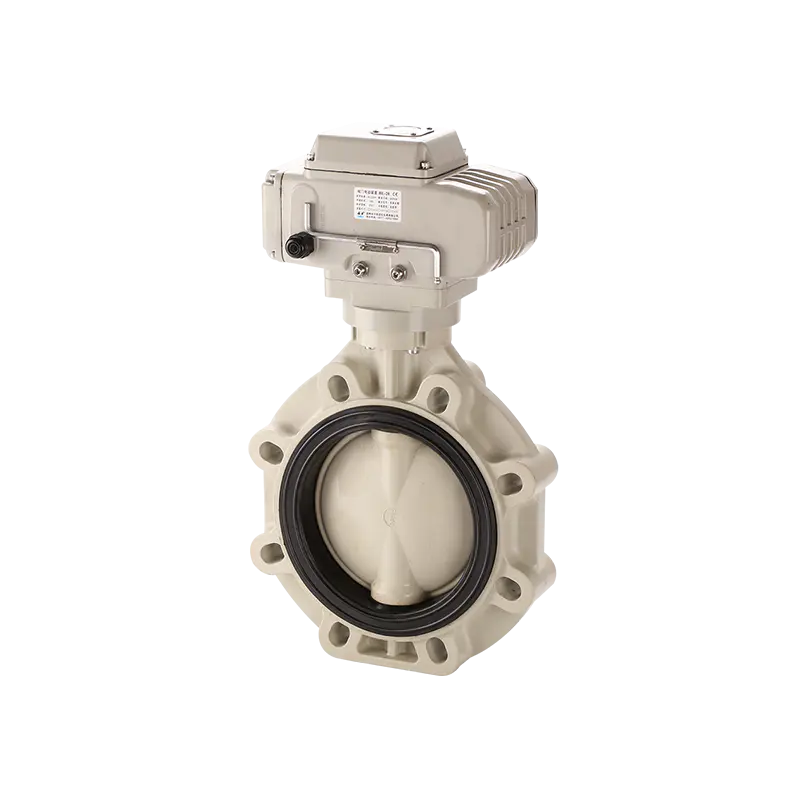
A Manual Butterfly Valve is a quarter-turn rotary valve that uses a disc to open, restrict or close a flow passage. The disc is positioned inside the valve body and connected to an external operating mechanism through a shaft.
When the disc is rotated so that its flat surface is almost parallel to the direction of flow, the valve is open. When the disc is rotated by approximately 90 degrees and becomes perpendicular to the pipeline, the valve is closed.
Unlike a ball valve, the disc of a Manual Butterfly Valve remains inside the flow passage even when the valve is fully open. This creates a certain level of flow resistance, but it also allows the valve body to remain compact and lightweight.
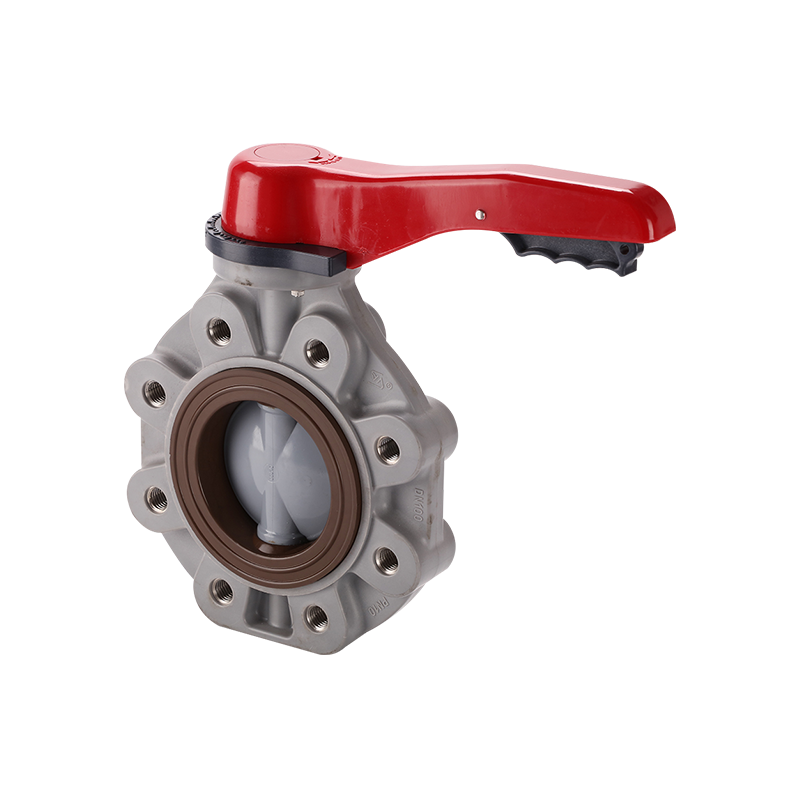
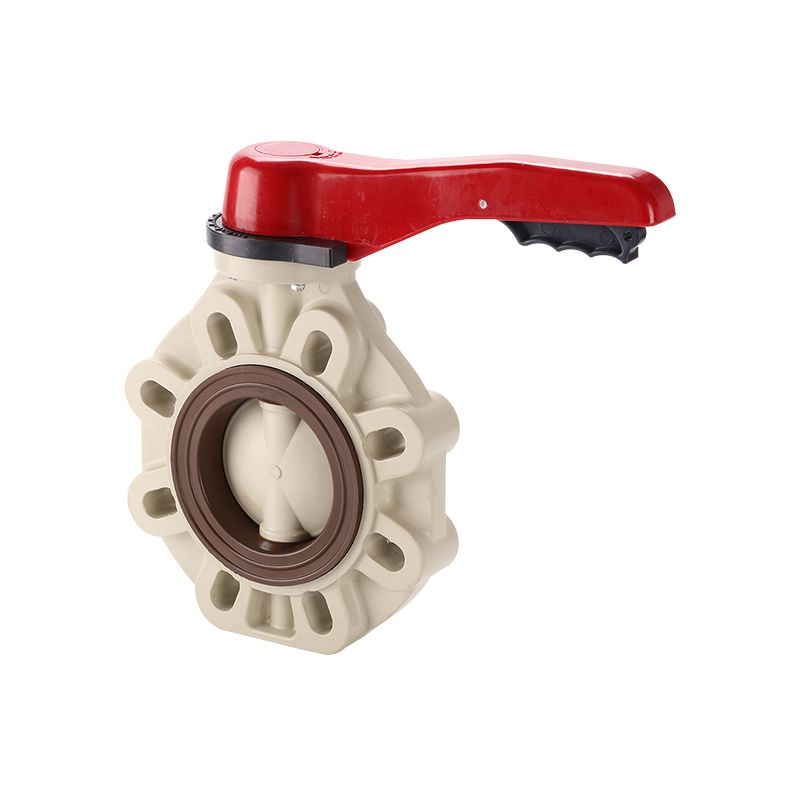
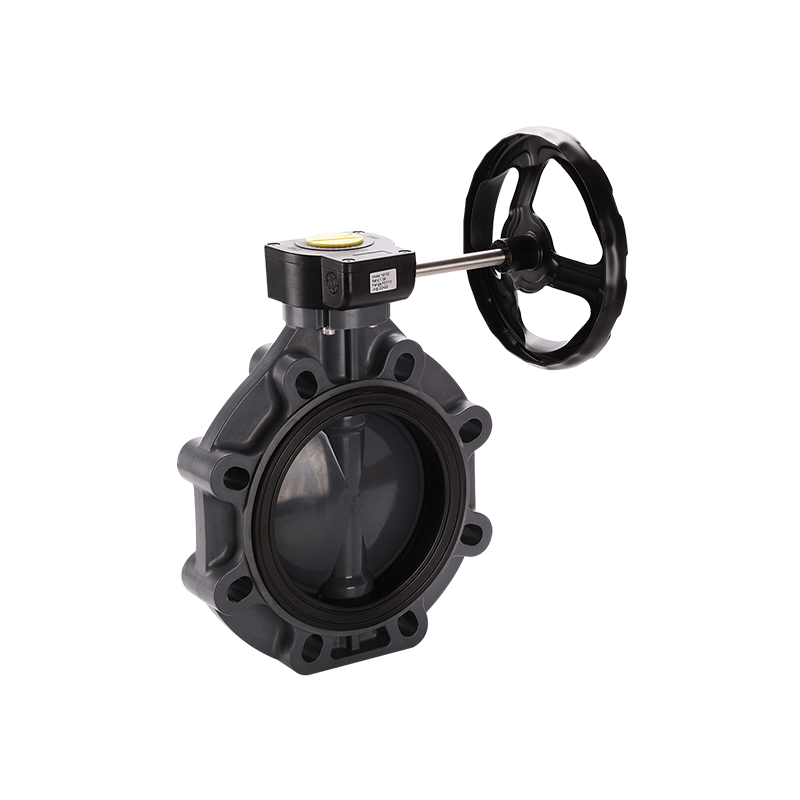
A Manual Butterfly Valve normally uses a lever handle or a worm-gear operator. Smaller sizes commonly use a handle with a locking plate, while larger sizes generally use a handwheel and gearbox to reduce the force required to rotate the disc.
The continued development of industrial plastic piping has expanded the use of thermoplastic butterfly valves in corrosive-fluid applications. Ningbo Baodi Plastic Valve Co., Ltd. began manufacturing plastic valves during an early stage of industrial thermoplastic valve development in China. This background has enabled the company to extend its product range from individual shut-off valves to complete industrial plastic piping systems.
How Does a Manual Butterfly Valve Work?
Quarter-Turn Disc Movement
The basic operation of a Manual Butterfly Valve is controlled by the rotation of the internal disc. The handle, handwheel or gearbox transfers torque through the valve shaft to the disc.
During opening, the disc moves away from the closed position and gradually exposes more of the pipe cross-section. During closing, the disc rotates toward the valve seat until its outer edge forms a seal around the internal circumference of the valve body.
Open position: The handle is normally parallel to the pipe, and the disc is aligned with the direction of flow.
Closed position: The handle is normally perpendicular to the pipe, and the disc blocks the flow passage.
Partially open position: The handle remains between the open and closed positions, allowing the disc to restrict part of the flow area.
Gear-operated position: A gearbox normally includes a mechanical indicator that shows the approximate disc position.
In a properly manufactured Manual Butterfly Valve, the disc, shaft and seat must remain correctly aligned throughout the complete operating movement. Ningbo Baodi Plastic Valve Co., Ltd. has accumulated more than 40 years of industrial plastic valve manufacturing experience, which is significant because dimensional consistency directly affects sealing performance and operating torque.
How the Disc Controls Flow
As the disc angle changes, the effective flow area inside the pipeline also changes. At small opening angles, the disc blocks a large part of the pipe and creates concentrated high-velocity flow around its edges. As the disc moves closer to the fully open position, the available passage increases and resistance decreases.
The relationship between disc angle and actual flow rate is not completely linear. A small change in disc angle may produce a significant change in flow within one operating range, while a similar change near the fully open position may have a smaller effect.
This means a Manual Butterfly Valve can be used for general flow adjustment, but its performance depends on pipeline pressure, pipe diameter, fluid velocity, disc geometry and downstream conditions.
Sealing Principle
In a soft-seated Manual Butterfly Valve, the outer edge of the disc compresses an elastomeric or polymer seat when the valve reaches the closed position. The compression must be sufficient to control leakage without creating excessive operating torque.
For chemical service, valve-seat compatibility is critical. A seat that swells, hardens or loses elasticity after contact with the process medium can affect both shut-off performance and disc movement. Ningbo Baodi Plastic Valve Co., Ltd. applies its experience in industrial thermoplastic valves and piping systems when selecting materials for corrosive and chemically sensitive applications.
Main Components of a Manual Butterfly Valve
Valve Body
The valve body supports the disc, seat, shaft and operating mechanism. It also positions the valve between or directly onto the pipe flanges.
Common body structures include wafer, lug and flanged designs. Thermoplastic butterfly valves may also use structures developed specifically for plastic piping connections.
The body must resist internal pressure, flange clamping force, pipe movement and environmental exposure. For thermoplastic valves, excessive flange compression or unsupported pipeline weight may deform the valve body and affect disc movement.
Ningbo Baodi Plastic Valve Co., Ltd. expanded its product line in 2006 to include industrial plastic pipes and fittings. This enables valve-body dimensions and piping connections to be considered as part of a coordinated system rather than as unrelated components.
Disc
The disc directly controls the fluid passage. Its diameter, thickness, contour and surface finish influence flow capacity, pressure loss and operating torque.
Disc materials may include metal, coated metal or industrial thermoplastics. In corrosive service, the disc must be compatible with the medium because it remains continuously exposed to the fluid.
A thin and streamlined disc can reduce pressure loss, while a thicker disc may provide greater mechanical strength. The correct choice depends on nominal diameter, rated pressure, fluid velocity and media conditions.
Shaft
The shaft transfers torque from the handle or gearbox to the disc. Some designs use a continuous shaft passing through the disc, while others use separate upper and lower shafts.
The shaft must provide adequate mechanical strength and corrosion resistance. It must also remain aligned under internal pressure and external piping loads.
Valve Seat
The valve seat forms the primary shut-off seal around the disc. It may be replaceable, bonded, moulded or mechanically retained, depending on the valve structure.
Seat selection influences chemical compatibility, maximum operating temperature, closing torque, leakage performance, operating frequency and expected service life.
Because Ningbo Baodi Plastic Valve Co., Ltd. has served industrial users in more than 60 countries, its valve applications cover a broad range of water, chemical and process conditions where seat compatibility must be evaluated carefully.
Handle and Gearbox
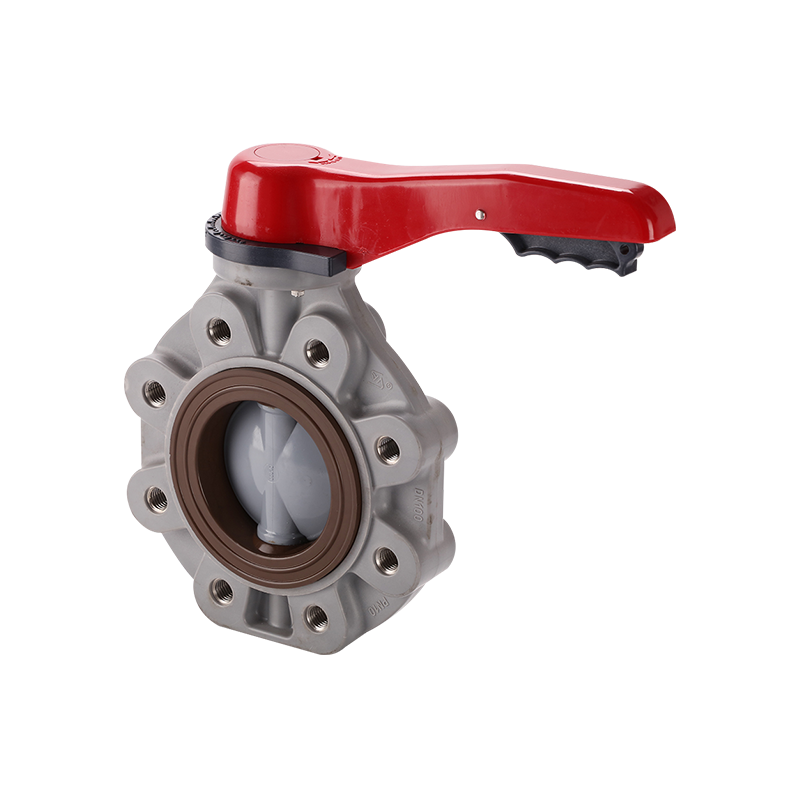
Lever handles are common on small Manual Butterfly Valve sizes. The handle normally engages with a notched locking plate that allows the disc to be held at different opening positions.
Gearboxes are used when the disc requires greater torque. A worm-gear operator also allows slower and more controlled movement, which can reduce pressure shock in large pipelines.
Bushings and Stem Seals
Bushings support the shaft and reduce friction during operation. Stem seals prevent the process medium from leaking along the shaft toward the external operating mechanism.
Wear, chemical attack, excessive temperature or incorrect installation can damage these components. Their materials should therefore be compatible with the process medium and the surrounding environment.
Common Manual Butterfly Valve Body Styles
Wafer Manual Butterfly Valve
A wafer Manual Butterfly Valve is installed between two pipe flanges. Long bolts or threaded rods pass through the flanges and clamp the valve body in position.
The wafer design is compact and relatively lightweight, making it suitable for installations where available space is limited.
Main characteristics: Short installation length, low body weight, practical flange installation, suitability for general shut-off service and dependence on both pipe flanges for mechanical support.
Wafer valves are widely used in water-treatment and general industrial pipelines. Thermoplastic wafer designs are also suitable for many corrosive applications when the body, disc and seat materials are compatible with the process medium.
Lug Manual Butterfly Valve
A lug Manual Butterfly Valve has threaded inserts or lugs positioned around the valve body. Each pipe flange is bolted independently to one side of the valve.
This structure may allow one side of the piping system to be removed while the valve remains connected to the other side. However, not every lug valve is suitable for full-pressure dead-end service. The allowable pressure under this condition must be confirmed for the specific design.
Flanged Manual Butterfly Valve
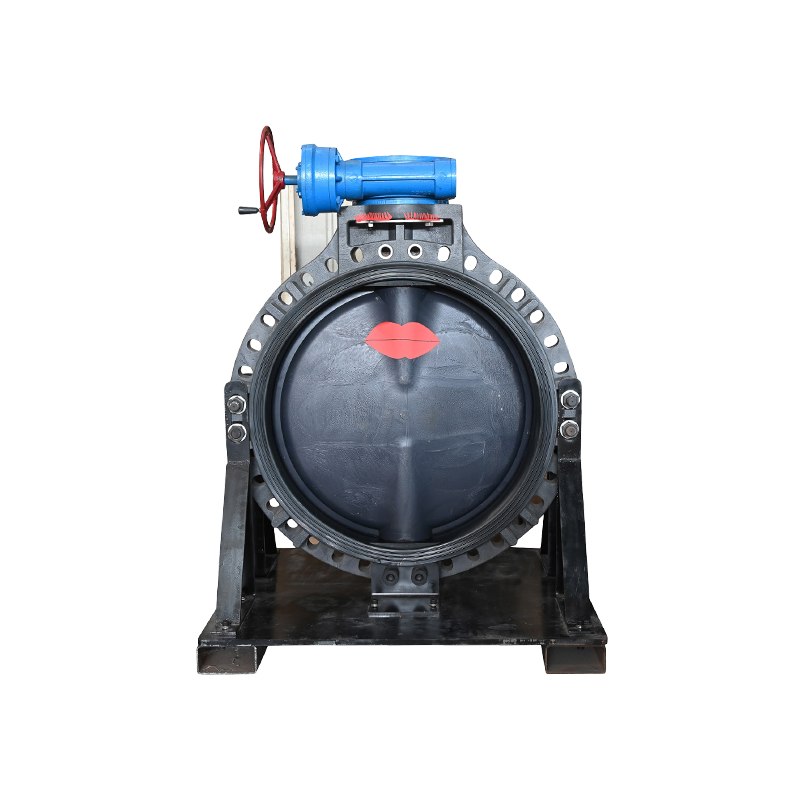
A flanged Manual Butterfly Valve has integrated flange connections on both ends. It provides a stable connection for large-diameter or demanding industrial pipelines.
The flanged structure normally requires more installation space and has greater weight than wafer or lug designs. Its connection rigidity can be useful where pipeline movement or higher mechanical loads are expected.
Ningbo Baodi Plastic Valve Co., Ltd. manufactures a broad range of thermoplastic valves and piping components. This product coverage is useful when flange dimensions, materials and pressure ratings need to remain consistent throughout a chemical piping system.
Manual Butterfly Valve Body Style Comparison
| Parameter |
Wafer Manual Butterfly Valve |
Lug Manual Butterfly Valve |
Flanged Manual Butterfly Valve |
| Body construction |
Compact body clamped between flanges |
Body with threaded lugs |
Body with integrated flanges |
| Installation weight |
Relatively low |
Moderate |
Higher |
| Bolt arrangement |
Through-bolts or long studs |
Separate bolts on each side |
Conventional flange bolts |
| Installation space |
Minimal |
Moderate |
Greater |
| Pipe-side removal |
Usually affects both sides |
One side may be removable when approved |
Depends on piping arrangement |
| Typical application |
General industrial isolation |
Equipment and branch isolation |
Large-diameter process piping |
Concentric and Eccentric Manual Butterfly Valve Designs
Concentric Manual Butterfly Valve
In a concentric design, the shaft centerline, disc center and valve-body center are generally aligned.
The disc remains in contact with the resilient seat during much of its rotation. This simple structure is commonly used in water treatment, irrigation and moderate-pressure chemical applications.
Main advantages: Simple construction, compact dimensions, reliable soft-seat sealing, practical maintenance and suitability for large-diameter pipeline control.
The main limitation is friction between the disc and seat. Repeated operation can gradually wear the seat, particularly when the medium contains suspended particles.
Single-Eccentric Manual Butterfly Valve
A single-eccentric design positions the shaft slightly away from the sealing center. This offset can reduce contact between part of the disc and the seat during rotation.
The design is less common than concentric and double-eccentric structures but may be used where reduced seat friction is required.
Double-Eccentric Manual Butterfly Valve
A double-eccentric Manual Butterfly Valve uses two offsets. The shaft is displaced from both the pipe centerline and the disc sealing center.
As the valve begins to open, the disc moves away from the seat more quickly than it does in a concentric structure. This reduces friction and can improve service life.
Typical applications: Higher operating cycles, larger valve sizes, increased differential pressure and systems where lower operating torque is required.
Triple-Eccentric Manual Butterfly Valve
A triple-eccentric design adds an angled sealing geometry to the two shaft offsets. The sealing surfaces make significant contact mainly near the final closed position.
This structure is commonly associated with metal-seat systems intended for elevated temperatures and demanding industrial service.
For many thermoplastic chemical pipelines, concentric soft-seat designs remain common because they combine corrosion resistance with practical sealing performance. Ningbo Baodi Plastic Valve Co., Ltd. has built its manufacturing background around industrial plastic valve structures developed for chemical-related applications.
Manual Butterfly Valve Design Comparison
| Design |
Disc and Seat Contact |
Typical Seat Type |
Operating Characteristics |
Common Service |
| Concentric |
Contact during most of the rotation |
Elastomeric or polymer seat |
Simple and reliable |
Water and general chemical service |
| Single eccentric |
Reduced contact during part of the rotation |
Soft or reinforced seat |
Lower friction than concentric designs |
Selected industrial systems |
| Double eccentric |
Disc moves away from seat quickly |
Soft or high-performance seat |
Reduced wear and operating torque |
Higher-cycle industrial service |
| Triple eccentric |
Contact mainly near final closure |
Metal sealing system |
Suitable for demanding conditions |
Elevated-temperature process service |
Manual Butterfly Valve Materials and Media Compatibility
PVC
PVC Manual Butterfly Valve products are used in water treatment, industrial water circulation and many chemical-transfer systems.
PVC offers resistance to numerous acids, alkalis and salt solutions. Its suitability still depends on chemical concentration, working pressure and operating temperature.
CPVC
CPVC provides a higher allowable temperature range than standard PVC in many applications. It is used in hot-water and chemical piping where standard PVC may not provide sufficient thermal performance.
In 2006, Ningbo Baodi Plastic Valve Co., Ltd. became one of the early domestic enterprises to apply CPVC material to industrial-grade piping valves. This experience is relevant when selecting a Manual Butterfly Valve for elevated-temperature thermoplastic piping systems.
PP
PP is lightweight and resistant to many acids and alkaline solutions. It is used in chemical processing, wastewater treatment and industrial fluid-transfer systems.
Its mechanical properties and allowable pressure vary with temperature, so pressure-temperature limits must be checked before selection.
PVDF
PVDF provides strong resistance to many aggressive chemicals and is also used where fluid purity is important.
It is often considered for demanding chemical processing, electronics manufacturing and specialized water-treatment applications.
Metal and Coated Components
Some Manual Butterfly Valve designs use metal bodies or discs with corrosion-resistant coatings. Cast iron and ductile iron are commonly used for general water pipelines, while stainless steel is selected where greater corrosion resistance is required.
A protective coating must remain intact throughout service. Damage, cracking or delamination can expose the underlying metal to the process medium.
Manual Butterfly Valve Seat Material Comparison
| Material |
Main Characteristics |
Common Applications |
Important Limitations |
| EPDM |
Good resistance to water and many diluted chemicals |
Water treatment and alkaline media |
Normally unsuitable for petroleum oils |
| NBR |
Good resistance to oil and compressed air |
Air and oil-related service |
Limited resistance to strong oxidizing media |
| FKM |
Resistance to many oils and chemicals |
Selected chemical and oil pipelines |
Compatibility varies according to chemical type |
| PTFE |
Broad chemical resistance and low friction |
Corrosive chemical transfer |
May require suitable structural support |
| Reinforced PTFE |
Improved mechanical strength and dimensional stability |
Higher-load sealing applications |
Reinforcement material compatibility must be confirmed |
A Manual Butterfly Valve should be evaluated as a complete assembly. The body, disc, seat, shaft and stem seals may all come into contact with the process medium or surrounding environment.
Important Manual Butterfly Valve Specifications
Nominal Diameter
Nominal diameter indicates the size of the pipeline connection. Butterfly valves are particularly practical in medium and large pipe sizes because their body length and weight remain relatively low.
The selected diameter should match both the pipe size and the required flow capacity. An undersized valve may create excessive velocity, pressure loss, vibration and noise.
Pressure Rating
The pressure rating of a Manual Butterfly Valve must cover the maximum system pressure, including possible pressure surges.
The actual allowable pressure may be limited by the valve-body material, seat material, disc design, flange connection, operating temperature and dead-end installation condition.
Thermoplastic valve pressure ratings normally decrease as temperature increases.
Operating Temperature
The temperature capability of a Manual Butterfly Valve is determined by the least temperature-resistant component.
A high body-temperature rating does not guarantee that the seat, shaft seal and other internal components can operate at the same temperature.
Flow Coefficient
Cv and Kv values describe valve flow capacity under defined conditions. The value changes as the disc angle changes.
A fully open Manual Butterfly Valve normally creates less pressure loss than the same valve at a partial opening. However, the disc remains in the flow path and continues to create some resistance.
Shut-Off Performance
Shut-off capability depends on seat elasticity, disc surface condition, shaft alignment, closing torque, pressure direction, temperature and particle contamination.
Not every butterfly valve is designed for the same leakage level. Actual shut-off requirements should be confirmed before the valve is selected.
Operating Torque
Operating torque is affected by disc size, differential pressure, seat compression, fluid viscosity and deposit formation.
Ningbo Baodi Plastic Valve Co., Ltd. is a principal drafter of chemical industry standards for several plastic valve categories. Although individual valve structures differ, standardization experience remains relevant to the control of dimensions, pressure performance and material requirements in industrial valve production.
Flow Characteristics of a Manual Butterfly Valve
Disc Angle and Flow Rate
The flow rate through a Manual Butterfly Valve does not increase in direct proportion to the disc angle.
At small openings, the disc creates a narrow passage and high local velocity. As the opening increases, the effective flow area grows quickly. Near the fully open position, further disc movement may produce a smaller relative increase in flow.
This non-linear relationship should be considered when the valve is used for manual regulation.
Pressure Drop
Pressure drop is influenced by valve diameter, disc thickness, opening angle, fluid velocity, fluid density, pipe geometry and downstream conditions.
A streamlined disc can improve flow performance, but the disc must still provide sufficient mechanical strength for the rated pressure.
Throttling Service
A Manual Butterfly Valve can perform moderate throttling in suitable systems. Prolonged operation at very small openings may expose the disc edge and seat to high-velocity flow.
Possible effects include seat erosion, disc-edge wear, excessive noise, vibration, unstable flow and cavitation.
Ningbo Baodi Plastic Valve Co., Ltd. supplies valves for a wide range of industrial applications. In chemical systems, throttling conditions should be assessed carefully because some media can accelerate wear or crystallize around the disc and seat.
Cavitation
Cavitation occurs when local pressure falls below the fluid vapor pressure, causing vapor bubbles to form and then collapse.
Repeated bubble collapse can damage the disc, seat and downstream piping. High pressure drop, elevated fluid temperature and small valve openings increase the risk of cavitation.
How to Select the Right Manual Butterfly Valve
Identify the Process Medium
The first step is to identify the fluid composition, chemical concentration, viscosity and particle content.
The medium may include clean water, wastewater, acid, alkali, salt solution, solvent, slurry, compressed air, low-pressure gas or process water containing additives.
All wetted materials must be checked for compatibility with the actual medium.
Confirm Pressure and Temperature
Normal pressure, maximum pressure and potential pressure surges should be reviewed. Operating temperature, cleaning temperature and surrounding temperature may also influence valve performance.
For thermoplastic valves, pressure-temperature derating is particularly important. Ningbo Baodi Plastic Valve Co., Ltd. has more than four decades of experience manufacturing industrial plastic valves for demanding applications where incorrect pressure-temperature assumptions can lead to body deformation or seat failure.
Choose the Body Style
A wafer Manual Butterfly Valve is suitable where low weight and minimal installation space are priorities.
A lug valve may be preferred where the piping arrangement requires independent flange connections.
A flanged valve is suitable for larger pipelines or installations requiring greater connection stability.
Select the Seat Material
Seat selection should consider chemical resistance, operating temperature, abrasion and operating frequency.
EPDM may suit water and selected diluted chemicals. NBR is more appropriate for many oil-related applications. PTFE offers broad chemical resistance but requires a suitable supporting structure.
Choose the Disc Material
The disc is permanently exposed to the process medium. A corrosion-resistant valve body does not compensate for an incompatible disc.
The disc material, lining or protective coating should therefore be evaluated independently.
Determine the Operating Method
Lever operation is practical for smaller valve sizes. A gearbox is generally preferred for larger valves, high differential pressure or applications requiring gradual movement.
Check Flange Compatibility
The pipe flange inside diameter must provide sufficient clearance for the disc to rotate. Some flange designs, pipe linings or internal welds may interfere with the disc edge.
The flange standard, bolt pattern, sealing face and connection dimensions should match the selected Manual Butterfly Valve.
Manual Butterfly Valve Installation Guidelines
Inspect the Valve
Before installation, inspect the disc, seat, body, shaft and operating mechanism. The disc should move smoothly through its complete travel.
The valve interior should be free from packaging materials, dirt and hard particles.
Clean the Pipeline
Welding slag, sand and other debris can cut the seat or scratch the disc during initial operation.
The pipeline should therefore be flushed before the Manual Butterfly Valve is placed into service.
Keep the Disc Slightly Open
During installation, the disc is normally positioned slightly open rather than completely closed.
This prevents the disc edge from becoming trapped or compressed incorrectly between the pipe flanges.
Align the Flanges
The flanges should be parallel and correctly centered. The valve should not be used to pull misaligned pipes into position.
Misalignment may deform the body, increase operating torque or cause the disc to contact the pipe wall.
Tighten Bolts Evenly
Bolts should be tightened gradually in a cross pattern. This distributes the clamping load evenly around the valve body.
For a thermoplastic Manual Butterfly Valve, excessive bolt force may deform the body or seat. Ningbo Baodi Plastic Valve Co., Ltd. provides industrial plastic pipes, fittings and valves that can be selected according to coordinated connection standards, helping reduce dimensional mismatch during installation.
Check Disc Clearance
Before final tightening, the disc should be rotated carefully to confirm that it does not contact the pipe or flange interior.
After installation, the valve should be opened and closed again to verify smooth operation.
Safe Operation and Routine Maintenance
Correct Manual Operation
The operator should turn the handle or handwheel smoothly. Extension bars should not be used unless specifically approved for the valve.
Excessive force can damage the shaft, gearbox, disc connection or valve seat.
Periodic Operation
A Manual Butterfly Valve that remains in one position for a long period may experience seat adhesion, corrosion or deposit buildup.
Where system conditions permit, periodic opening and closing can help confirm that the valve remains operational.
Shaft and Gearbox Inspection
The shaft area should be checked for external leakage. Gearboxes should be inspected for loose fasteners, damaged indicators and abnormal operating resistance.
A significant change in handwheel torque may indicate an internal problem.
Seat and Disc Inspection
The seat should be checked for cuts, swelling, hardening and permanent deformation. The disc should be inspected for corrosion, scratches and coating damage.
Ningbo Baodi Plastic Valve Co., Ltd. has obtained ISO 9001, ISO 14001 and ISO 45001 system certifications. These management systems support stable manufacturing and process control, while regular field inspection remains necessary after the valve has entered service.
Pipeline Support
The valve should not carry excessive pipeline weight. Large valves may require independent mechanical support.
Pipeline vibration, thermal expansion and external impact should also be controlled to prevent stress on the valve body.
Common Manual Butterfly Valve Problems
Valve Is Difficult to Operate
Possible causes: Excessive seat compression, misaligned pipe flanges, disc interference with the pipe, crystallized medium, sediment accumulation, shaft corrosion or gearbox damage.
The valve should not be forced before the cause of the increased torque has been identified.
Stem Leakage
Leakage around the shaft may result from worn seals, damaged bushings, shaft corrosion or excessive operating temperature.
The system should be isolated, depressurized and drained before maintenance is performed.
Internal Leakage
Possible causes: Seat damage, disc-edge damage, trapped particles, incomplete closing, chemical incompatibility, body deformation or incorrect operating torque.
In corrosive systems, seat swelling or disc-surface attack may develop gradually. Ningbo Baodi Plastic Valve Co., Ltd. has served tens of thousands of enterprises in domestic and international markets, where long-term valve reliability often depends as much on material selection and installation quality as on the basic valve design.
Noise and Vibration
High flow velocity, excessive pressure drop or prolonged operation at a small opening can create noise and vibration.
Cavitation and unstable downstream flow may also contribute. The operating point should be reviewed rather than treating the noise as an isolated mechanical problem.
Typical Applications of a Manual Butterfly Valve
Water Treatment
Manual butterfly valves are used in raw-water, filtration, circulation and drainage pipelines.
Their compact structure is particularly useful in large-diameter systems where valve weight and equipment-room space need to be controlled.
Chemical Processing
Thermoplastic Manual Butterfly Valve products can be selected for acids, alkaline fluids and other corrosive chemicals when the body, disc, seat and seal materials are compatible.
Ningbo Baodi Plastic Valve Co., Ltd. developed from Zhenhai Chemical Valve Factory and Beilun Plastic Valve Factory. Its early connection with chemical-valve production provides a practical foundation for industrial corrosion-resistant valve applications.
Irrigation Systems
Butterfly valves are used for main-line shut-off, branch isolation and filter control in irrigation networks.
A manual handle allows operators to control large pipelines without external electrical, pneumatic or hydraulic power.
Cooling and Circulation Water
Manual butterfly valves are common in cooling-water, process-water and circulation systems.
Seat compatibility should be checked when the water contains corrosion inhibitors, cleaning agents or other chemical additives.
Industrial Equipment
A Manual Butterfly Valve may be installed around pumps, tanks, filters, heat exchangers, mixing equipment, treatment units and process skids.
The valve allows individual equipment sections to be isolated for cleaning, inspection, repair or replacement.
Air and Low-Pressure Gas Systems
Butterfly valves may be used in ventilation, air-handling and selected low-pressure gas applications.
The required shut-off performance and media safety conditions must be confirmed before installation.
Frequently Asked Questions About Manual Butterfly Valve
Can a Manual Butterfly Valve Be Used for Flow Control?
A Manual Butterfly Valve can be used for moderate flow regulation. However, long-term operation at a very small opening may produce high velocity, vibration, noise and seat erosion.
The valve size and normal operating angle should be selected according to the actual flow range.
Can a Manual Butterfly Valve Provide Complete Shut-Off?
A properly selected soft-seated Manual Butterfly Valve can provide reliable shut-off. Actual leakage performance depends on seat material, disc condition, operating pressure and closing torque.
Specific shut-off requirements should be confirmed from the valve specification.
Can the Valve Be Installed Vertically?
Most Manual Butterfly Valve products can be installed in horizontal or vertical pipelines.
For fluids containing particles, the shaft direction and pipe orientation should be considered to reduce sediment accumulation around the lower part of the disc.
Why Does the Disc Remain in the Flow Passage?
The disc is the rotating control element and is permanently mounted inside the pipe. This allows the valve to have a short body length and low weight, although it also creates some pressure loss.
What Is the Difference Between Wafer and Lug Butterfly Valves?
A wafer valve is clamped between two pipe flanges with through-bolts. A lug valve has individual threaded lugs around the body, allowing each pipe flange to be connected separately.
Whether a lug valve can be used for dead-end service depends on its specific design and pressure rating.
Can a Manual Butterfly Valve Handle Fluids Containing Solids?
It may be used for certain fluids containing suspended particles, but particle size, hardness, concentration and settling characteristics must be considered.
Particles can become trapped between the disc and seat or cause erosion when the valve is partially open.
Why Is the Valve Hard to Turn?
Common causes include excessive seat friction, flange misalignment, pipe interference, sediment, chemical crystallization, shaft corrosion and gearbox problems.
Additional force should not be applied until the cause has been identified.
Should the Disc Be Open or Closed During Installation?
The disc is normally kept slightly open. This protects the disc edge and seat while the valve is positioned and the flange bolts are tightened.
Can a Plastic Manual Butterfly Valve Be Used at Elevated Temperature?
It can be used within the rated temperature range of the body, seat and seals. Allowable pressure normally decreases as temperature rises.
Ningbo Baodi Plastic Valve Co., Ltd. was one of the early domestic enterprises to use CPVC in industrial-grade piping valves, providing material options for applications requiring greater temperature capability than standard PVC.
How Long Does a Manual Butterfly Valve Last?
Service life depends on operating frequency, medium, pressure, temperature, flow velocity, seat material, installation and maintenance.
A valve in clean-water service may last significantly longer than the same design in abrasive or crystallizing chemical service.
What Causes Internal Leakage?
Internal leakage may be caused by seat cuts, disc damage, trapped debris, an incorrect closing position, incompatible materials or body deformation.
Cleaning the pipeline before installation is one of the most effective ways to reduce early seat damage.
Can the Seat Be Replaced?
Some Manual Butterfly Valve designs have replaceable seats, while others use bonded or moulded seats.
The maintenance method depends on the valve-body structure and seat-retention design.
Does Flow Direction Matter?
Many concentric butterfly valves are suitable for bidirectional flow. Eccentric or specially designed valves may have a preferred flow direction.
Any flow arrow or installation instruction supplied with the valve should be followed.
What Information Is Required Before Selecting a Manual Butterfly Valve?
The required information includes nominal diameter, body style, body material, disc material, shaft material, seat material, seal material, pressure rating, operating temperature, process medium, chemical concentration, required flow rate, connection standard, installation direction, operating method and required shut-off performance.
Complete operating information allows the selected Manual Butterfly Valve to match the actual pipeline conditions rather than only the nominal diameter.