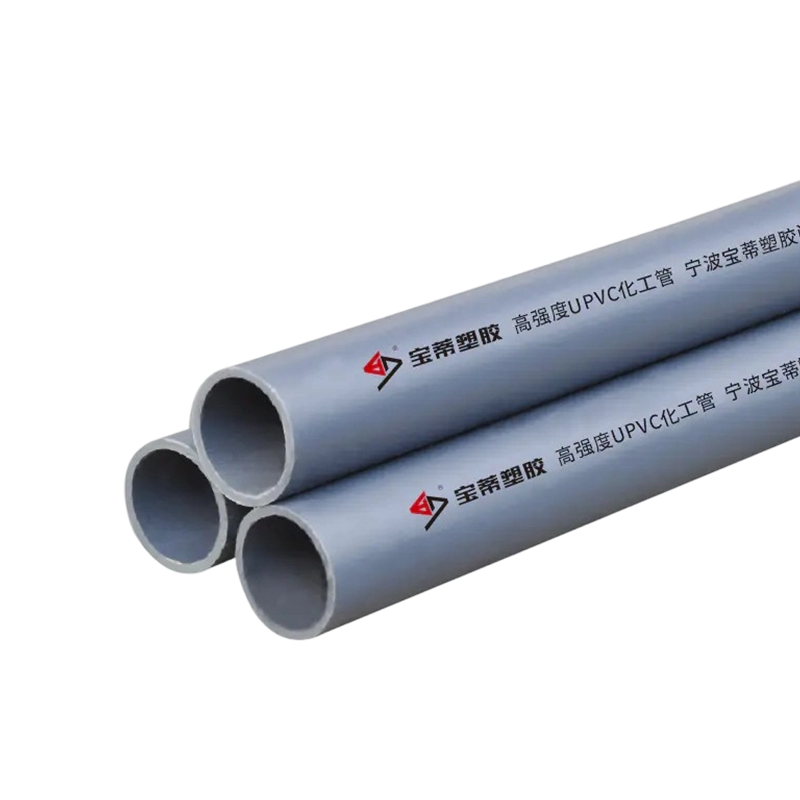
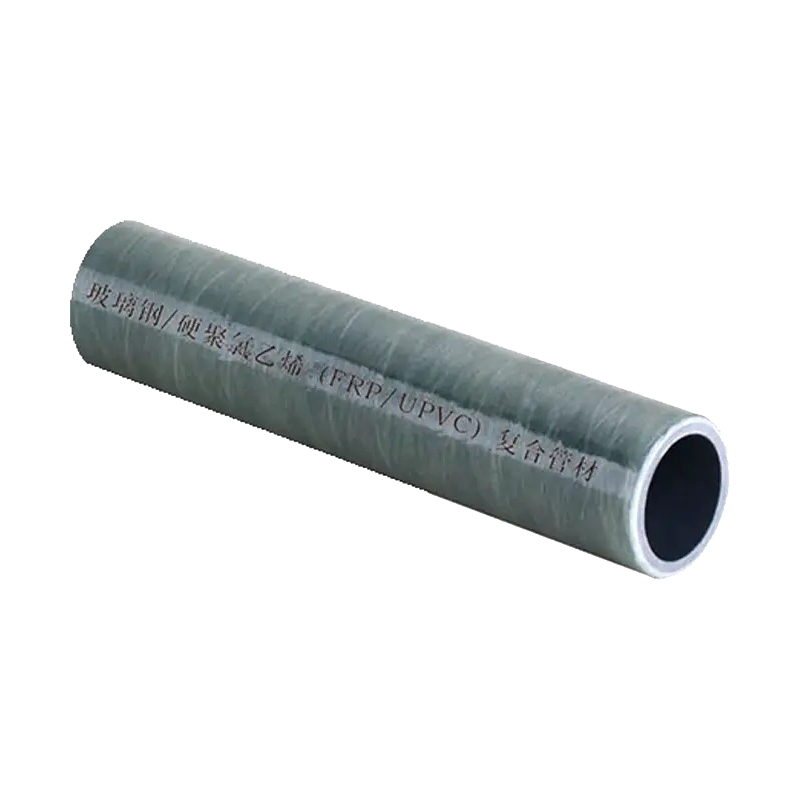
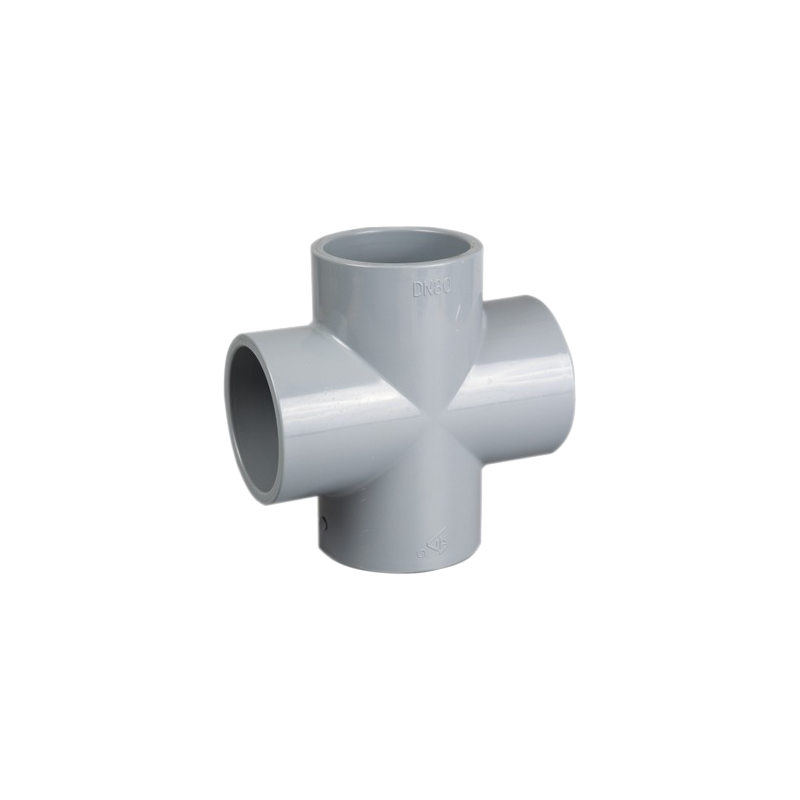
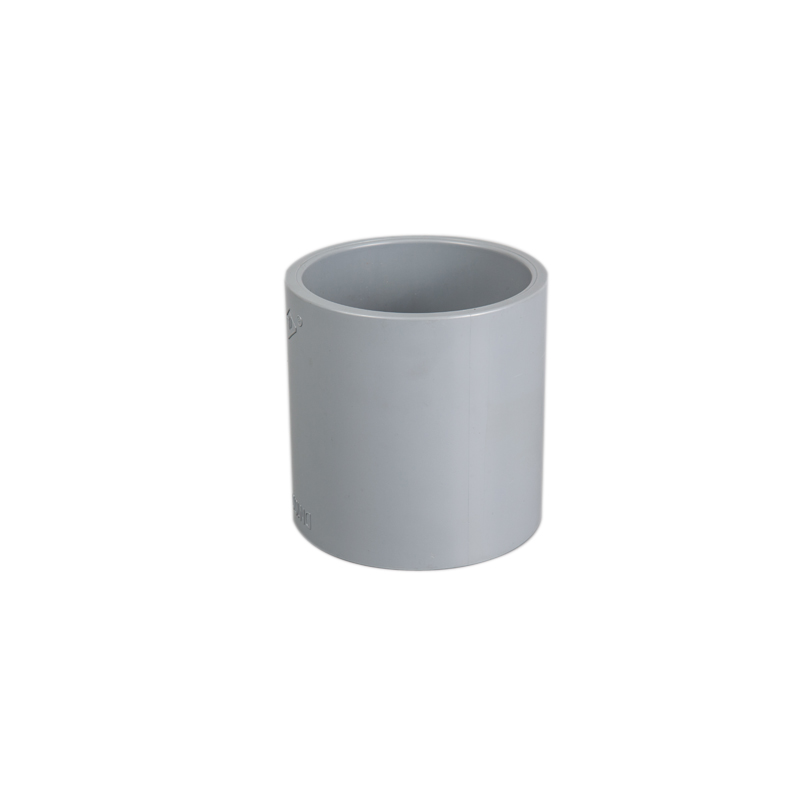
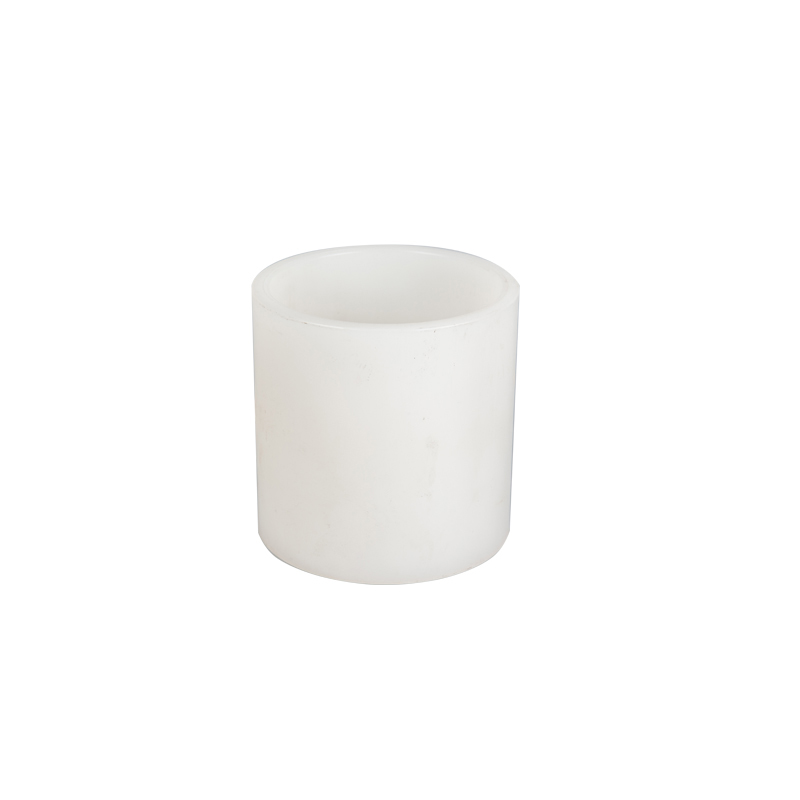
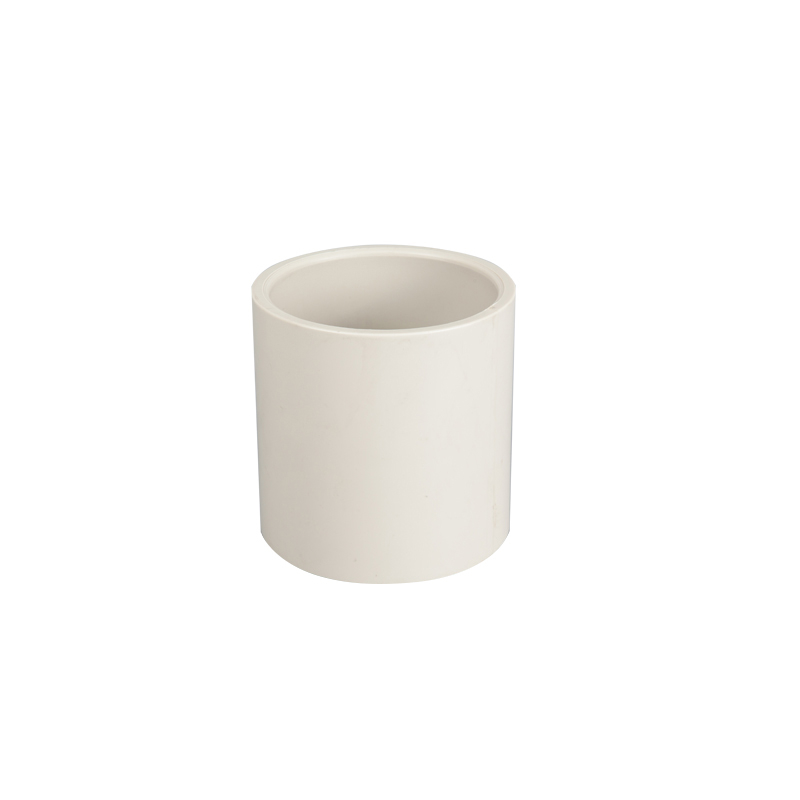
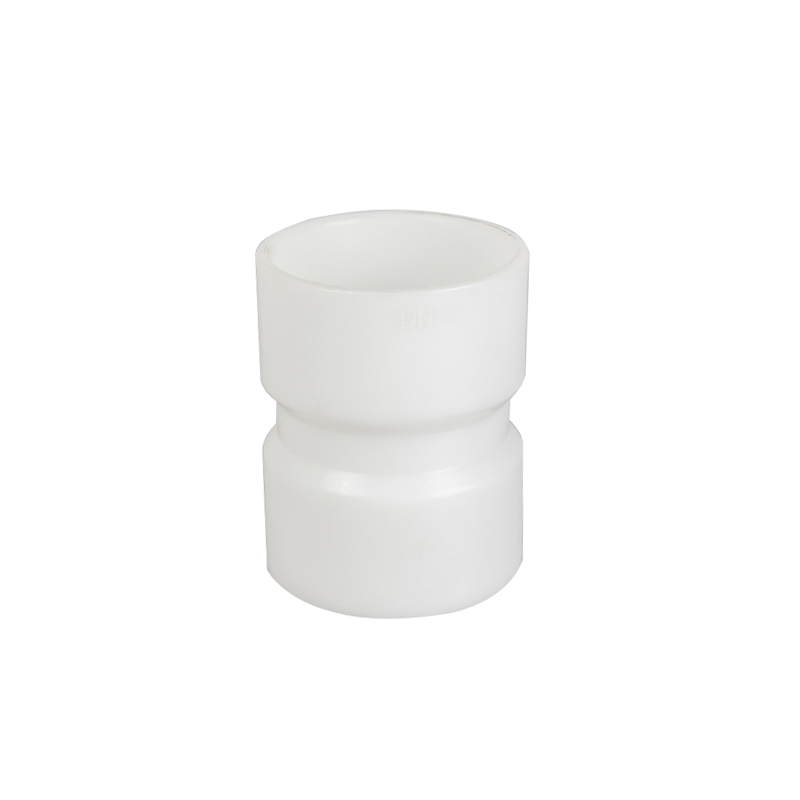
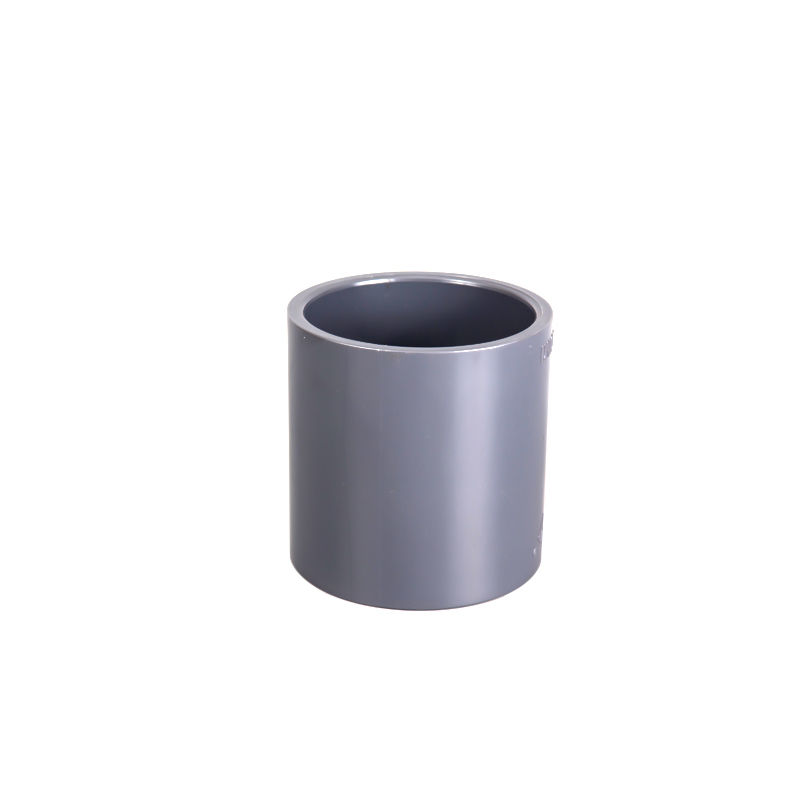
A Plastic Pipe Fitting Coupling joins two pipe ends in a straight run. Four distinct coupling types exist, each addressing a different installation or maintenance condition, and selecting the correct type is a common point of specification error, particularly the distinction between standard and repair couplings, which look similar but serve genuinely different installation scenarios.
Ningbo Baodi Plastic Valve Co., Ltd. has supplied plastic piping fittings alongside its valve product lines since expanding into industrial plastic pipes and fittings in 2006, with couplings among the most frequently ordered items across both new installation projects and pipeline maintenance and repair work for the company's distributor and project-contractor clients.
Standard (Fixed) Coupling
A basic permanent joint connecting two pipe ends of the same diameter, bonded or fused once installed. This is the default coupling for planned pipeline extension where both adjoining pipe sections can be positioned freely during installation, allowing normal insertion depth into each socket without any constraint on how the pipe is maneuvered into place. In new construction, where the full pipe run is being assembled from individual lengths in a controlled sequence, the standard coupling is the appropriate default, since there is no existing fixed pipe section to work around.
The standard coupling's socket depth on each side is calculated to provide adequate bonded or fused surface area for the joint to achieve its full rated pressure capacity, and this depth should not be reduced by cutting the coupling shorter or by under-inserting the pipe during assembly, even where doing so might seem to save material or simplify a tight installation.
Repair Coupling
Manufactured with a longer body than a standard coupling specifically so it can slide fully over one pipe end before a damaged section is cut out, then be repositioned to bridge the gap without requiring either adjoining pipe section to move. This is the coupling type required for buried, wall-chased or otherwise fixed pipe where the adjoining ends cannot be pulled apart — a condition that applies to most unplanned pipeline repairs, which is why repair couplings are the standard maintenance-stock item rather than standard couplings for facilities managing their own pipeline maintenance.
The repair sequence using this coupling type generally follows a consistent pattern: the damaged section is identified and isolated, the repair coupling is slid fully onto one of the two pipe ends adjacent to the damage (with enough clearance that the damaged section can then be removed), the damaged pipe is cut out, the new pipe section or the two existing ends are brought together at the correct gap distance, and the repair coupling is then slid back into its final bridging position and bonded or fused on both sides. Because the coupling must be slid the full length of its body during this process, the pipe surface it will travel across should be clean and free of burrs or damage that could catch the coupling or its internal sealing surface during positioning.
Expansion Coupling
Designed to accommodate a defined amount of axial movement from thermal expansion or contraction rather than acting as a fully rigid joint. Required in long straight runs subject to significant temperature variation, where standard fixed couplings at every joint can concentrate stress if the system's expansion loops, guides and anchors are not independently adequate to manage the total thermal movement expected across the run — plastic pipe expands and contracts considerably more than metal across the same temperature range, a property that is often underestimated by engineers whose primary experience is with metal piping systems.
An expansion coupling typically incorporates a sliding or telescoping element, sealed against leakage while still permitting a defined range of axial travel, rather than the fully bonded or fused rigid connection used in a standard coupling. The amount of movement a given expansion coupling can accommodate is a specified design parameter and should be checked against the calculated thermal expansion expected for the actual pipe run length and anticipated temperature range, rather than assumed to be generically sufficient for any application.
Threaded Coupling
Used in smaller auxiliary lines where a bonded or fused joint is impractical, or where the connection may require future disassembly without cutting. Where future disassembly access is the primary requirement rather than simple pipe extension, a union is generally the more appropriate fitting than a threaded coupling, since a union's three-piece structure is specifically designed around repeated reliable reopening in a way a simple threaded coupling, which still requires unscrewing an entire pipe section rather than a separate nut, is not.
None of these four types should be treated as a universal default across an entire project. A single facility commonly requires all four simultaneously: standard couplings for the initial installation of new process lines, repair couplings kept in maintenance stock for eventual unplanned failures, expansion couplings at specific points identified during thermal design review, and threaded couplings at the small number of auxiliary connections where occasional access without cutting is genuinely useful. Treating coupling selection as a single project-wide decision, rather than a location-by-location specification exercise, is itself a common source of the mismatches described throughout this section.
Type Selection Reference
| Type |
Disassembly |
Primary Application |
| Standard coupling |
Permanent |
New installation, planned pipe extension |
| Repair coupling |
Permanent once installed |
Fixed/embedded pipe repair, unplanned maintenance |
| Expansion coupling |
Permanent, allows axial movement |
Long runs with significant thermal cycling |
| Threaded coupling |
Removable |
Small auxiliary lines, occasional future access |
Installation Requirements Common to All Types
Pipe end preparation: cut ends must be square, deburred and clean before bonding or fusion; a poorly prepared end reduces joint strength regardless of coupling type selected, since an angled or burred cut reduces the effective contact area between pipe and coupling even when the coupling itself is dimensionally correct and properly selected for the application.
Insertion depth: pipe should be inserted to the coupling's full socket depth, marked before joining, to ensure adequate bonded or fused contact area. Marking the insertion depth on the pipe surface before applying solvent cement or beginning fusion allows the installer to visually confirm full insertion has been achieved once the joint is made up, rather than relying on feel alone, which can be unreliable particularly in awkward field positions.
Axial alignment during curing/cooling: the two pipe sections must remain aligned while a solvent-cement joint cures or a fusion joint cools; misalignment during this stage produces a permanently offset connection that introduces unintended bending stress at the joint for the remainder of the system's service life, and cannot be corrected after the joint has fully set without cutting it out and starting again.
Load timing: pressure and equipment loads should not be applied until curing or cooling is complete, per the material manufacturer's specified time for the ambient conditions at installation — cure and cooling times generally lengthen in colder ambient temperatures, a factor that should be accounted for on projects installed in cooler climates or seasons.
Material Options
PVC couplings cover ambient-temperature water supply, drainage and general chemical applications, representing the most commonly stocked and ordered coupling material across general industrial and municipal water projects. CPVC extends the same coupling types into hot water and higher-temperature service while retaining a similar installation process to PVC, easing the transition for installers already familiar with solvent-cement techniques. PP couplings, generally fusion-joined for a continuous homogenous joint, suit acid, alkaline and wastewater systems where the fusion process avoids introducing a separate adhesive material into chemically aggressive service. PVDF couplings serve aggressive chemical and high-purity applications, typically also fusion-joined, and are commonly specified where both purity and broad chemical resistance are simultaneously required.
Ningbo Baodi Plastic Valve Co., Ltd. produces couplings across this full material range and across all four functional types described above, supporting both new-installation project orders and the repair-coupling maintenance stock that distributors typically carry for their industrial and municipal customers' unplanned repair needs. This material-and-type breadth is a direct extension of the company's broader plastic piping fitting range, developed since its 2006 expansion into industrial plastic pipes and fittings, and allows a single distributor relationship to cover coupling requirements across water treatment, general industrial and chemical-processing customer segments without needing to source different coupling types from separate manufacturers.
Stocking Strategy for Distributors and Maintenance Buyers
Because pipeline damage is typically unplanned and repair timelines are often urgent, distributors and maintenance-focused buyers should stock both standard and repair couplings across common pipe sizes, since repair couplings are the type most frequently required on site for fixed or embedded pipe — a maintenance department that has stocked only standard couplings, anticipating planned extension work, can find itself unable to complete an urgent repair on buried or fixed pipe without a special order, introducing delay at exactly the point where a fast turnaround matters most. Buyers should confirm the connection method, pressure and temperature rating, and whether expansion-type couplings are required for long thermal-cycling runs at the point of specification, rather than defaulting to standard couplings across an entire stocking program regardless of application.
For bulk project orders, dimensional consistency in socket depth and wall thickness across production batches affects prefabricated pipe spool fit-up on site — a batch-to-batch variation that might be negligible for a single field repair can create cumulative fit-up problems across a large prefabricated spool assembly where many couplings must all interface correctly with pipe cut to precise lengths in a factory or staging-yard environment before being shipped to site for final assembly.
Diagnosing Coupling Joint Problems in the Field
Leaks discovered at a coupling joint shortly after installation are most commonly traced to inadequate insertion depth, insufficient solvent cement or fusion heat applied during joining, or contamination on the pipe or coupling surface (dirt, moisture, or residual cutting oil) that prevented a full bond from forming at the time of installation. These causes are generally traceable to the installation process itself rather than to a defect in the coupling as manufactured, and are best addressed by cutting out the affected joint and reinstalling with corrected technique rather than attempting a surface repair over an inadequately bonded joint.
Leaks or failures developing well after a period of reliable service point toward different causes: chemical attack on the pipe or coupling material from a fluid outside its rated compatibility range, thermal cycling stress on a standard (non-expansion) coupling installed in a run that experiences more temperature variation than was accounted for during design, or mechanical stress transmitted into the joint from inadequate pipe support elsewhere in the system, causing the coupling to bear bending or axial load it was not designed to carry. Distinguishing between these causes generally requires reviewing the original design conditions against the coupling's actual service history, since the corrective action differs substantially — a chemical-compatibility failure requires a material change, a thermal-cycling failure requires switching to an expansion coupling and reviewing the support and anchor layout, and a support-related failure requires correcting the pipe support system rather than replacing the coupling with an identical one that would simply fail again under the same unaddressed root cause.
Procurement Specification
Buyers ordering couplings should specify the coupling type explicitly (standard, repair, expansion or threaded) rather than ordering by nominal size and material alone and assuming a default type, since the four types are not interchangeable despite superficial similarity in appearance for a given pipe size. Connection method, pressure and temperature rating, and — for expansion couplings — the required range of axial movement, should all be confirmed at the point of order.
Ningbo Baodi Plastic Valve Co., Ltd. exports to more than 60 countries with ISO 9001, ISO 14001 and ISO 45001 certification supporting consistent coupling dimensions for both new-build and maintenance-stock orders, and has drawn on manufacturing experience dating to the company's 1979 founding to support distributor partners assembling comprehensive coupling stocking programs that anticipate the full range of installation and repair scenarios their own customers are likely to encounter.