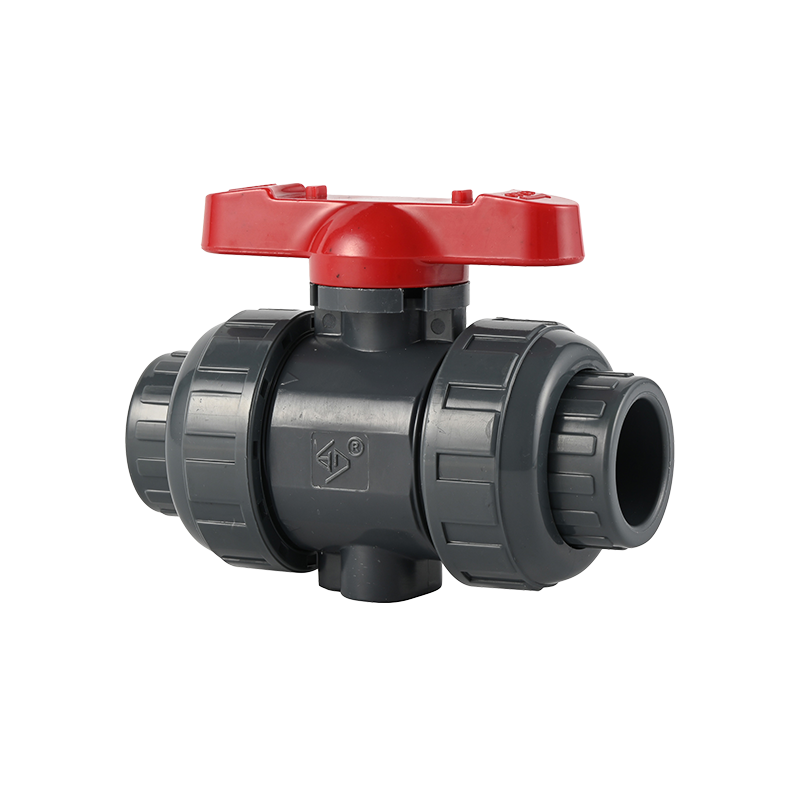
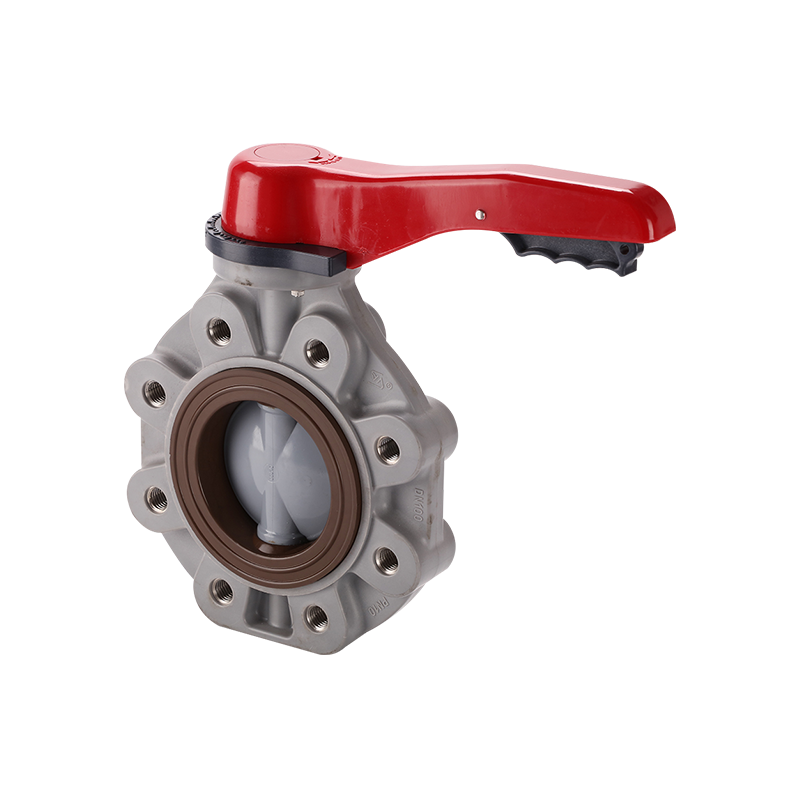
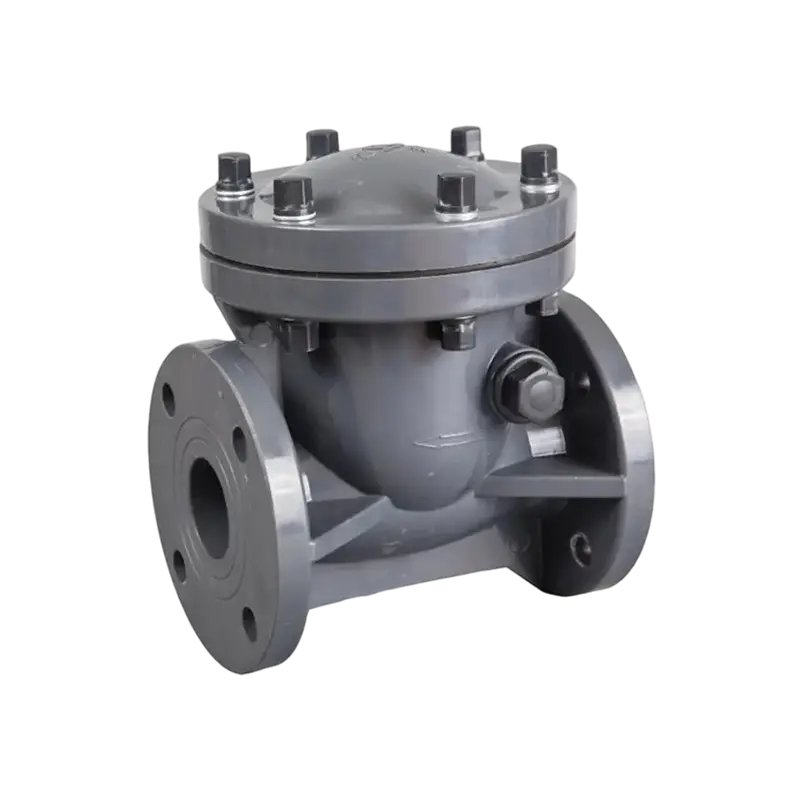
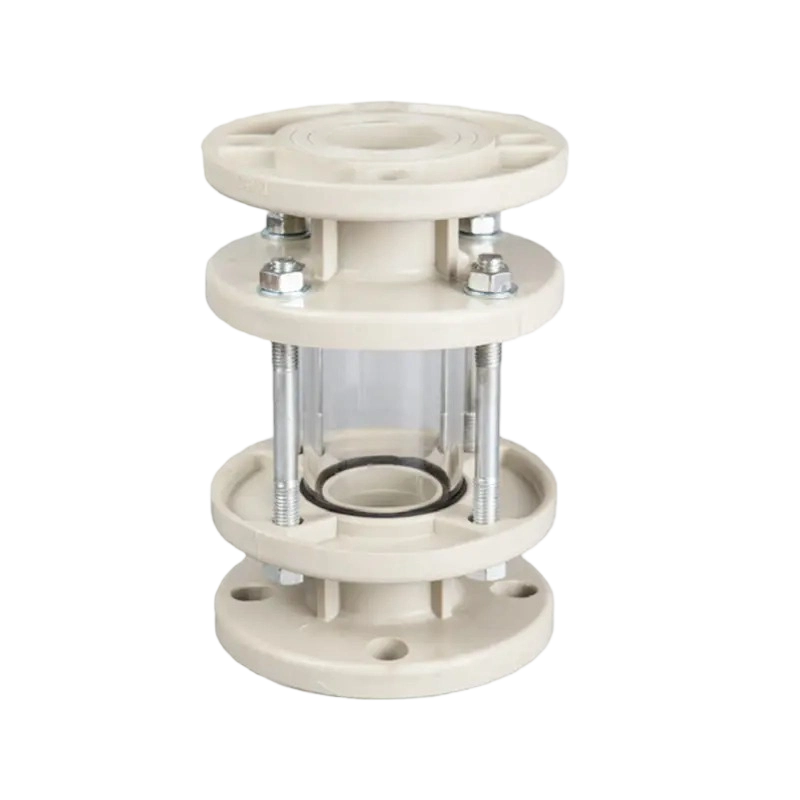
product product product product product product product product product product product product

Ball Type Plastic Check Valves Custom

Flow Control / Ball Check Series

Ball Type
Plastic
Check Valves

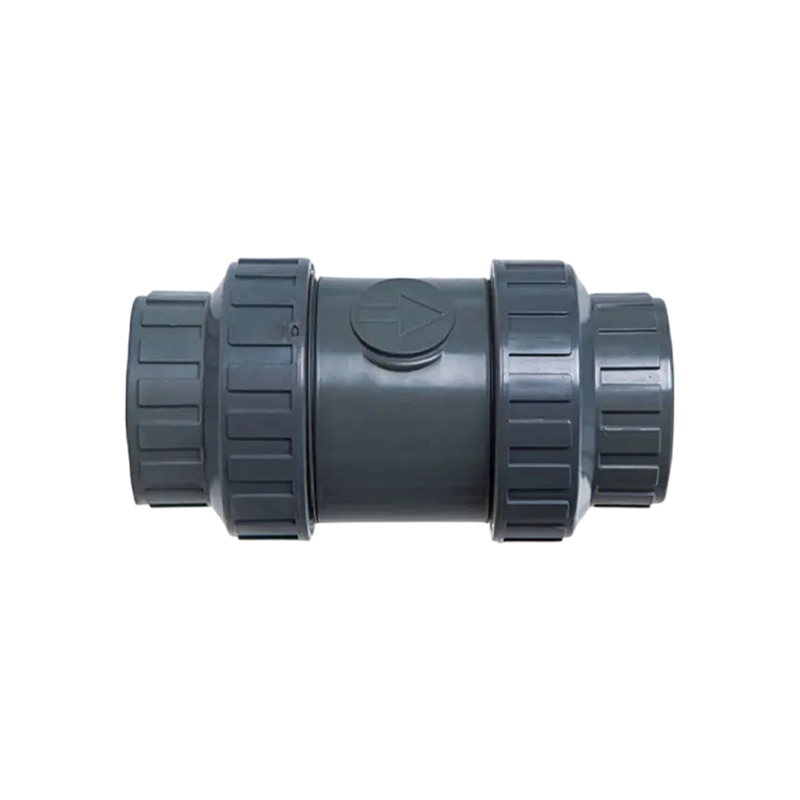
Plastic check valves with a free-moving ball that rolls onto the seat to stop backflow, self-cleaning in service and well suited to wastewater, slurries, and dosing lines.

Size RangeDN15 – DN100
PressureUp to 235 psi
Temperature0°C to 90°C
MOQ
120 pcs / size
Lead Time
4–6 days stock / 2–4 wks custom
Packaging
Carton / bulk pack
Certifications
ISO 9001, ASTM ref.
Raw Materials
PVC-U, CPVC, PP, PVDF; EPDM / FPM seal
Customization
Body material, ball material, seal, connection
Our Story

about BAODI

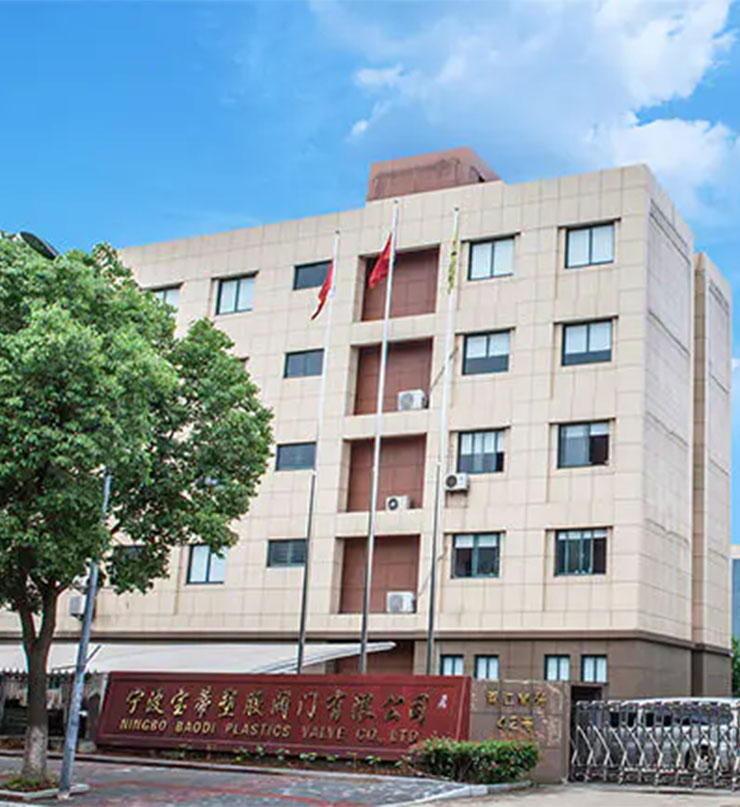
Ningbo Baodi Plastic Valve Co., Ltd. traces its origins back to 1979, with its predecessors being Zhenhai Chemical Valve Factory and Beilun Plastic Valve Factory. The company is one of the earliest Ball Type Plastic Check Valves Manufacturers and Custom Ball Type Plastic Check Valves Factory in China to design and produce industrial plastic valves and receive acceptance from the Ministry of Chemical Industry. In 1979, the company manufactured its first plastic diaphragm valve, which passed the technical appraisal of the Ministry of Chemical Industry in 1983. In 1992, the company invented the one-piece flange ball valve, a structural design that has since become the most widely used plastic valve product in chemical-related industries. The development history of the company and its predecessors also represents an important chapter in the application of plastic valves in China's industrial production.

In 2006, the company expanded its product line to cover industrial plastic pipes and fittings, becoming one of the first domestic enterprises to apply CPVC material in the production of industrial-grade piping valves. Over more than 40 years since its establishment, the company has designed and manufactured various plastic valves for the most demanding industries. It has served tens of thousands of enterprises both domestically and internationally, exporting to more than 60 countries, and has consistently remained a leading manufacturer of industrial thermoplastic valves and piping systems. Our professional service and stable quality have always been well received and recognized by customers.

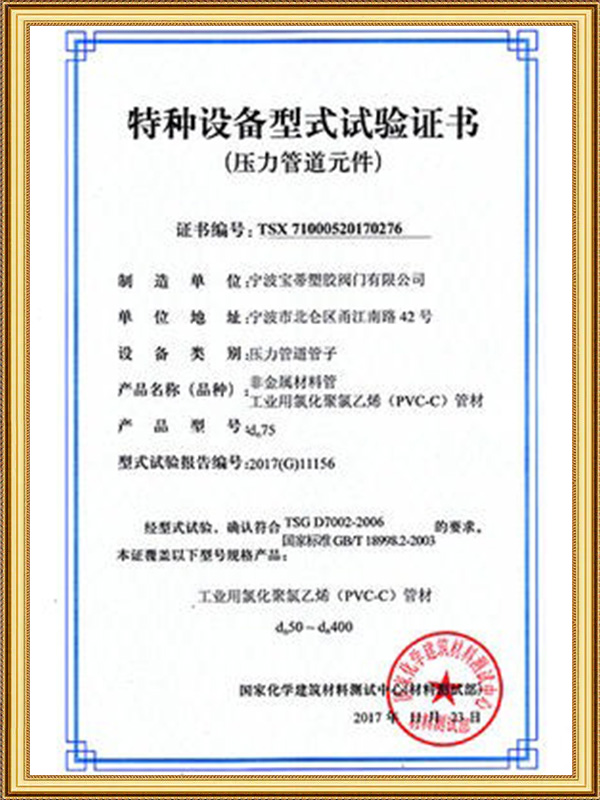
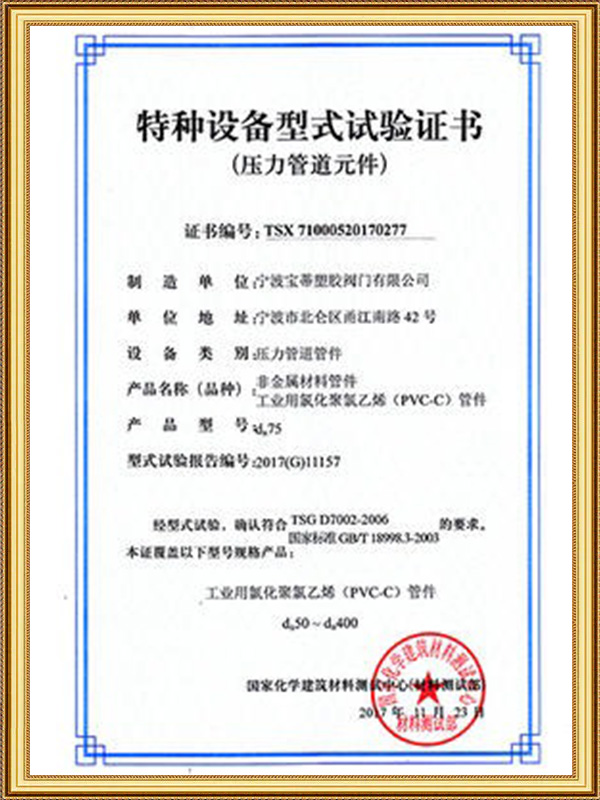
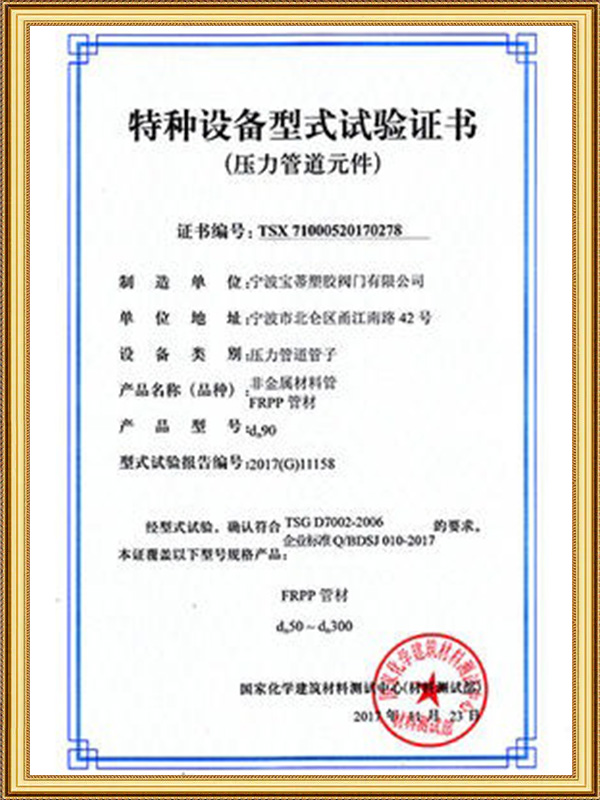
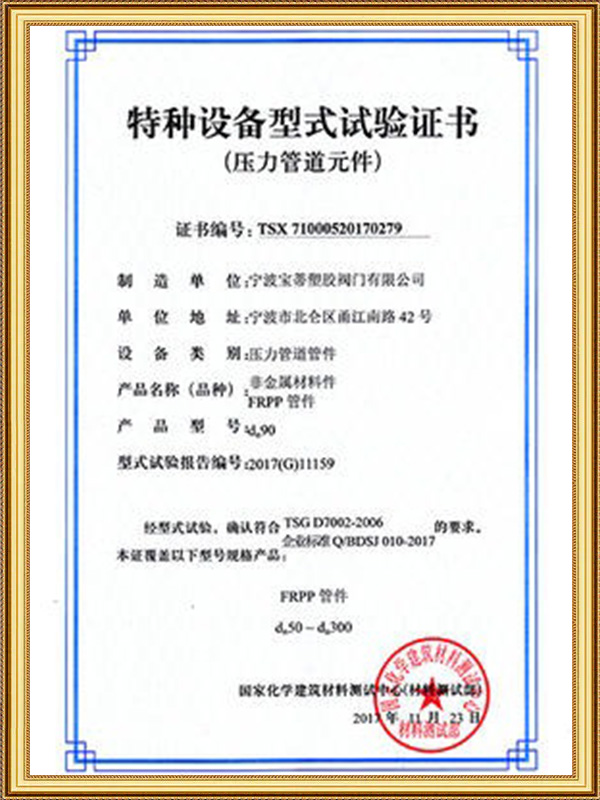
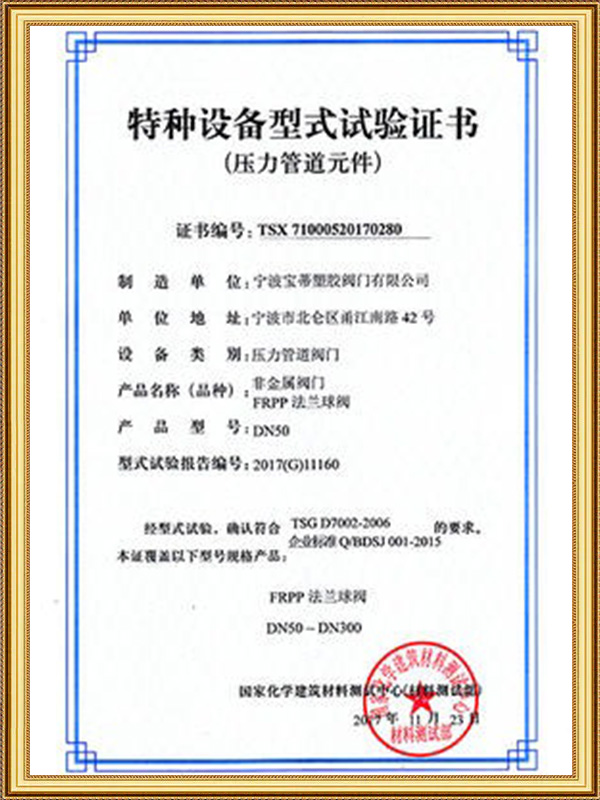
Baodi ranks among the global leaders in the number of product categories, capable of fully covering industrial plastic pipe and valve requirements. The company has obtained ISO 9001, ISO 14001, and ISO 45001 system certifications, as well as the national special equipment pressure piping component manufacturing license. It is recognized as a National High-Tech Enterprise and a Ningbo City Specialized and Sophisticated Enterprise. Baodi is a principal drafter of the national standard for plastic diaphragm valves and the chemical industry standards for plastic diaphragm valves, plastic ball valves, and plastic check valves.
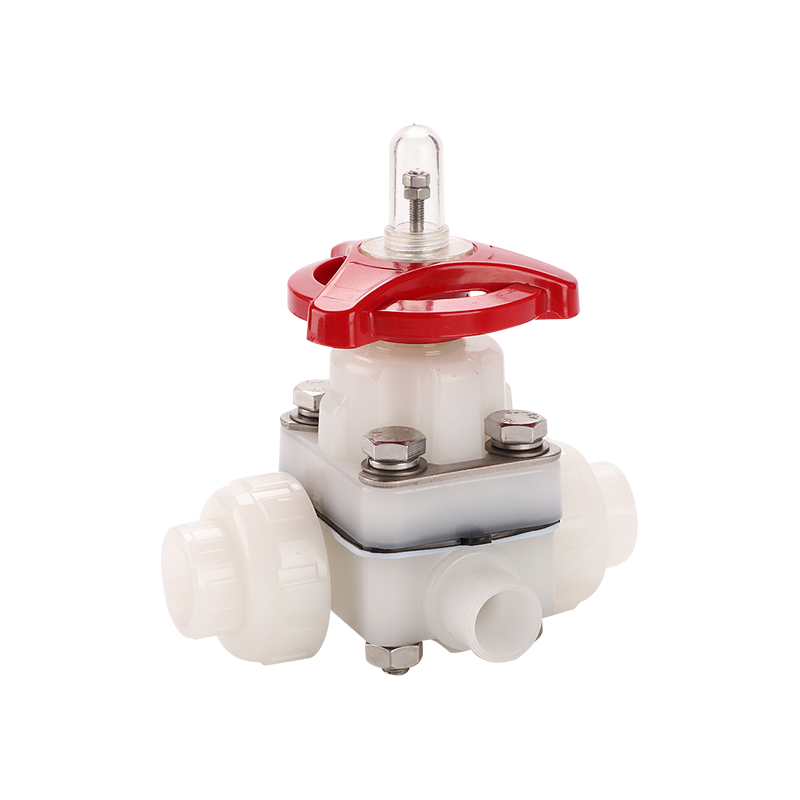

Ningbo Baodi Plastic Valve Co., Ltd.

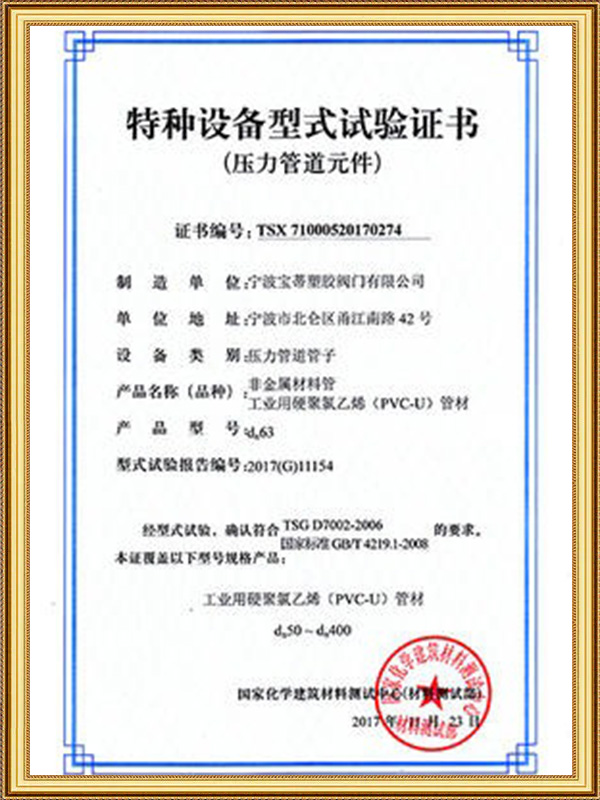
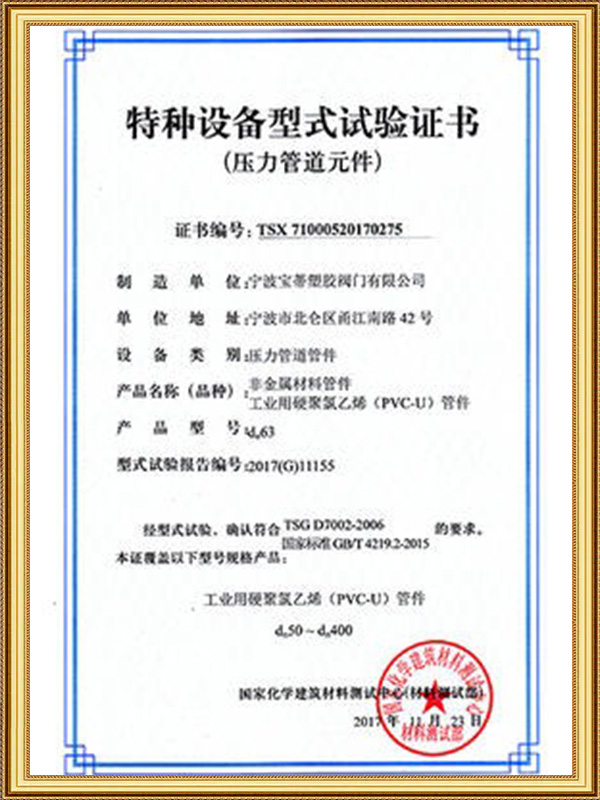
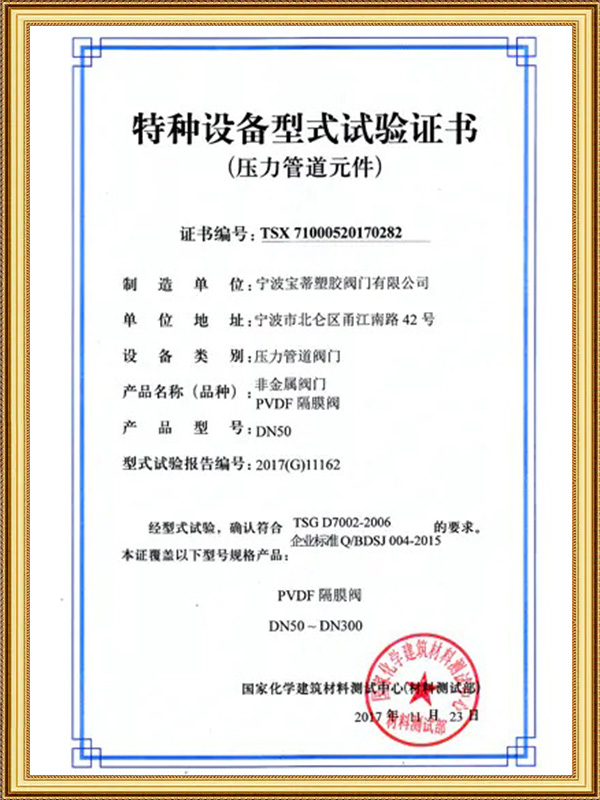
Certifications & Qualifications

OEM/ODM CUSTOMIZATION PROCESS

Custom Solutions

Design Idea

Tell us what you need. Such as material, color, size, mold, logo and package. Or you can just show us some photos.
Custom Solutions

2D Drawing

According to your request, we will make 2D drawing and confirm the details with you.
Custom Solutions

3D Modeling

We will build 3D model to create technical drawing and manufacturing specification.
Custom Solutions

Mold Fabrication

We produce initial samples for client approval, incorporating feedback for final adjustments.
Custom Solutions

Prototype Testing

Both the appearance and functions of the product prototype should meet the requirements.
Custom Solutions

Full-scale production

Once the sample is approved, we would start full-scale production using approved designs and high-quality raw materials.
47+

years of experience
30+

new tailor-made products every month
20000+

catalog products
10/50

Mass production time for new products
Overview

A free-moving ball that seals the line and passes solids

How a ball check works

A ball type plastic check valve uses a free ball sitting in a chamber in the body. Forward flow pushes the ball off its seat and along the chamber wall, opening a wide passage around it. When flow stops or reverses, the ball rolls back and seats against the inlet, sealing the line. With no hinge, spring, or stem, the design has few parts to foul.

Suited to dirty and viscous fluids

The ball turns slightly as fluid passes, which helps keep the seat clean, and the wide chamber lets solids pass without jamming. For these reasons, ball checks are the usual choice for wastewater, slurries, and viscous or fibrous fluids. They can be mounted horizontally or vertically, usually in a true union body, so the valve can be removed for cleaning without cutting pipe.

Application

Where ball checks are used

Fluids that carry solids or are likely to foul a hinge or spring are the natural home of a ball check.

Wastewater & Sewage Lift Stations
Preventing backflow in dirty water lines.
Chemical Dosing Pumps
Backflow prevention on pump discharge and injection points.
Slurry & Sludge Lines
Checks that pass suspended solids without jamming.
Pulp & Paper
Backflow protection on fibrous stock lines.
Aquaculture & Water Reuse
Preventing reverse flow in recirculation lines.
Industrial Cleaning Systems
Checks on rinse and wash circuits.
Material Selection

Body, ball, and seal choices

The ball is usually molded from the same family as the body, with the seal matched to the fluid.

ComponentOptionsSelection BasisNotes
BodyPVC-U, CPVC, PP, PVDFFluid chemistry and temperatureTrue union or single body
BallPVC-U, CPVC, PP, PVDF, or elastomer-coveredWeight and chemical resistanceDensity chosen so the ball seats reliably
SealEPDM, FPMFluid and temperatureO-ring on the seat
Union NutsMatched to body materialService accessAllow removal without cutting pipe
Specification

Technical data at a glance

ItemDescription
Valve TypeBall type plastic check valve, true union
Body MaterialPVC-U, CPVC, PP, or PVDF
Ball MaterialMatched to body material, or elastomer-covered
Seal MaterialEPDM or FPM
Size RangeDN15 – DN100 (1/2 inch – 4 inch)
End ConnectionSocket, threaded, or flanged
Working PressureUp to 235 psi (16 bar) at 20°C, rating decreases with temperature
Working Temperature0°C to 90°C, material dependent
OrientationHorizontal or vertical
Cracking PressureLow; depends on ball density and size
Comparison

Ball check vs. swing check

Both are simple automatic checks; the ball handles solids better, the swing check loses less pressure.

FactorBall CheckSwing Check
Handling SolidsSelf-cleaning, passes solidsCan foul the hinge or seat
Pressure LossModerate, ball sits in the chamberVery low, full bore
OrientationHorizontal or verticalHorizontal or upward vertical
Moving PartsSingle free ballDisc and hinge pin
Typical SizeSmall to mediumMedium to large
Best UseDirty, viscous, or dosing fluidsClean, steady-flow lines
Advantage

Why ball checks are chosen for difficult fluids

Self-Cleaning Seat
The ball rolls as fluid passes, which keeps the seat clear.
Passes Solids
A wide chamber lets suspended solids flow around the ball.
Few Moving Parts
A free ball has no hinge or spring to fail.
True Union Service
Union nuts allow removal for cleaning without cutting pipe.
Any-Orientation Mounting
Works horizontally or vertically.
Quiet Operation
The ball seats gently with little slam.
Structure & Components

What is inside the valve

A free ball sits in a chamber and rolls onto the inlet seat when flow stops.

1. Body — Plastic housing forming the ball chamber
2. Ball — Free-moving ball that opens and closes the passage
3. Seat — Sealing surface at the inlet
4. Seal — Elastomer O-ring around the seat
5. Union Nut (x2) — Allow the body to be taken out of the line
6. End Connectors — Socket, threaded, or flanged ends
Quality Control

Every valve is checked before it ships

Ball freedom and seat sealing are verified on every unit.

1
Material Check
Resin and elastomer batches are checked for grade and consistency.
2
Ball Freedom Check
The ball is moved by hand to confirm it rolls freely in the chamber.
3
Hydrostatic Test
Each body is pressure tested at its rated working pressure.
4
Backflow Seal Test
Reverse pressure verifies the ball seals on its seat.
5
Union Joint Check
Union nut engagement is checked for a leak-free joint.
6
Batch Traceability
Production batches are recorded back to raw material lots.
Options

Choosing ball and seal options

The ball and seal can be matched to the fluid and to the line orientation.

OptionBest Suited ForKey Characteristics
Standard BallGeneral dirty-water and dosing serviceMatched to the body material
Elastomer-Covered BallQuiet, soft seating on light fluidsGentle contact with the seat
FPM SealOils and some solventsBroader chemical range than EPDM
Installation & Maintenance

Getting it right in the field

Installation Guidance
  • Install with the flow arrow matching the flow direction.
  • In vertical lines, mount so flow runs upward, so the ball can fall back to the seat.
  • Leave room to remove the body at the unions.
  • Support the pipe on both sides so the body carries no pipe load.
Maintenance Guidance
  • Take the valve out at the unions and clean the chamber at intervals suited to the fluid.
  • Inspect the ball and seat for wear or scale.
  • Replace the seal if backflow is detected.
  • Check union nuts for tightness after the first thermal cycles.
Payment, Shipping & Warranty

Ordering with confidence

Payment & Shipping

Payment: T/T (bank transfer), L/C, and PayPal are accepted, with flexible terms for repeat orders. A deposit is typically required to confirm production.

Shipping: Sea freight (FCL/LCL) for bulk orders, air freight for urgent shipments, and express courier for samples. Valves are cartoned and palletized.

Delivery: Shipment from the nearest available port or airport, with door-to-door, FOB, CIF, or EXW terms on request.

Warranty & Support

Each valve is covered under a standard warranty against manufacturing defects in material and workmanship, generally valid for 12 months from the shipment date.

  • Help choosing ball and seal materials for your fluid.
  • Replacement balls, seals, and union hardware available as spare parts.
FAQ

Common questions

Which orientation works for a ball check?
Horizontal, or vertical with upward flow so the ball can drop back onto the seat by gravity.
Does a ball check handle solids?
Yes, the wide chamber and rolling ball let solids pass, which is why it is common in wastewater.
What is the cracking pressure?
It is low and depends on ball density and valve size.
Can the valve be cleaned in place?
True union versions allow the body to be removed for cleaning without cutting pipe.
What sizes are available?
DN15 to DN100 in standard ranges.

Related Information

Swing Type Plastic Check Valves

Overview A hinged disc that swings clear of the

Spring Loaded Plastic Check Valves

Overview A spring-assisted element that closes f

Weir Type Plastic Diaphragm Valves

Overview A raised-seat body geometry that reduce

Pneumatic Actuated Plastic Ball Valves

Overview Compressed-air operation for fast, repe

Electric Motorized Plastic Ball Valves

Overview Motor-driven shutoff for remote, wired

Industrial Plastic Check Valves

Overview Automatic backflow prevention in corros

High Pressure Plastic Ball Valves

Overview A reinforced body engineered for the up

Wafer Style Plastic Butterfly Valves

Overview A slim wafer body that clamps between s

One Piece Flange Ball Valves

Overview A single-piece flanged body for direct

Ready to specify a ball check valve?

Share your fluid, size, orientation, and connection type, and get a configuration recommendation.