product product product product product product product product product product product product

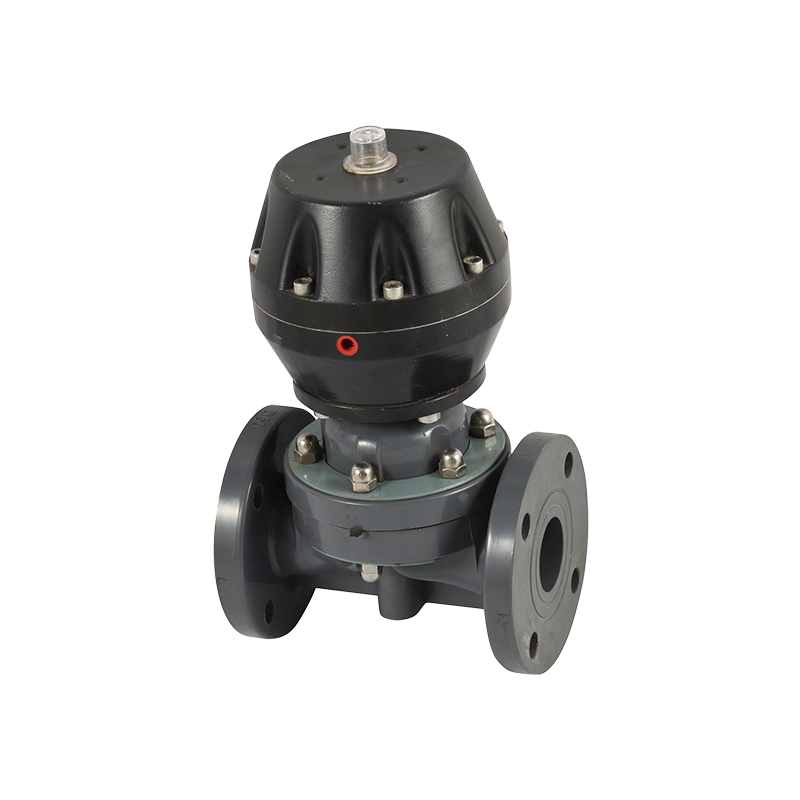
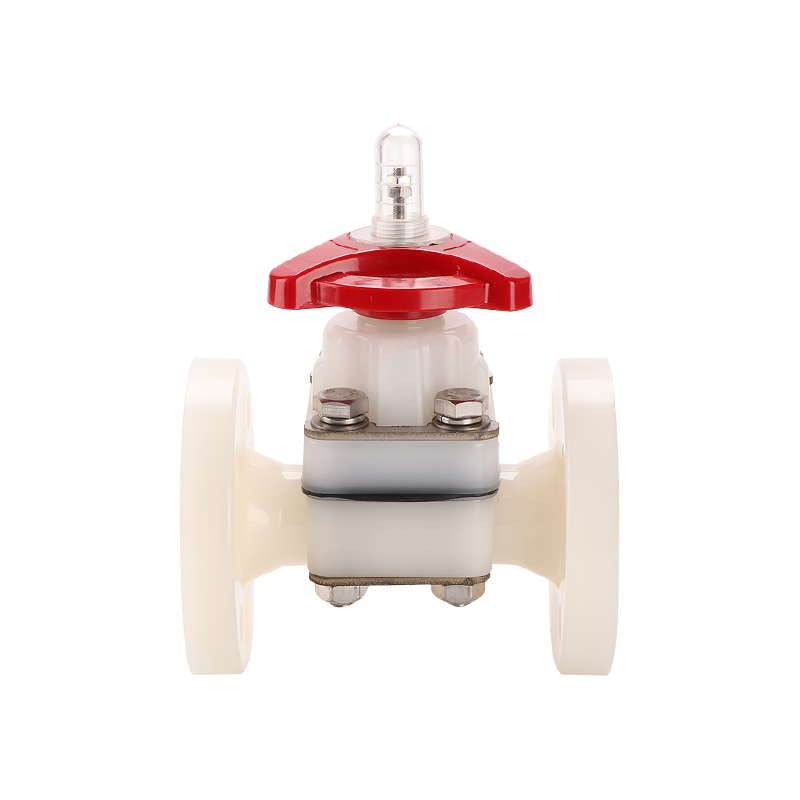
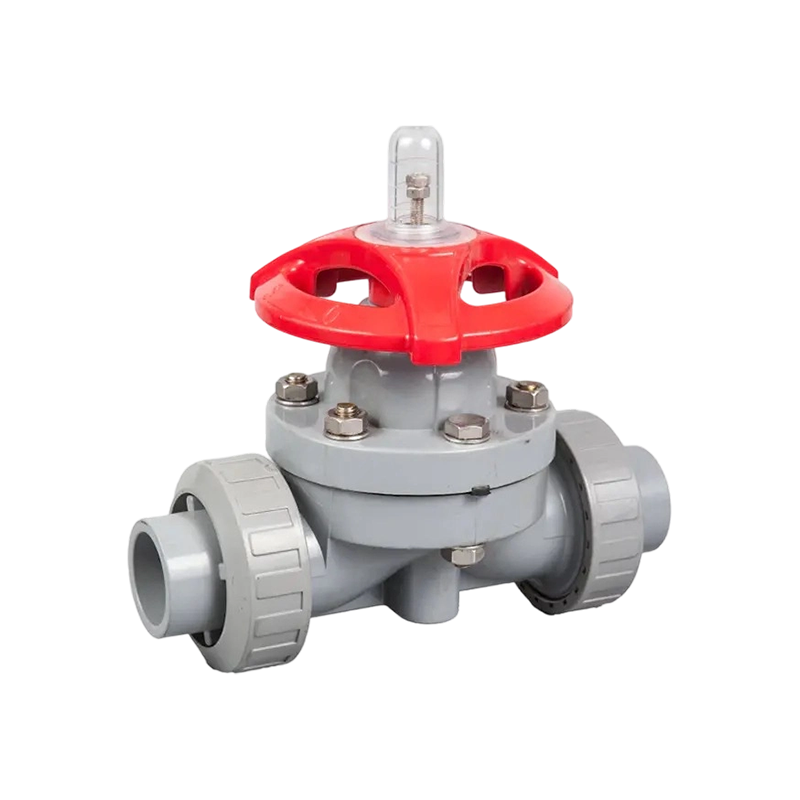
Weir Type Plastic Diaphragm Valves Custom

Flow Control / Weir-Type Diaphragm Series

Weir Type
Plastic
Diaphragm Valves

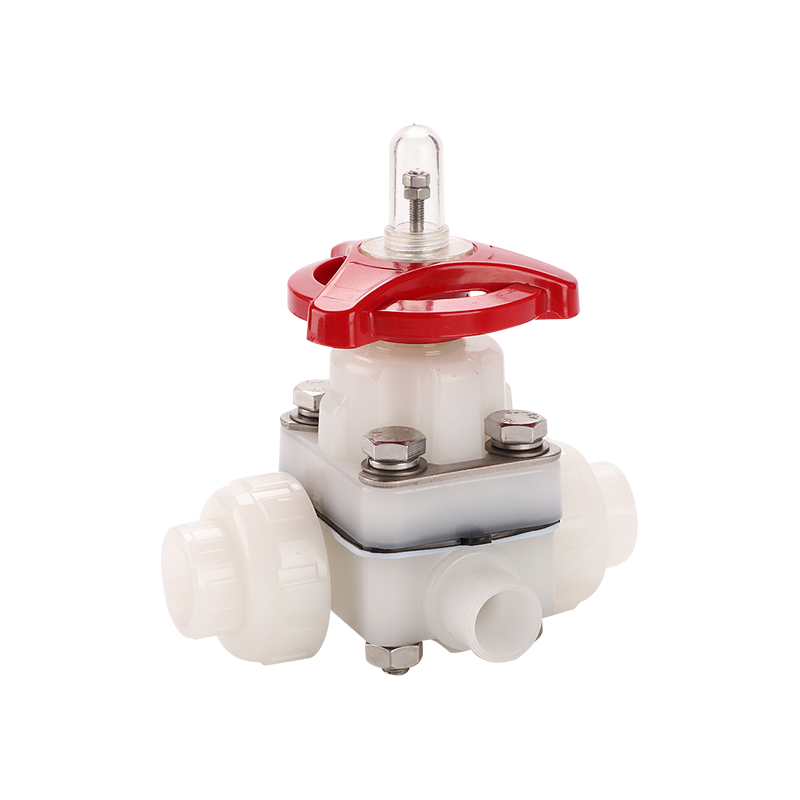
A raised-seat diaphragm valve body that shortens diaphragm travel for longer service life and finer throttling control — the standard geometry for most diaphragm valve applications.

Size RangeDN15 – DN150
PressureUp to 150 psi
Temperature0°C to 95°C
MOQ
80 pcs / size
Lead Time
5–7 days stock / 3–4 wks custom
Packaging
Carton / wooden crate
Certifications
ISO 9001, ASTM ref.
Raw Materials
PVC-U, CPVC, PP
Customization
Body material, diaphragm material, connection type
Our Story

about BAODI

Ningbo Baodi Plastic Valve Co., Ltd. traces its origins back to 1979, with its predecessors being Zhenhai Chemical Valve Factory and Beilun Plastic Valve Factory. The company is one of the earliest Weir Type Plastic Diaphragm Valves Manufacturers and Custom Weir Type Plastic Diaphragm Valves Factory in China to design and produce industrial plastic valves and receive acceptance from the Ministry of Chemical Industry. In 1979, the company manufactured its first plastic diaphragm valve, which passed the technical appraisal of the Ministry of Chemical Industry in 1983. In 1992, the company invented the one-piece flange ball valve, a structural design that has since become the most widely used plastic valve product in chemical-related industries. The development history of the company and its predecessors also represents an important chapter in the application of plastic valves in China's industrial production.

In 2006, the company expanded its product line to cover industrial plastic pipes and fittings, becoming one of the first domestic enterprises to apply CPVC material in the production of industrial-grade piping valves. Over more than 40 years since its establishment, the company has designed and manufactured various plastic valves for the most demanding industries. It has served tens of thousands of enterprises both domestically and internationally, exporting to more than 60 countries, and has consistently remained a leading manufacturer of industrial thermoplastic valves and piping systems. Our professional service and stable quality have always been well received and recognized by customers.

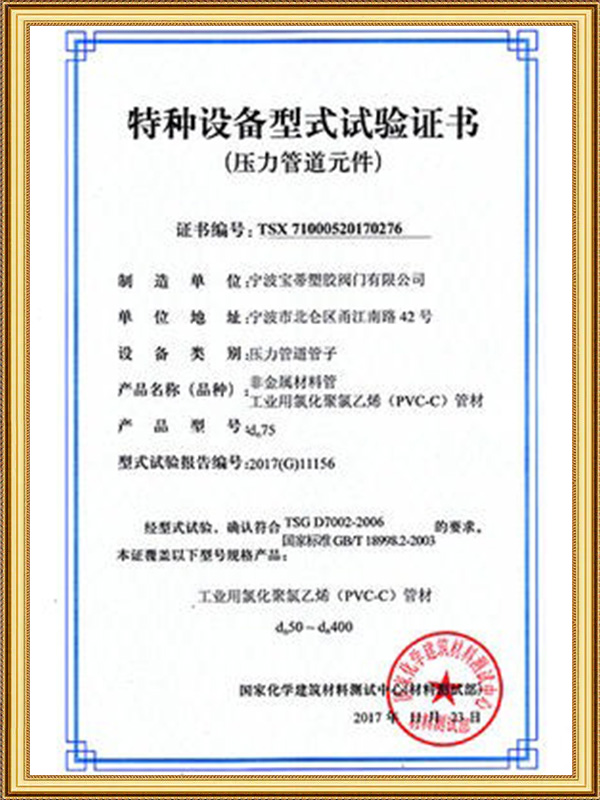
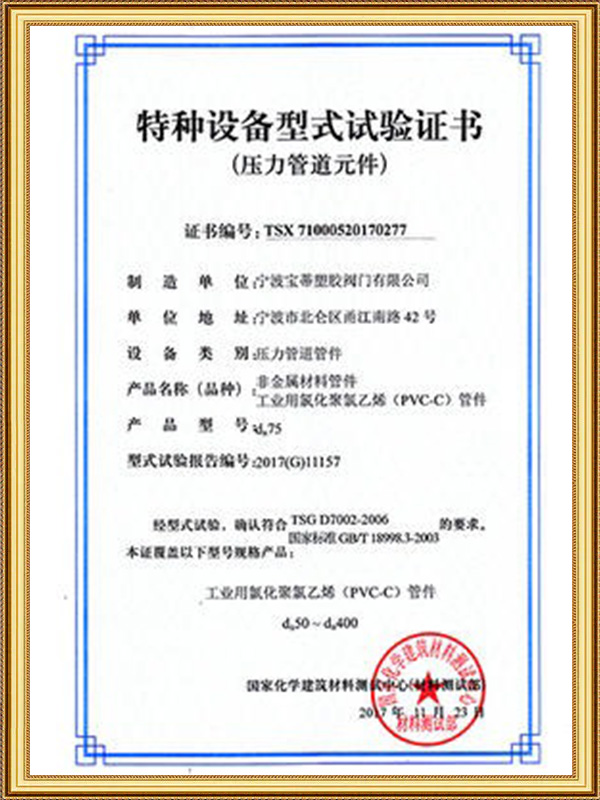
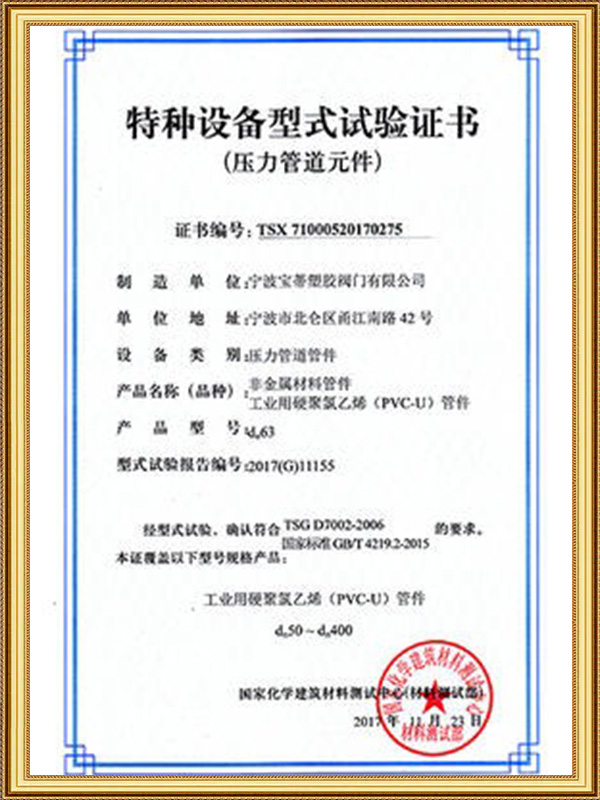
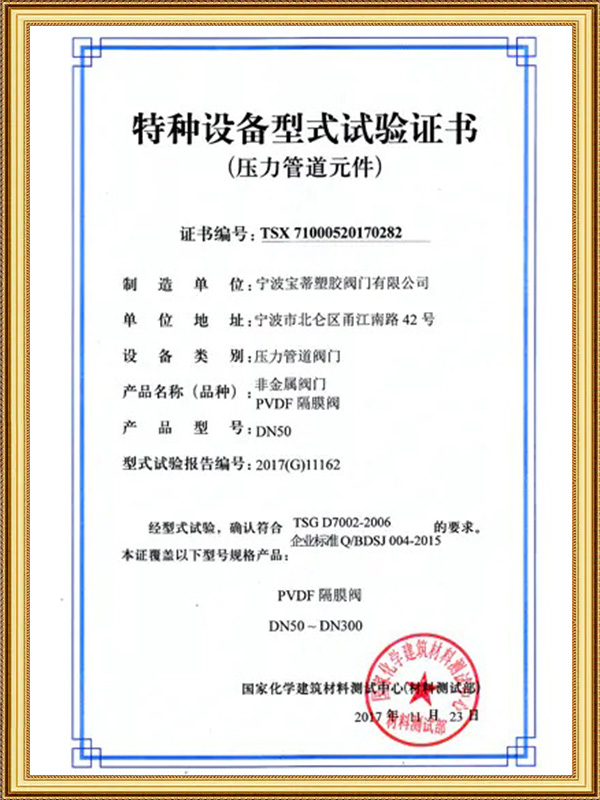
Baodi ranks among the global leaders in the number of product categories, capable of fully covering industrial plastic pipe and valve requirements. The company has obtained ISO 9001, ISO 14001, and ISO 45001 system certifications, as well as the national special equipment pressure piping component manufacturing license. It is recognized as a National High-Tech Enterprise and a Ningbo City Specialized and Sophisticated Enterprise. Baodi is a principal drafter of the national standard for plastic diaphragm valves and the chemical industry standards for plastic diaphragm valves, plastic ball valves, and plastic check valves.

Ningbo Baodi Plastic Valve Co., Ltd.

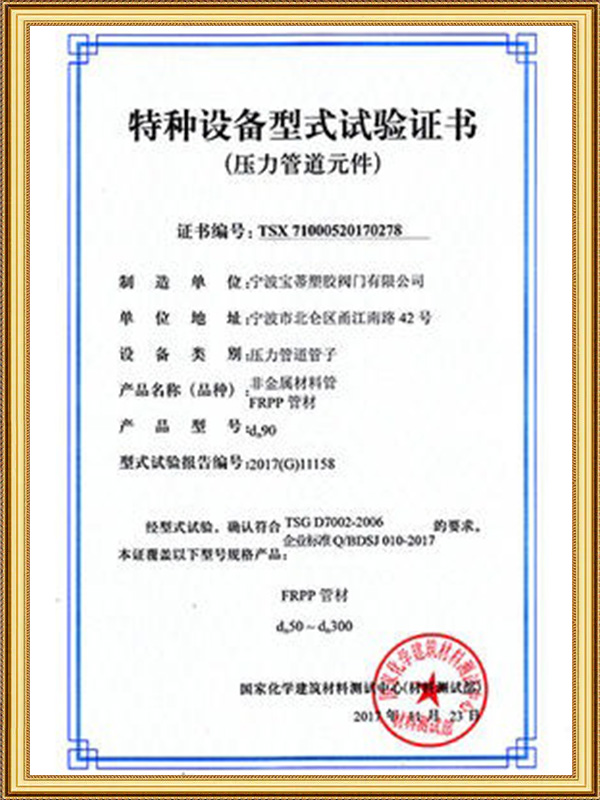
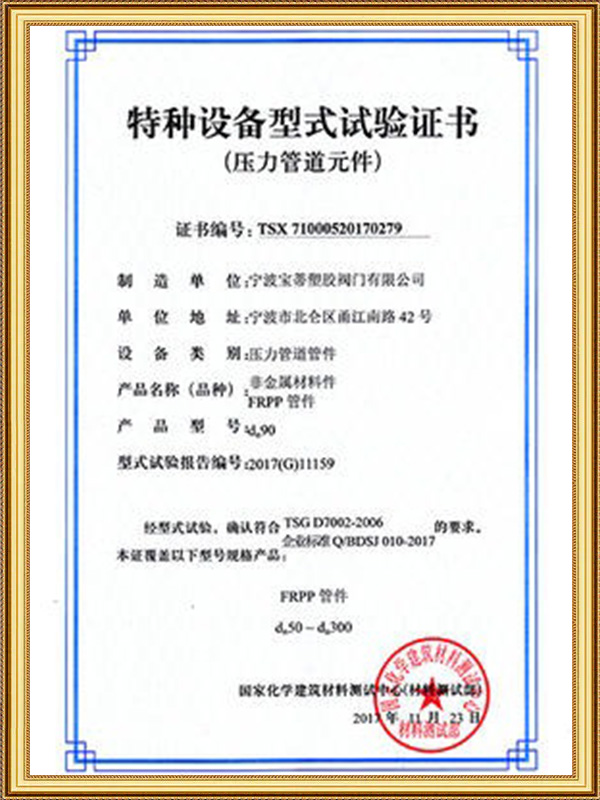
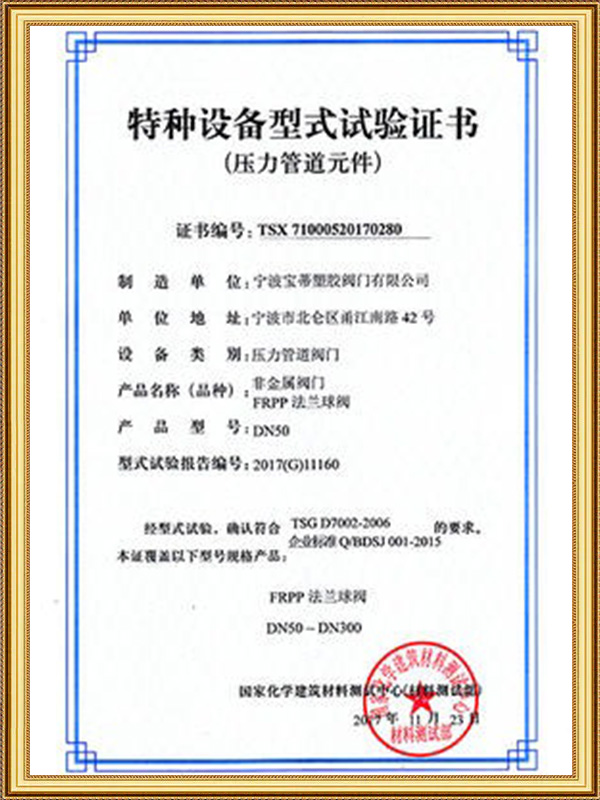
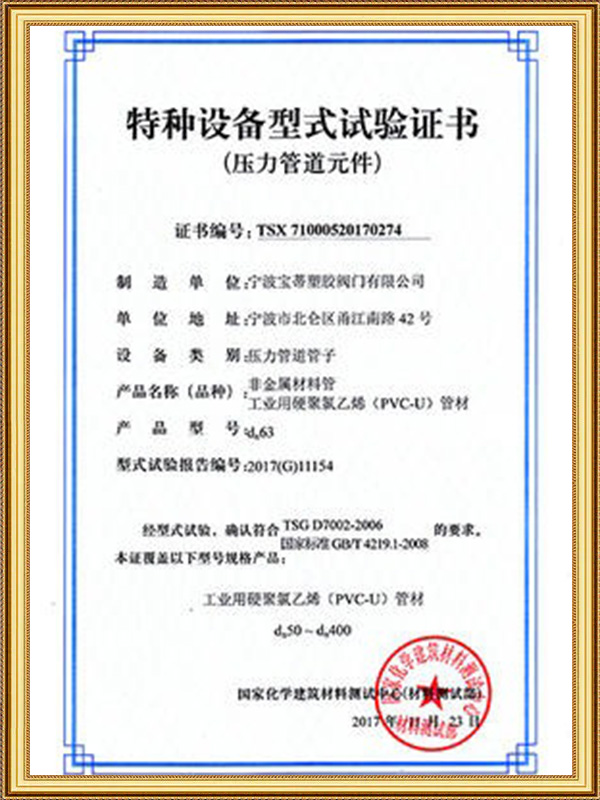
Certifications & Qualifications

OEM/ODM CUSTOMIZATION PROCESS

Custom Solutions

Design Idea

Tell us what you need. Such as material, color, size, mold, logo and package. Or you can just show us some photos.
Custom Solutions

2D Drawing

According to your request, we will make 2D drawing and confirm the details with you.
Custom Solutions

3D Modeling

We will build 3D model to create technical drawing and manufacturing specification.
Custom Solutions

Mold Fabrication

We produce initial samples for client approval, incorporating feedback for final adjustments.
Custom Solutions

Prototype Testing

Both the appearance and functions of the product prototype should meet the requirements.
Custom Solutions

Full-scale production

Once the sample is approved, we would start full-scale production using approved designs and high-quality raw materials.
47+

years of experience
30+

new tailor-made products every month
20000+

catalog products
10/50

Mass production time for new products
Overview

A raised-seat body geometry that reduces diaphragm travel and stress

The weir shape, and why it matters

Weir type plastic diaphragm valves use a raised internal seat, or weir, molded into the flow path so the diaphragm only needs to travel a short distance to make contact and seal — unlike a straight-through diaphragm valve, where the diaphragm must stretch across the full pipe bore. This shorter stroke reduces diaphragm stress and wear per cycle, generally extending diaphragm service life and giving finer control over throttling position for a given handwheel or actuator travel.

The default choice unless full-bore flow is required

Because the weir raises the valve's minimum flow restriction slightly compared with a straight-through design, it is the default diaphragm valve geometry for the great majority of general and chemical process applications, reserving the straight-through variant for lines that specifically need an unrestricted, full-bore flow path — such as handling very heavy slurries or requiring pigging. PVC-U, CPVC, or PP body options and a selectable diaphragm elastomer keep the weir-type design chemically flexible across process fluids.

Application

Where the weir-type geometry is the natural fit

The weir shape suits the majority of general and chemical process duty, offering longer diaphragm life and finer throttling than a straight-through design.

General Water Treatment
Filtration, backwash, and chemical feed isolation and throttling.
Chemical Process Control
Reagent dosing and process line throttling where fine flow adjustment matters.
Pharmaceutical Process Lines
Precise flow control on process and utility lines with moderate solids content.
Food & Beverage Processing
Throttling and shutoff on product and CIP (clean-in-place) lines.
Cooling Tower & Utility Systems
Chemical treatment and makeup water throttling in continuous service.
General Industrial Process Piping
The default diaphragm valve choice across most plant utility and process lines.
Material Selection

Choosing the right body material for a weir-type valve

Body material determines chemical compatibility and temperature range; the weir geometry is available across all standard material options.

MaterialTemperature RangeTypical StrengthsCommon Use
PVC-U0°C to 60°CBroad acid and alkali resistance, economicalGeneral water treatment and utility isolation
CPVC0°C to 95°CHigher temperature ceiling than PVC-U with similar chemical resistanceHot process water, elevated-temperature chemical lines
PP0°C to 90°CGood solvent resistance, lighter than PVC-UGeneral chemical processing and dosing
Specification

Technical data at a glance

ItemDescription
Valve TypeWeir-type diaphragm valve
Body MaterialPVC-U, CPVC, or PP
Diaphragm MaterialEPDM, FPM (Viton), or PTFE-faced EPDM
Bonnet MaterialMatched to body or glass-reinforced polypropylene
Size RangeDN15 – DN150 (1/2 inch – 6 inch)
End ConnectionSocket, threaded, or flanged
Working PressureUp to 150 psi (10 bar) at 20°C, rating decreases with temperature
Working Temperature0°C to 95°C, material dependent
Sealing PerformanceBubble-tight shutoff, suitable for throttling duty
OperationHandwheel standard; actuator mounting available
Flow PathRaised weir seat, reduced diaphragm travel versus straight-through design
Comparison

Weir type vs. straight-through diaphragm valves

Both use a flexible diaphragm; the body geometry changes flow restriction, diaphragm life, and throttling behavior.

FactorWeir Type ValveStraight-Through Valve
Diaphragm TravelShort — diaphragm only reaches down to the raised weirLong — diaphragm must span the full pipe bore
Diaphragm WearLower per-cycle stress, generally longer service lifeHigher per-cycle stress on the diaphragm
Flow RestrictionSlightly reduced flow area at the weirFull, unrestricted bore when open
Throttling PrecisionFiner control for a given travel distanceCoarser control over the same travel distance
Best UseGeneral and chemical process duty, most applicationsHeavy slurries or lines requiring a full-bore, pigging-compatible path
AvailabilityStandard, most common diaphragm valve configurationAvailable on request for specific full-bore requirements
Advantage

Why the weir-type body is the standard choice

Longer Diaphragm Service Life
Shorter travel per cycle reduces diaphragm stress compared with a straight-through design.
Finer Throttling Control
Reduced travel distance gives more precise flow adjustment for a given handwheel or actuator movement.
Lower Actuation Force
A shorter compressor stroke can reduce the torque or force needed to fully seat the diaphragm.
Broad Material Options
PVC-U, CPVC, and PP body choices keep the weir-type design chemically flexible across most process fluids.
No Stem Packing Leak Path
The diaphragm isolates process fluid from the bonnet, the same benefit shared across the diaphragm valve family.
Proven, Widely Stocked Design
As the standard geometry, weir-type valves are typically the fastest to source and the most cost-effective.
Structure & Components

What is inside the valve

A raised weir seat shortens the distance the diaphragm must travel to make contact and seal.

1. Weir-Type Body — Body with a raised internal seat molded into the flow path
2. Flexible Diaphragm — Elastomer membrane that travels a short distance to seal against the weir
3. Compressor — Transfers stem movement into diaphragm deflection
4. Bonnet — Houses the compressor and stem, bolted to the body
5. Stem & Handwheel — Manually raises and lowers the compressor to control flow
6. Weir Seat — The raised flow restriction that defines the valve's shortened diaphragm travel
Quality Control

Every valve is checked before it ships

Weir seat dimensions and diaphragm seating are checked closely, since the shortened travel depends on accurate weir geometry.

1
Material Check
Incoming resin and diaphragm elastomer batches are checked for correct grade and consistency.
2
Weir Dimension Check
The raised seat geometry is measured against drawing tolerances to confirm correct diaphragm travel.
3
Hydrostatic Test
Each valve body is pressure tested with water to confirm it withstands its rated working pressure.
4
Diaphragm Seal Test
An air or water seal test verifies bubble-tight shutoff with the diaphragm fully seated on the weir.
5
Compressor Travel Check
Stem and compressor travel are checked for smooth, full-range operation over the shortened stroke.
6
Batch Traceability
Production batches are recorded, allowing traceability back to raw material lots.
Actuation

Manual, pneumatic, or electric

The shortened weir-type stroke suits compact actuators as well as handwheel operation.

Operation TypeBest Suited ForKey Characteristics
HandwheelLocal throttling and shutoff on general process linesLowest cost, fine control over the short weir stroke
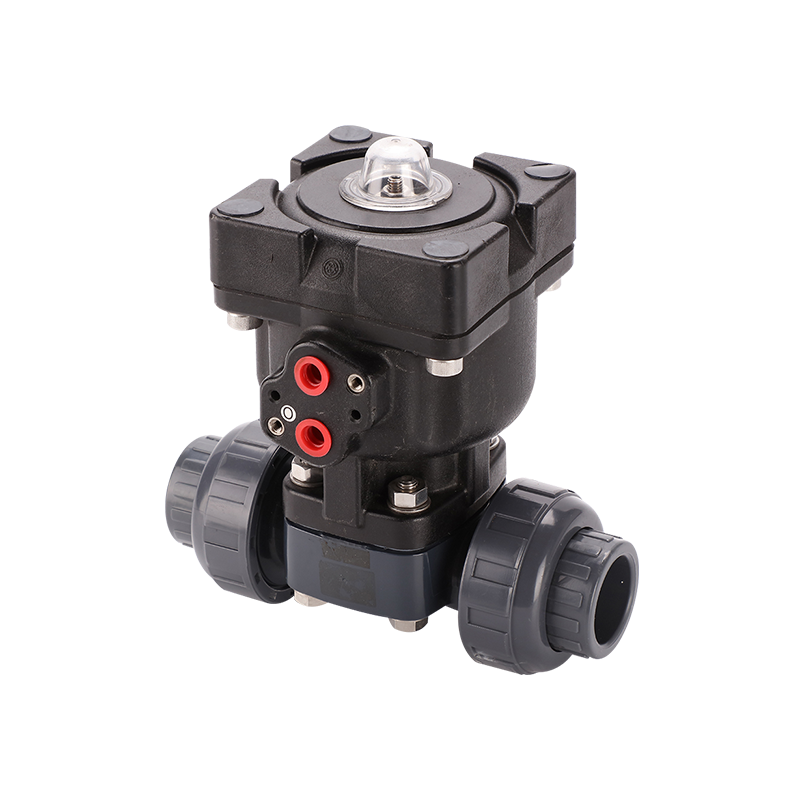
Pneumatic ActuatorAutomated process lines with compressed air availableCompact actuator sizing benefits from the shortened stroke
Electric ActuatorRemote-controlled or monitored process valvesIntegrates with control systems and remote monitoring
Installation & Maintenance

Getting it right in the field

Installation Guidance
  • Support the pipeline near the valve so the body does not carry pipeline weight or bending loads.
  • For solvent weld connections, allow the joint to fully cure before pressurizing the line.
  • Note the slight flow restriction at the weir when sizing the line for expected flow velocity.
  • Operate the handwheel through its full range after installation to confirm smooth diaphragm travel before service.
Maintenance Guidance
  • Inspect the diaphragm periodically for cracking, permanent set, or chemical attack, since it is a wear item by design.
  • Replace the diaphragm as a scheduled maintenance item; the weir design typically extends the interval versus a straight-through valve.
  • Check the weir seat surface for buildup or scale during routine maintenance to maintain a good diaphragm seal.
  • Keep spare diaphragms of the correct material on hand to minimize downtime during replacement.
Payment, Shipping & Warranty

Ordering with confidence

Payment & Shipping

Payment: T/T (bank transfer), L/C, and PayPal are accepted, with flexible terms for repeat orders. A deposit is typically required to confirm production.

Shipping: Sea freight (FCL/LCL) for large-volume orders, air freight for time-sensitive shipments, and express courier for samples. Valves are packed in cartons or wooden crates depending on size.

Delivery: Shipment from the nearest available port or airport, with door-to-door, FOB, CIF, or EXW terms on request.

Warranty & Support

Each valve is covered under a standard warranty against manufacturing defects in material and workmanship, generally valid for 12 months from the shipment date.

  • Guidance on weir versus straight-through geometry selection for your application before and after purchase.
  • Replacement diaphragms and bonnet seals available as spare parts.
FAQ

Common questions

What does the weir shape actually do?
The raised weir seat shortens the distance the diaphragm has to travel to seal, reducing diaphragm stress per cycle and giving finer throttling control compared with a straight-through design.
Does the weir restrict flow compared with a straight-through valve?
There is a slight flow restriction at the raised seat, but it is generally accounted for in normal line sizing and is a reasonable trade-off for the diaphragm life and control benefits.
When would a straight-through valve be needed instead?
A straight-through design is used where a full, unrestricted bore is required — such as very heavy slurries or lines that need to be pigged for cleaning.
What materials are offered for the weir-type body?
PVC-U, CPVC, and PP are available, selected according to the process fluid and operating temperature.
Is the weir-type design the standard option?
Yes, weir-type is the default and most widely stocked diaphragm valve geometry, suitable for the majority of general and chemical process applications.

Related Information

Ball Type Plastic Check Valves

Overview A free-moving ball that seals the line

Industrial Plastic Diaphragm Valves

Overview The full diaphragm valve range, from bo

Swing Type Plastic Check Valves

Overview A hinged disc that swings clear of the

Pneumatic Plastic Diaphragm Valves

Overview Compressed-air operation for automated

Threaded Industrial Diaphragm Valves

Overview A threaded-end diaphragm body sized for

Heavy Duty Diaphragm Valves

Overview A reinforced body and bonnet for demand

Chemical Duty Diaphragm Valves

Overview A diaphragm valve sized and specified f

Corrosion Resistant Diaphragm Valves

Overview A fully non-metallic flow path for aggr

Wafer Style Plastic Butterfly Valves

Overview A slim wafer body that clamps between s

Ready to specify a weir-type diaphragm valve?

Share your process fluid, sizing, and flow control requirements, and get a material recommendation for your line.