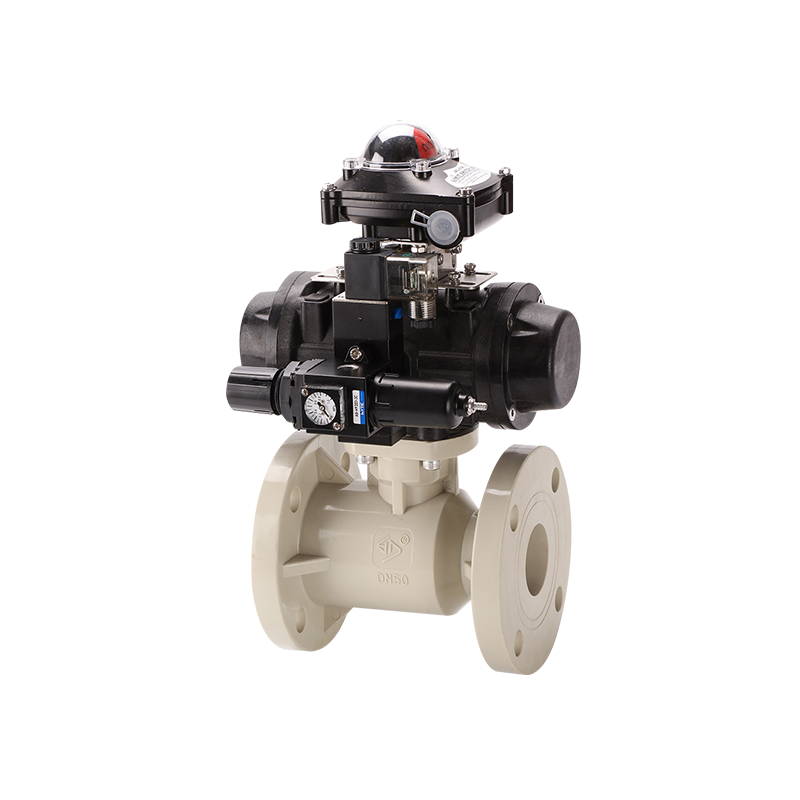
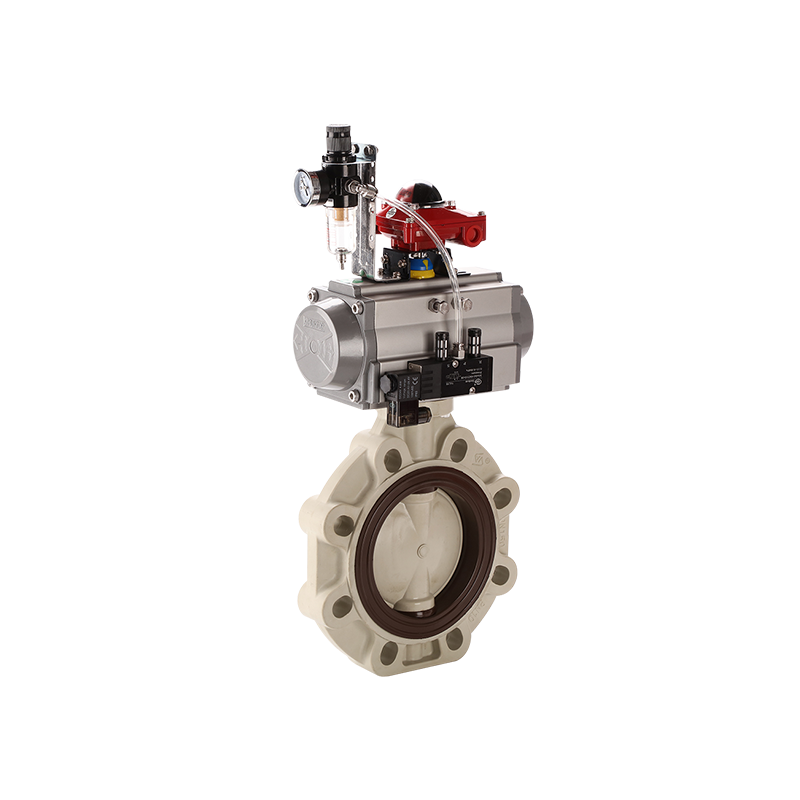
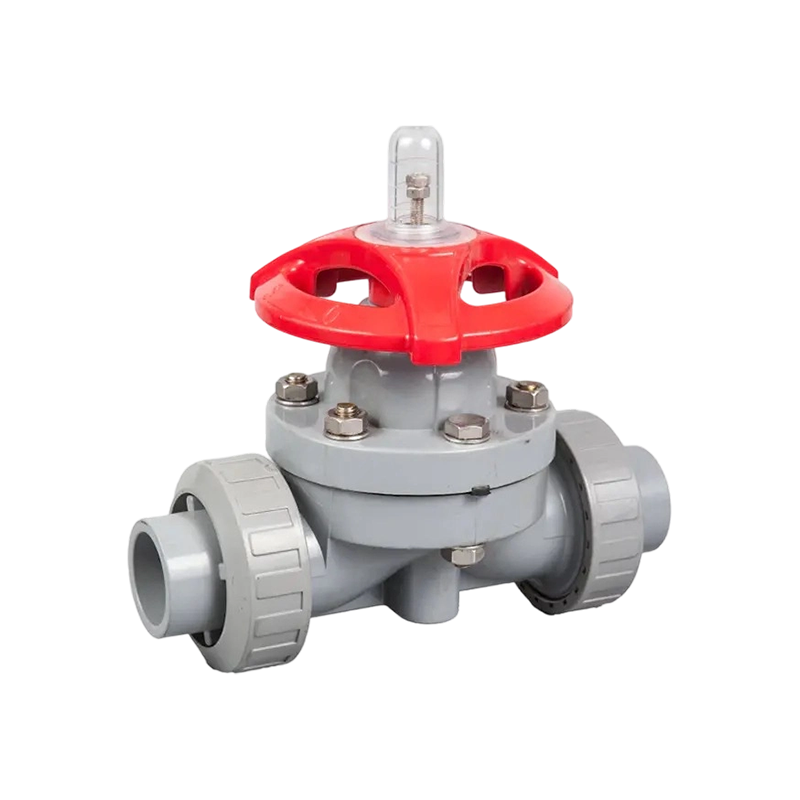
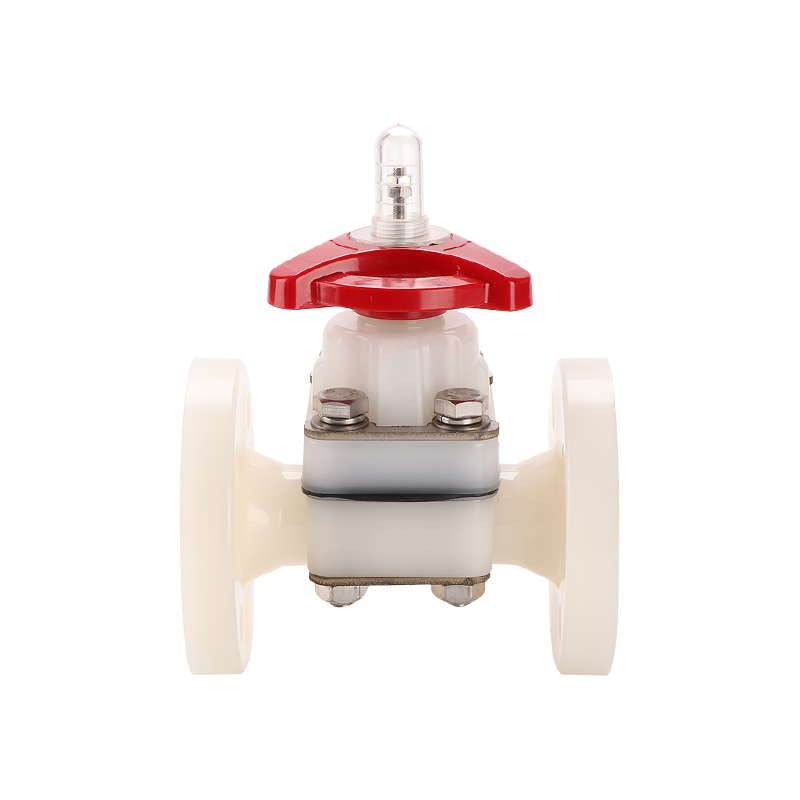
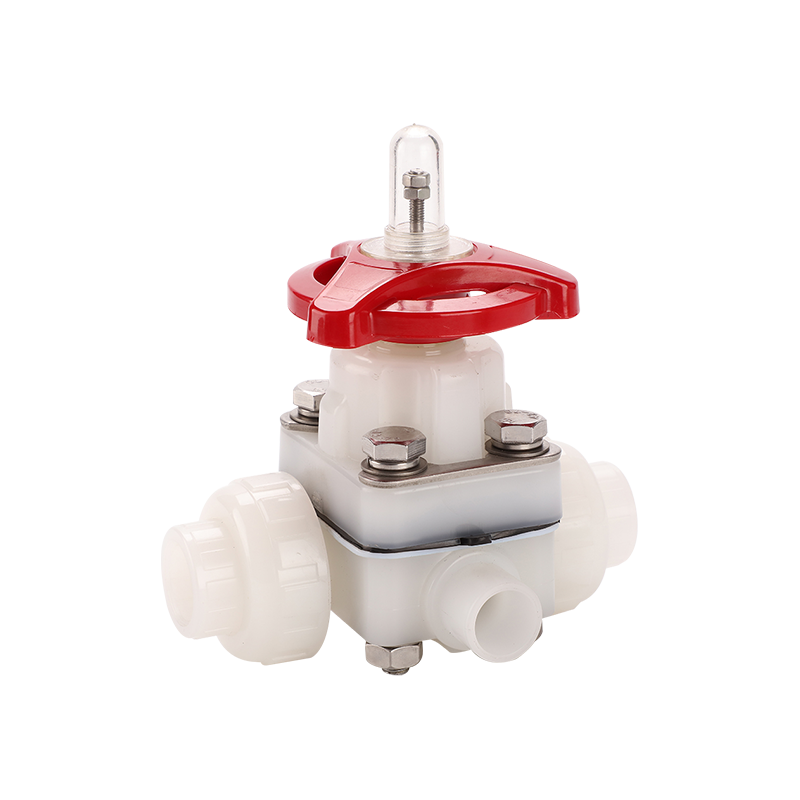
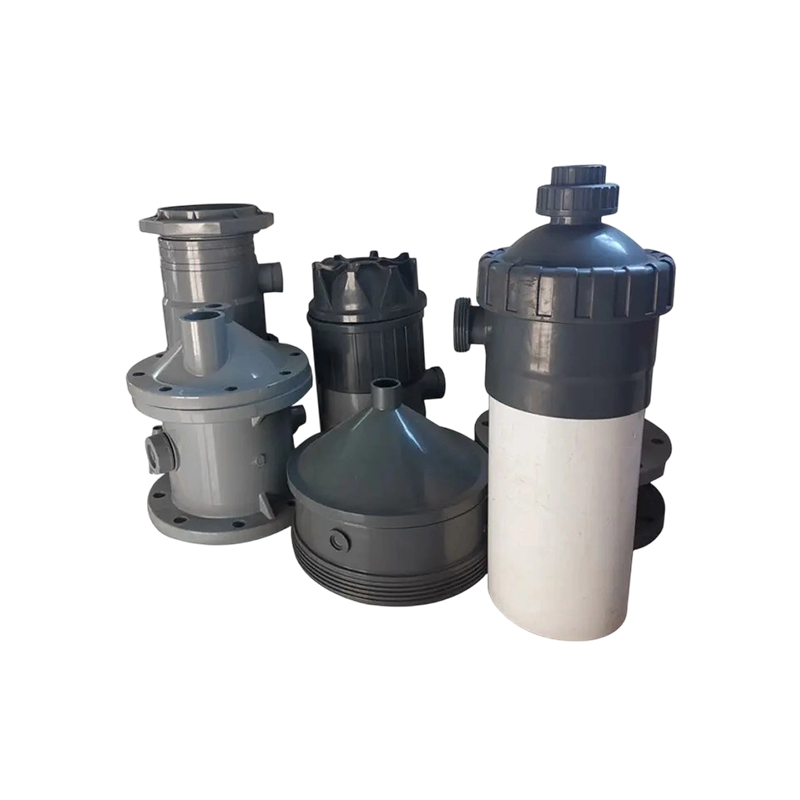
product product product product product product product product product product product product

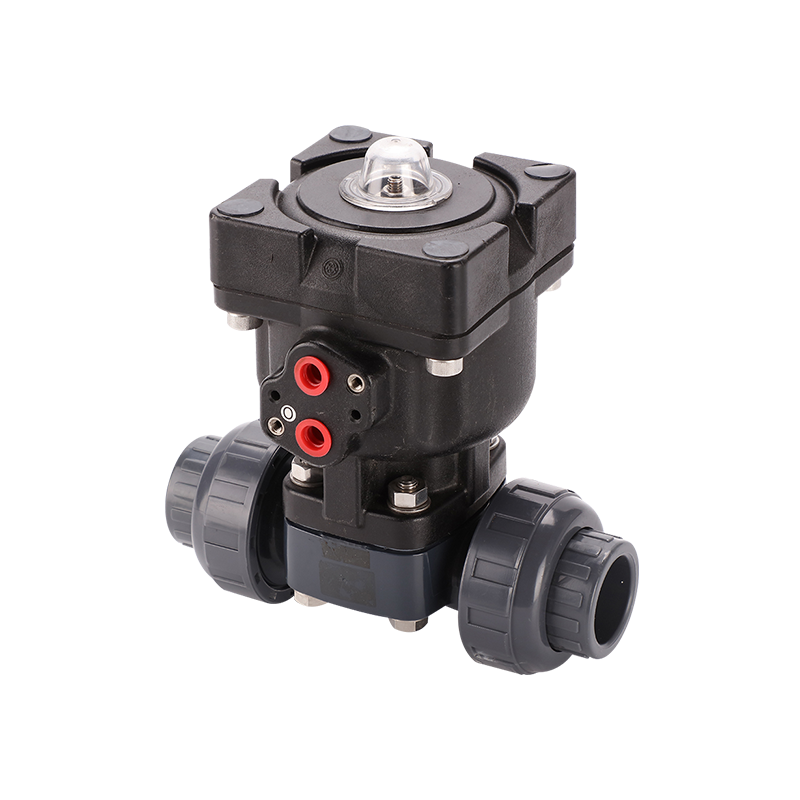
Pneumatic Plastic Diaphragm Valves Custom

Flow Control / Automated Diaphragm Series

Pneumatic
Plastic
Diaphragm Valves

Compressed-air-driven diaphragm shutoff and throttling on a PVC-U, CPVC, PP, or PVDF body — automated, clog-resistant flow control for process lines with air supply available.

Size RangeDN15 – DN100
PressureUp to 150 psi (valve)
Temperature0°C to 95°C
MOQ
50 sets / size
Lead Time
1–2 wks stock / 3–5 wks custom
Packaging
Wooden crate, actuator pre-mounted
Certifications
ISO 9001, ISO 5211-style mounting ref.
Raw Materials
PVC-U, CPVC, PP, or PVDF body; aluminum or PA66 actuator
Customization
Body material, diaphragm material, actuator type, positioner
Our Story

about BAODI

Ningbo Baodi Plastic Valve Co., Ltd. traces its origins back to 1979, with its predecessors being Zhenhai Chemical Valve Factory and Beilun Plastic Valve Factory. The company is one of the earliest Pneumatic Plastic Diaphragm Valves Manufacturers and Custom Pneumatic Plastic Diaphragm Valves Factory in China to design and produce industrial plastic valves and receive acceptance from the Ministry of Chemical Industry. In 1979, the company manufactured its first plastic diaphragm valve, which passed the technical appraisal of the Ministry of Chemical Industry in 1983. In 1992, the company invented the one-piece flange ball valve, a structural design that has since become the most widely used plastic valve product in chemical-related industries. The development history of the company and its predecessors also represents an important chapter in the application of plastic valves in China's industrial production.

In 2006, the company expanded its product line to cover industrial plastic pipes and fittings, becoming one of the first domestic enterprises to apply CPVC material in the production of industrial-grade piping valves. Over more than 40 years since its establishment, the company has designed and manufactured various plastic valves for the most demanding industries. It has served tens of thousands of enterprises both domestically and internationally, exporting to more than 60 countries, and has consistently remained a leading manufacturer of industrial thermoplastic valves and piping systems. Our professional service and stable quality have always been well received and recognized by customers.

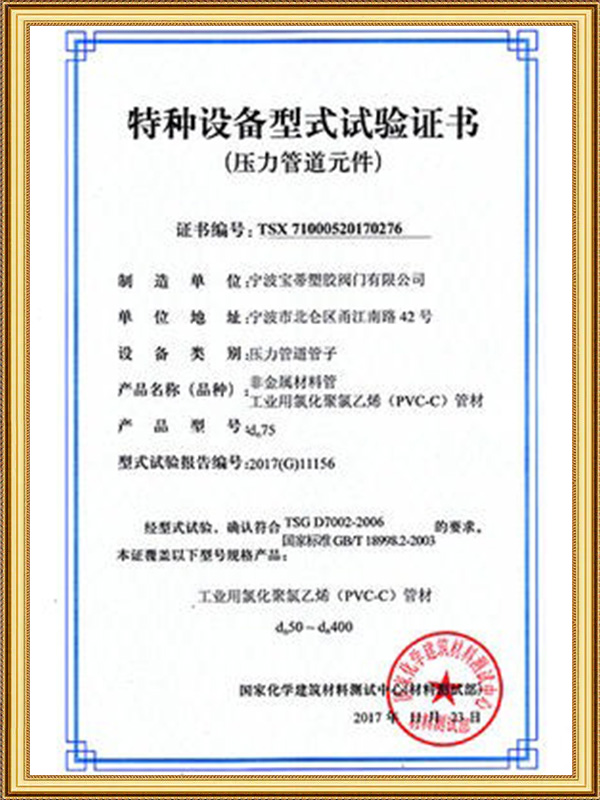
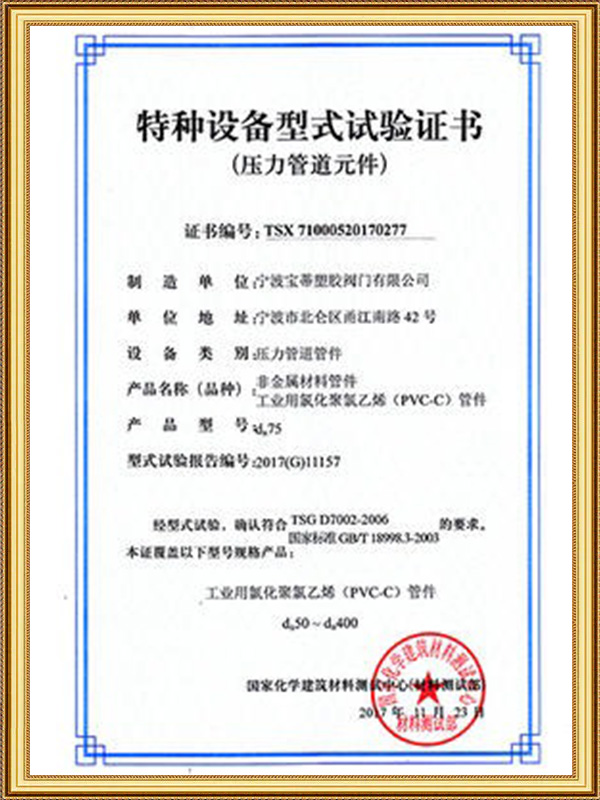
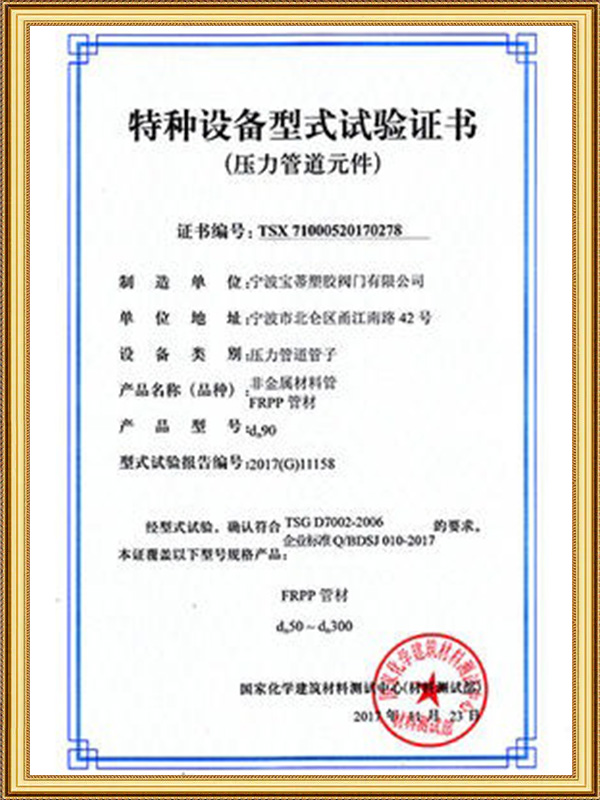
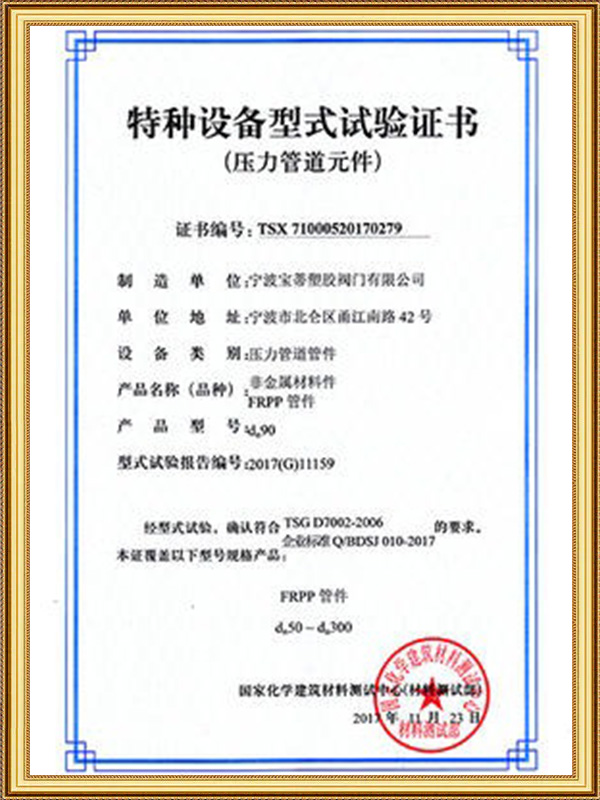
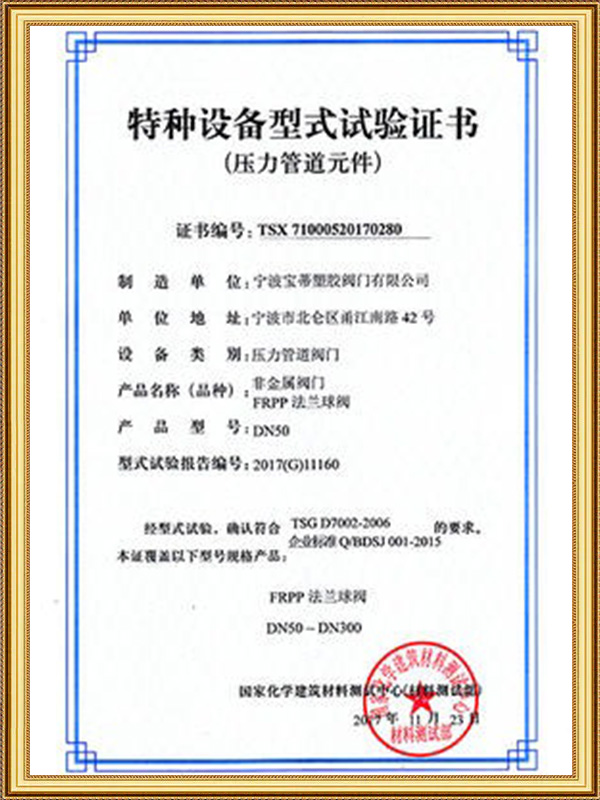
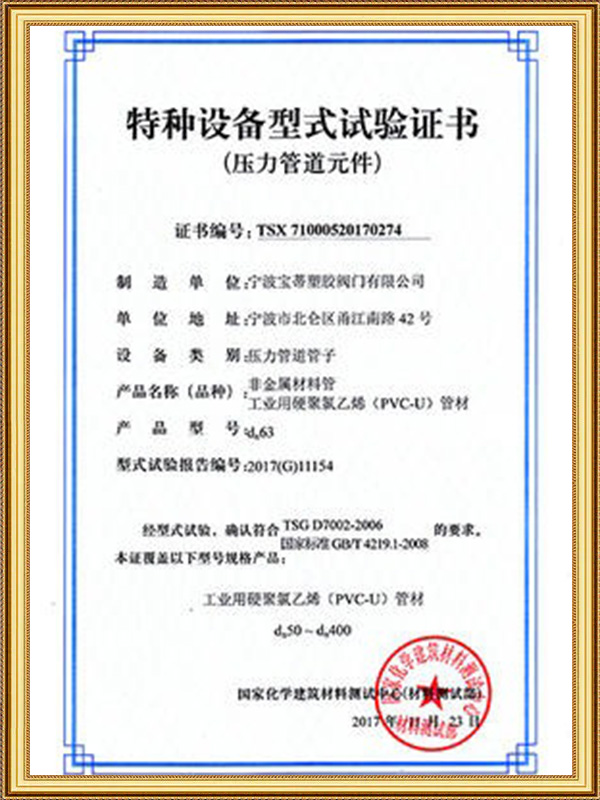
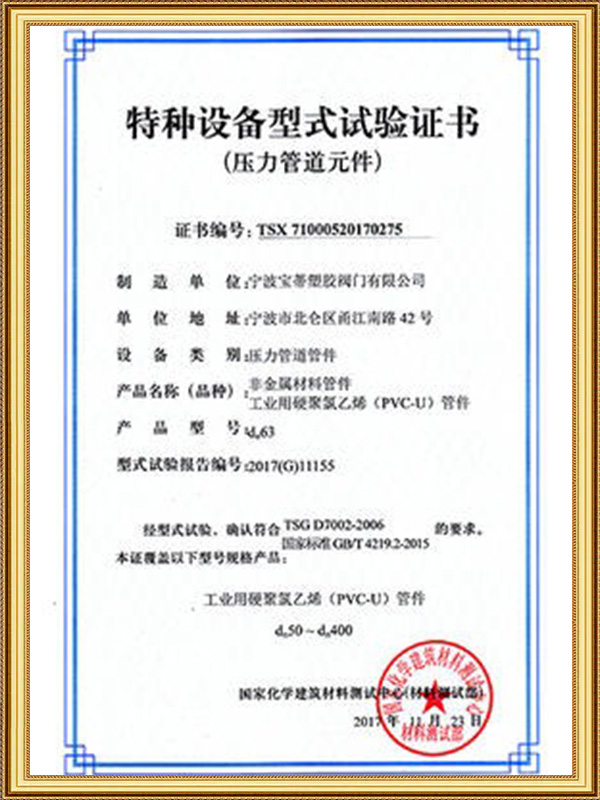
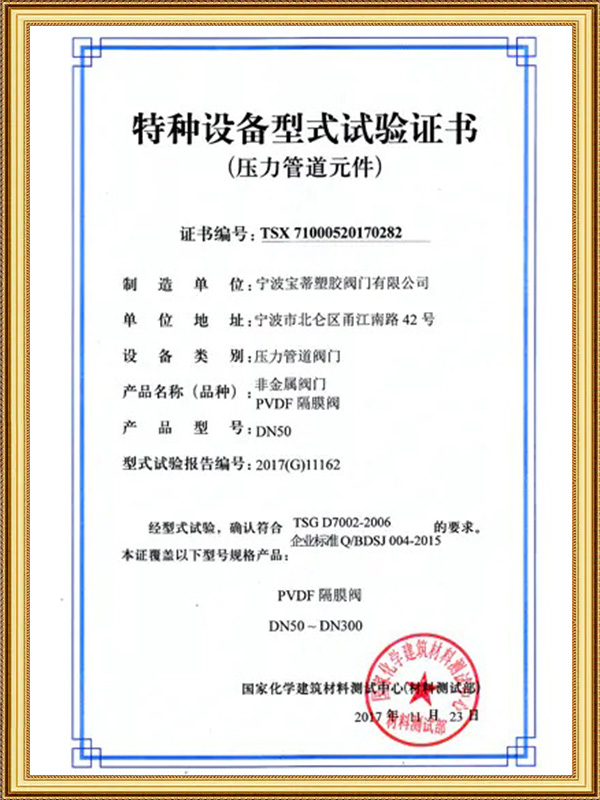
Baodi ranks among the global leaders in the number of product categories, capable of fully covering industrial plastic pipe and valve requirements. The company has obtained ISO 9001, ISO 14001, and ISO 45001 system certifications, as well as the national special equipment pressure piping component manufacturing license. It is recognized as a National High-Tech Enterprise and a Ningbo City Specialized and Sophisticated Enterprise. Baodi is a principal drafter of the national standard for plastic diaphragm valves and the chemical industry standards for plastic diaphragm valves, plastic ball valves, and plastic check valves.

Ningbo Baodi Plastic Valve Co., Ltd.

Certifications & Qualifications

OEM/ODM CUSTOMIZATION PROCESS

Custom Solutions

Design Idea

Tell us what you need. Such as material, color, size, mold, logo and package. Or you can just show us some photos.
Custom Solutions

2D Drawing

According to your request, we will make 2D drawing and confirm the details with you.
Custom Solutions

3D Modeling

We will build 3D model to create technical drawing and manufacturing specification.
Custom Solutions

Mold Fabrication

We produce initial samples for client approval, incorporating feedback for final adjustments.
Custom Solutions

Prototype Testing

Both the appearance and functions of the product prototype should meet the requirements.
Custom Solutions

Full-scale production

Once the sample is approved, we would start full-scale production using approved designs and high-quality raw materials.
47+

years of experience
30+

new tailor-made products every month
20000+

catalog products
10/50

Mass production time for new products
Overview

Compressed-air operation for automated throttling and shutoff on a diaphragm body

A diaphragm valve body paired with an air actuator

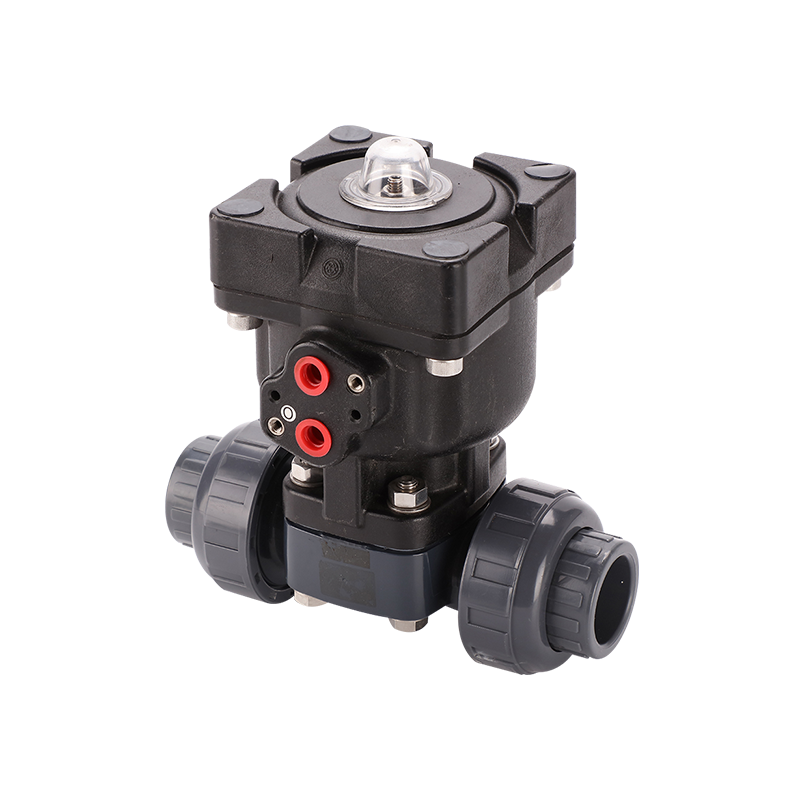
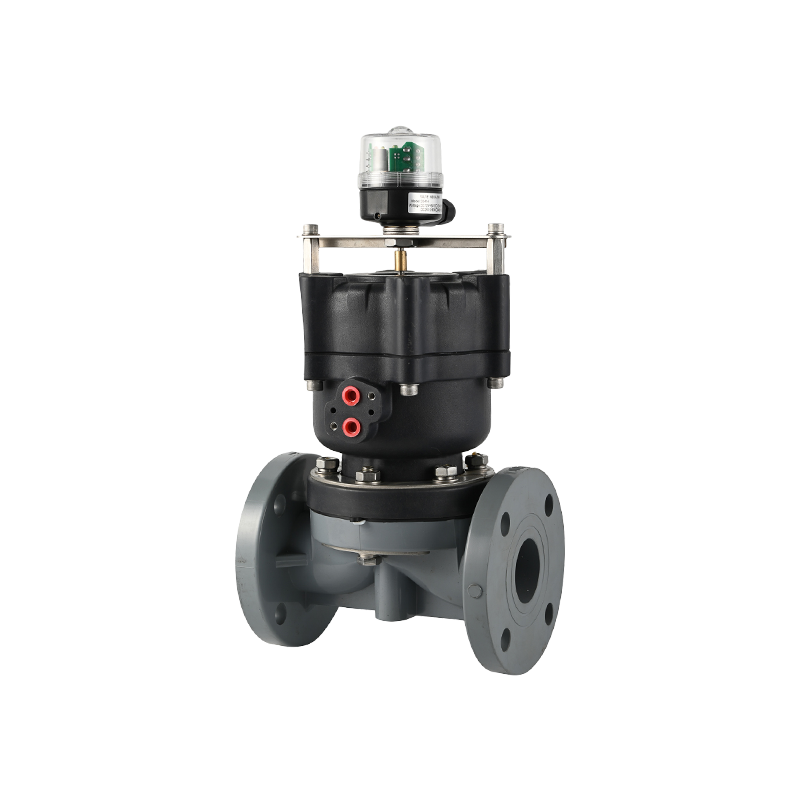
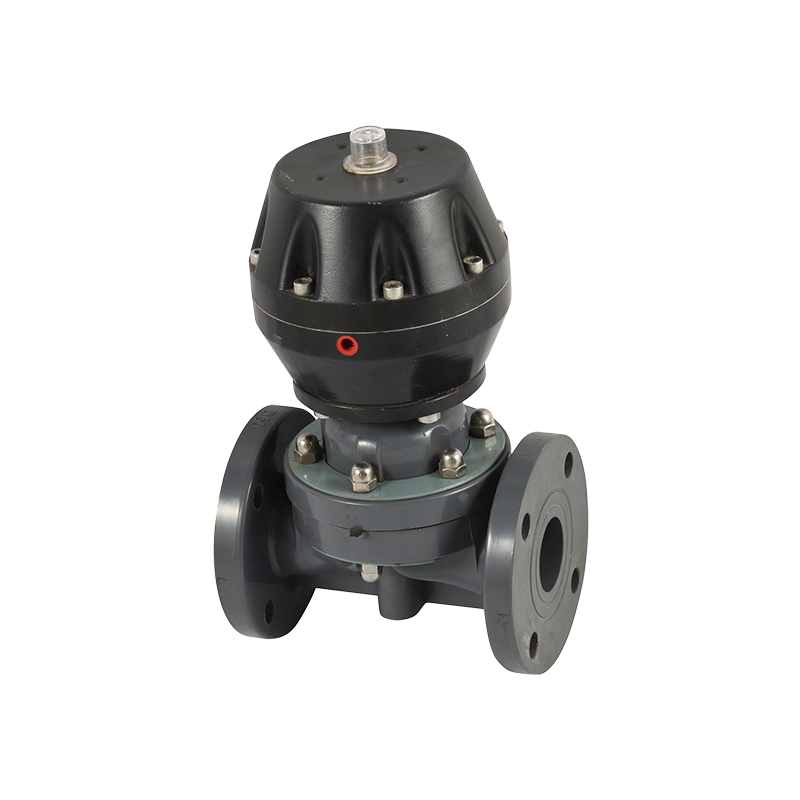
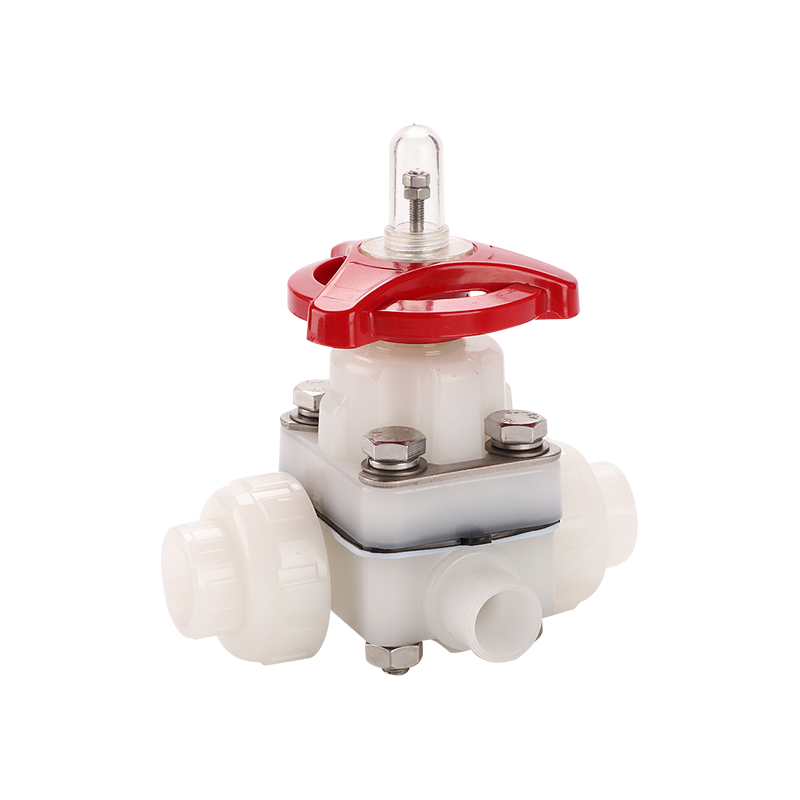
Pneumatic plastic diaphragm valves combine a corrosion-resistant PVC-U, CPVC, PP, or PVDF diaphragm valve body with a pneumatic actuator that drives the compressor up and down using compressed air instead of a handwheel. Because the diaphragm's proportional sealing behavior lends itself to positioning, not just full open or closed, the actuator can be paired with a positioner for modulating flow control, in addition to simple automated on/off duty.

Automating clog-resistant shutoff and throttling together

The valve body keeps the same weir-type flow path and stem-free diaphragm sealing used across the manual range, so solids-handling ability is unchanged when automation is added. Solenoid valves, limit switch boxes, and positioners can be fitted to the actuator for remote signaling, position feedback, or proportional throttling control, making this configuration a common choice for automated slurry, dosing, and chemical process lines controlled from a PLC or DCS.

Application

Where pneumatic automation is the practical choice

Compressed air is already available in most process plants, making pneumatic actuation a fast, cost-effective way to automate diaphragm valve throttling and shutoff.

Chemical Batching & Dosing
Automated proportional dosing control on batching skids with frequent cycling.
Water & Wastewater Treatment
Automated sludge, filtrate, and chemical feed control from a central control room.
Mining & Mineral Processing
Automated slurry line throttling where clogging resistance and remote control both matter.
Pulp & Paper Process Automation
Automated fibrous stock and bleach line control on process lines.
Hazardous Area Installations
Air-driven actuation avoids electrical components in classified zones.
Skid-Mounted Process Systems
Compact automated diaphragm valve packages for pre-assembled process skids.
Actuator & Body Materials

What the assembly is built from

The valve body and diaphragm materials are selected for chemical service, while the actuator housing is chosen for the ambient environment.

ComponentMaterial OptionsSelection BasisNotes
Valve BodyPVC-U, CPVC, PP, PVDFMatched to the process fluid and temperatureWetted parts unchanged from manual valve
DiaphragmEPDM, FPM (Viton), PTFE-faced EPDMMatched to the specific process fluidSelected independently of body material
Actuator HousingAnodized aluminum or glass-reinforced nylon (PA66)Ambient environment, indoor/outdoor dutyPowder-coated aluminum for corrosive atmospheres
Positioner (optional)Pneumatic or electro-pneumaticModulating flow control applicationsConverts a control signal into proportional diaphragm position
Specification

Technical data at a glance

ItemDescription
Valve TypePneumatically actuated weir-type diaphragm valve
Body MaterialPVC-U, CPVC, PP, or PVDF
Diaphragm MaterialEPDM, FPM (Viton), or PTFE-faced EPDM
Size RangeDN15 – DN100 (1/2 inch – 4 inch)
End ConnectionSocket, threaded, or flanged
Working Pressure (valve)Up to 150 psi (10 bar) at 20°C, material dependent
Working Temperature0°C to 95°C, body and diaphragm dependent
Actuator TypePneumatic diaphragm or piston actuator
Air SupplyClean, dry compressed air, typically 40–90 psi (3–6 bar)
Control ModesOn/off or modulating with a positioner
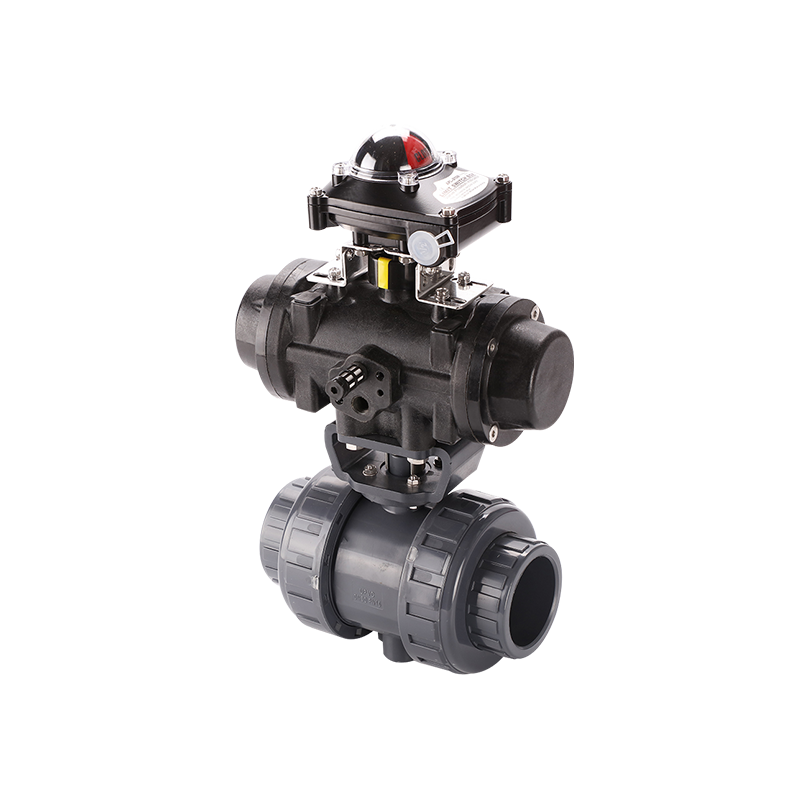
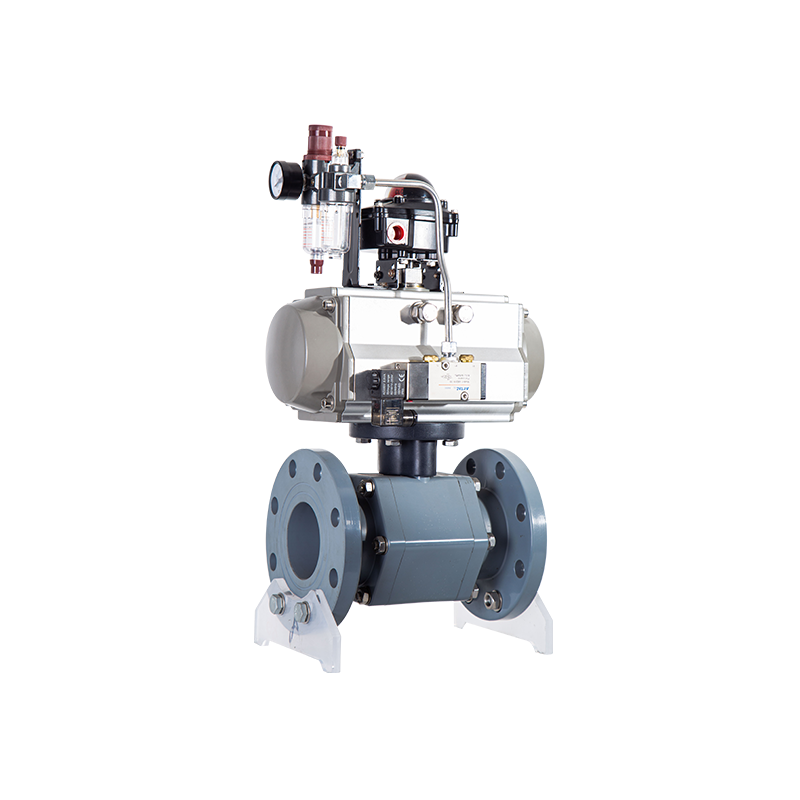
Optional AccessoriesSolenoid valve, limit switch box, positioner, air filter/regulator
Comparison

Pneumatic diaphragm valve vs. pneumatic ball valve

Both automate quarter-turn or linear shutoff; the choice depends on whether the fluid needs solids handling and proportional control.

FactorPneumatic Diaphragm ValvePneumatic Ball Valve
Handling Solids/FibersSmooth weir path resists clogging and fiber wrapBall cavity can trap solids and fibers
Throttling AbilityStrong, well suited to modulating control with a positionerLimited, primarily suited to on/off duty
Actuator MotionLinear compressor stroke90° rotary stroke
Stem SealingNo stem packing exposed to process fluidStem seal exposed to process fluid
Cycle SpeedModerate, proportional to stroke lengthVery fast, typically under a few seconds
Best UseAutomated slurry, dosing, and throttling dutyAutomated clean-fluid on/off shutoff
Advantage

Why plants automate diaphragm valves with pneumatic actuators

Automated Proportional Control
Pairing with a positioner allows precise, remotely controlled flow throttling, not just on/off.
Retains Clog Resistance
The weir-type flow path and stem-free diaphragm sealing are unchanged by adding actuation.
Hazardous Area Friendly
No electrical components at the valve itself, simplifying use in classified or wet environments.
Fast Response for On/Off Duty
Direct-acting pneumatic actuators cycle quickly for automated shutoff applications.
Compatible with Existing Air Systems
Drops into plants that already run compressed air for other pneumatic equipment.
Broad Material Coverage
PVC-U, CPVC, PP, and PVDF body options extend automation across most process chemistries.
Structure & Components

What is inside the assembly

A pneumatic actuator replaces the handwheel, driving the compressor stroke that presses the diaphragm onto the weir seat.

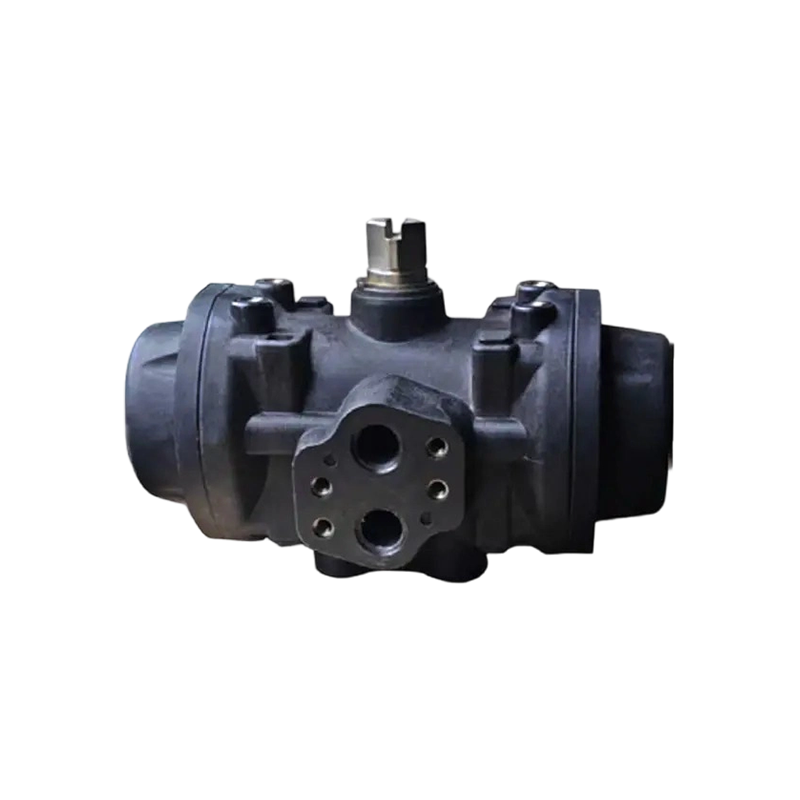
1. Pneumatic Actuator — Diaphragm or piston mechanism that drives the linear compressor stroke
2. Mounting Yoke — Couples the actuator to the valve bonnet
3. Compressor & Stem — Transfers actuator motion into diaphragm deflection
4. Valve Body & Diaphragm — Chemical-resistant plastic body with the weir-type flow path and flexible diaphragm
5. Air Ports & Fittings — Connect the actuator to the compressed air supply lines
6. Optional Positioner / Limit Switch — Provides proportional control or reports valve position
Quality Control

Every assembly is checked before it ships

Inspection covers both the valve body and the actuator's air-driven stroke before the two are shipped as a matched assembly.

1
Valve Body Test
The bare valve body is hydrostatically pressure tested before actuator mounting.
2
Diaphragm Seal Test
An air or water seal test verifies bubble-tight shutoff with the diaphragm fully seated.
3
Actuator Stroke Test
The mounted actuator is cycled under rated air pressure to confirm smooth, full-stroke travel.
4
Positioner Calibration
Units fitted with a positioner are calibrated to verify accurate proportional response.
5
Torque & Coupling Check
Stem coupling alignment is checked to prevent binding or misalignment under load.
6
Batch Traceability
Production batches are recorded, allowing traceability back to raw material and actuator lots.
Air Supply & Control

On/off and modulating control options

Actuator size and spring rating are matched to the valve's diaphragm area and the available air supply pressure.

Control TypeBest Suited ForKey Characteristics
On/Off Pneumatic ActuatorSimple automated shutoff pointsDirect-acting stroke driven by supply air pressure
Pneumatic Actuator with PositionerModulating flow control loopsProportional diaphragm positioning driven by an analog control signal
Fail-Safe Spring ReturnApplications requiring a defined position on air lossSpring drives the diaphragm open or closed if air supply is interrupted
Installation & Maintenance

Getting it right in the field

Installation Guidance
  • Confirm air supply pressure and flow meet the actuator's rated range before commissioning.
  • Fit an air filter/regulator ahead of the actuator to keep supply air clean and dry.
  • Support the pipeline near the valve, since the added actuator weight increases the load on the body.
  • Cycle the assembly through several full strokes on commissioning to confirm smooth, unobstructed travel.
Maintenance Guidance
  • Check air line filters and regulators periodically to prevent moisture or debris reaching the actuator.
  • Inspect the diaphragm periodically for cracking, permanent set, or chemical attack, since it remains a wear item under automation.
  • Verify positioner calibration periodically to maintain accurate proportional control.
  • Service the diaphragm per the base valve's maintenance guidance; the actuator can be unbolted for access.
Payment, Shipping & Warranty

Ordering with confidence

Payment & Shipping

Payment: T/T (bank transfer), L/C, and PayPal are accepted, with flexible terms for repeat orders. A deposit is typically required to confirm production of matched valve-actuator assemblies.

Shipping: Sea freight (FCL/LCL) for bulk orders, air freight for time-sensitive automation projects, and courier for samples. Assemblies ship pre-mounted and tested in wooden crates.

Delivery: Shipment from the nearest available port or airport, with door-to-door, FOB, CIF, or EXW terms on request.

Warranty & Support

Each assembly is covered under a standard warranty against manufacturing defects in material and workmanship, generally valid for 12 months from the shipment date, covering both valve and actuator.

  • Technical support with actuator and positioner sizing, air supply requirements, and accessory selection before and after purchase.
  • Replacement actuator seals, diaphragms, and solenoid or limit switch accessories available as spare parts.
FAQ

Common questions

Can the actuator provide proportional flow control, not just on/off?
Yes, pairing the pneumatic actuator with a positioner allows the diaphragm to be positioned proportionally in response to a control signal, giving modulating flow control.
What air pressure is needed to operate the actuator?
Most actuators operate on clean, dry compressed air in the range of 40–90 psi (3–6 bar); exact requirements depend on the actuator and valve size selected.
Does automation change how well the valve handles solids?
No, the weir-type flow path and diaphragm sealing are unchanged by adding a pneumatic actuator, so clog resistance is the same as the manual valve.
Can the valve body material be selected independently of the actuator?
Yes, the actuator mounts to a standard bonnet interface common to PVC-U, CPVC, PP, and PVDF valve bodies, so the wetted material is chosen based on the process fluid.
Is this suitable for hazardous or wet areas?
Pneumatic actuation avoids electrical components at the valve itself, which is one reason it is often preferred in classified or wash-down environments.

Related Information

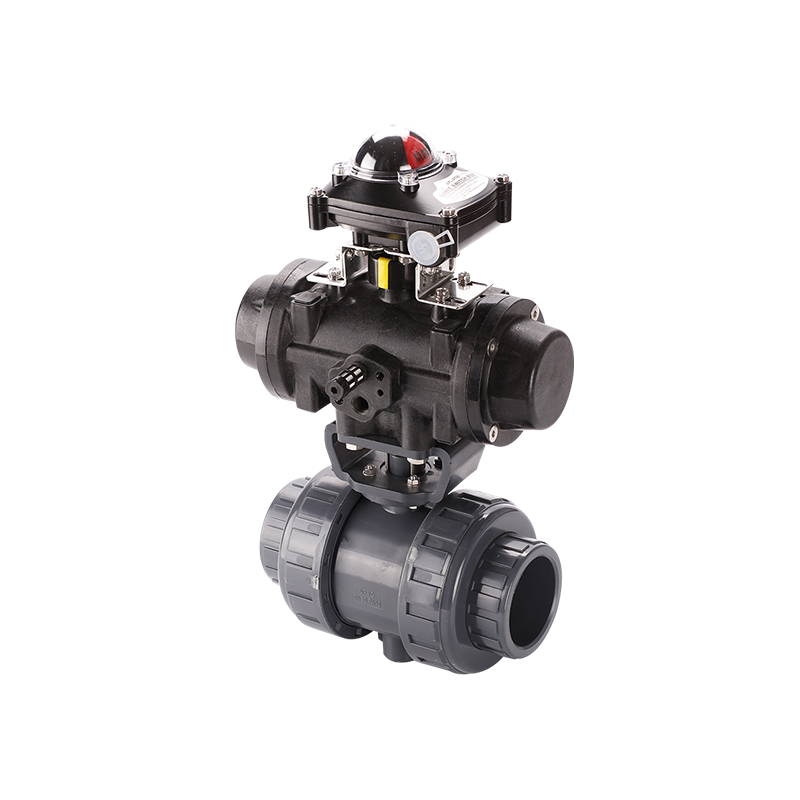
Pneumatic Actuated Plastic Ball Valves

Overview Compressed-air operation for fast, repe

Industrial Plastic Diaphragm Valves

Overview The full diaphragm valve range, from bo

Weir Type Plastic Diaphragm Valves

Overview A raised-seat body geometry that reduce

Threaded Industrial Diaphragm Valves

Overview A threaded-end diaphragm body sized for

Heavy Duty Diaphragm Valves

Overview A reinforced body and bonnet for demand

Chemical Duty Diaphragm Valves

Overview A diaphragm valve sized and specified f

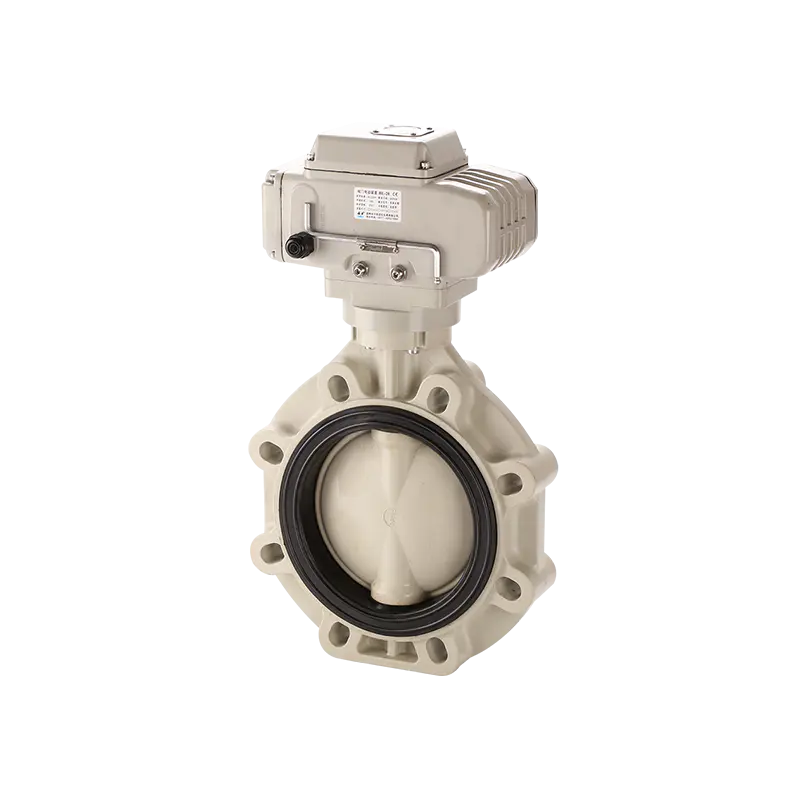
Wafer Style Plastic Butterfly Valves

Overview A slim wafer body that clamps between s

Manual Industrial Diaphragm Valves

Overview Handwheel-operated diaphragm shutoff fo

CPVC Lined Diaphragm Valves

Overview A CPVC flow path for diaphragm valve se

Ready to automate your diaphragm valve?

Share your valve material, size, control requirements, and air supply pressure, and get an actuator sizing recommendation.