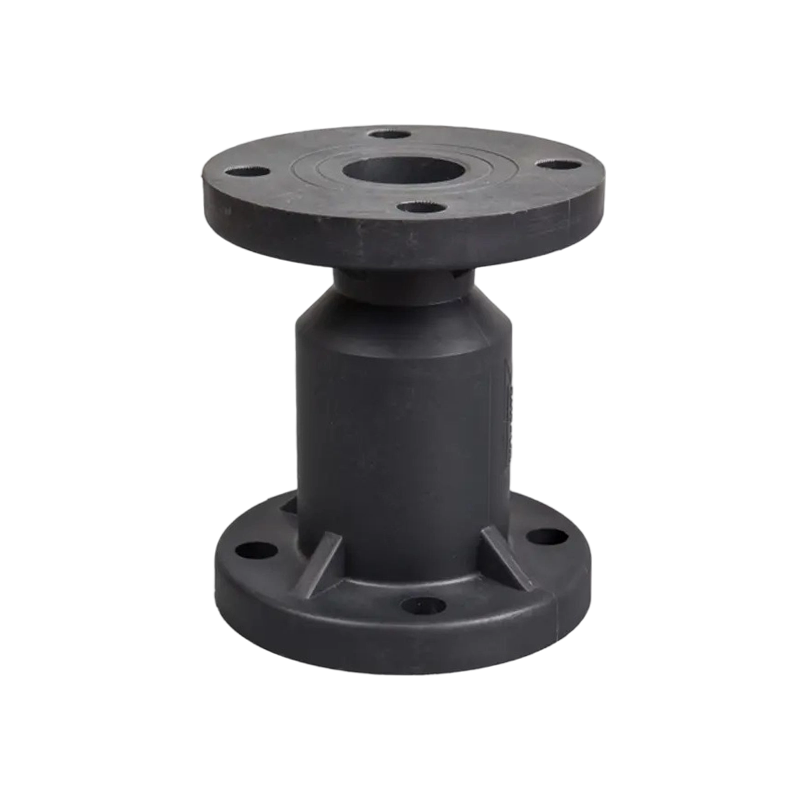
PVC Ball Valve Use: Quarter-Turn Isolation, Not Flow Regulation
A PVC ball valve is used to start, stop, and isolate flow in a plastic piping line. The handle turns a bored ball a quarter turn; when the bore lines up with the pipe, flow passes, and when the ball turns 90 degrees, it seats against the seals and blocks the line. That simple action explains most purchases: a compact shutoff point before a pump, after a tank, at a branch, or at the inlet of a chemical dosing skid.
The first conclusion is blunt: choose a PVC ball valve for on/off duty, not for tuning flow. A ball valve has a fast, high-flow opening, but partially open operation puts the seats and ball edge in a poor hydraulic position. If the job requires repeatable throttling, a diaphragm valve, globe valve, or a control valve with the correct trim is usually the safer specification. If the job requires “close it, lock it, and know it is closed,” a quarter-turn ball valve is often the practical choice.
That distinction matters because PVC ball valves appear in many applications that look similar on a drawing but behave differently in service: irrigation manifolds, water treatment skids, laboratory drains, chemical transfer lines, pool filtration, aquaculture tanks, and packaged equipment. The valve body may be inert and low cost, but the seat, stem seal, actuator, and connection method still decide whether the installation is reliable. A ball valve is not a universal answer to every plastic-line isolation problem; it is a strong answer when the duty is clean isolation within the pressure and temperature limits of the chosen PVC material.
Typical use boundaries for PVC ball valves compared with other common plastic valve duties.
| Duty |
PVC ball valve fit |
Watch point |
Better choice when |
| Line isolation |
Very good: quarter-turn shutoff, low flow resistance when open |
Seat material and pressure rating must match the media |
Nothing else is usually needed for clean isolation |
| Flow balancing |
Poor: not intended for fine regulation |
Partially open ball valves can erode seats and create noise |
Diaphragm, globe, or dedicated control valve |
| Chemical transfer |
Good if body, seats, and seals are compatible |
PVC may not suit strong solvents, hot caustics, or aggressive oxidizers |
CPVC, PVDF, or PP with verified compatibility |
| Buried irrigation branch |
Good for manual isolation, provided access is planned |
Solvent-welded joints need proper cure time before pressure |
True union or flanged design for easier service |
| Automated skid |
Good with electric or pneumatic actuation |
Actuator torque, fail position, and cycle speed must be sized |
Automated ball valve with duty-matched actuator |
| High-temperature loop |
Limited: standard PVC has a modest temperature ceiling |
Pressure rating drops as temperature rises |
CPVC or another higher-temperature thermoplastic |
For an industrial plastic line, the practical question is not simply “PVC or metal?” It is “which thermoplastic valve body, seat, seal, and connection will hold the media, pressure, temperature, and maintenance access for the life of the line?” An industrial thermoplastic ball valve can be a good fit when the duty is isolation, the media is compatible, and the installer respects solvent-weld or threaded connection procedures.
Where PVC Ball Valves Are Used in Real Piping Systems
The most common PVC ball valve applications share three traits: the fluid is relatively compatible with PVC, the valve is used for shutoff rather than balance, and the line needs a low-cost, corrosion-resistant isolation point. The application cards below show where buyers most often specify them and what to check before releasing the order.
Water treatment and filtration
Used before pumps, after media filters, on chemical dosing branches, and at drain points. PVC handles many cold water and dilute chemical services well, but chlorine strength, temperature, and UV exposure still need review.
Check: pressure rating at the highest water temperature, seat material, and whether the valve will be exercised regularly.
Irrigation and landscape supply
Manual ball valves isolate zones, mainlines, and pump suction lines. Their quarter-turn operation is easy for maintenance staff, and the full-open bore reduces pressure loss compared with many restrictive valve types.
Check: solvent-weld cure time, UV protection, and access for repair if the valve is buried.
Chemical transfer and dosing
Used on storage-tank outlets, dosing-pump suction lines, and drain branches. Compatibility is the main gate: PVC is not suitable for every solvent, acid, or oxidizer. The seat and O-ring compound can fail even when the body is acceptable.
Check: full media compatibility, specific gravity, temperature, and whether the valve needs a locked handle or actuation.
Pools, spas, and aquaculture
Isolation valves on pump lines, filter loops, and tank drains. PVC is common in these wet environments because it resists corrosion and can be solvent-welded into compact manifolds.
Check: continuous pump pressure, water hammer, and the position of the valve for future seat replacement.
Wastewater and sump lines
Used for isolating lift-station branches, sump discharges, and drain headers. Solids and debris can interfere with seat closure, so strainer placement and flushing practice matter.
Check: debris risk, valve orientation, and whether a full-bore ball valve gives enough clearance for the expected solids.
Packaged equipment and OEM skids
Machine builders use PVC ball valves as compact isolation points inside chillers, rinse stations, lab equipment, and water-treatment cabinets. The valve often becomes part of a repeatable bill of materials.
Check: dimensional repeatability, actuator envelope, handle clearance, and batch traceability for service spares.
The same valve can work well in one plant and poorly in another because of installation details rather than the valve concept. A solvent-welded valve placed under stress from misaligned pipe can leak at the joint. A threaded valve sealed with excess paste can contaminate a clean process. A valve sized purely by pipe diameter can be undersized for actuator torque or too restrictive for a gravity line. Application review should always include the pipe support, the valve access space, and the maintenance procedure, not only the catalog pressure rating.
Manual or Actuated PVC Ball Valves: Choose by Operating Frequency
Manual PVC ball valves make sense where someone can safely reach the handle and operation is occasional. Actuated ball valves make sense where the valve is part of an automatic sequence, sits in a difficult location, must close on a signal, or needs repeatable cycling. The purchase decision usually comes down to labor access and control logic rather than valve body style.
Choose manual operation when
- The valve is operated a few times per shift or less.
- The handle is visible, reachable, and clear of hot surfaces or moving equipment.
- A lockout/tagout handle or padlock feature supports maintenance safety.
- No control air or electrical supply is available at the valve location.
- The line is small enough that a hand torque is practical and predictable.
Choose actuation when
- The valve must open or close from a PLC, timer, sensor, or remote panel.
- The valve is high, enclosed, or unsafe to reach during normal operation.
- The process requires frequent cycling or a defined fail position.
- The line benefits from a repeatable stroke and position feedback.
- Interlocks prevent flow until another pump, level switch, or door is safe.
Do not overlook
- Actuator torque rises with pressure differential and seat friction.
- Electric actuators need supply voltage, control signal, and enclosure rating defined together.
- Pneumatic actuators need air quality, port size, and fail-safe behavior stated clearly.
- Manual override and position indication should be specified for maintenance.
- The valve and actuator must be tested as a matched assembly, not selected separately at the last minute.
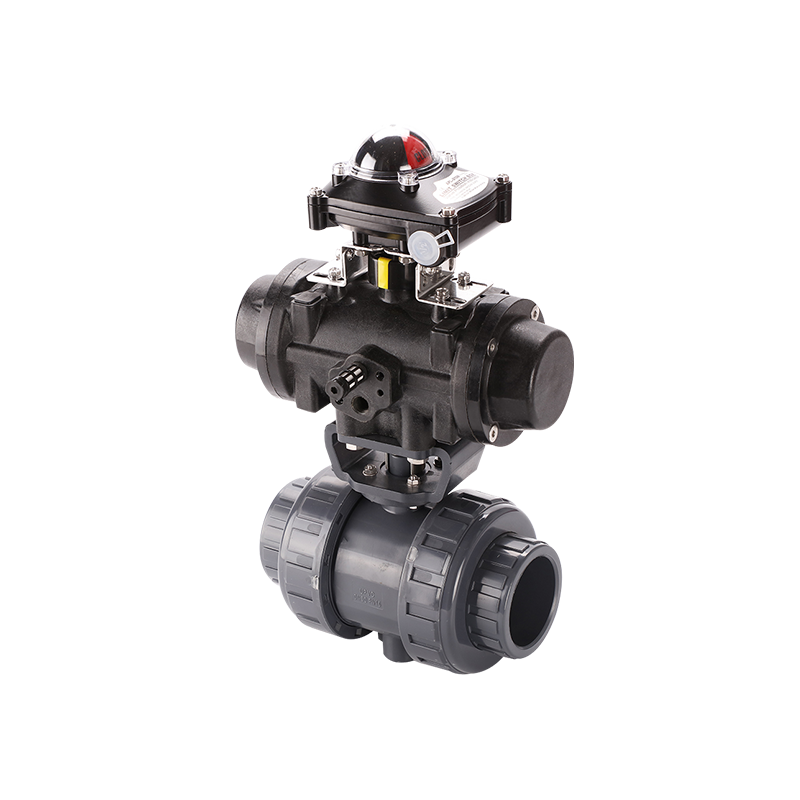
For automatic isolation, the actuator is not an accessory added after the valve is chosen. It changes the torque demand, the envelope, the wiring or air routing, and the maintenance procedure. A valve that is easy to turn by hand may need a larger actuator than expected when the line pressure holds the ball against the seat. That is why a matched automatic assembly is usually safer than mixing a valve from one source with an actuator from another without a torque review.
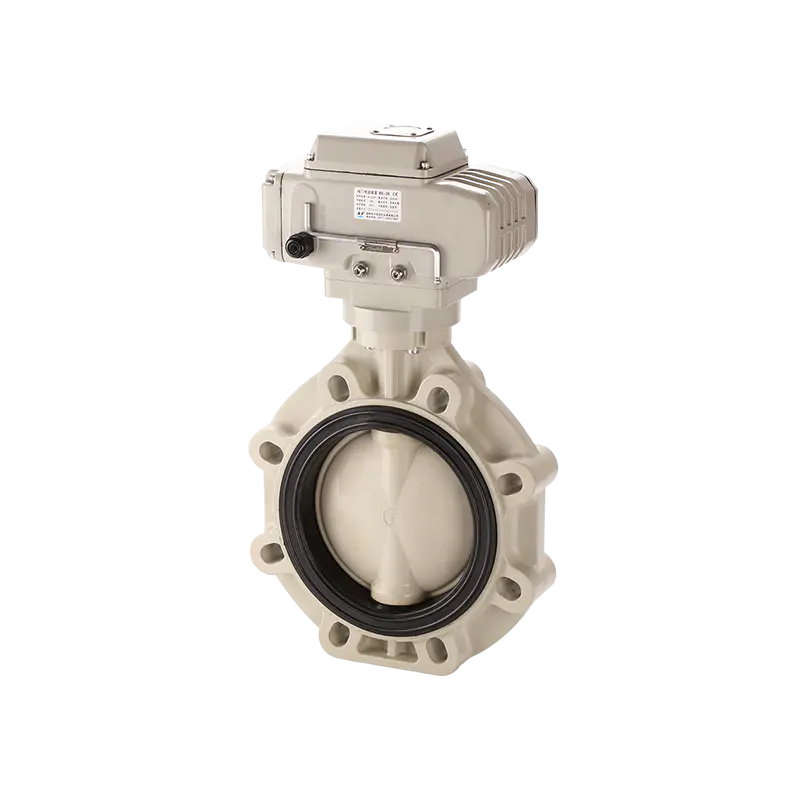
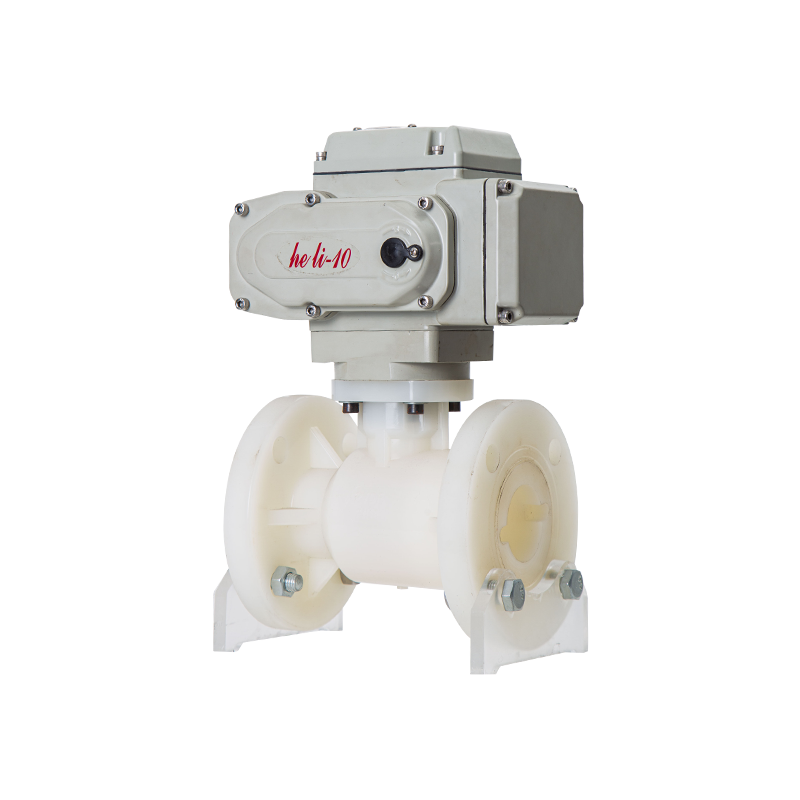 Electric Flanged Plastic Ball Valve with Matched ActuatorA matched automatic plastic ball valve assembly with electric actuation, offered in multiple body materials and actuator options for isolation layouts that avoid compressed air.View Product →
For skids with a control panel, electric actuation removes the need for compressed air and simplifies wiring in some layouts. For areas with reliable instrument air and a need for fast cycling, pneumatic actuation can be compact and responsive. Neither choice replaces the need to confirm media compatibility, pressure rating, and fail position.
Common PVC Ball Valve Configurations and Their Purchase Trade-offs
“PVC ball valve” covers several body styles that solve different installation problems. The wrong body style can turn a simple repair into a cut-and-rebuild job, so the connection method deserves as much attention as the pressure rating.
True union ball valve
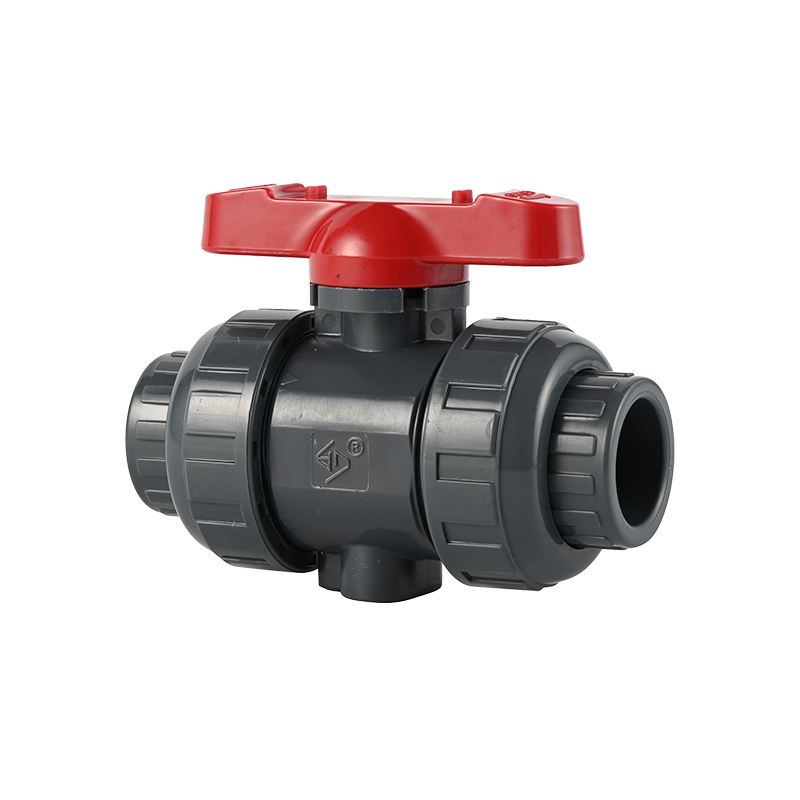
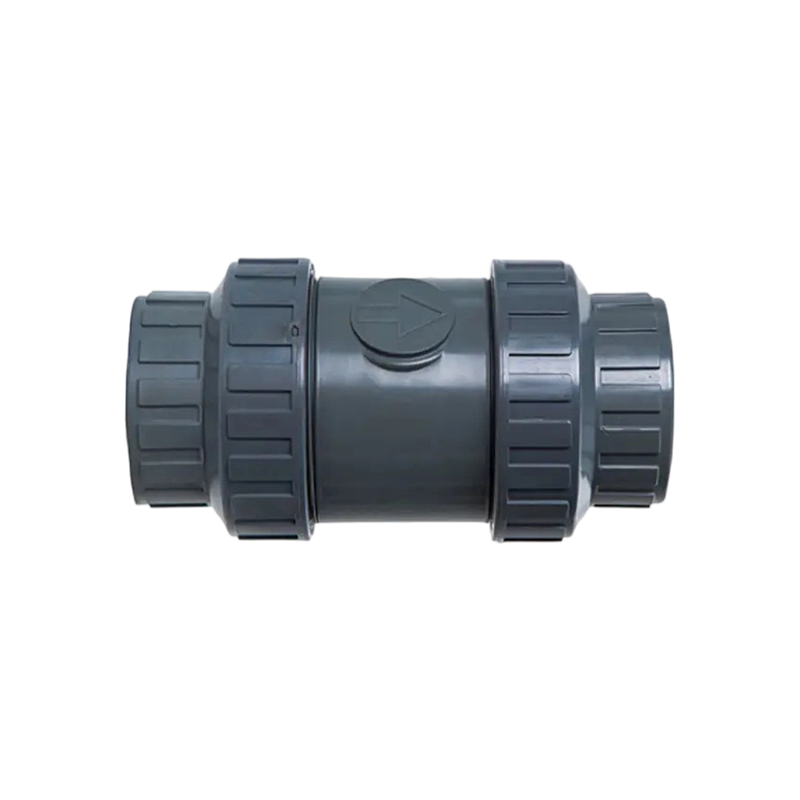
A true union design lets the valve body be removed from the line without cutting the pipe, provided the installer leaves enough clearance. It is often preferred for pump discharge lines, chemical skids, and locations where seats or the whole valve may need service. The trade-off is more joints and a larger envelope than a simple socket valve. For maintenance-sensitive lines, true union PVC ball valves can reduce downtime because the pipe ends stay in place.
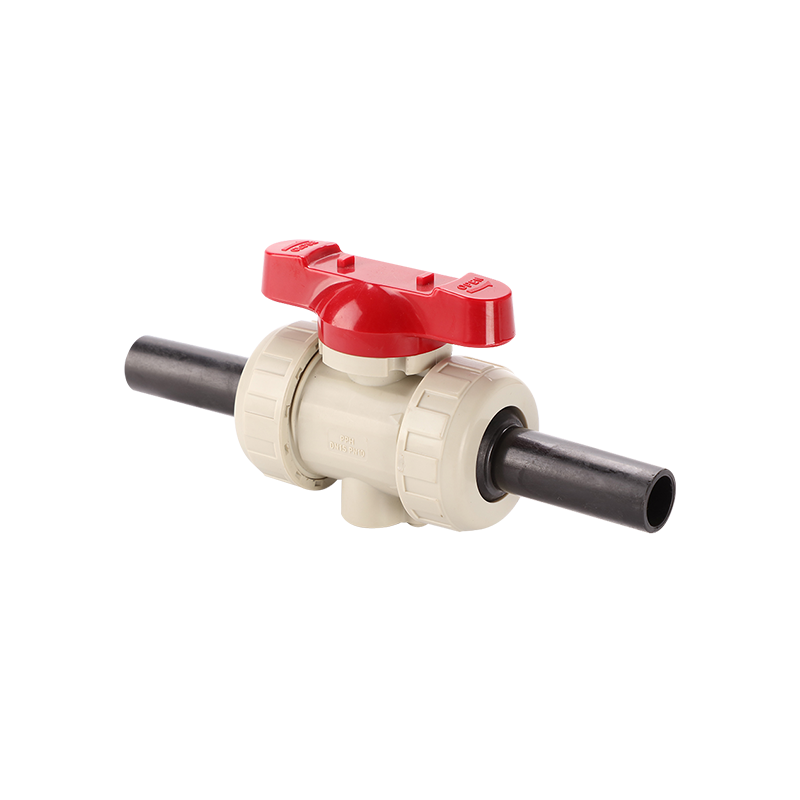 True Union Plastic Ball Valve for Maintenance-Sensitive LinesA full-bore manual plastic valve with union ends that can be removed without cutting pipe and converted to automatic operation without replacing the body.View Product →
Flanged ball valve
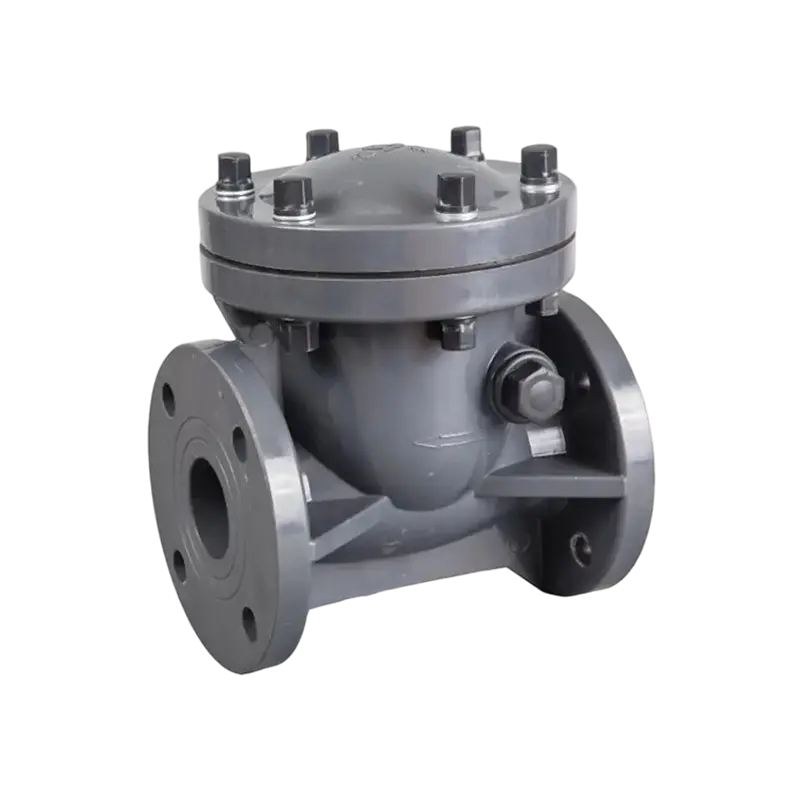
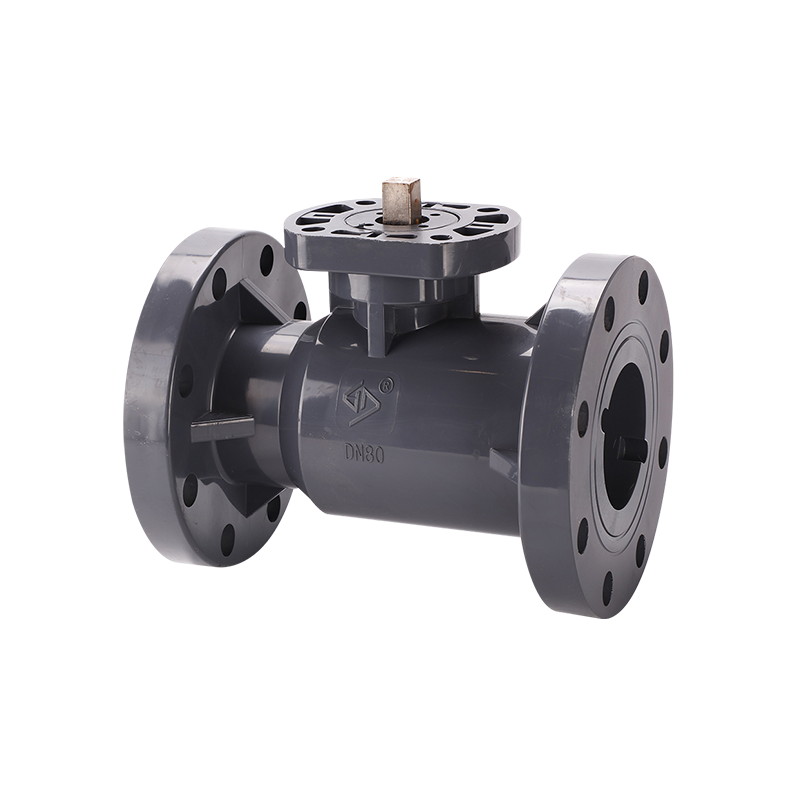
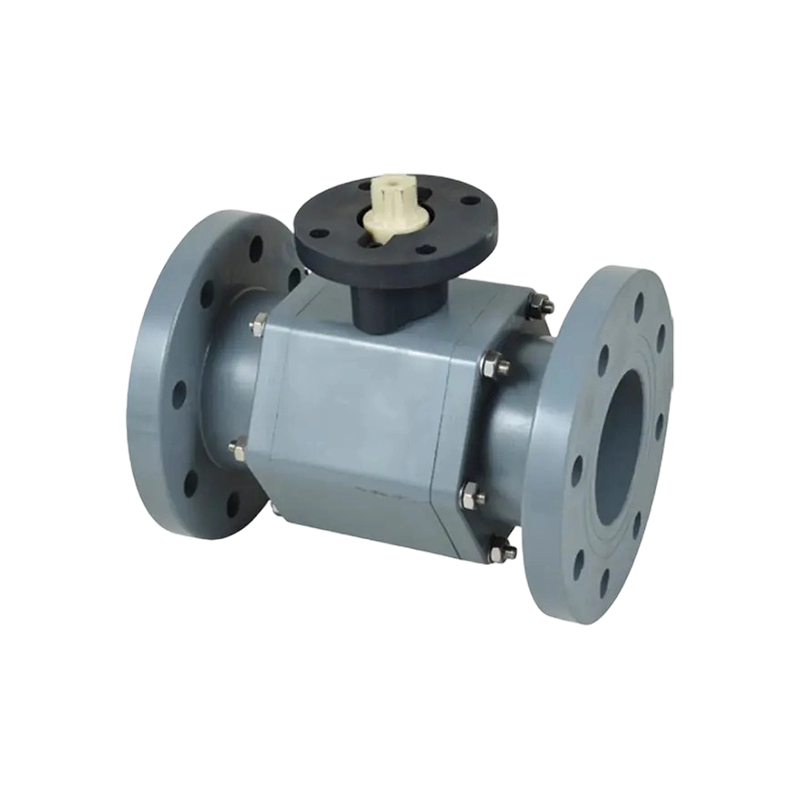
Flanged valves suit larger pipe sizes, equipment connections, and systems where a bolted joint is preferred over solvent welding at the final tie-in. They also allow the valve to be removed with common tools. The installation still depends on gasket selection, bolt torque, flange alignment, and support. A flange that is pulled into alignment by tightening bolts can crack a plastic valve body or create a leak path.
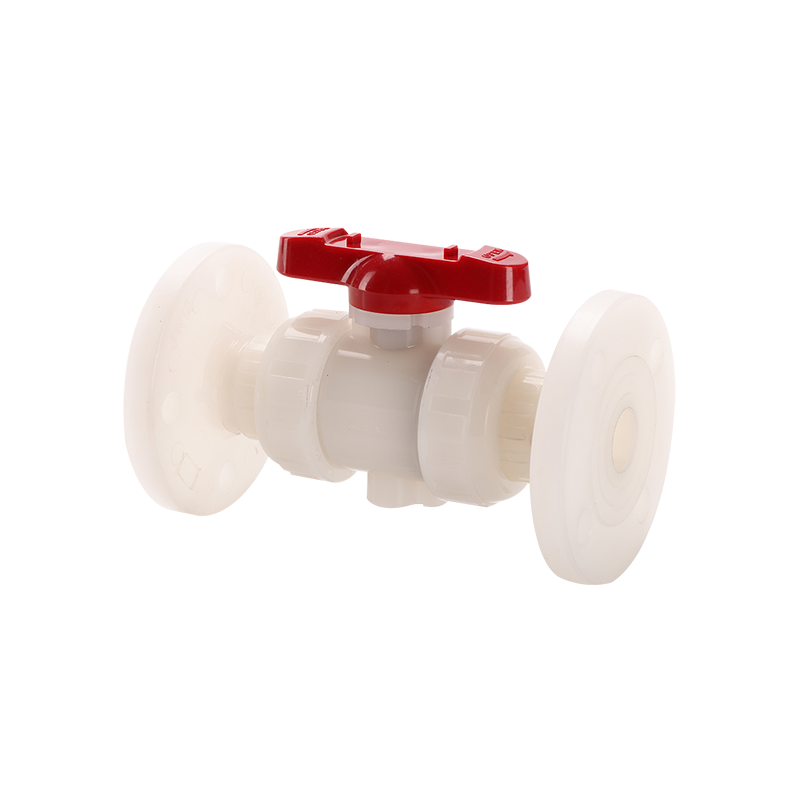 One-Piece Plastic Flanged Ball ValveA manually operated flanged plastic ball valve with PTFE sealing and optional lock, suited where bolted connections and fewer leakage points are preferred.View Product →
Threaded and socket-weld ends
Threaded ends can be useful for small valves and temporary assemblies, but thread sealant must be compatible with the process and applied sparingly. Socket-weld ends create a strong, compact joint when the correct solvent cement and cure schedule are used. The hidden risk is rushing the cure: a joint that holds during a quick pressure test may fail later under load or temperature change.
Three-way and compact designs
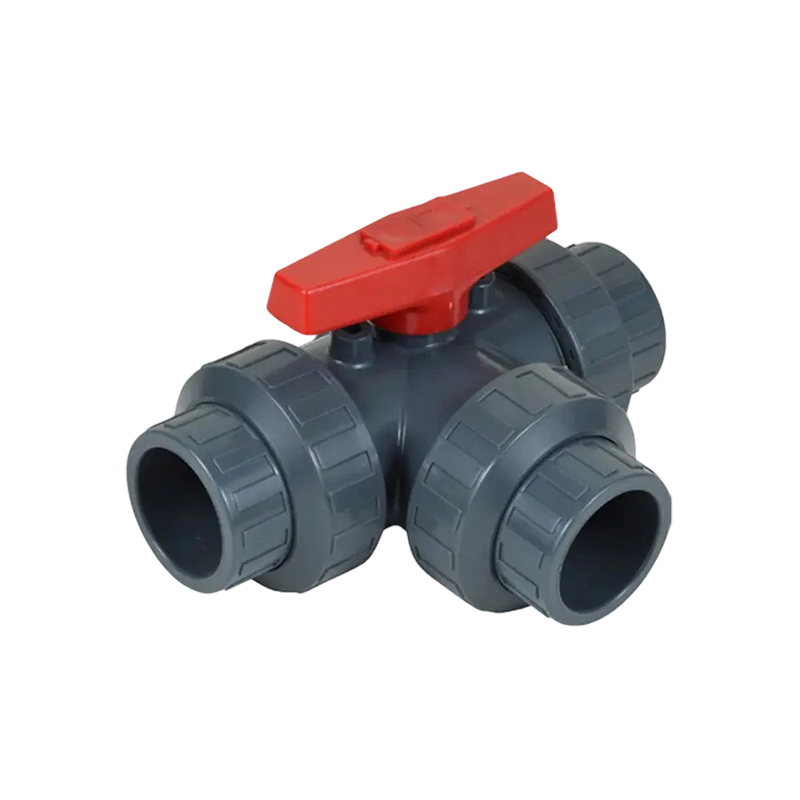
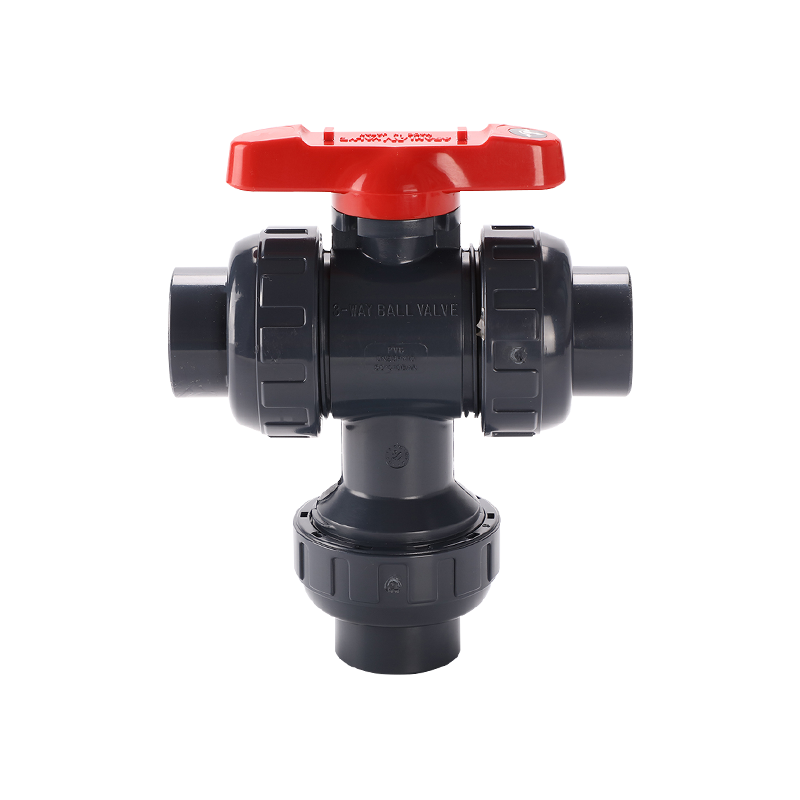
Three-way ball valves combine flow paths for diverting or selecting between lines. Compact ball valves save space in small equipment and irrigation manifolds. Neither should be treated as a direct substitute for a standard full-port isolation valve when pressure loss, actuator clearance, or seat service life is critical.
Connection style comparison for PVC ball valve selection.
| Style |
Best fit |
Installation consideration |
Service consideration |
| True union |
Skids, pump lines, frequent maintenance |
Allow room to unscrew the union nuts |
Valve can be removed without cutting pipe |
| Flanged |
Larger lines, equipment interfaces |
Gasket, bolt torque, and alignment matter |
Removable with tools, but heavier envelope |
| Socket weld |
Compact permanent piping |
Correct cement, fit, and full cure time |
Cutting and re-jointing may be needed |
| Threaded |
Small valves, temporary or serviceable joints |
Do not over-apply sealant |
Thread damage can cause leaks after repeated service |
| Three-way |
Diverting or selecting flow paths |
Confirm port layout and handle position |
More complex seat and cavity cleaning |
Material, Temperature, and Pressure: The Limits Buyers Must Check
The word “PVC” is often used loosely. In industrial piping, buyers may see PVC, UPVC, and CPVC in the same conversation, but they do not share the same temperature ceiling or chemical resistance profile. Standard PVC and UPVC are common for cold water and many mild chemical services. CPVC is chosen where higher temperatures or a different compatibility profile is needed. PVDF and PP may be better where solvents, strong chemicals, or higher temperatures push beyond PVC.
Pressure rating is not a single fixed number for all conditions. It falls as temperature rises. A valve rated for a certain pressure at room temperature may have a much lower allowable pressure at an elevated service temperature. The same applies to solvent-welded joints, which can lose strength before the valve body does. The purchase order should state the design pressure, design temperature, and media together, not as separate line items on different documents.
Chemical compatibility review
Critical
Temperature derating check
Critical
Seat and seal material
High
Actuator torque margin
Medium
This bar chart is a specification-weighting aid, not a measured failure-rate study. The highest-weight items should be resolved before a valve is released for purchase.
General material selection guide for plastic ball valve duties.
| Material |
Typical advantage |
Typical limitation |
Useful check |
| PVC / UPVC |
Good corrosion resistance, cost-effective, widely available |
Moderate temperature ceiling; not for every chemical |
Confirm pressure derating at service temperature |
| CPVC |
Higher temperature capability than standard PVC in many services |
Still limited by chemical compatibility and joint procedure |
Confirm gasket, seat, and cement compatibility |
| PP / PPH |
Good chemical resistance for many aggressive services |
Lower stiffness; welding and support need attention |
Check pressure and temperature together |
| PVDF |
High-performance chemical and temperature resistance |
Higher cost and different installation practice |
Verify the full media list, not just the main chemical |
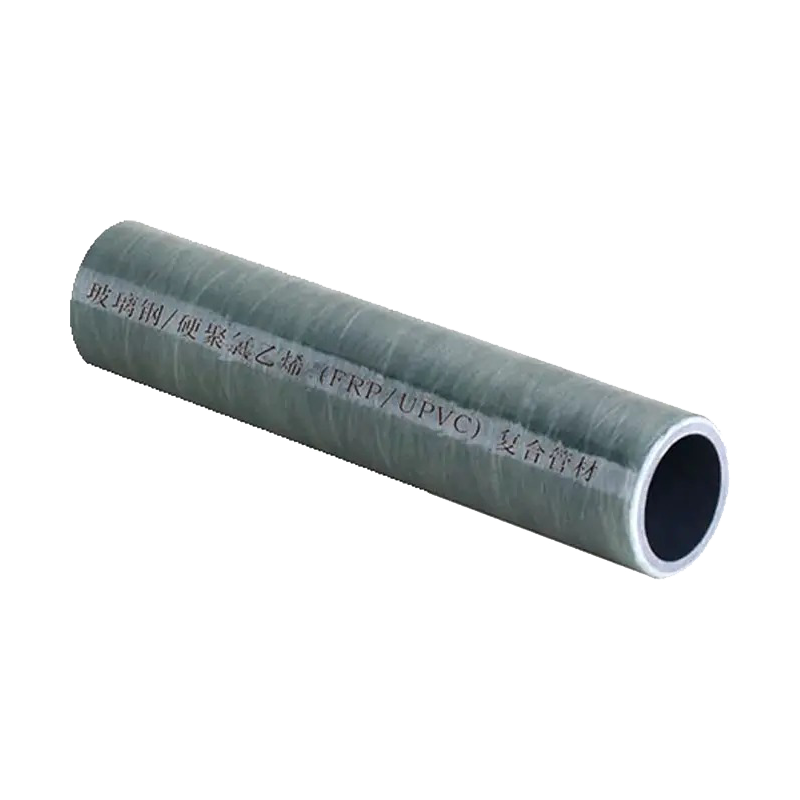
| FRPP / FRP composite |
Added structural strength for demanding piping routes |
More complex installation and inspection |
Follow the manufacturer’s support and joining method |
Sizing and Specification Details That Prevent Rework
Sizing a PVC ball valve starts with pipe size, but it does not end there. The valve must pass the required flow without excessive pressure loss, fit the available space, and accept the chosen actuator. For gravity lines and pump suction lines, a reduced-port valve can add more restriction than expected. For automated lines, a valve that is correct in size may still be wrong if the actuator cannot produce enough torque under the real pressure differential.
1
Define the duty
State whether the valve is for isolation, drain, diversion, or equipment protection. Confirm that throttling is not being assigned to a ball valve by default.
2
Fix the design conditions
List media, concentration, specific gravity, design pressure, design temperature, and ambient conditions. Include cleaning chemicals if the line is flushed or sanitized.
3
Select body and seals
Choose PVC, CPVC, PP, PVDF, or another material only after checking the media against the body, seat, and seal materials.
4
Choose the connection
Decide between true union, flanged, socket, or threaded ends based on service access, pipe material, and installation skill.
5
Confirm operation
Define manual handle, gear operation, electric actuator, or pneumatic actuator. State fail position, control signal, and manual override needs.
6
Check the installation
Review support, alignment, handle clearance, actuator envelope, drain direction, and future maintenance access before issuing the purchase order.
A common specification gap is the difference between line size and port size. A full-port ball valve offers a clear bore close to the pipe inside diameter, while a reduced-port valve has a smaller bore. The reduced-port design may be acceptable for a short isolation branch, but it can be a poor choice on a pump suction line where every pressure loss matters. Buyers should ask for the port configuration, not only the nominal valve size.
Another common gap is actuator torque margin. A valve that turns freely on a bench may need more torque after installation because of pressure, seat compression, and temperature. The actuator selection should include a margin above the calculated breakaway torque, and the valve supplier should confirm that the stem and mounting interface are rated for the actuator. This is especially important on lines that cycle often or close against a pump running condition.
Installation, Operation, and Maintenance Points That Affect Service Life
The service life of a PVC ball valve is often decided before the first pressure test. Misalignment, over-tightened threads, incomplete solvent cure, missing support, and a handle that strikes a pipe can all shorten service life even when the valve itself is correctly rated. The points below are practical checks for installation teams and maintenance planners.
Before installation
- Confirm the valve body, seat, and seal materials against the actual media, not a general chemical name.
- Check that the pressure rating at the design temperature is acceptable, including surge or pump shutoff pressure.
- Verify handle clearance and actuator envelope before cutting pipe.
- Inspect the valve for shipping damage and confirm that the ball moves through the full quarter turn.
- Keep the valve closed or protected during solvent welding to prevent cement or debris from entering the bore.
During installation
- Support the pipe on both sides of the valve so the valve body does not carry pipe load.
- For solvent-welded joints, follow the cement manufacturer’s cure schedule before pressure testing.
- For threaded joints, use a compatible sealant and avoid excess material that can enter the process.
- Do not use the valve to pull misaligned pipe into position.
- For flanged valves, tighten bolts in a crossing pattern and check gasket alignment.
- Leave enough space for future union nut rotation, flange bolt removal, or actuator service.
Operation and maintenance
- Operate the valve fully open or fully closed; avoid leaving a manual ball valve part-open for long periods.
- Cycle infrequently used valves on a planned schedule so seats and stems do not seize.
- Check for leaks at joints and stem seals after temperature changes or pressure excursions.
- Replace seats or seals with the correct spare parts rather than forcing a worn valve to seal.
- If the line is drained or winterized, follow a procedure that avoids trapped water freezing inside the valve cavity.
Maintenance planning question
Can the valve be isolated and removed without cutting the pipe? If the answer is no, a true union or flanged body may be worth the extra initial cost. If the answer is yes, confirm that the maintenance team has the correct union seals, gaskets, and actuator spares on hand.
Debris is another practical issue. A ball valve that closes on sand, scale, or polymer particles may not seal fully even after the handle reaches the stop. A strainer upstream can protect the seat, but it adds a maintenance point. On dirty service, the better approach is often to select a valve and installation position that can be flushed, inspected, and cleaned without dismantling the whole line.
Procurement Checks for Industrial PVC Ball Valve Orders
Buyers comparing PVC ball valves should compare the specification package, not only the unit price. A lower-cost valve can become expensive if the seat material is wrong, the actuator mounting is non-standard, or the batch cannot be traced when a leak appears. The table below lists the checks that usually prevent disputes and rework.
Procurement checklist for PVC ball valve orders.
| Check |
What to ask for |
Why it matters |
| Body material |
PVC, UPVC, CPVC, or other thermoplastic grade |
Temperature and chemical limits differ by material |
| Seat and seal materials |
Seat, O-ring, and stem seal compound |
The body may be compatible while the seal is not |
| Pressure and temperature basis |
Design pressure at the stated design temperature |
Room-temperature ratings can mislead on warm lines |
| Port configuration |
Full port or reduced port, plus bore size |
Affects pressure loss and pump suction performance |
| End connection |
True union, flange, socket, or thread standard |
Controls installation method and future service access |
| Actuator data |
Torque, voltage or air supply, fail position, cycle time |
Prevents mismatched valve and actuator assemblies |
| Traceability |
Batch marking, test record, and spare-part identification |
Supports maintenance and warranty review |
For projects that combine valves, pipe, and fittings, it also helps to standardize the connection system and spare seals across the plant. A maintenance store with ten similar-looking valves but five different union seal sizes creates delays. Standardization is not only a purchasing preference; it affects how quickly a line can be returned to service after a leak or a seat change.
Finally, ask whether the valve will be tested as a complete assembly. An actuated valve should be checked for open and closed position, stroke, leak tightness, and accessory function before shipment. A manual valve should be checked for smooth operation and clear position indication. These checks do not replace site commissioning, but they reduce the chance that a basic assembly error becomes a start-up delay.
FAQ: PVC Ball Valve Uses and Selection
What is a PVC ball valve used for?
A PVC ball valve is mainly used for on/off isolation in plastic piping lines. It starts or stops flow with a quarter turn and is common on water, irrigation, chemical transfer, pool, aquaculture, wastewater, and equipment lines. It is not intended for fine flow balancing.
Can a PVC ball valve be used for throttling?
Generally, no. A partially open ball valve can create noise, seat wear, and unstable flow. Use a valve designed for regulation, such as a diaphragm or globe valve, when flow must be adjusted repeatedly.
How do I know if the valve is open or closed?
The handle position usually indicates the state. On many manual ball valves, the handle in line with the pipe means open, and across the pipe means closed, but always confirm the manufacturer’s marking. For actuated valves, use the position indicator or feedback signal.
Is a PVC ball valve suitable for hot water?
Standard PVC has a limited temperature ceiling. CPVC or another higher-temperature material may be needed for hot service. The pressure rating must be checked at the actual service temperature, not only at room temperature.
What is the difference between a true union and a standard PVC ball valve?
A true union valve can be removed from the line by unscrewing union nuts, while a standard socket valve usually requires cutting the pipe. True union designs are easier to service but need enough clearance and more joints.
Can PVC ball valves be automated?
Yes. Electric and pneumatic actuators are available for plastic ball valves. The actuator must be matched to the valve torque, media pressure, cycle frequency, and required fail position.
What causes a PVC ball valve to leak?
Common causes include incompatible seat or seal material, debris on the seat, incomplete solvent cure, over-tightened threads, misaligned flanges, thermal movement, and wear from frequent partial-open operation. The joint and installation should be checked before replacing the valve.
How should a PVC ball valve be stored before installation?
Store it clean, protected from sunlight and impact, and away from heavy pipe loads. Keep the bore free of cement, sand, and debris. Confirm that the handle and actuator mounting are not damaged before installation.