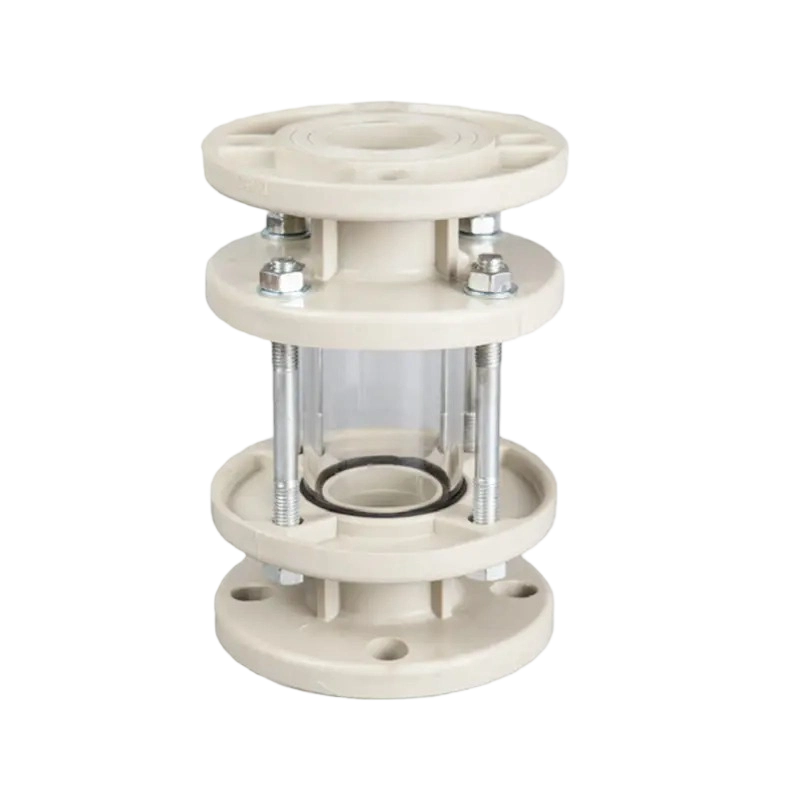
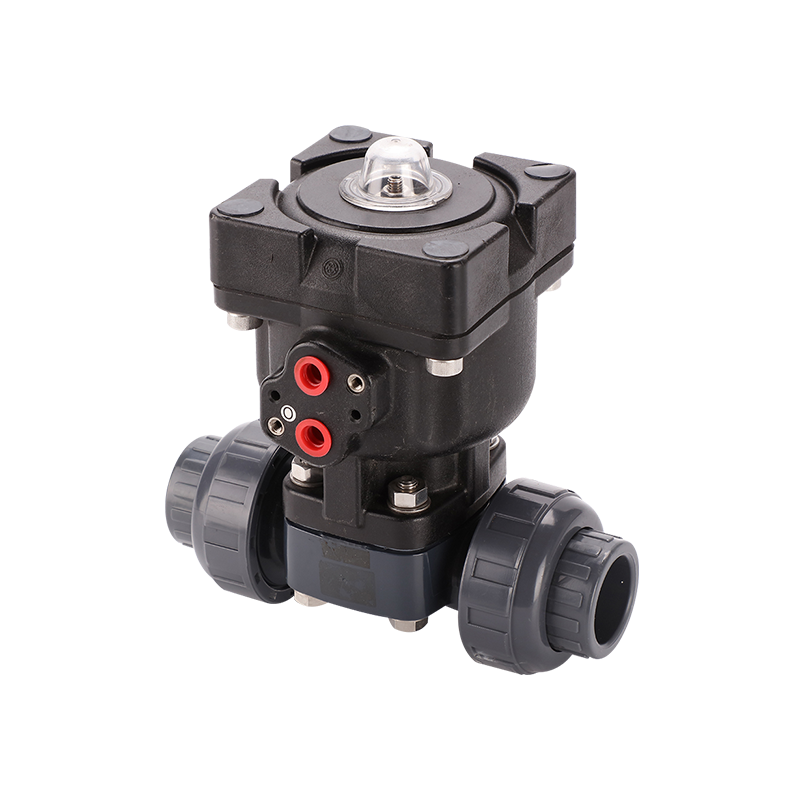
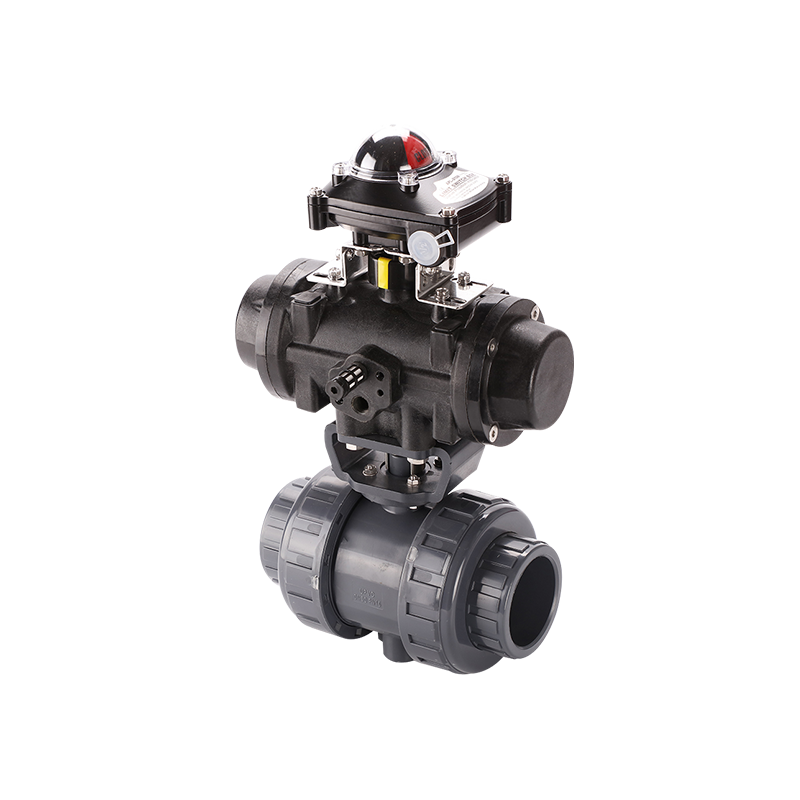
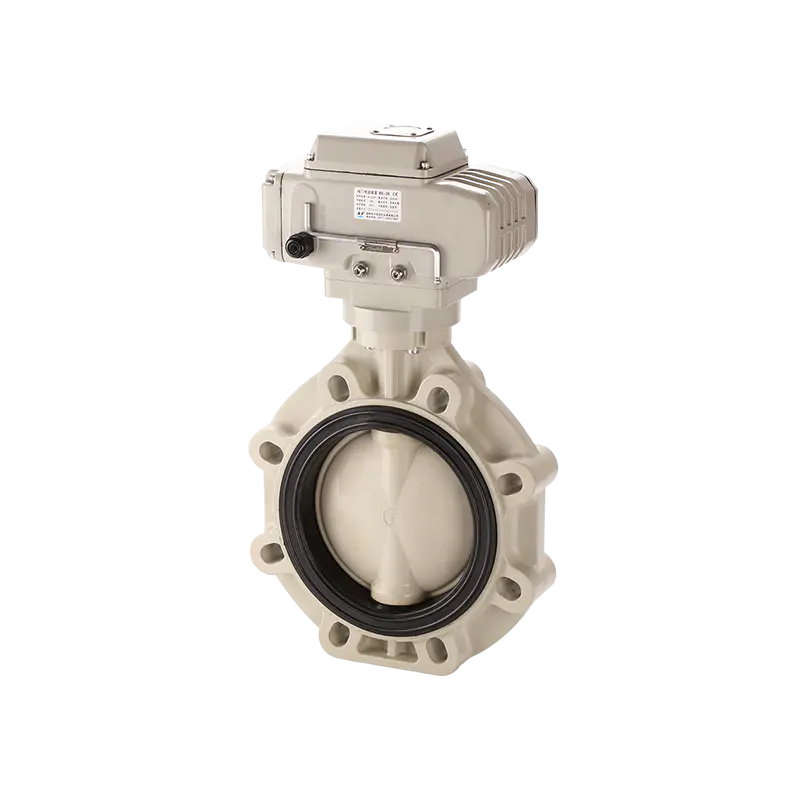
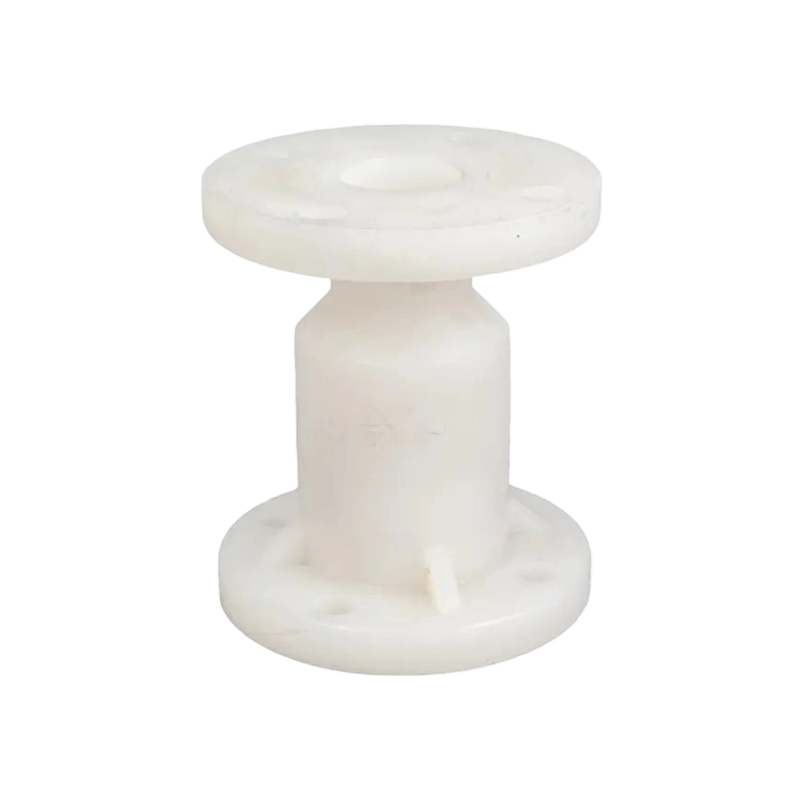
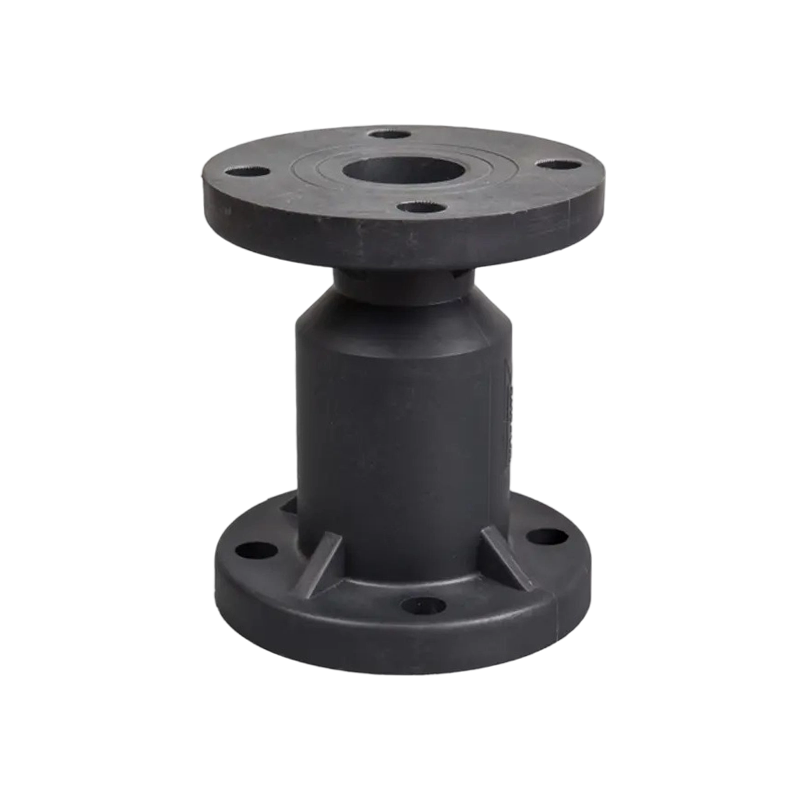
A PVC check valve failed in a hydrochloric acid dosing line because the ball-type closing element was the wrong choice for the service. The ball softened, the seat swelled, and reverse flow pushed corrosive fluid back into the filtration skid. The valve had the correct nominal size, but the type was wrong. That is the reality of selecting check valves for plastic piping systems.
PVC check valves stop backflow automatically, but they are not interchangeable. Each type uses a different closing element, a different body design, and different installation rules. Swing, ball, spring-loaded, wafer, and foot valves each have strengths that make them suitable for specific duties. Knowing those differences before you order will save downtime, spare parts, and pipe repairs.
Start With the Closing Element: Five PVC Check Valve Types
All PVC check valves are passive. Forward flow lifts the closing element off the seat, and when flow stops or reverses, the element returns to block the backflow. The type is defined by the closing element and the way the body is arranged around it. The five types below cover nearly every standard thermoplastic check valve application.
Swing Check Valves
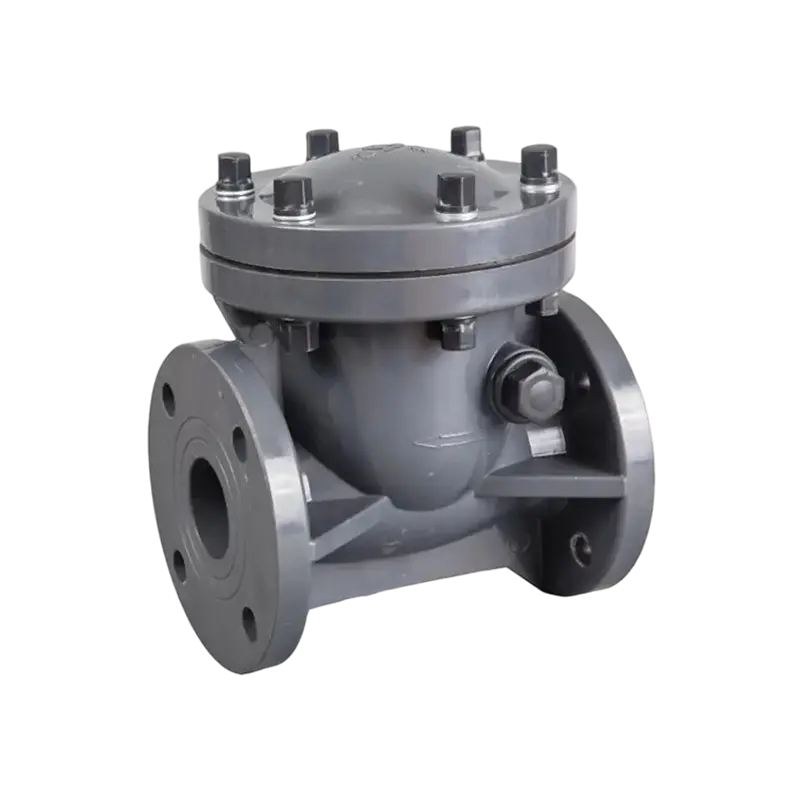
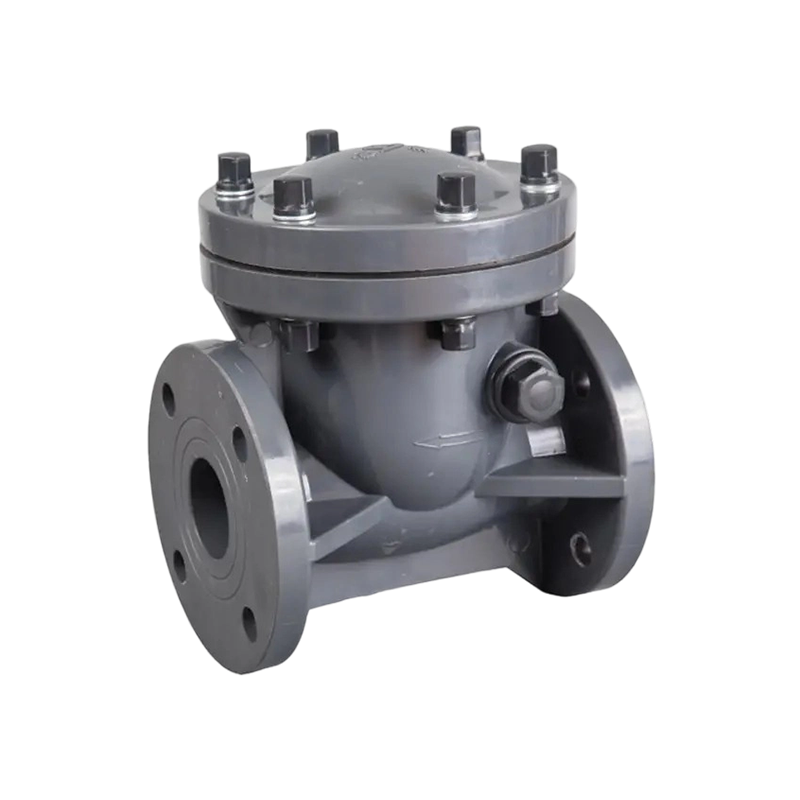
Swing check valves use a disc hinged at the top of the valve body. Forward flow pushes the disc open, creating a nearly straight path through the valve. When the pump stops, the disc swings back down and seats to block reverse flow. The straight-through design keeps the pressure drop very low, which is why swing types are preferred on long transfer lines where every meter of head matters.
Swing check valves are also the most tolerant of suspended solids. The disc sweeps a large opening, so particles and short fibers usually pass through without wedging between the seat and the disc. For lines that carry slightly dirty media, such as untreated water or process slurries with low solids content, this is a real advantage.
The main restriction is orientation. A swing check valve must be installed horizontally with the hinge pin on top, or vertically with upward flow. If it is mounted on a vertical line with downward flow, gravity works against the disc, and reverse flow can slam it onto the seat hard enough to crack the body. The valve also needs more installation space than other types because of its long face-to-face length.
Typical service includes pump discharge lines, main transfer headers, and industrial water circuits where energy loss and solids tolerance matter more than available space.
A ball check valve uses a spherical ball as the closing element. Forward flow lifts the ball off the seat, and when flow stops, the ball settles back. The ball is usually hollow or made with a molded core to keep it light, so it can respond to relatively low flow rates without a spring.
Ball check valves work in both horizontal and vertical lines and are more compact than swing valves of the same size. They tolerate a moderate amount of solids, and because there is no spring coil inside, fibrous media is less likely to tangle in the valve. The simple construction also makes them easy to clean when the body is opened.
The weak point is sealing at very low differential pressure. If the system operates close to the opening pressure, the ball may not seat fully, and a small reverse pressure can leak past the seat. On clean chemical lines with steady pump pressure, this is rarely a problem, but on gravity-fed or low-head systems, a spring-loaded check valve is a safer choice.
Common installations include sump pump discharge, wastewater transfer, and chemical dosing lines where the valve must respond even when the flow is not perfectly steady.
Spring-loaded check valves, also called spring check valves, use a spring to push the disc or ball back onto the seat. The spring force gives a positive closing action in any orientation, so the valve can be installed horizontally, vertically, or at any angle. This makes it the most flexible type for tight piping layouts.
The fast closing action is the main reason engineers choose a spring-loaded valve. In a PVC system, reverse flow can develop quickly when a pump stops, and a swing check valve may allow a moment of backflow before the disc lands. A spring-loaded valve catches the reverse flow almost immediately, which limits the pressure surge that travels back toward the pump. In systems with long pipe runs, this is one of the most effective ways to control water hammer without adding separate surge-control equipment.
The trade-off is pressure drop. The spring occupies part of the flow passage, and the medium must overcome the spring force to open the valve. At low flow rates, the disc may only lift partially, which causes throttling and increases the energy loss. The opening pressure of the spring should be matched to the actual system pressure so the valve opens fully during normal operation.
Spring-loaded PVC check valves are common on vertical pump discharge lines, chemical injection circuits, and recirculation lines where rapid response and orientation flexibility are more important than minimizing pressure loss.
Wafer Check Valves
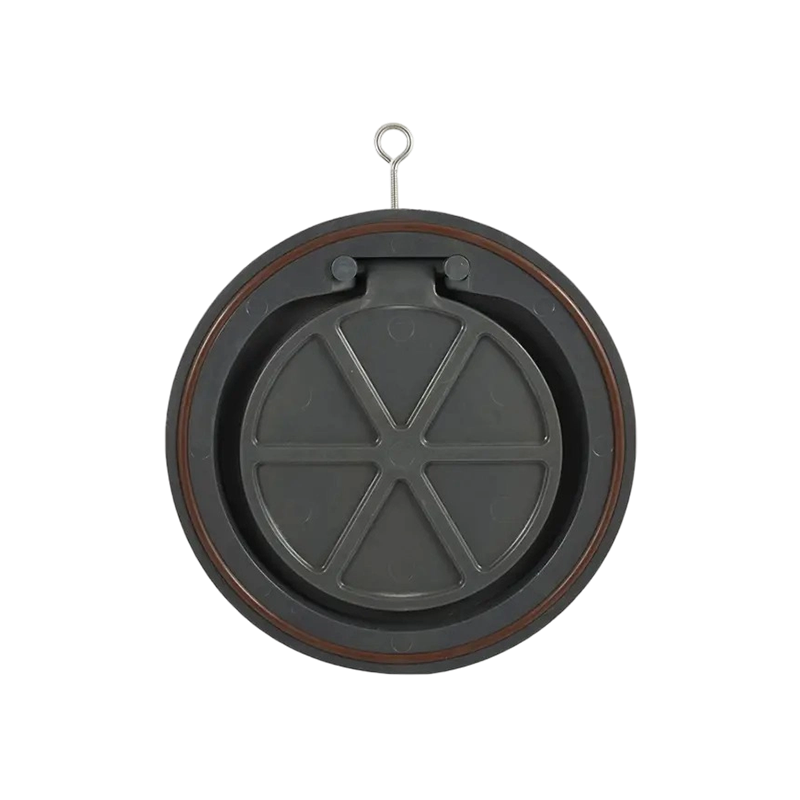
A wafer check valve is a slim, disc-style check valve built to sit between two pipe flanges. The compact face-to-face length is the main reason engineers choose it, because the valve adds very little space to the piping run. This is particularly useful inside equipment skids, close-coupled pump sets, and retrofit projects where the existing pipe length cannot be changed.
Wafer check valves are available in both swing-disc and spring-loaded disc forms. Because the body is clamped between two flanges, there is no separate flange face and no large body to support, which reduces weight and cost. The clamping bolts must be torqued evenly, and the gaskets must align correctly to prevent leaks. When the valve has to be removed, the flanges must be spread apart, so the piping must have enough flexibility for that operation.
Wafer types suit small and medium pipe sizes where the low pressure drop of a swing element or the fast response of a spring element is needed in a compact package. They are frequently used in water treatment units, chemical process modules, and OEM equipment packages.
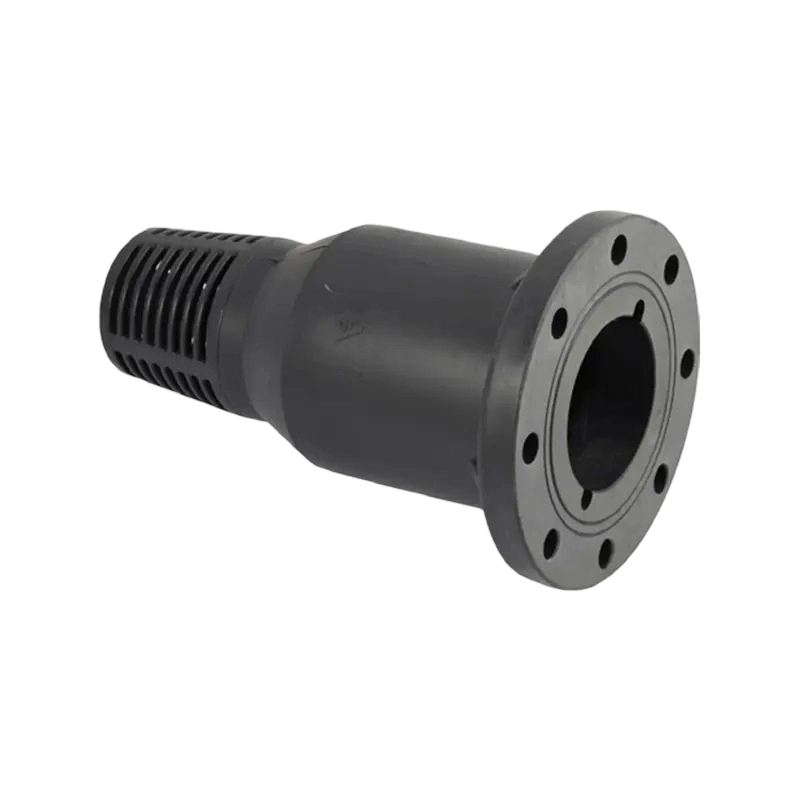
Foot Valves
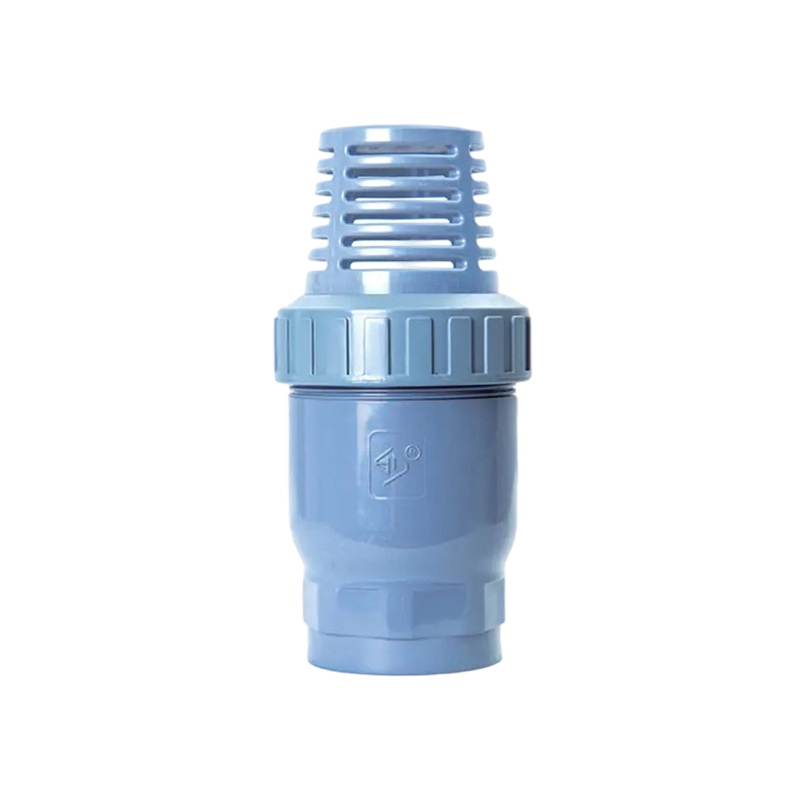
A foot valve is a check valve mounted at the lower end of a pump suction line. Its job is to keep the pump and the suction pipe full of liquid when the pump stops, so the pump does not lose prime and does not need manual refilling before the next start. For pumps lifting from wells, tanks, or open sumps, the foot valve is the component that makes the suction system self-priming.
Most plastic foot valves use a ball check element and include an integrated strainer that blocks coarse debris. The strainer mesh size plays an important role in system reliability. A mesh that is too fine adds suction resistance and can starve the pump, while a mesh that is too coarse lets solids reach the impeller and accelerates wear. It is standard practice to inspect and clean the strainer on a regular schedule.
Foot valves are available with flanged connections for larger suction lines and union connections for fast removal. On the suction side, the line operates under partial vacuum, so the valve must seal reliably at low differential pressure. A ball element is a good match because it seats without spring force and re-seats smoothly if minor reverse flow occurs.
Side-by-Side Comparison of the Main PVC Check Valve Types
The table below condenses the differences that drive most selection decisions. Use it as a first filter, then check the specific pressure, temperature, and media conditions of your line.
Comparison of the five main PVC check valve types
Type
Closing Element
Best Orientation
Pressure Drop
Solids Tolerance
Service Access
Swing
Hinged disc
Horizontal or vertical upward flow
Low
High
Flanged models allow direct removal
Ball
Floating or guided ball
Horizontal or vertical
Low to medium
Medium
Union models allow quick cleaning
Spring-loaded
Spring-biased disc or ball
Any orientation
Medium to high
Low
Body must be removed from the line
Wafer
Slim disc, swing or spring
Horizontal preferred
Low to medium
Low to medium
Requires flange separation
Foot valve
Ball with integrated strainer
Vertical, at the pump suction end
Low to medium
Strainer dependent
Union models allow fast strainer cleaning
No single type wins in every category. The right choice balances installation orientation, available pressure budget, and the condition of the media in the line. For clean water and chemical transfer with generous space, a swing check valve is hard to beat. For tight spaces or vertical lines, a wafer or spring-loaded type is often the better compromise.
SwingLowest pressure drop
BallWorks vertical or horizontal
SpringFastest closing action
WaferShortest face-to-face length
Foot valveKeeps pump primed
Pressure Drop and Flow Capacity: What the Numbers Actually Mean
Pressure drop is the energy lost as the medium passes through the check valve. In plastic piping systems, where pressure margins are often small, the wrong check valve can reduce flow below the design rate or push a pump outside its operating curve. Two characteristics matter: the pressure drop at normal flow, and the opening pressure required to lift the closing element.
The bar chart below shows the relative pressure drop of the five types at typical industrial flow velocities. The values are qualitative rather than absolute, because the exact number depends on valve size, spring stiffness, ball weight, and flow rate.
Relative Pressure Drop by PVC Check Valve Type
Swing
Low
Ball
Low to medium
Spring-loaded
Medium to high
Wafer
Low to medium
Foot valve
Low to medium
If the line is long or the pump head is tight, a swing or wafer type with a straight-through design is the safer choice. If the line is short and the pump has enough head, a spring-loaded valve is acceptable and gives faster closing.
Flow Rate vs. Pressure Drop Curve (Illustrative)Red curve: swing check valve. Gray curve: spring-loaded check valve. The spring-loaded valve shows a higher pressure drop at the same flow rate because the spring restricts the flow area and requires additional force to stay open.
Water hammer is the other side of the pressure story. When a pump stops, the fluid column reverses direction and the check valve closes. If that closing happens after a significant reverse flow has developed, the kinetic energy converts into a pressure spike. A spring-loaded valve closes before the reverse velocity builds, which keeps the surge low. In systems with long pipe runs or frequent stop-start cycles, this can be more important than the steady-state pressure drop.
Flanged, Union, or Wafer: Connection Style and Body Design
The check valve type describes the internal mechanism. The body style and connection method decide how the valve fits into the pipe, how much space it takes, and how easy it is to remove. Four connection styles dominate PVC check valve specification.
Flanged Body
Flanged check valves are the standard for larger industrial lines. The valve carries its own flanges and bolts directly to matching pipe flanges or flange adapters. This connection is rigid and can handle pipe vibration and thermal movement better than threaded or solvent joints. The trade-off is weight and length, which matter in tight piping racks. Flanged bodies also offer the easiest maintenance access: unbolt, lift out, and replace without cutting the pipe.
True Union Body
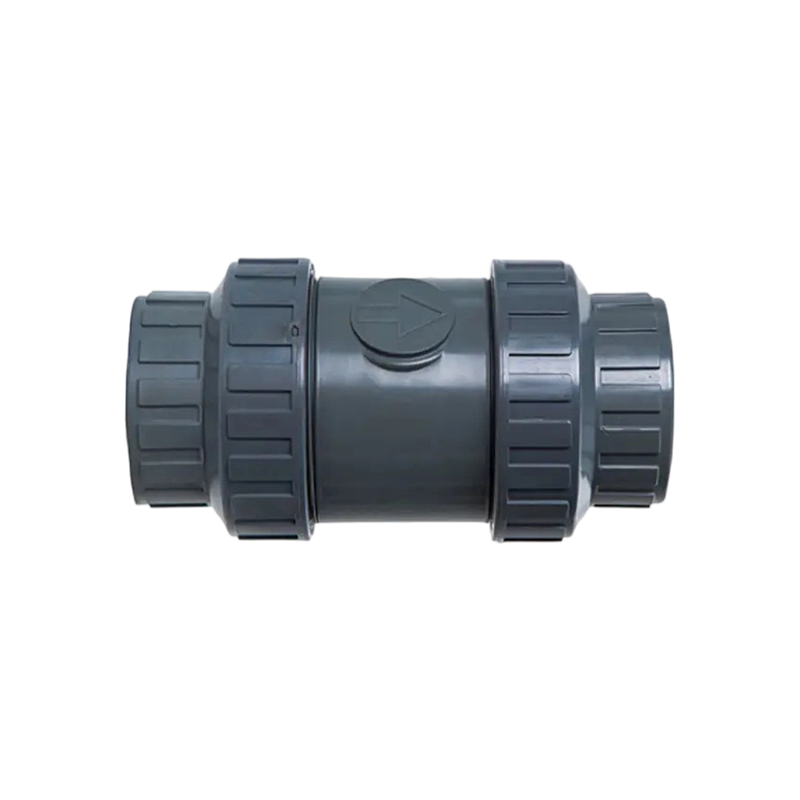
True union check valves have a union nut at each end. You can remove the valve body by unscrewing the two union rings without cutting the pipe or disassembling adjacent fittings. This is the best choice where the valve needs regular inspection, such as lines carrying media that crystallizes, polymerizes, or leaves scale. The union body is slightly more expensive than a flanged body of the same size, but the maintenance savings usually justify the difference.
Wafer Body
A wafer check valve has no flange of its own. It sits between two existing flanges and relies on the flange bolts for clamping. It is compact and cost-effective, but the installation sequence must allow for flange separation when the valve has to be serviced. Wafer bodies also require correct gasket placement on both faces, so alignment is more sensitive than with a flanged body.
Threaded or Socket Connection
On small lines up to a few inches, threaded or solvent-socket connections keep the cost low and simplify the layout. Socket connections are preferred for CPVC and PVDF, where solvent welding or heat welding is the normal jointing method. Keep in mind that a threaded plastic joint concentrates stress at the thread root, so the valve should be supported independently to avoid cracking the socket or thread.
Material Selection: Is a PVC Check Valve Always PVC?
The term PVC check valve is used loosely in the industry. Many thermoplastics check valves are manufactured in different resins to match the chemical and temperature requirements of the line. The base material is often as important as the valve type, because the closing element, seat, and body all need to survive the media for years without swelling, softening, or cracking.
Thermoplastic materials commonly used in check valve construction
Material
Continuous Operating Temperature
Typical Service
Key Selection Note
UPVC (PVC-U)
Up to 60°C
Water, plating, general chemical transfer
Lowest cost; good rigidity; limited heat resistance
For strong oxidizing acids, organic solvents, or high-temperature process media, PVDF or PPH is often the safer choice. For general water, plating, and moderate chemical service, UPVC or CPVC keeps the cost down while delivering reliable performance. Chemical compatibility charts are a useful starting point, but they cannot replace the experience of the valve manufacturer, especially for mixed media or trace contaminants.
The connection material also matters. Flanged plastic valves usually incorporate a metal or plastic flange reinforcement, and the gasket material must be compatible with the media. A check valve that is the right type but the wrong material will fail prematurely, often in the middle of a production run.
Baodi's complete range of backflow-prevention valves, including all connection styles and the materials above, is listed on the industrial plastic check valves page. Check the line size and pressure class there before selecting the material combination.
A Practical Selection Checklist for PVC Check Valves
Work through these points before ordering, and most check valve failures can be avoided. The list is ordered roughly by the frequency of field problems.
Line Size and Flow VelocityMatch the valve to the line size and check the actual flow velocity. An oversized valve will flutter because the disc cannot stay fully open. A velocity between 1 and 3 meters per second is a common target for plastic check valves.
Operating Pressure and SurgesKnow the steady pressure, the pump shut-off head, and the pressure spike during start-stop cycles. The valve pressure rating must cover all three, including transient conditions.
Temperature RangeThermoplastic strength drops as temperature rises. Check the continuous rating of the material against the actual process temperature, including summer sunlight on outdoor piping.
Chemical CompatibilityA valve that resists the primary acid may still fail with a trace solvent or oxidizing agent. Confirm the wetted materials against the full media composition, not just the main component.
Installation OrientationSwing valves need horizontal or vertical-up mounting. If the pipe runs vertically downward, choose a spring-loaded or ball type instead.
Space and Removal ClearanceMeasure the available length. If the valve will be removed for cleaning, choose a true union body so the piping does not have to be cut.
Common Mistakes When Using PVC Check Valves
Most return calls about check valves are connected to avoidable installation or specification errors. The list below covers the most frequent ones found in industrial and commercial plastic piping systems.
Ignoring the flow direction arrow molded into the valve body. Every PVC check valve has a direction mark. Installing against the arrow turns the valve into a closed block.
Mounting a swing check valve in the wrong orientation. The hinge must be at the top in a horizontal line, and the flow must be upward in a vertical line.
Oversizing the valve. A larger valve on a line that normally flows at only a fraction of its rated capacity will cause the disc to hover and chatter, which wears the seat and generates noise.
Choosing PVC-U for hot media. The material softens above its continuous rating, and the ball or disc can deform permanently, leading to leakage and backflow.
Forgetting pipe support near the valve. Heavy flanged check valves pull on the pipe and flanges, causing misalignment, gasket leaks, and stress on the valve body.
Using a check valve as the only backflow protection where the local code requires a reduced-pressure zone assembly or another code-compliant device. A check valve is a flow-control component, not a substitute for code-required backflow prevention.
Skipping the strainer on the suction side. On pump inlet lines, a separate strainer or a foot valve with a proper mesh is necessary to protect the check valve seat from particles.
Frequently Asked Questions About PVC Check Valves
What is the difference between a ball check valve and a swing check valve?
A ball check valve uses a spherical ball that lifts off the seat, while a swing check valve uses a hinged disc that opens like a gate. Ball types handle vertical lines better and are more compact, while swing types have a lower pressure drop and tolerate more solids. The ball check valve also responds faster in small lines, while the swing type is usually preferred on larger pipe diameters.
Can a PVC check valve be installed vertically?
Yes, but the type matters. Ball and spring-loaded types work in vertical lines. A swing check valve only works in a vertical line with upward flow, because the disc needs gravity or reverse flow to seat. A foot valve is designed to hang at the lower end of a vertical suction line and holds the column of liquid above it.
What temperature can a PVC check valve handle?
Standard PVC-U is rated for continuous service up to about 60°C. CPVC extends that to about 95°C, and PVDF can handle up to 120-140°C. The exact limit depends on the pressure in the line, because pressure and temperature both contribute to the stress on the material. At higher temperatures, the pressure rating of the same valve must be derated.
Why does my PVC check valve make noise during pump operation?
Noise usually means the disc or ball is fluttering. This happens when the flow velocity is too low to hold the closing element fully open, or when the check valve is oversized for the actual flow rate. Reducing the valve size, increasing the flow velocity, or switching to a spring-assisted type often solves the problem. A fluttering valve wears the seat quickly, so the issue should not be ignored.
How does a foot valve differ from a regular check valve?
A foot valve is a check valve with an integrated strainer, mounted at the bottom of a pump suction line to keep the pump primed. A regular check valve prevents backflow in the pipe but cannot hold the suction line full when the pump is off, because it has no strainer and no provision for mounting at the end of a pickup pipe.
How long does a PVC check valve last?
Typical service life is several years, but the actual number depends on the chemical, temperature, and cycling frequency. A valve in a clean, cool line can last much longer than one in a hot, aggressive medium. Regular inspection of the ball, disc, and seat is the only reliable way to know when the valve should be replaced. For critical services, replacing the valve during scheduled maintenance is cheaper than an unplanned shutdown.
If you are comparing a spring-loaded valve with another style for your specific line conditions, the article on how to choose the best check valve for your fluid covers the decision in more detail, including media effects and operating margins.