Why the Smallest Component Often Decides System Safety
At a chemical transfer station along the eastern China coast, a 6-inch UPVC feed line carried 30 percent hydrochloric acid from a storage tank to a dosing header. The line had run for four years without a single unplanned stop. Then, at 2:47 a.m., the feed pump tripped on thermal overload. The pressure differential reversed within seconds, and the acid column, roughly 12 meters of liquid head, began to move backward through the check valve and into the pump volute. The pump impeller was machined from glass-filled PPH. In less than twenty minutes, the stagnant acid etched the impeller surface beyond repair. The downstream ultrasonic flow meter lost its calibration, and the replacement work, including crane rental, pump removal, and a new impeller, cost more than four hundred times the purchase price of the check valve sitting in that line.
The conclusion is simple and it applies to almost every industrial piping system: a plastic check valve is the least expensive form of insurance in a corrosive fluid handling line. It has no motor, no gearbox, no sensor, and no control signal. It reacts purely to pressure difference. When forward pressure exceeds the closing force, the ball, disc, or flap lifts and media passes through. When forward pressure drops, the element returns to its seat and reverse flow is arrested. That automatic action repeats thousands of times per year with no attention, provided that the body material matches the chemical environment, the internal closing mechanism matches the installation orientation, and the valve size matches the actual flow velocity.
This guide walks through those three decisions in order: how plastic check valves are built, which thermoplastics suit which services, which valve style works where, what the datasheet numbers mean in practice, and which installation and maintenance habits separate a valve that lasts fifteen years from one that fails in a single season.
How a Plastic Check Valve Works
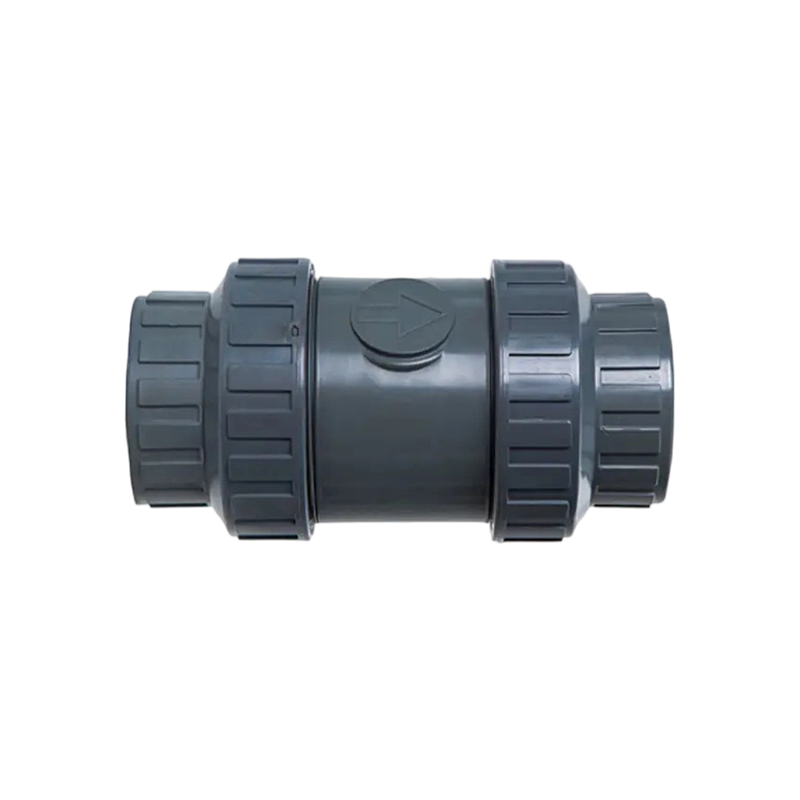
A plastic check valve is an automatic, flow-sensitive valve that permits fluid to move in one direction and closes when forward flow stops or reverses. It is often called a non-return valve or one-way valve. Unlike a ball valve, butterfly valve, or globe valve, a check valve has no handle, no stem, and no packing gland. Its only moving parts are the internal closure element, which can be a ball, a hinged disc, a flap, or a piston, plus a spring in spring-loaded designs.
The closure element is held against the seat by gravity, by a spring, or by both. When the pump starts, inlet pressure rises. Once the pressure force on the element exceeds the weight of the element or the spring force, the element moves away from the seat and fluid begins to flow. When the pump stops, inlet pressure collapses and downstream pressure pushes the element back toward the seat. The minimum upstream pressure needed to begin lifting the element is called the cracking pressure, and it is one of the most important numbers on a check valve datasheet.
For a standard gravity-assisted ball check valve, cracking pressure is low, typically 0.02 to 0.05 bar. For a spring-loaded valve, cracking pressure is higher, typically 0.1 to 0.3 bar, because the spring adds a measurable closing force. If a system runs on low pump head or gravity feed, a spring-loaded valve may never open fully, and the restriction causes a permanent pressure loss. If the line is horizontal and reverse flow is possible, a gravity-only ball may not seat reliably on its own; a spring-loaded valve provides the positive closing force the installation needs.
In corrosive service, plastic check valves outperform metal designs for a specific reason: there is no metal surface in the wetted area, no coating to chip, and no bimetallic corrosion between the body and the trim. A solid thermoplastic valve weighs roughly one quarter to one eighth of a lined metal valve of the same rating, which reduces the number of pipe supports, the load on flanges, and the labor time for installation. The trade-off is a lower maximum temperature and, in many designs, a lower pressure rating. As explained in our article on the purpose of a check valve, the fundamental job of backflow protection is identical in every piping system; what changes between materials is how each thermoplastic handles temperature, chemical attack, and repeated cycling.
Selecting the Body Material for Your Chemical Media
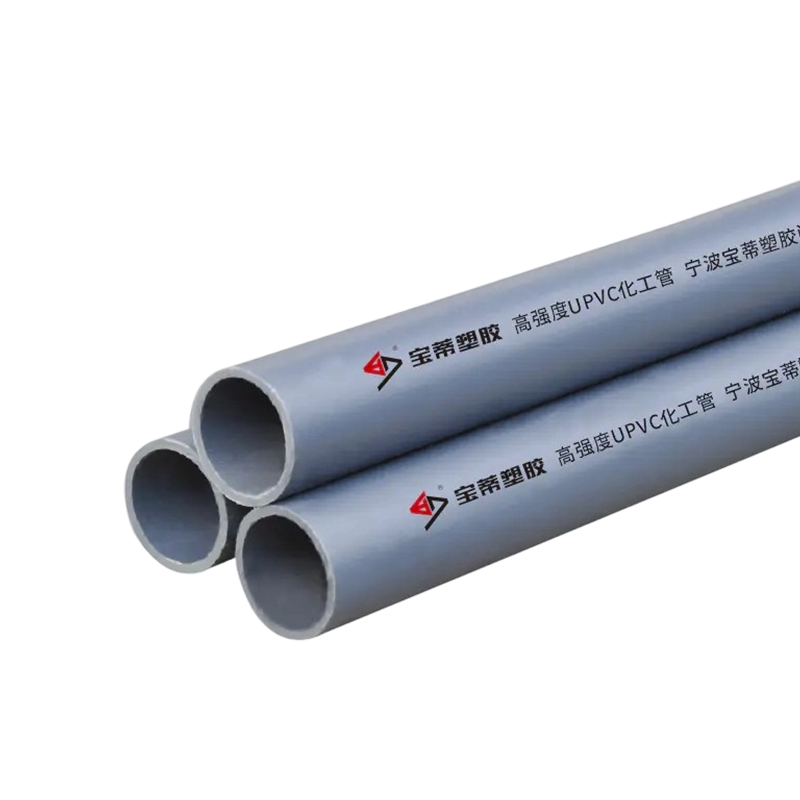
Thermoplastic check valves are manufactured in four principal materials: UPVC, CPVC, PPH, and PVDF. All four resist a wide range of acids, alkalis, and salt solutions, but their temperature capability, mechanical strength, and response to specific aggressive media differ substantially. Choosing the cheapest material that satisfies the process conditions is usually the correct economic decision. Choosing a material based only on the pipe color or the product name is the most common specification error in the field.
Typical continuous service limits for thermoplastic check valve body materials. Actual values depend on media concentration, cyclic load, and pressure rating.
Material
Max Continuous Temperature (°C)
Pressure Rating at 23 °C (bar)
Chemical Resistance Strengths
Typical Services
UPVC
60
10
Strong acids, alkalis, salt solutions, chlorine-based disinfectants
Water treatment, electroplating rinse lines, ambient-temperature chemical dosing
CPVC
95
8
Acids, alkalis, oxidizers, hot chlorinated media
Hot chemical lines, metal finishing, chlorine dosing, sulfuric acid service
PPH
90
8
Most acids and alkalis, organic solvents at moderate temperatures
Chemical processing, plating, semiconductor waste lines, acid drainage
PVDF
140
6
Halogens, strong oxidizers, ultrapure water, most solvents
High-purity chemical production, pharmaceutical utilities, semiconductor wet process tools
UPVC is the default for ambient-temperature water and dilute chemical service. It is rigid, inexpensive, and dimensionally stable, which makes it the most common plastic check valve material for water treatment and acid transfer below 60 °C. Its limitation is temperature, not chemical resistance: above roughly 60 °C, UPVC loses mechanical strength quickly and the valve body can deform under pressure.
CPVC is chlorinated polyvinyl chloride. Additional chlorine atoms in the polymer chain raise the glass transition temperature, allowing continuous service up to around 95 °C. CPVC check valves are standard in hot acid lines, chlorine dioxide applications, and metal finishing baths where UPVC would soften. At elevated temperature, the pressure rating must be derated according to the manufacturer's chart.
PPH, polypropylene homopolymer, combines broad chemical resistance with moderate temperature capability up to 90 °C. PPH is tougher than UPVC and absorbs mechanical impact better, which matters in outdoor installations and lines subject to vibration. It is widely used in chemical process piping and fume scrubber systems.
PVDF is the highest-performance commodity thermoplastic in this group. It withstands continuous service at 140 °C and resists some of the most aggressive chemicals in industrial use, including hot oxidizing acids, halogens, and ultrapure process fluids. PVDF check valves are specified in pharmaceutical water systems, semiconductor chemical delivery, and high-purity chemical plants where ionic purity and chemical inertness are non-negotiable.
Main Types of Plastic Check Valves and Their Strengths
Plastic check valves are classified by the closure element and body geometry. Four types dominate industrial use: ball check valves, swing check valves, wafer check valves, and foot valves. Each has specific strengths, and choosing the wrong type is a common cause of premature failure.
Ball Check Valves
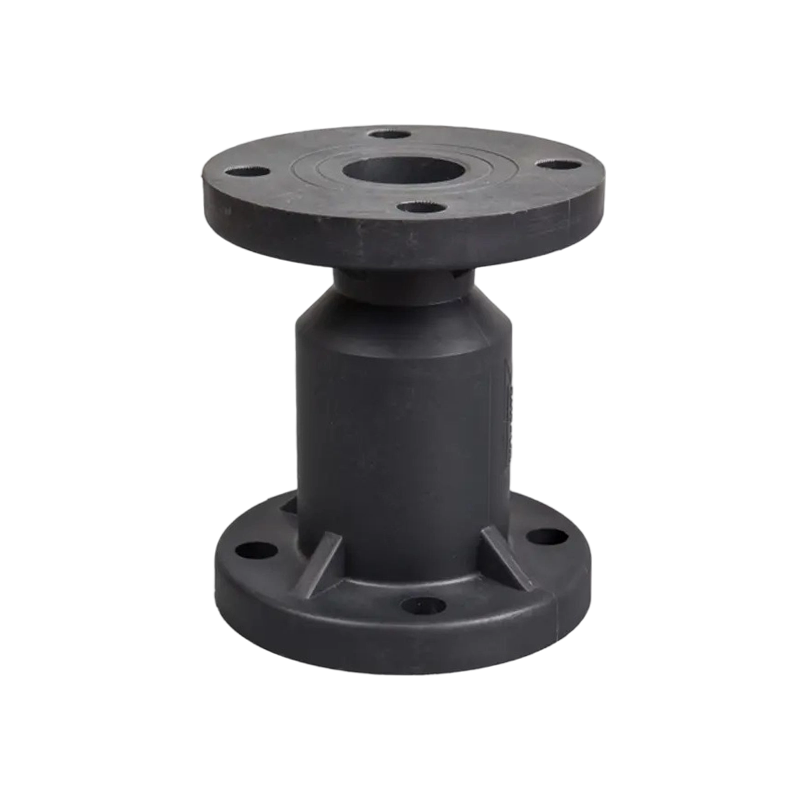
A ball check valve uses a free-moving ball as the sealing element. During forward flow, the ball is pushed out of its seat and media passes around it. When the pump stops, reverse pressure rolls the ball back against the seat. Because there is no hinge and no pivot pin, ball check valves are the best choice for fluids carrying suspended solids, fibers, or sticky residue. A hinged closure can jam when a particle lodges in the hinge pocket; a ball rolls over small debris and still seats.
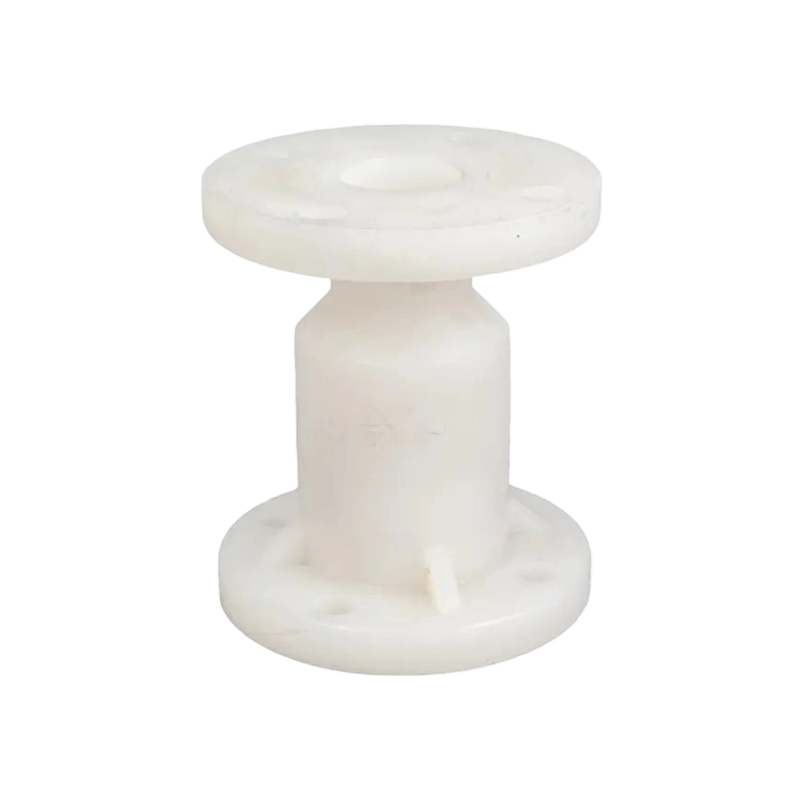
Ball check valves are produced in flanged and union body configurations. Flanged units are used for line sizes DN50 and above, where pipe flanges provide rigid support and removal access. Union bodies let the central section be unscrewed so the ball and seat can be inspected in place, saving time during routine maintenance. For vertical lines with upward flow, a gravity-type ball check valve is usually sufficient. For horizontal lines, a spring-loaded ball design is preferred because the spring forces the ball toward the seat regardless of line orientation.
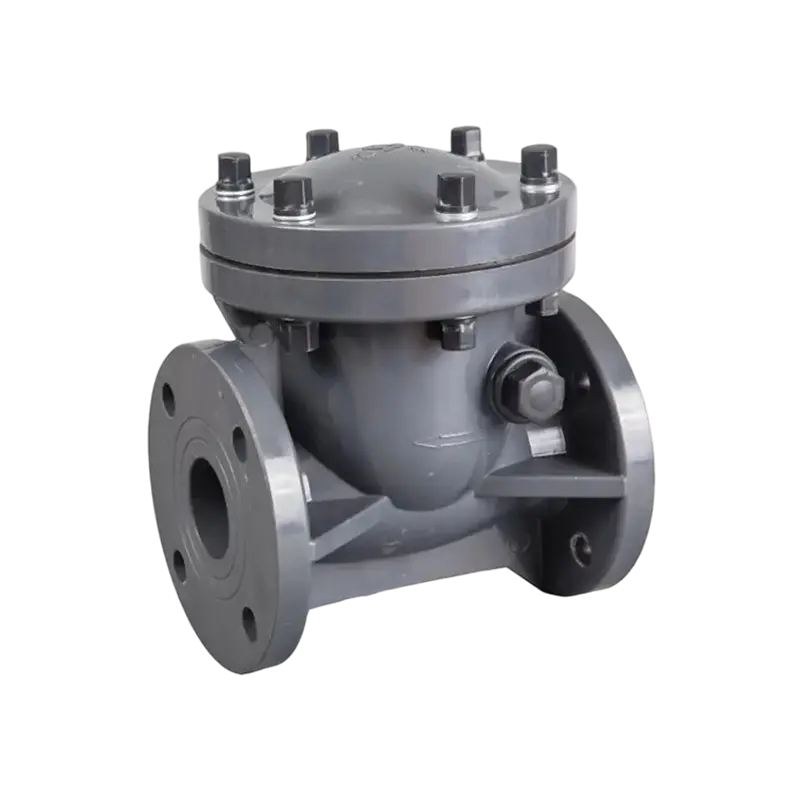
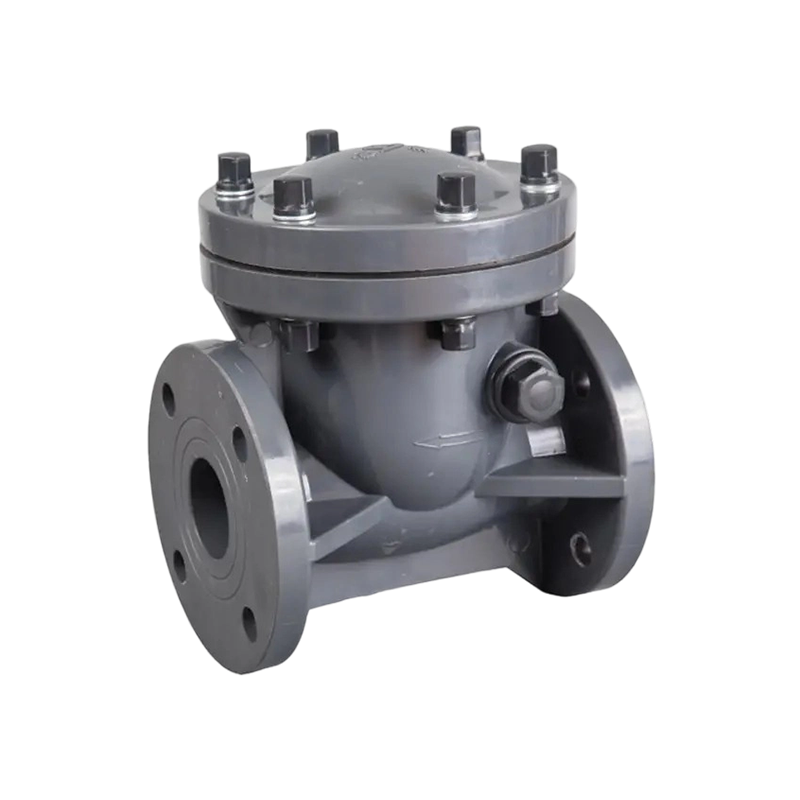
Swing Check Valves
A swing check valve has a disc mounted on a hinge. In the open position, the disc swings up into the flow stream, creating a nearly straight full-bore path. This produces the lowest pressure drop of any check valve type, which is meaningful on long pipelines where every kilopascal of loss forces the pump to work harder. Swing check valves are best installed on horizontal lines with the hinge pin on top so gravity helps the disc close. The hinge and pin are exposed to the media, so their material must be chemically compatible with the service.
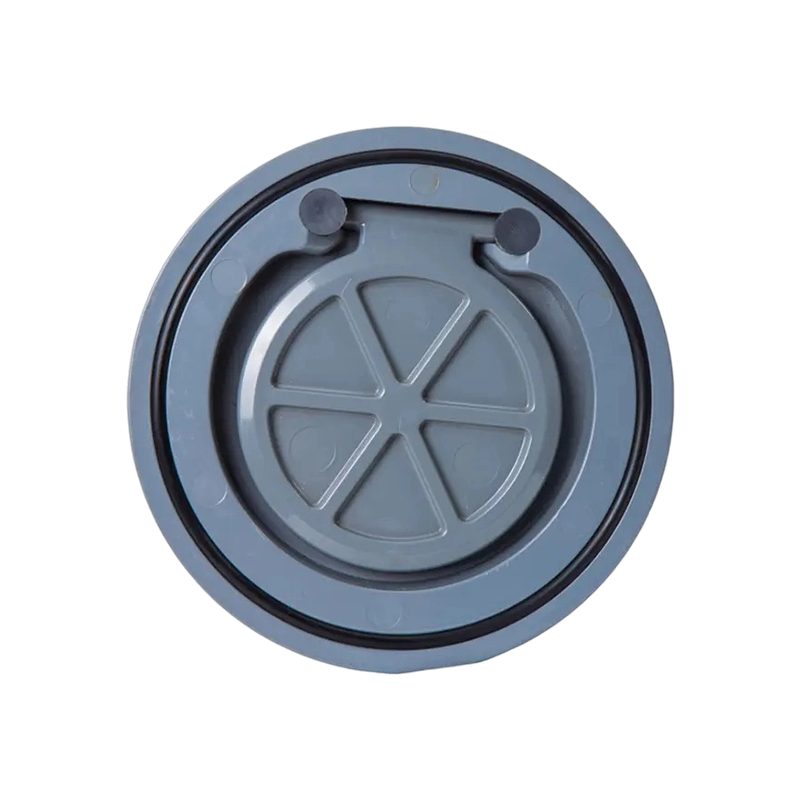
Wafer Check Valves
A wafer check valve is a short disc-style valve that fits between two pipe flanges on long bolts. It is significantly shorter than a flanged ball check valve, which is valuable when space on a process skid is tight. Wafer check valves are available in single-disc and dual-disc versions. The dual-disc design has a small footprint and moderate pressure drop, but it tolerates dirty media less well than a ball check because particles can interfere with the disc seats. For clean fluids and compact installations, a wafer check valve is often the most economical choice.
Foot Valves
A foot valve is a check valve mounted at the bottom of a pump suction pipe, usually with an integral strainer. Its job is to keep the suction pipe full of liquid when the pump stops, so the pump does not lose prime. Foot valves operate vertically with flow upward and are widely used on tanker unloading pumps, borehole pumps, and transfer skids. The strainer should be inspected regularly because debris accumulation raises suction lift and can cause cavitation at the impeller.
Selection Parameters: What the Datasheet Numbers Mean
Once the valve type is selected, the engineering work begins: matching the valve to the flowing conditions. Five numbers dominate: nominal diameter, pressure rating, temperature derating, cracking pressure, and flow velocity range.
Pressure Rating and Temperature Derating
Thermoplastic valves are rated at a reference temperature, typically 23 °C. The pressure rating falls as temperature rises. A UPVC valve rated at 10 bar at 23 °C may be certified for only 4 bar at 50 °C. CPVC, PPH, and PVDF follow the same rule with different curves. When selecting a check valve, calculate the maximum system pressure at the maximum operating temperature, not just the nominal pressure. A pump dead-heading against a closed block valve generates the worst-case pressure in a system, and that number must stay below the derated rating of the check valve body.
Cracking Pressure
Cracking pressure is the minimum upstream pressure required to begin lifting the internal element off the seat. A low cracking pressure, around 0.02 to 0.05 bar, suits gravity-fed lines and low-head pump discharges. A higher cracking pressure, 0.1 to 0.3 bar, is the consequence of a spring-loaded valve that closes positively on a horizontal line. The danger is specifying a spring-loaded valve on a gravity-flow line with only 0.1 bar of available head: the valve may never open fully, flow becomes restricted, and the ball or disc rides in a partially open position where flutter wears the seat quickly.
Sizing for Flow Velocity, Not Just Pipe Size
Check valves are velocity-sensitive. At very low velocities, the internal element may not be pushed fully open and will hover near the seat, vibrating and damaging the sealing surfaces. At very high velocities, the element slams against its stop, and the repeated impact can crack a plastic body after thousands of cycles. For most plastic check valve designs, the recommended operating velocity is between 1 and 3 meters per second. Below 0.5 meters per second, a ball check valve may chatter and a swing check valve is the better choice. Above 3 meters per second, consider stepping up one nominal size to extend internal component life.
Engineering tip: When a corrosive line runs below 0.5 m/s for most of the day but spikes to 2 m/s during a rinse cycle, size the check valve for the dominant velocity, not the peak. An element that spends hours hovering in a partially open position wears faster than one that opens fully at the normal flow rate.
Pressure Drop Comparison at Steady Flow, DN50 Valves
End Connections
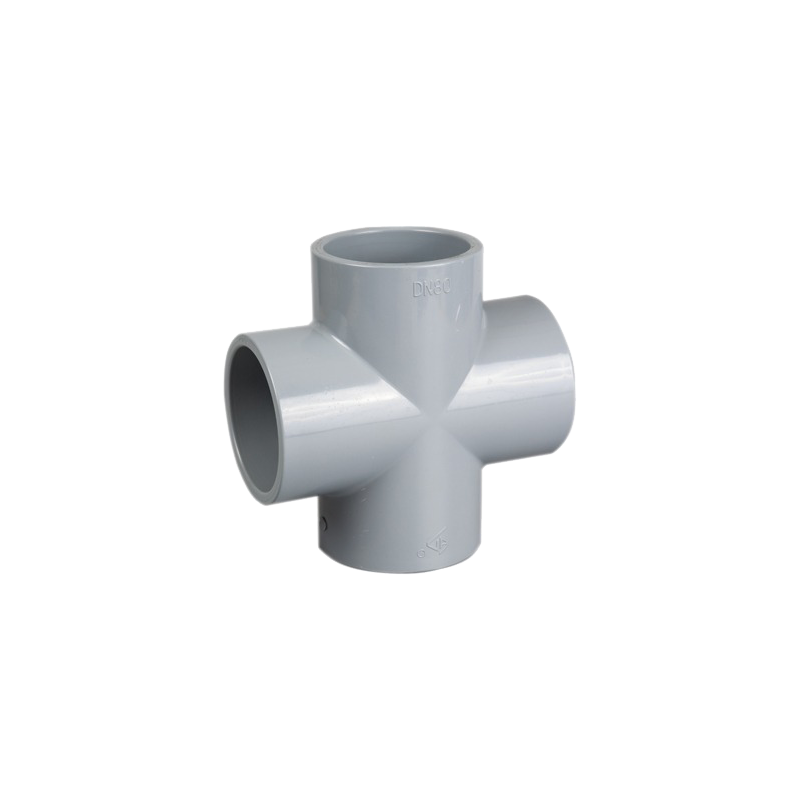
Plastic check valves are available with flanged ends in ISO, ANSI, or DIN drilling patterns, union socket ends, socket ends for solvent cement welding, threaded ends, and plain spigot ends for butt welding. The connection must match the rest of the piping system. Mixing socket and flanged connections on the same run creates an extra adapter joint that becomes a future leak point. For lines that must be dismantled for cleaning, a union-type body is preferable. For large-diameter metallic pipelines, a flanged plastic valve with a backing ring provides the same bolt circle without special adapters.
Installation Orientation and Positioning Rules
More check valves fail from incorrect installation than from manufacturing defects. The orientation rules are simple, but they are often ignored when a piping designer tries to fit a valve into a tight section of the layout.
Always align the flow direction arrow on the valve body with the actual flow direction in the line. A valve installed with the arrow reversed will block the line from the first start-up.
Gravity-assisted ball check valves must be installed in a vertical line with flow upward. Installed horizontally, the ball has to roll sideways to reach the seat, which may not happen at low reverse pressure or when the bore is slightly fouled.
Spring-loaded check valves can be installed in any orientation because the spring supplies the closing force. Check the spring's cracking pressure against the pump's minimum discharge pressure before finalizing the arrangement.
Swing check valves must be mounted so the hinge pin is horizontal and on the upper side of the valve. Mounting a swing check vertically with the hinge at the bottom leaves the disc hanging in a partially open position when flow stops, allowing reverse leakage.
Allow at least five pipe diameters of straight run upstream of the check valve to reduce turbulence and help the internal element settle evenly on its seat.
Never use a check valve as a pipe support point. A heavy valve on an unsupported vertical drop pulls the flanges out of alignment and prevents the internal element from seating correctly. Install a support bracket within one pipe diameter of the valve flange.
In pump systems, the check valve belongs on the discharge side, between the pump outlet and any closing block valve. A check valve at this position protects the pump from reverse rotation when another pump in the same manifold is running, which is a frequent cause of mechanical seal damage in aggressive chemical services.
Common Failure Modes and How to Correct Them
When a plastic check valve fails, the symptom is rarely a dramatic burst. It is usually a gradual or intermittent behavior that a maintenance team can miss until a more serious event occurs. The table below lists the most frequent failure patterns observed in industrial plastic check valve service.
Common failure modes in plastic check valves, their likely causes, and corrective actions used in the field.
Symptom
Most Likely Cause
Corrective Action
Rapid clicking or fluttering noise during operation
Valve oversized for the actual flow rate; element hovering in a partially open position
Verify flow velocity; install a smaller valve or switch to a swing check type with a lower opening threshold
Reverse flow when the pump stops
Debris holding the ball or disc off its seat; damaged seat surface; missing or broken spring
Remove the valve, inspect seat and element, clean the bore, replace damaged internal parts
High pressure drop across the valve
Selected cracking pressure above the available head; element not opening fully due to low velocity
Measure actual differential pressure; select a valve with lower cracking pressure or a larger end connection
Water hammer after pump stop
Closure element slams onto the seat; high reverse velocity in a long line with an abrupt pump stop
Install a spring-loaded valve with damping or change the pump stop sequence for a controlled ramp-down
Leakage from the body or flange joints
Thermal expansion stress; flange bolts over-torqued or tightened unevenly
Replace the gasket, retorque bolts in a criss-cross sequence to the specified value
The most effective way to avoid these failure modes is to confirm the minimum and maximum flow velocity before finalizing the selection. A check valve that is correctly sized for velocity, correctly oriented for its closing mechanism, and installed with adequate support will normally outlast the pumps in the same system.
Lifecycle Cost: Why Initial Price Is Only the Beginning
Engineers who compare check valves on purchase price alone miss the largest cost component in the calculation: the cost of an unplanned line shutdown. Replacing a check valve in a chemical plant, including decontamination, draining, flange breaking, and recommissioning, can cost more than the valve itself. A valve with a seat material and closing mechanism matched to the real service conditions is cheaper in total lifecycle terms than an identical-looking valve that fails every two years.
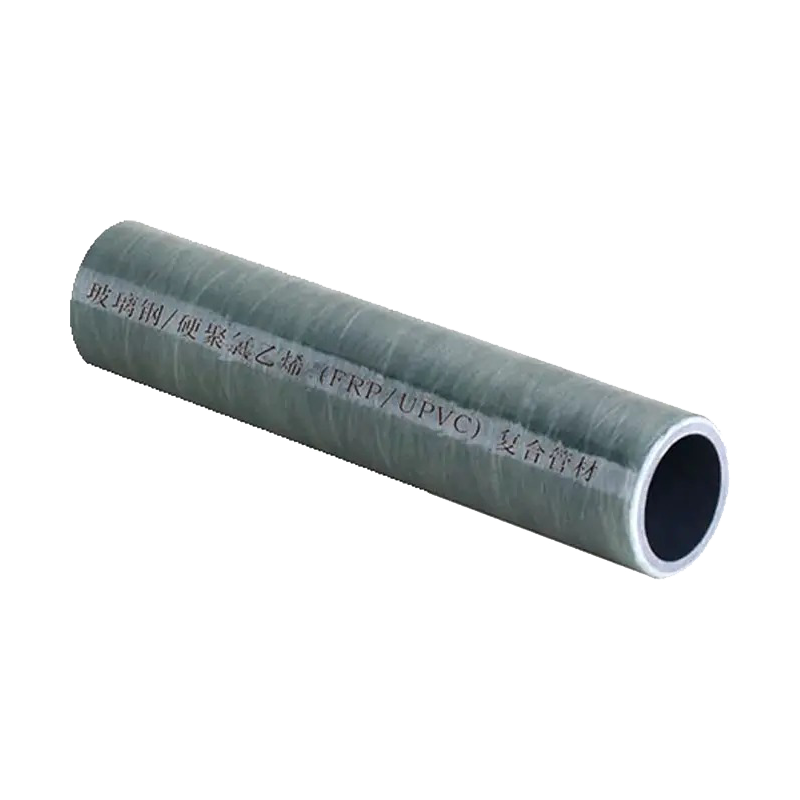
Plastic check valves also compare favorably with lined metal valves in this calculation. The plastic valve costs less to purchase, weighs a fraction of the metal assembly, never requires painting, and does not suffer from liner delamination at elevated temperatures. For corrosive service, the full-lifecycle comparison usually favors a solid thermoplastic valve in UPVC, CPVC, PPH, or PVDF over a lined metal valve with a limited lining life.
UPVC 5–8 years
CPVC 8–12 years
PPH 8–10 years
PVDF 12–15+ years
Typical service life ranges in continuous chemical service at or below derated conditions. Life shrinks sharply when the valve is operated beyond the material temperature or pressure limits.
A check valve does not wear out at a fixed age. It wears out when the cumulative number of closing cycles, chemical attack, and mechanical loads exceed the design envelope. Keeping spare seats, balls, and springs in stock lets a maintenance crew return most plastic check valves to service in minutes, because most industrial plastic check valves are designed to be rebuilt rather than discarded.
Maintenance Checks That Keep Check Valves Reliable
A plastic check valve needs little attention, but the attention it does need must be consistent. A five-minute monthly inspection catches most developing problems before they become line failures.
Inspect the exterior for crazing, whitening, or discoloration. These are signs of chemical attack or UV degradation and mean the body material is not fully compatible with the service.
Listen for fluttering or clicking while the pump is running. Any rhythmic ticking sound indicates the internal element is vibrating, which is the earliest sign of a sizing or velocity problem.
Verify that the flow direction arrow is legible and matches the installed flow direction. Cleaning crews occasionally reinstall a valve backward during maintenance.
During a planned shutdown, open the union or remove the flanged cover and inspect the seat for scoring, the ball or disc for flat spots, and the spring for fatigue cracks.
Clean the ball and seat with the same cleaning agent used in the piping system. Never use metal scrapers or wire brushes on thermoplastic surfaces.
When replacing the internal element, replace the seat at the same time. A new ball on a worn seat leaks just as much as the worn parts it replaced.
Frequently Asked Questions About Plastic Check Valves
What is the cracking pressure of a typical plastic check valve?
A standard gravity-type ball check valve begins to open at about 0.02 to 0.05 bar. Spring-loaded designs require 0.1 to 0.3 bar. The exact value is stated on the product datasheet and must be compared with the minimum pump discharge pressure at the expected flow.
Can a plastic check valve be installed vertically?
It depends on the closing mechanism. A gravity-type ball check valve works in a vertical line when flow is upward because the ball falls back onto the seat when flow stops. In a horizontal line, use a spring-loaded ball design or a swing check valve with the hinge on top. Always confirm the orientation limits on the datasheet, because a valve installed outside its allowed orientation may remain open when the pump stops.
What is the difference between a foot valve and a check valve?
A foot valve is a check valve designed for the bottom of a pump suction pipe and normally includes an integral strainer screen. It keeps the suction line full of liquid so the pump does not lose prime. A check valve, by contrast, is installed in the discharge line or elsewhere in the piping to prevent backflow between two points. Most installations need both: a foot valve at the suction end and a check valve at the pump discharge.
How do I choose between UPVC and PVDF for a check valve?
Choose UPVC when the media temperature is below 60 °C, the pressure is within the derated limit, and the chemical is adequately resisted by PVC at the actual concentration. Choose PVDF when the temperature rises above 60 °C, when the media is a halogen or strong oxidizer, or when the process demands the highest purity with zero metal contamination. The PVDF valve costs more initially, but the service life in the right application is typically two to three times longer.
Why does my check valve make noise while the pump is running?
The most common cause is flutter. The ball or disc hovers in a partially open position because the flow velocity is too low to push it fully open, often because the valve is oversized for the line. Flutter accelerates seat wear and can crack a plastic ball over time. Confirm that the flow velocity is at least 1 meter per second and consider a smaller check valve or a different valve type.
Can a plastic check valve handle water hammer?
Water hammer is caused by a sudden change in flow velocity, typically when a pump stops quickly or a downstream valve closes abruptly. A spring-loaded check valve closes before reverse flow can accelerate, which reduces the hammer effect. A gravity-type ball check valve closes more slowly, so a fast transient can produce a pressure spike. If water hammer is present, install a spring-loaded valve and review the pump stop sequence.
What More Than Four Decades of Plastics Manufacturing Means for You
A plastic check valve looks like a simple product: a body, a ball, a seat, and a spring. The simplicity is deceptive. Dimensional tolerance between the ball and its guide cage, the surface finish on the seat, the formulation of the sealing compound, and the residual stress in the welded body all decide whether the valve seals for ten thousand cycles or for one million cycles. A tiny bead of welding residue left in a valve bore moves downstream and contaminates a process line; an out-of-round seat rejects the ball the first time pressure reverses.
Ningbo Baodi Plastic Valve Co., Ltd. has made industrial thermoplastic valves and piping since 1979, when its predecessor factory completed China's first plastic diaphragm valve and passed the technical appraisal of the Ministry of Chemical Industry in 1983. The company invented the one-piece flanged ball valve in 1992 and, in 2006, was among the first Chinese manufacturers to apply CPVC to industrial-grade pipe and valve production. Today Baodi holds ISO 9001, ISO 14001, and ISO 45001 certification, the Chinese special equipment pressure pipe component manufacturing license, and the status of national high-tech enterprise. Its catalog covers manual valves, actuated valves, piping systems, and pipe fittings in UPVC, CPVC, PPH, PVDF, and glass-fiber-reinforced composite structures, exported to more than sixty countries.
For a project engineering team evaluating a long-term source, the practical benefit of a single manufacturer with a complete industrial plastic check valve range is consistency. The body material, seat material, ball material, and gasket are controlled at one source, so the valve in the second order behaves exactly like the valve in the first. The same factory that produces the check valve also produces the ball valves, diaphragm valves, butterfly valves, and pipe fittings on the same process skid, which simplifies spare parts inventory and eliminates cross-supplier compatibility questions.