Begin With the Valve Seat and the Pipe Wall in the Same Service Envelope
A 2-inch line moving 20% sodium hydroxide at 75°C and 4 bar tells you more about PVC versus CPVC than a generic material chart ever will. At that condition, standard PVC is outside its comfortable continuous service window, while CPVC may still be viable after pressure derating, chemical compatibility review, and verification of the valve seals, diaphragms, gaskets, and solvent-cement joints. That is the practical starting point: do not compare PVC and CPVC as abstract resins. Compare the complete piping envelope, including valves, fittings, expansion, installation method, and maintenance access.
The short answer is clear enough for early screening. PVC is usually the lower-cost choice for cold water, drainage, vent lines, and many chemical services below roughly 60°C. CPVC costs more, but it extends the usable temperature range to roughly 93°C to 95°C, depending on compound, size, schedule, pressure, and standard. The longer answer is where projects succeed or fail: CPVC is not a universal upgrade, PVC is not automatically unsafe at every warm condition, and both materials have chemical families they should not touch.
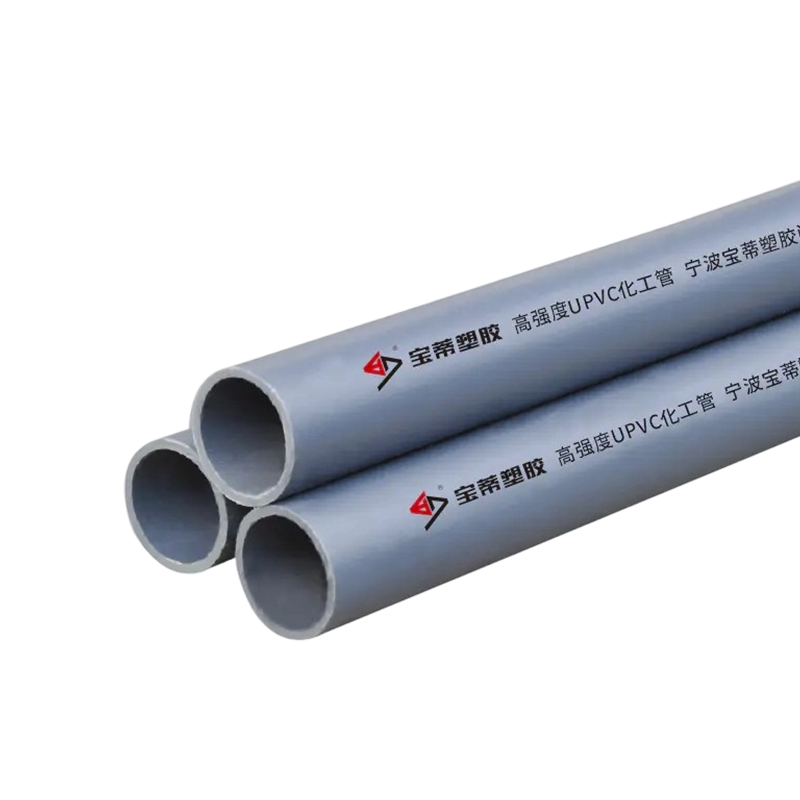
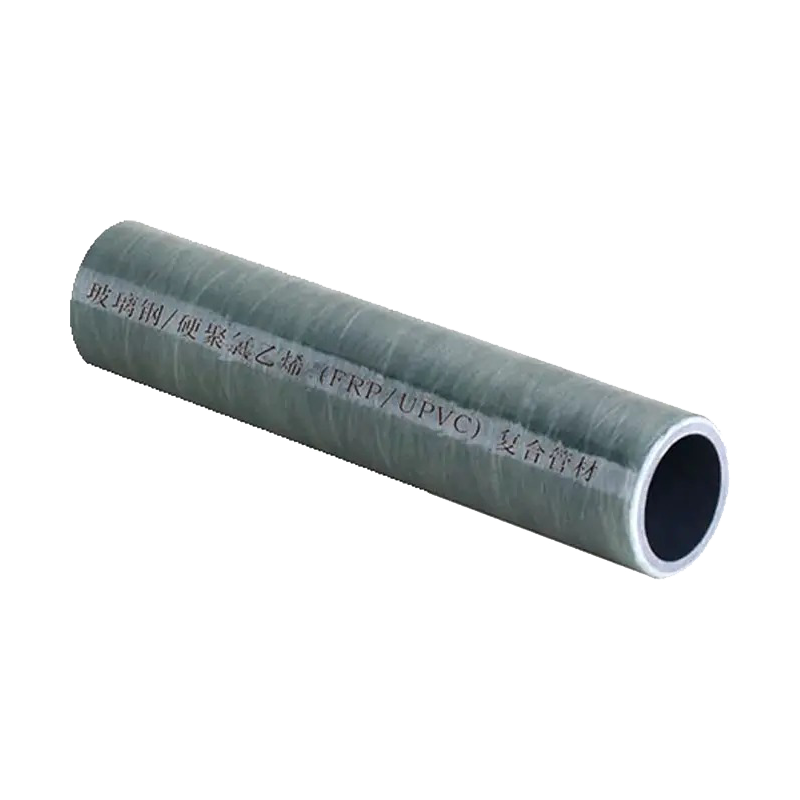
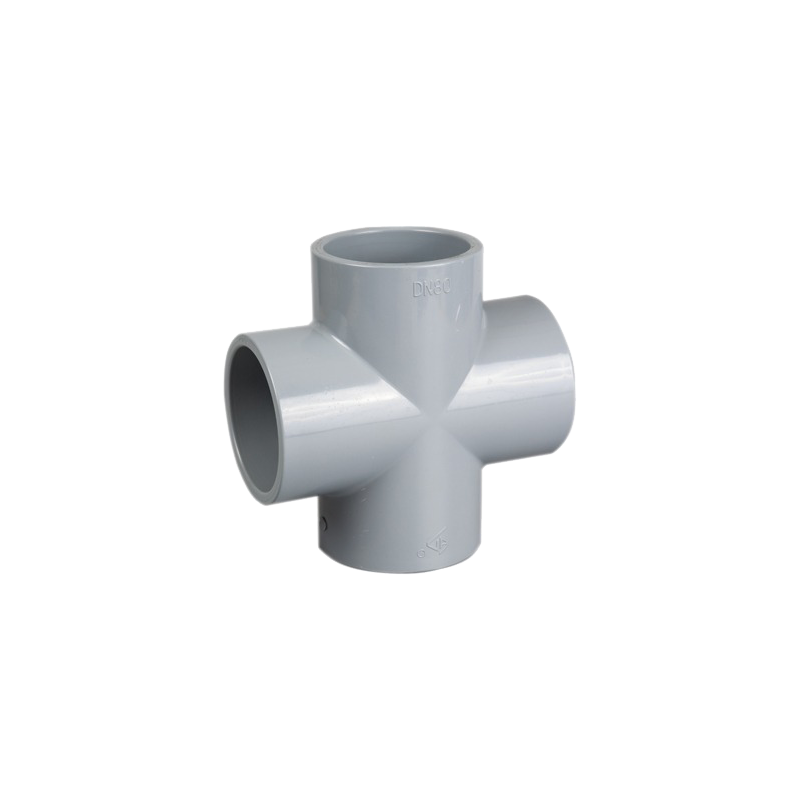
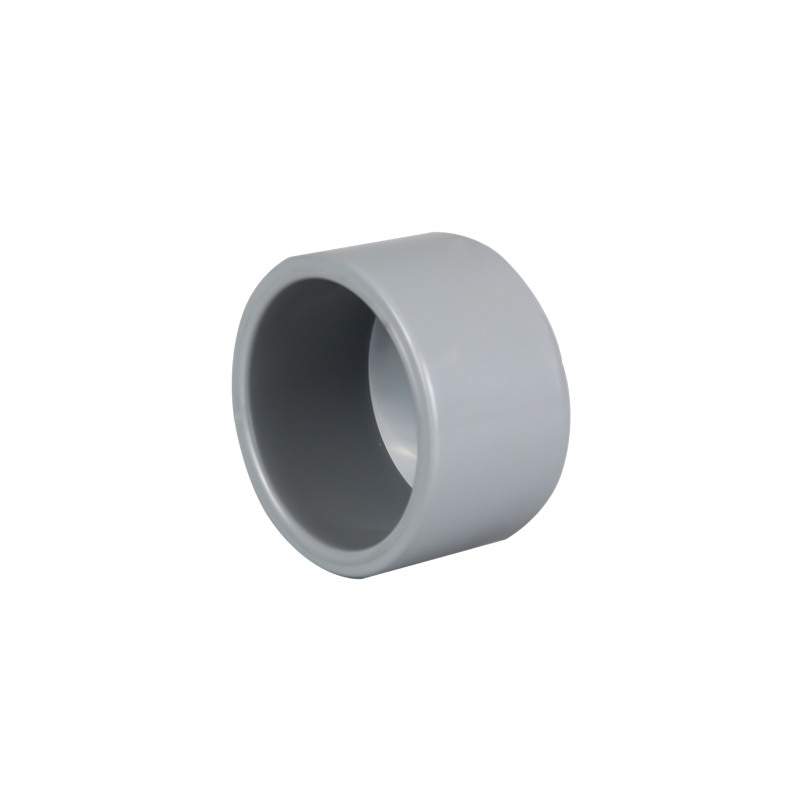
For CPVC-based industrial lines, the pipe, fittings, and valves should be treated as one specification package rather than three separate purchases. A CPVC pipe with a PVC valve seat, an incompatible elastomer, or a mismatched cement system can erase the temperature advantage of the pipe itself. Use a CPVC pipe selection reference when checking resin grade and joining requirements, then confirm the valve and fitting materials against the actual media and operating temperature.
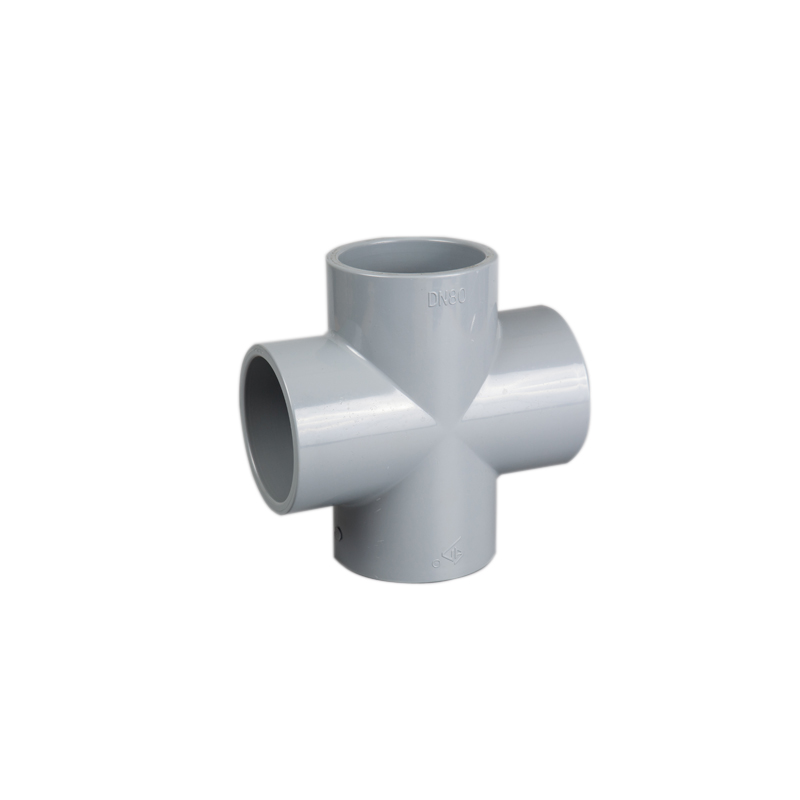
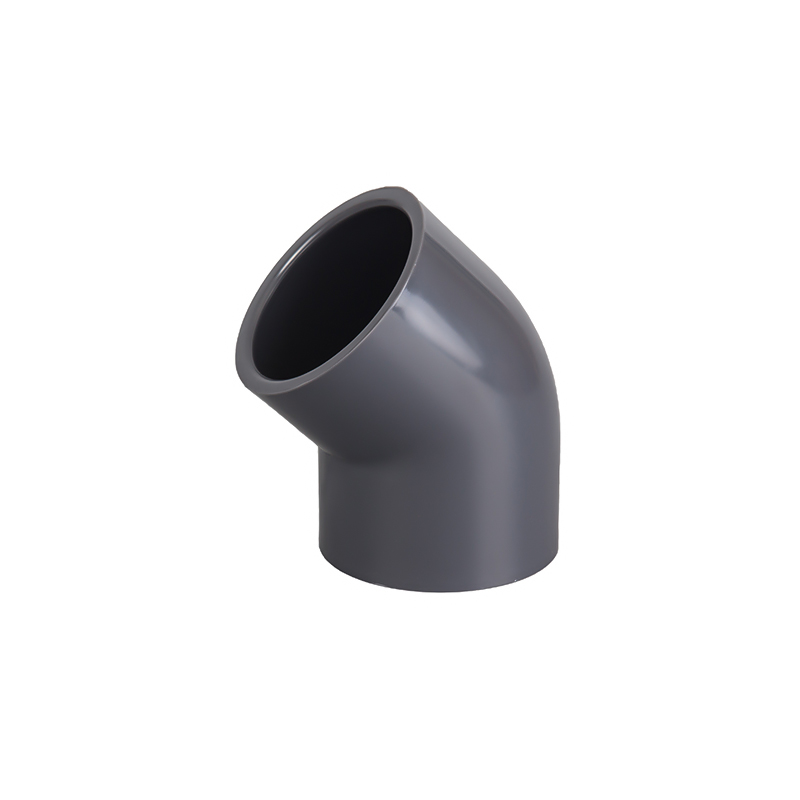
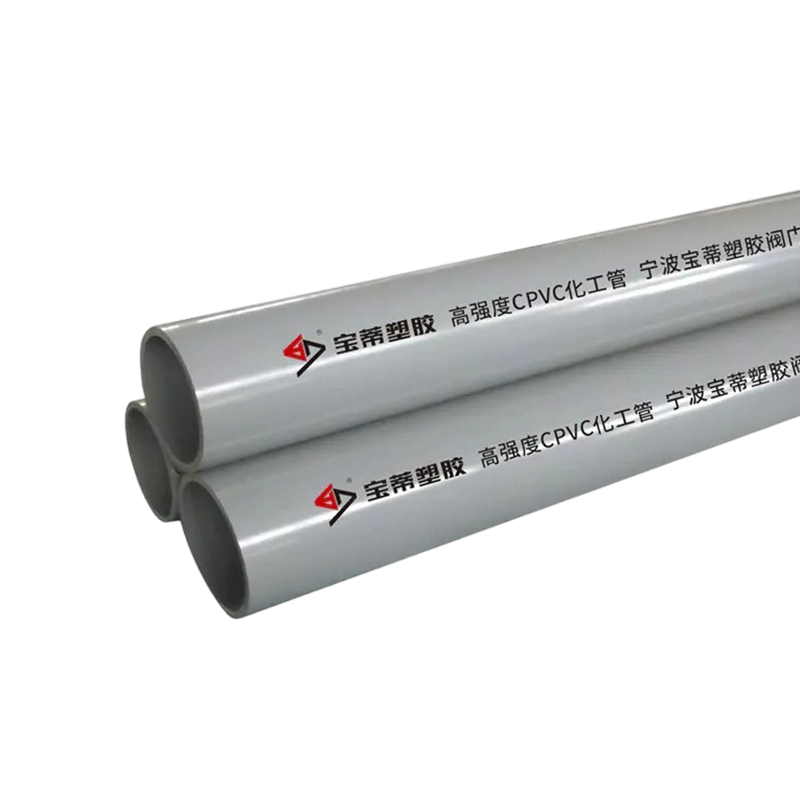 CPVC Piping System for Industrial Process LinesComplete CPVC pipe and fitting range for industrial process and hot/cold water lines, useful when matching pipe, valves, and fittings to media and temperature.View Product →
CPVC contains more chlorine than PVC, which is the main reason it holds mechanical strength at higher temperatures and resists some oxidizing and acidic environments better. That higher chlorine content also changes processing, cementing, impact behavior, and cost. It does not make CPVC chemically immune. Chlorinated solvents, aromatic hydrocarbons, some ketones, esters, and certain concentrated oxidizing media can still attack CPVC, especially as temperature rises. PVC, meanwhile, remains a strong value where the line stays cool and the chemical duty is well understood.
The most useful buying decision is therefore a three-part check: first, what is the maximum continuous temperature and pressure combination; second, what is the chemical concentration and possible upset condition; third, what maintenance and valve access does the line need. A line that passes the resin chart but fails the valve seal review is still a bad design.
Temperature Limits: Where PVC Stops and CPVC Keeps Working
For ordinary industrial screening, PVC-U is commonly rated for continuous service up to about 60°C, while CPVC is commonly rated up to about 93°C to 95°C. These are not universal numbers. They shift with pressure, pipe schedule, joint method, media, and the manufacturer’s published derating table. A 60°C PVC line may still be acceptable at low pressure; a 70°C CPVC line may require a lower pressure rating or a larger schedule. The mistake is to treat the headline temperature as a standalone limit.
Typical screening ranges for industrial thermoplastic piping. Confirm the actual compound, size, schedule, and pressure rating with published data.
Temperature affects more than softening. It reduces tensile strength, changes impact resistance, increases thermal expansion, and can accelerate chemical attack. CPVC keeps useful strength at higher temperatures, but it also becomes more sensitive to stress concentration, poor support, and abrupt pressure surges. PVC is more cost-efficient at lower temperatures, but it should not be used as a shortcut for a hot line simply because the initial pressure test passes.
Typical screening values for PVC and CPVC piping; use manufacturer-published ratings for final design.
| Selection Factor |
PVC-U Piping |
CPVC Piping |
| Common continuous temperature screen |
Up to about 60°C |
Up to about 93°C to 95°C |
| Pressure behavior as temperature rises |
Derating is significant; low-pressure limits apply at upper temperatures |
Higher temperature capability, but derating is still mandatory |
| Typical cost position |
Lower material cost |
Higher material cost |
| Common service bias |
Cold water, drainage, vent, many low-temperature chemical lines |
Hot water, hot chemical, and higher-temperature industrial lines |
| Critical installation issue |
Correct solvent cement and adequate support |
CPVC-compatible cement, greater expansion allowance, careful handling |
At 60°C, PVC may be near the top of its practical range, and the allowable pressure can fall sharply compared with 23°C. At 80°C, CPVC may be workable, but the allowable pressure may also be a fraction of its room-temperature rating. That is why a temperature comparison without pressure derating is incomplete. A line rated at 10 bar at 20°C does not automatically remain a 10 bar line at 80°C.
Pressure Derating and the Safety Margin Buyers Forget
Pressure rating is a function of temperature, time, and material. Thermoplastic pipe loses strength as the wall temperature rises, so the published pressure rating at 23°C cannot be applied to a hot line. A proper specification uses the manufacturer’s derating table for the exact pipe schedule and compound, then applies a design margin for surges, water hammer, valve closure, pump start-up, and thermal cycling.
Consider a line that runs at 70°C with occasional 6 bar surges. CPVC may be the only practical thermoplastic option among PVC and CPVC, but the designer still needs to check the pressure rating at 70°C, not at ambient. The same logic applies to valves. A valve body may carry a nominal rating, but the seat, seal, diaphragm, and stem packing may have a lower temperature limit. The weakest component sets the system limit.
- Check continuous operating temperature, not only the maximum excursion.
- Apply the published pressure derating factor for the actual temperature and schedule.
- Include surge allowance for quick-closing valves, pump stops, and check-valve slam.
- Verify valve seats, O-rings, diaphragms, and gaskets against the same temperature and media.
- Confirm that solvent-cemented joints and flanged connections are rated for the same service envelope.
For automated lines, the valve actuation speed matters. A fast-closing ball valve can create a pressure spike that a slow manual valve would not produce. If the line uses actuated valves, the pressure class should be reviewed together with the actuator cycle time and the pipe support layout. A system that is safe on paper at steady state can still fail during a valve stroke if the surge margin is ignored.
Cost Comparison: Material, Installation, Maintenance, and Downtime
PVC is generally less expensive than CPVC at the material level. For comparable sizes and schedules, CPVC often carries a premium that can range from roughly 15% to 40%, depending on resin grade, market conditions, fitting availability, and pressure class. That premium is real, but it is not the whole cost. The installed cost includes cement, primer, labor, supports, insulation, testing, replacement access, and downtime. In hot-water or hot-chemical service, CPVC can avoid the need for additional thermal protection or the shorter service life of an underspecified PVC line.
Cost comparison should include installed cost and risk, not only the pipe price per meter.
| Cost Area |
PVC-U Piping |
CPVC Piping |
| Pipe and fitting material |
Lower |
Higher |
| Solvent cement and primer |
Standard PVC cement system |
CPVC-compatible cement system |
| Insulation or heat protection |
May be required in hot service, or the material may be unsuitable |
Often reduces the need for additional thermal protection, depending on design |
| Maintenance risk |
Lower cost per replacement, but potentially shorter hot-service life |
Higher component cost, but better fit for higher-temperature duty |
| Downtime exposure |
Can rise if the line is operated near or beyond its limit |
Can fall when the material is correctly specified for hot chemical service |
A useful comparison is to price the whole line, not the pipe alone. Include valves, flanges, unions, check valves, strainers, supports, cement, labor, pressure testing, and spare parts. On a cold-water line, PVC usually wins on first cost and is often the right answer. On a 75°C chemical line, a lower-priced PVC package may become the more expensive option if it needs frequent repair, additional protection, or early replacement.
Fitting availability also affects cost. A CPVC system with limited fitting choices may require more flanges, adapters, or custom spools, which adds labor and leak paths. A PVC system with a complete local fitting range can be faster to install. The best cost comparison uses the same scope: same line length, same valve count, same support spacing, same testing requirement, and same maintenance access.
Chemical Resistance: Compare by Chemical Family, Not by “Better”
Neither PVC nor CPVC is universally chemical resistant. PVC performs well in many acids, bases, salts, and aqueous solutions at moderate temperature. CPVC extends that usefulness to higher temperatures and often improves resistance to some oxidizing media, but it remains vulnerable to chlorinated solvents, aromatic hydrocarbons, and certain organic compounds. Concentration and temperature can turn a compatible chemical into an aggressive one.
General chemical resistance guidance for PVC and CPVC; always verify the exact concentration, temperature, and exposure duration.
| Chemical Family |
PVC-U Piping |
CPVC Piping |
Practical Note |
| Many mineral acids |
Often suitable at moderate temperature |
Often suitable at higher temperature |
Check concentration and oxidizer content |
| Bases and caustic solutions |
Often suitable in cool service |
Better temperature headroom |
Verify stress and concentration limits |
| Salts and neutral aqueous solutions |
Usually good |
Usually good |
Watch for dissolved oxidizers |
| Chlorinated solvents |
Generally not recommended |
Generally not recommended |
Material swelling or softening risk |
| Aromatic hydrocarbons |
Generally not recommended |
Generally not recommended |
Do not rely on temperature derating alone |
| Some ketones, esters, and ethers |
Case-dependent |
Case-dependent |
Confirm with a chemical resistance chart and coupon test if needed |
The system boundary matters. A pipe may be resistant, but the EPDM gasket may swell, the PTFE seat may be acceptable, or the diaphragm may have a shorter life. Valve bodies, balls, stems, seats, and seals should be reviewed as a set. For aggressive media, a diaphragm valve is often preferred because the process fluid is isolated from the operating mechanism by a flexible diaphragm, while a ball valve may trap fluid in the cavity. The correct choice depends on the media, temperature, pressure, and cleaning routine.
Temperature changes chemical resistance in two ways. It increases reaction rates and can soften the polymer, making it more susceptible to stress cracking or permeation. A chemical that is acceptable at 20°C may not be acceptable at 70°C. For any new service, request a compatibility review from the material supplier and confirm the actual concentration range, including cleaning chemicals and possible upset conditions.
Valves and Fittings: Where System Performance Is Won or Lost
The pipe is only part of the pressure boundary. Valves introduce seats, seals, cavities, stems, and actuation forces. Fittings introduce stress concentration and cement joints. A CPVC pipe line with a standard PVC ball valve is not a fully CPVC system. For hot chemical service, the valve body, ball, stem, seat, and seals should be reviewed against the same temperature and media as the pipe.
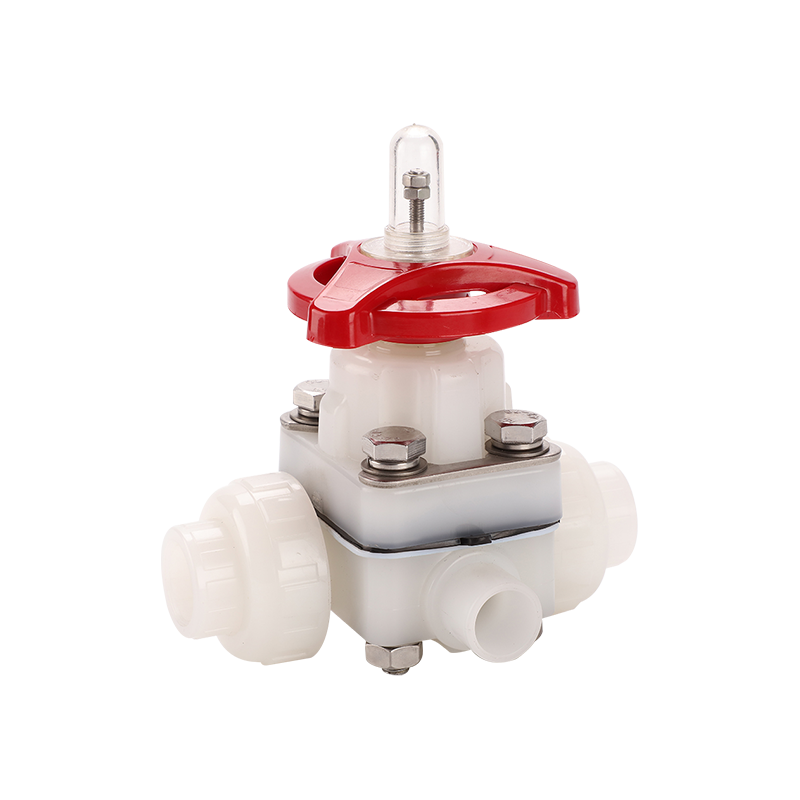
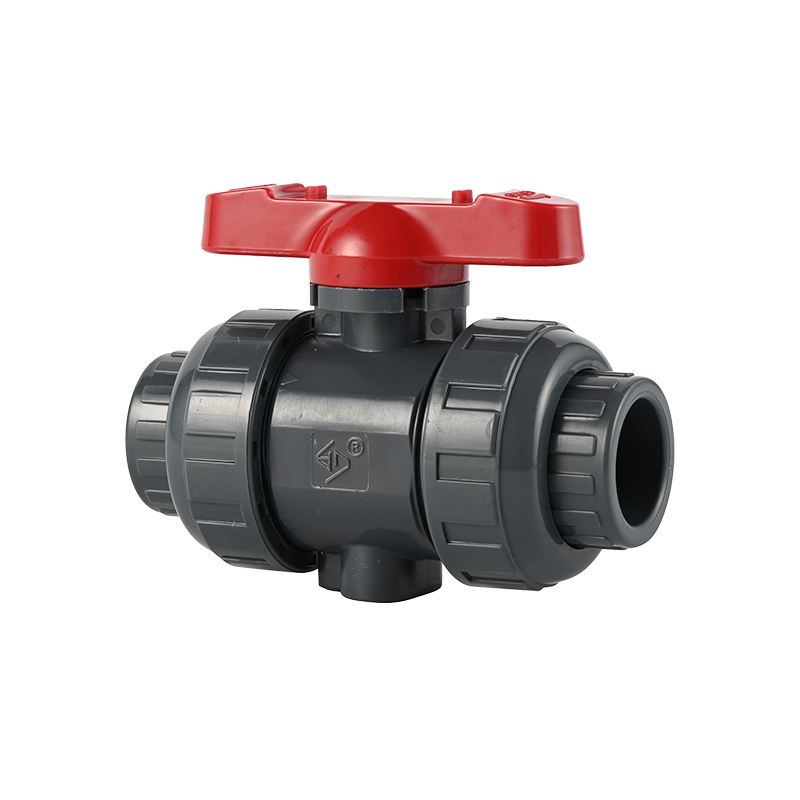
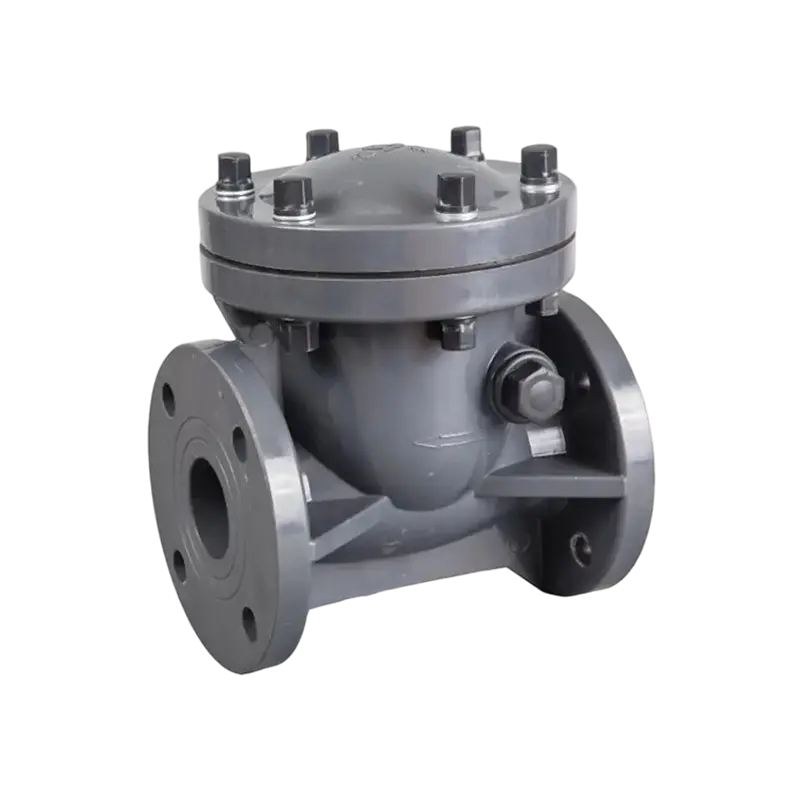
For isolation duty, a true-union ball valve is easy to remove for seat or seal replacement without cutting the line. For slurry, viscous media, or aggressive chemicals, a diaphragm valve may be the better choice because the diaphragm separates the media from the actuator and there is no ball cavity to trap solids. For pump discharge lines, a check valve protects against backflow and helps maintain prime. Each valve type has a different pressure drop, maintenance profile, and temperature limit.
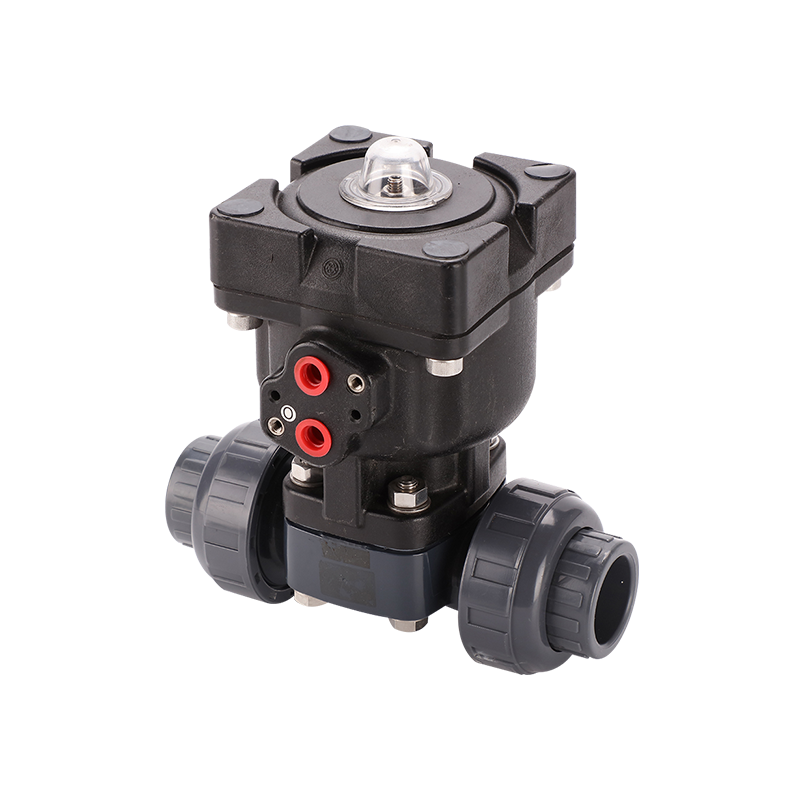
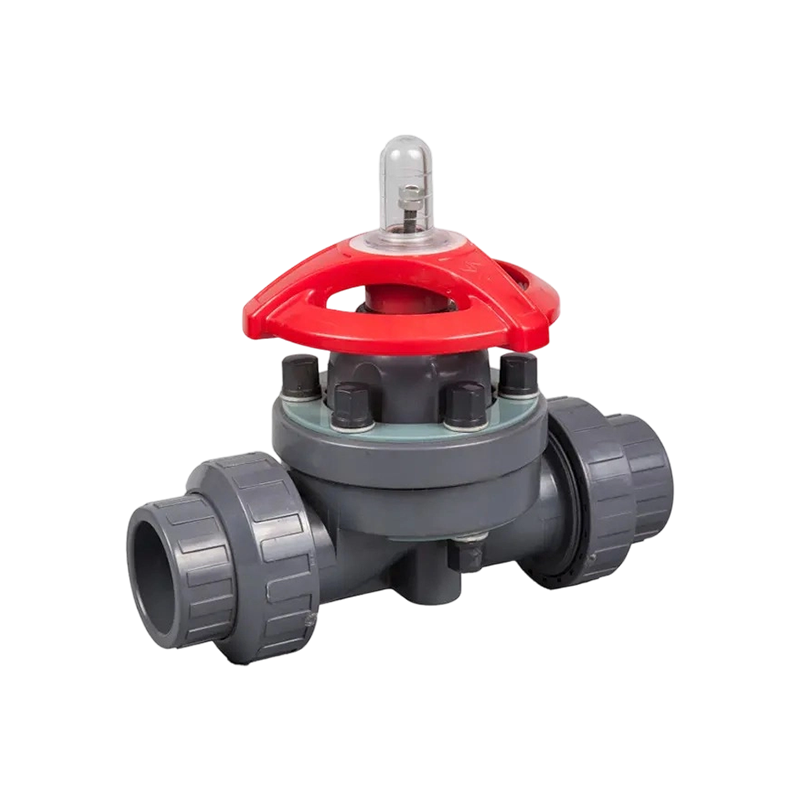 True Union Diaphragm Valves for Plastic Piping SystemsManual diaphragm valves with union ends for removable bodies and large flow in plastic piping systems; check materials and DN limits for the service.View Product →
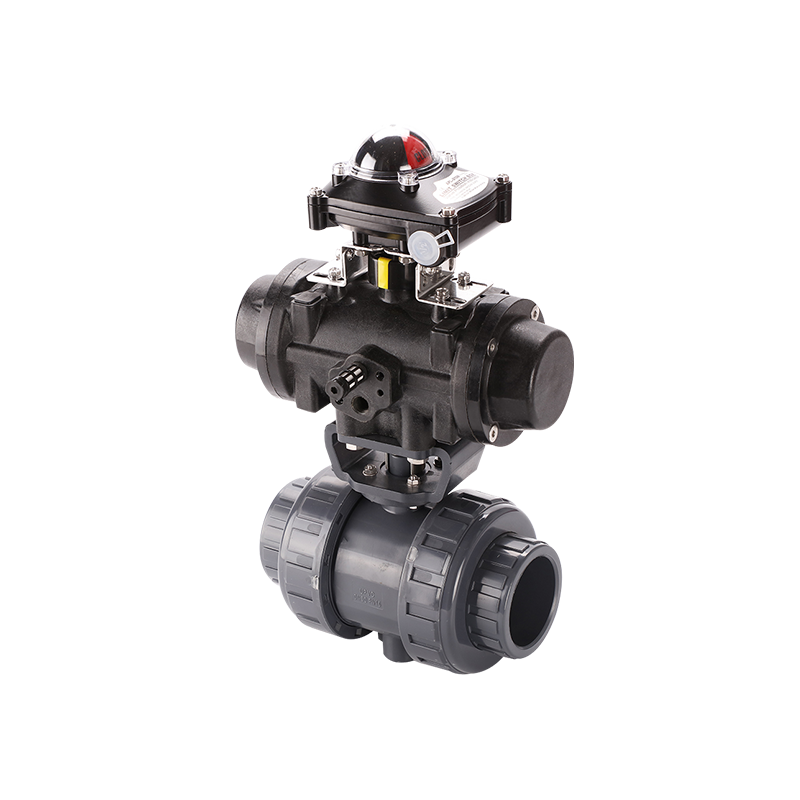
Industrial CPVC ball valves are useful where quick quarter-turn isolation and a compact body are needed. They suit many chemical lines, but the seat material and pressure rating must be checked at the working temperature. For automated duty, electric or pneumatic actuators add another layer: the actuator housing, limit switches, solenoid, and air supply may have their own temperature and environmental limits.
Use industrial CPVC ball valves as a reference point when matching a valve to a CPVC pipe system, but do not stop at the body material. Confirm the stem sealing, ball port, end connection, and pressure class. A valve that is correct at 25°C may need a different seat or body configuration at 80°C.
Ball valve
Fast quarter-turn isolation, compact layout, good for many clean chemical services. Check cavity trapping and seat compatibility.
Diaphragm valve
Media isolated from the mechanism, useful for aggressive or dirty fluids. Diaphragm material and temperature range are decisive.
Check valve
Protects pumps and prevents reverse flow. Size and cracking pressure should match the line, not just the pipe diameter.
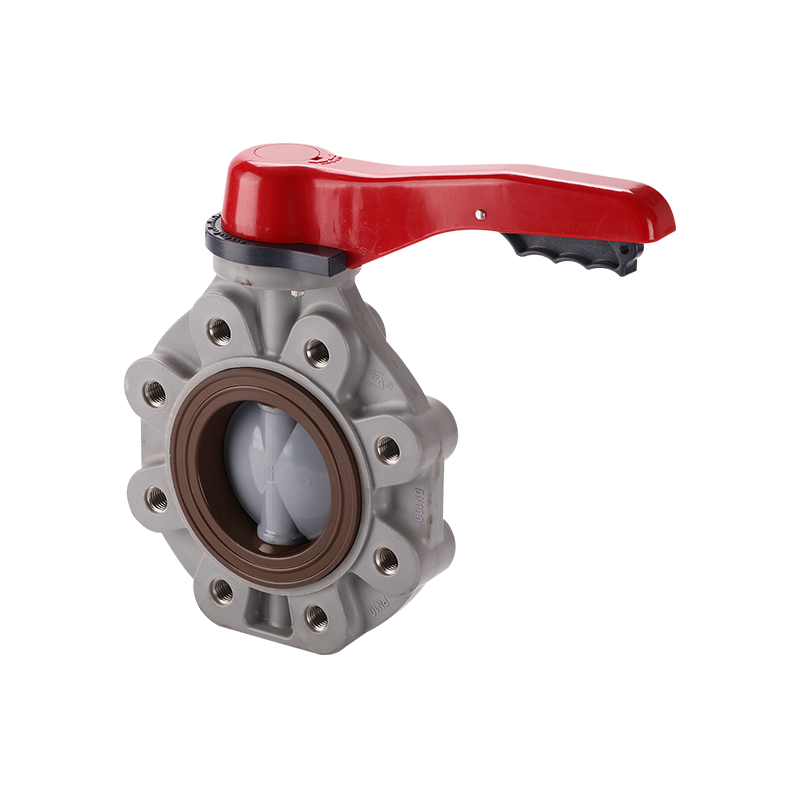
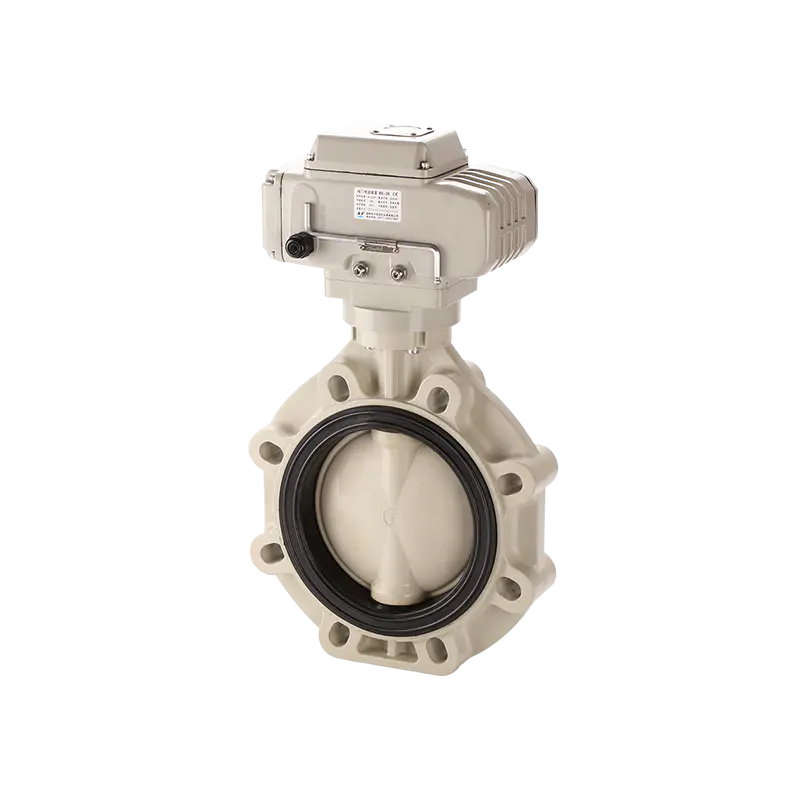
Butterfly valve
Compact isolation for larger lines. Seat and disc materials must be reviewed for chemical exposure and temperature.
Installation Differences That Change the Bid
PVC and CPVC look similar on site, but they do not use the same joining materials. CPVC requires cement and primer designed for CPVC. Using PVC cement on CPVC can produce a weak joint, and mixing primers or cements can create uncertainty during pressure testing. The joint should be made by trained installers who understand set time, cure time, gap filling, and the effect of ambient humidity.
Thermal expansion is another difference that affects layout. CPVC generally expands slightly more than PVC over the same temperature rise. On a long run, that movement must be accommodated with guides, anchors, offsets, or expansion loops. A straight line that is rigidly clamped at both ends can transfer stress into the fittings and valve bodies.
Expansion example
A 30 m straight run with a 40°C temperature rise can move roughly 62 mm in PVC and roughly 72 mm in CPVC, using typical screening coefficients. The exact value depends on the compound and installation temperature. Plan the movement before the pipe is fixed in place.
Support spacing should follow the manufacturer’s recommendation for the pipe size, schedule, and temperature. Hot lines may need closer support or more guide points. Valves and heavy fittings should not be supported by the pipe alone. Flanged connections need correct gasket selection and bolt tightening. Threaded connections should be avoided or carefully evaluated for thermoplastic pipe because threads cut into the wall and create stress concentration.
Pressure testing should be done after the cement has fully cured. A quick test on a partially cured joint may pass at low pressure and fail later in service. For CPVC, the curing time can be longer than many installers expect, especially in cool or humid conditions. The test procedure should specify cure time, test pressure, test duration, and temperature correction.
Flow, Sizing, and the Cost of Overlooking Both
A PVC versus CPVC decision is also a sizing decision. Schedule 40 and Schedule 80 pipe have different inside diameters, and CPVC systems are often specified in Schedule 80 for industrial duty. A smaller inside diameter increases velocity and pressure drop. The pump may need more energy, and the valve may need a larger Cv to avoid throttling losses.
Temperature affects flow indirectly. Hot fluid may have lower viscosity, which can reduce pressure drop in some chemical services, but the pipe’s pressure rating also falls. The design should check the combination of flow rate, velocity, pressure drop, and temperature. A line that is hydraulically acceptable at 20°C may exceed the allowable velocity or pressure loss at 80°C if the fluid properties change.
Use the valve Cv, not the nominal pipe size alone, when selecting control or isolation valves. A reduced-port ball valve can create a significant pressure drop. A full-port valve costs more but may reduce pumping cost. For gravity drainage, slope and venting matter more than pressure rating. For pumped chemical lines, check valve selection, strainer placement, and pump suction conditions together.
When PVC Is the Better Commercial Choice
PVC is often the better choice for cold-water supply, drainage, vent lines, irrigation, and many low-temperature chemical services. It has a broad fitting range, familiar installation practice, and lower material cost. For a plant expansion that stays below the PVC temperature limit and uses compatible media, specifying CPVC everywhere can add cost without adding useful capability.
PVC also makes sense where the line is not continuously hot but may see short warm flushing. The designer should still check the maximum temperature and duration, because repeated short excursions can accumulate damage. If the line is normally at 30°C and occasionally reaches 50°C for a few minutes, PVC may be acceptable with the right pressure margin. If the line runs at 65°C for hours, PVC is usually the wrong starting point.
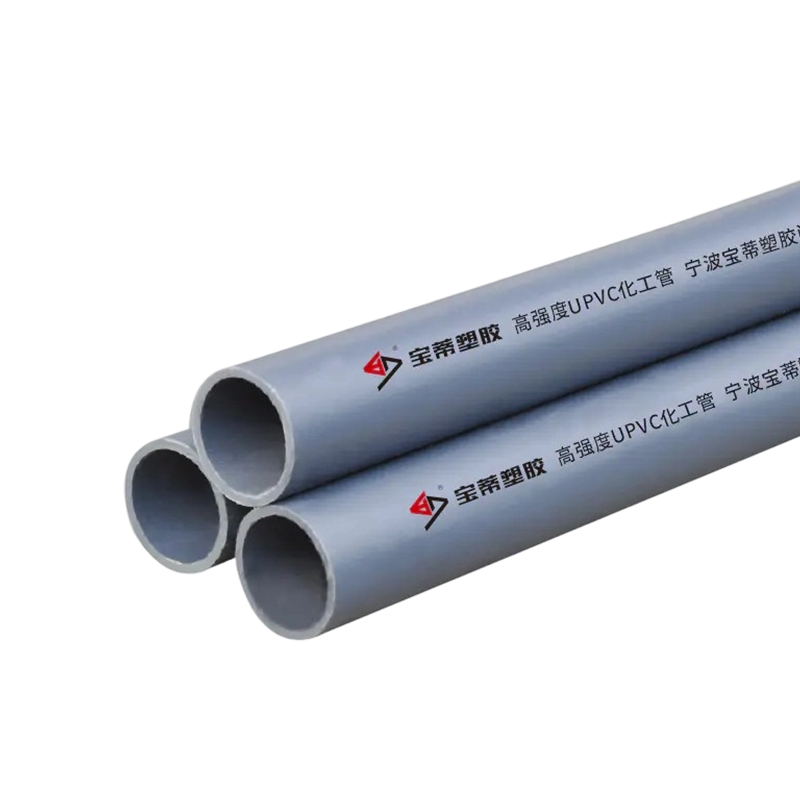 UPVC Piping System for Water and Chemical LinesCost-effective UPVC pipe and fitting range for water supply, drainage, and general chemical transport within UPVC temperature limits; confirm compatible valves and fittings.View Product →
For a PVC-U system, confirm that the valves and fittings are also suitable for the service. A lower-cost PVC pipe package can be undermined by a valve with an incompatible seal or a fitting with a different pressure class. The best PVC specification is complete, not piecemeal.
When CPVC Is the Better Technical Choice
CPVC is usually the stronger candidate for hot water, hot chemical transfer, and processes where PVC would need a lower pressure rating or a shorter replacement cycle. It is common in industrial lines that run above 60°C but below the CPVC limit, especially where the chemical duty is compatible and the pressure class is available.
CPVC is not automatically the right choice for every hot line. If the chemical is a chlorinated solvent or an aromatic hydrocarbon, a higher temperature rating does not solve the compatibility problem. If the line is hot but the pressure is high, the available CPVC schedule may still be insufficient. If the line is hot and abrasive, a different material or a lined system may be needed. The technical choice should be based on the full service envelope, not on temperature alone.
In many plants, the best answer is a mixed system: PVC for cold utility and drainage lines, CPVC for hot chemical lines, with clearly labeled isolation points and compatible valves at the transition. That approach controls cost while keeping the critical lines within their safe operating window. The transition points deserve extra attention because a flange or union between two materials can become the weakest joint if the gasket and bolt torque are not selected correctly.
Specification Checklist for Mixed PVC and CPVC Systems
A clear specification prevents the most common procurement problem: buying pipe by one standard and valves by another. The following checklist is written for the project team that needs to compare PVC and CPVC without losing the practical details.
- Define the maximum continuous temperature, maximum pressure, and expected surge pressure for each line.
- List the chemical concentration range, including cleaning agents and possible upset conditions.
- Select the pipe schedule using the manufacturer’s pressure derating table at the working temperature.
- Confirm that fittings, flanges, unions, and valves use the same material family and pressure class.
- Check the valve seat, stem seal, diaphragm, and gasket against the media and temperature.
- Specify CPVC-compatible cement and primer where CPVC is used; do not allow substitution on site.
- Include expansion allowance, support spacing, and anchor details in the installation drawing.
- Require pressure test procedures with cure time, test pressure, duration, and temperature correction.
- Request material certificates, pressure-piping qualifications, and traceable batch information for critical lines.
- Label PVC and CPVC sections clearly to prevent maintenance crews from installing the wrong spare part.
For high-risk chemical lines, a review of the actual failure mode is more useful than a generic material datasheet. Ask what happens if the valve closes too fast, if the line is drained hot, if the pump deadheads, or if the ambient temperature drops below freezing. PVC and CPVC behave differently under impact and thermal movement, and those differences should be reflected in the support and operating procedure.
FAQ: PVC vs CPVC Piping Selection
Is CPVC always better than PVC?
No. CPVC is better for higher-temperature service and some chemical duties, but PVC is often the more economical and practical choice for cold water, drainage, vent lines, and many low-temperature chemical applications. The correct choice depends on temperature, pressure, chemical compatibility, and installed cost.
Can PVC be used at 70°C?
PVC should not be treated as a standard 70°C piping material. Some PVC compounds may have limited short-term capability, but the allowable pressure at that temperature is usually very low. For continuous 70°C service, CPVC or another higher-temperature material is normally the safer starting point.
Does CPVC have a higher pressure rating than PVC?
Not at every temperature. At room temperature, the pressure ratings of comparable schedules can be similar. The advantage of CPVC appears as temperature rises, where it retains more usable strength than PVC. Always compare the derated pressure at the actual operating temperature.
Can PVC and CPVC be joined together?
They can be connected through flanges, unions, or adapters, but they should not be solvent-cemented directly to each other as a substitute for a proper transition. Use the correct gasket and connection method, and label the transition so future maintenance does not mix components.
Is CPVC suitable for chlorinated water?
CPVC is often used for hot chlorinated water, but performance depends on chlorine concentration, temperature, pressure, and the specific compound. Very high chlorine levels or high temperatures can shorten service life. Confirm the exact water chemistry with the pipe manufacturer.
Which material is better for acids?
Both PVC and CPVC can handle many mineral acids at moderate temperatures. CPVC usually offers more temperature headroom, but it is not universally resistant. Concentration, temperature, and oxidizing strength must be checked. Some acids can attack one material but not the other depending on grade and condition.
Why do CPVC valves cost more?
CPVC resin costs more, and the machining, molding, and certification requirements can be more demanding. The higher price is not only for the body material; it also reflects seat, seal, and pressure-class requirements for hotter service. A lower-cost valve with the wrong seal can cost more in downtime.
What is the most common installation mistake?
Using the wrong cement system is a frequent error. Another common problem is ignoring thermal expansion or failing to support valves and heavy fittings. Both mistakes can create leaks or cracks that are blamed on the material even though the installation caused the failure.