How Do Plastic Reducing Tees Create Stable Branch Connections in Industrial Piping Systems?
Industrial plastic piping systems frequently require a smaller branch to be connected to a larger main pipeline. The branch may supply a dosing unit, connect an instrument, collect a sample, drain part of the system or carry fluid to a separate piece of process equipment. Because branch flow is usually lower than main-line flow, using the same pipe diameter for all three connections is often unnecessary.
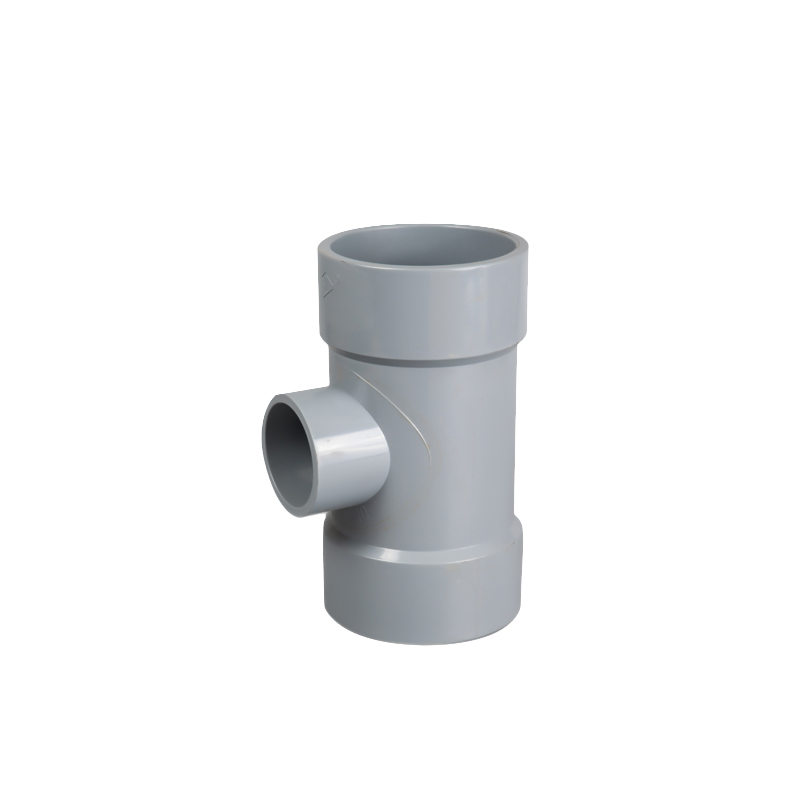
Plastic Pipe Fitting Reducing Tees combine a branch connection and a pipe-size transition in one fitting. Two opposite ports form the main run, while the third port has a smaller diameter. Compared with installing an equal tee followed by a separate reducer, this structure can shorten the pipeline, reduce connection quantity and simplify installation in limited spaces.
The reduced branch still requires careful hydraulic and mechanical evaluation. If the branch is too small, velocity, noise and pressure loss may become excessive. If it is too large, low velocity can cause sediment, poor flushing or slow process response. Orientation, valve position, pipe support and chemical compatibility also affect long-term reliability.
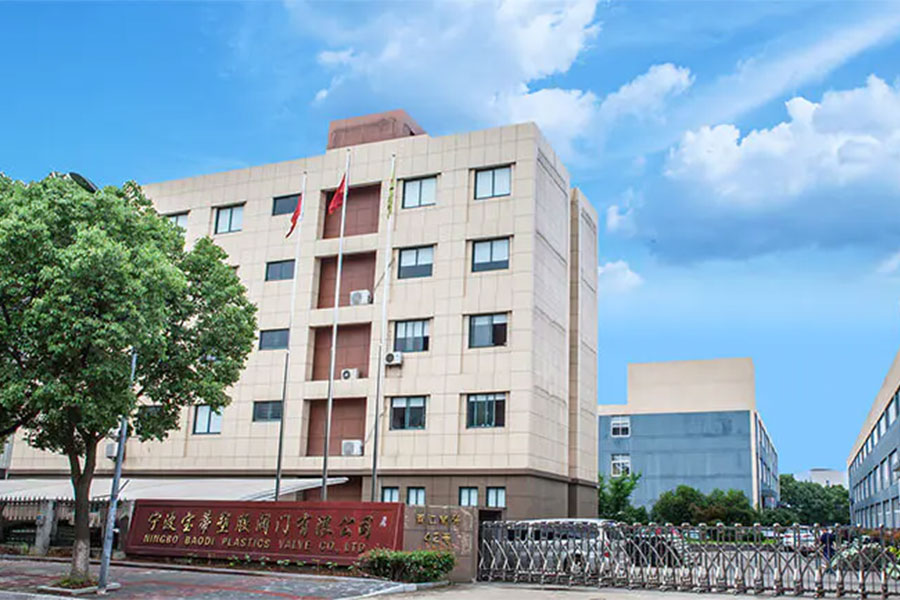
Ningbo Baodi Plastic Valve Co., Ltd. traces its origins to 1979, with Zhenhai Chemical Valve Factory and Beilun Plastic Valve Factory as its predecessors. Its long experience with industrial thermoplastic valves, pipes and fittings provides a practical basis for coordinating reducing tees with complete corrosion-resistant piping systems.
Plastic Pipe Fitting Reducing Tees
What Are Plastic Pipe Fitting Reducing Tees?
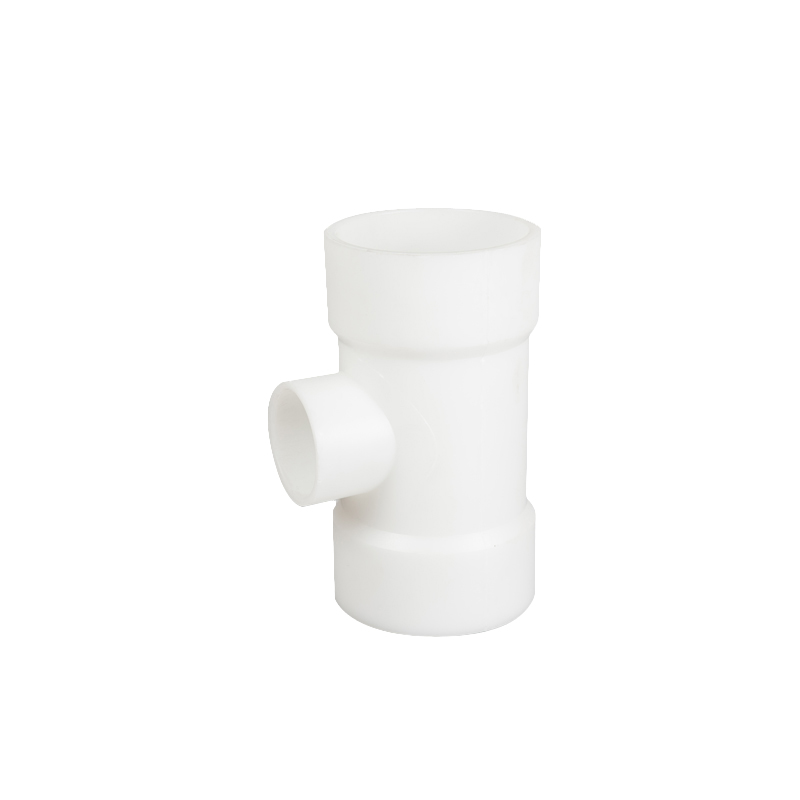
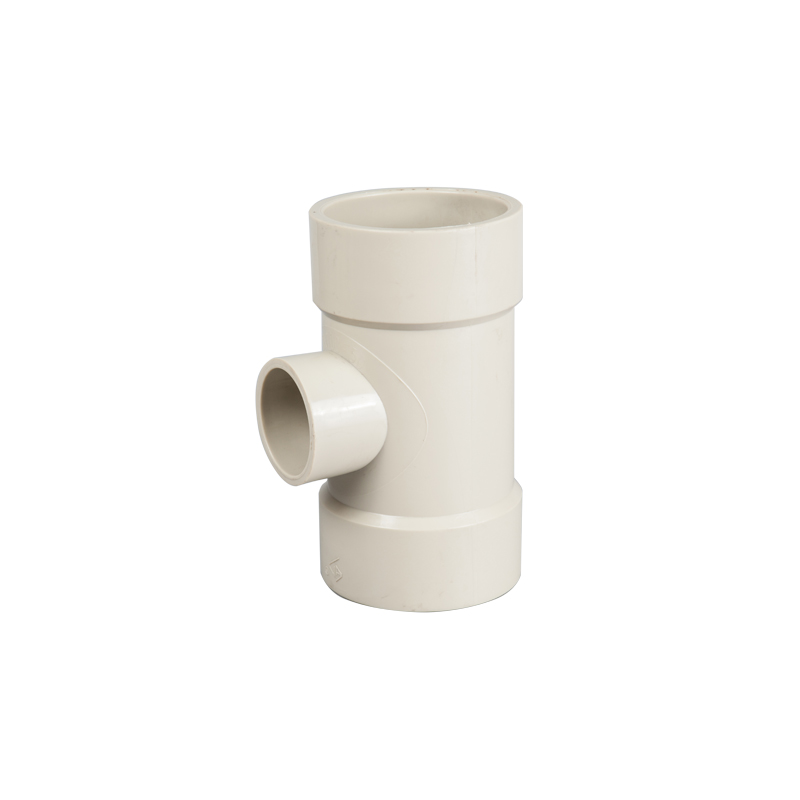
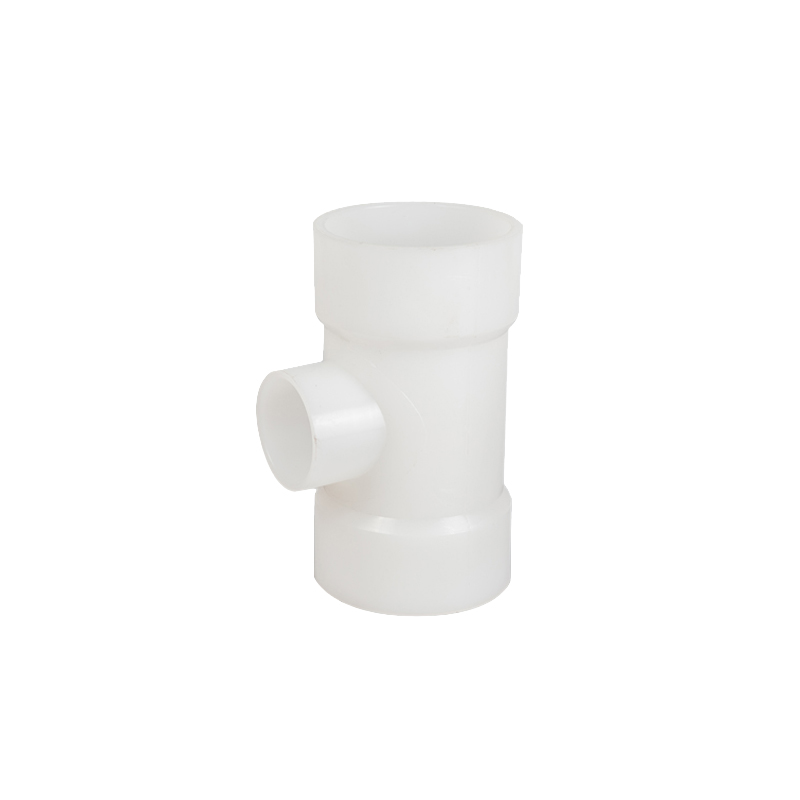
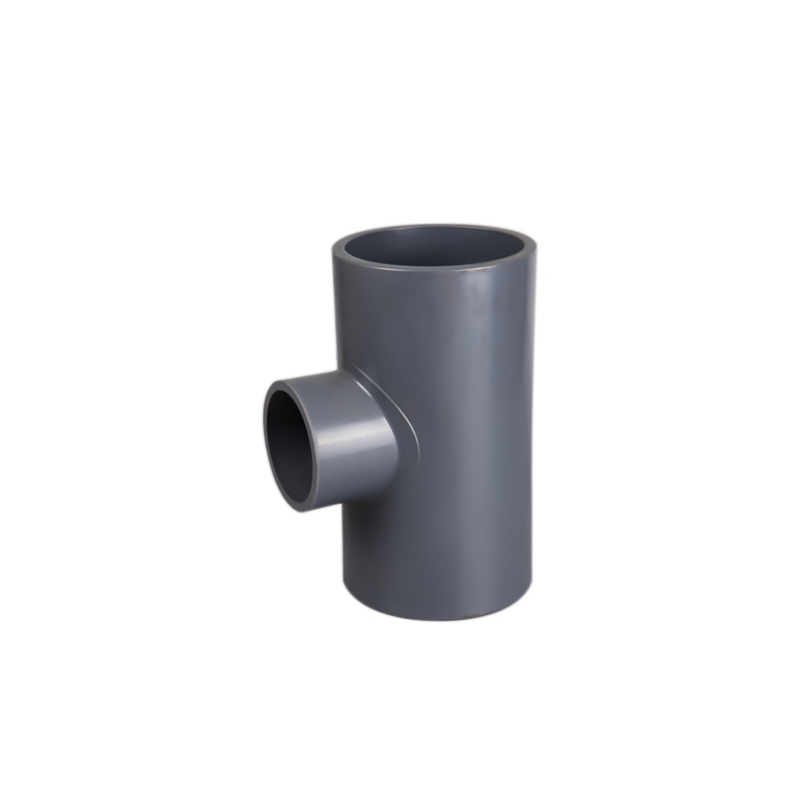
Plastic Pipe Fitting Reducing Tees are three-port thermoplastic fittings used to connect a smaller branch pipe to a larger main pipeline. Two opposite ports create the straight main run, while the third port normally branches from the center at a 90-degree angle.
The two main-run ports generally have the same nominal size. The branch port is smaller and may use the same connection method as the main run or a different connection structure.
Common materials include PVC, CPVC, PP and PVDF. Available connection methods may include solvent-cement sockets, fusion ends, threaded branches and flanged ends.
Flow distribution: Part of the fluid in the main pipeline can enter the smaller branch.
Flow collection: Fluid from a smaller return line can enter the main run.
Dosing connection: A reduced branch can introduce a controlled chemical stream into a larger process line.
Drainage and sampling: Small branches can provide drain, vent, sampling and instrument connections.
Compact installation: The fitting completes branching and size reduction without an additional reducer.
A reducing tee does not automatically regulate branch flow. The actual flow depends on the branch diameter, pipe length, valve opening, elevation and downstream pressure.
Ningbo Baodi Plastic Valve Co., Ltd. manufactured its first plastic diaphragm valve in 1979. The product passed the technical appraisal of the Ministry of Chemical Industry in 1983. This early work with pressure-containing plastic components established experience that later extended to industrial pipe fittings.
Main Structure of a Plastic Reducing Tee
Main Run
The two opposite ports form the main flow passage. They normally connect pipes with the same outside diameter and wall series.
The main run carries most of the system flow, so its internal bore should remain reasonably continuous through the fitting. Severe internal steps can increase turbulence and pressure loss.
Reduced Branch
The third port connects the smaller branch pipe.
Its size should be selected according to the required branch flow rather than simply choosing the smallest available diameter. An undersized branch can cause high velocity, unstable control and excessive resistance.
Central Intersection
The central area is where the main and branch passages meet.
During flow distribution, part of the fluid continues along the main run while another portion turns into the reduced branch. During combining flow, the branch stream enters and mixes with the main-line fluid.
This area experiences more complicated hydraulic and mechanical loads than a straight pipe connection.
Branch Angle
Most Plastic Pipe Fitting Reducing Tees use a 90-degree branch. The compact arrangement is practical, but the direction change creates local flow disturbance.
For wastewater, slurry and fluids containing fibres, the intersection should be considered a possible accumulation point.
Wall Thickness and Reinforcement
The tee center must contain pressure while receiving loads from three connected pipes.
Industrial buyers should not judge pressure capability only from outside appearance. Material, wall structure, dimensions and applicable pressure data are more useful purchasing references.
Reducing Tees and Other Branch-Reduction Methods
| Connection Method |
Main Advantage |
Main Limitation |
Typical Application |
| Plastic reducing tee |
Branching and reduction in one fitting |
Fixed branch-size combination |
Standard industrial branch lines |
| Equal tee with reducer |
Flexible size selection |
More joints and longer installation |
Non-standard branch dimensions |
| Equal tee with reducer bushing |
Compact and easy to stock |
May create a sharp internal step |
Small instrument or drain branches |
| Fabricated reducing branch |
Can match special dimensions |
Requires additional joining inspection |
Large or custom piping systems |
| Flanged reducing tee |
Removable branch connection |
Requires more space and fasteners |
Equipment and valve connections |
Plastic Pipe Fitting Reducing Tees reduce the number of joints and installation steps. This is useful where space is limited or where every additional socket or fusion joint increases inspection work.
An equal tee followed by a reducer offers greater dimensional flexibility but increases the overall length. A reducer bushing saves space, although the internal transition may be more abrupt.
A fabricated branch can match unusual dimensions, but buyers should confirm its joining method, dimensional tolerance and pressure capability before ordering.
How Flow Divides Through a Reducing Tee
Main-Run Flow
When fluid reaches the tee, part of it may continue through the straight main passage.
The downstream main-line flow is normally equal to the upstream flow minus the branch flow. Changing the branch valve position therefore affects the pressure and flow available downstream.
Branch Flow
Fluid entering the branch turns approximately 90 degrees and moves into a smaller flow area.
If the branch carries a large percentage of the total flow, its velocity can rise quickly. This may produce noise, vibration and greater pressure loss.
Flow-Split Ratio
The split between the main run and branch is not determined by port dimensions alone.
Branch length, pipe elevation, valve resistance, equipment pressure and downstream conditions all affect the actual flow. Plastic Pipe Fitting Reducing Tees create the physical connection but do not balance the network.
Combining Flow
A smaller branch may also deliver fluid into the main run.
This arrangement is common in return lines and chemical dosing systems. Branch pressure must be sufficient to enter the main stream without unwanted reverse flow.
Bidirectional Operation
Backwash and circulation systems may reverse their normal flow direction.
The tee should therefore be evaluated for production, cleaning and shutdown conditions instead of only one operating mode.
Branch Velocity and Pressure-Loss Control
Velocity in the Reduced Branch
A smaller branch has less flow area than the main run.
For a given flow rate, reducing the branch diameter increases velocity. Excessive velocity can cause noise, vibration, erosion and unstable valve control.
Local Pressure Loss
Fluid entering the branch must change direction and pass through a smaller opening.
The combination of turning and reduction creates local pressure loss. The amount depends on the main and branch sizes, internal geometry and flow-split ratio.
Downstream Equipment
Small control valves, flowmeters and dosing equipment may be sensitive to disturbed or high-velocity flow.
A suitable straight pipe section may be required before precision equipment. Branch size should not be selected only from the equipment connection size.
Oversized Branches
A branch that is too large may produce very low velocity.
Low velocity can cause slow chemical response, ineffective flushing and solids accumulation. Proper sizing balances acceptable pressure loss with sufficient transport velocity.
Main-to-Branch Diameter Ratio
Small Diameter Difference
When the branch is only slightly smaller than the main run, the hydraulic transition is generally less severe.
This arrangement suits branches carrying a relatively large proportion of the total flow.
Large Diameter Difference
A very small branch creates a more significant change in velocity.
This structure is common in sampling, venting, drainage and instrument lines. Buyers should check the minimum internal bore rather than relying only on the nominal port size.
Multiple-Stage Reduction
A large main line connected to a very small branch may require more than one reduction stage.
Using a tee, reducer and smaller pipe provides flexibility but adds connection points. Several nested bushings should be avoided unless the resulting bore and pressure capability have been checked.
Important Dimensions
Main-port outside diameter: Confirm compatibility with the actual pipe standard.
Branch outside diameter: Confirm the reduced pipe size and wall series.
Internal bore: Check the actual flow passage where velocity is important.
Socket depth: Confirm the insertion length for all three connections.
Center-to-end dimensions: Verify compatibility with prefabricated pipes and equipment positions.
Ningbo Baodi Plastic Valve Co., Ltd. exports to more than 60 countries, where piping dimensions may differ. Confirming drawings before production helps reduce installation problems in international projects.
Branch Orientation in Horizontal Pipelines
Upward-Facing Branches
An upward branch is commonly used for venting, instrumentation and selected sampling duties.
In liquid systems, gas may collect inside the upper branch. This can support venting, but it may also create a stagnant pocket if the branch remains closed.
Downward-Facing Branches
A downward branch may be used for drainage, flushing or solids removal.
Chemical residue and sediment can collect in the branch. Maintenance procedures should ensure that it is completely isolated, depressurized and drained.
Side-Facing Branches
A horizontal side branch is commonly used to connect process equipment and parallel pipelines.
It is usually easier to support, but the branch pipe, valve and instruments should not create excessive cantilever load on the tee center.
Process-Based Orientation
The direction of Plastic Pipe Fitting Reducing Tees should be selected according to branch function.
Vent, drain, sampling and dosing branches may require different orientations. The approved installation drawing should define this position before site assembly begins.
Reducing Tees in Vertical Pipelines
Upward Main Flow
When the main fluid moves upward, part of the flow may leave through the reduced branch.
If the branch remains closed, gas or liquid may become trapped depending on its direction and valve position.
Downward Main Flow
In a downward-flowing line, the branch may serve as a drain, equipment supply or side outlet.
Gravity can affect branch flow and the ability of the line to empty completely.
Pipe Weight
A vertical main pipeline can place substantial weight on the tee.
The fitting should not support a long liquid-filled riser. Both main and branch pipes require independent supports according to their size and weight.
Prefabrication Accuracy
Vertical reducing tees often need to align with floors, platforms, supports or equipment nozzles.
Center-to-end and branch-height dimensions should be confirmed before pipe fabrication.
Dead Legs and Stagnation in Small Branches
A small branch becomes a dead leg when its isolation valve remains closed or flow is infrequent.
Liquid trapped between the tee and valve may settle, crystallize or change concentration. In chemical systems, this retained volume can create a maintenance hazard.
In water and clean-service applications, long stagnant branches may affect flushing and hygiene performance.
Solids-containing fluids can accumulate near the reduced opening, particularly in downward-facing branches or low-velocity systems.
Dead-leg length can be reduced by positioning the isolation valve close to the tee. Unused branches should be kept short or removed when the system is modified.
Ningbo Baodi Plastic Valve Co., Ltd. has served tens of thousands of enterprises. Experience across different industrial systems shows that branch layout and valve position can be as important as fitting material when controlling stagnation.
Materials for Plastic Pipe Fitting Reducing Tees
PVC Reducing Tees
PVC reducing tees are widely used in ambient-temperature water treatment and general chemical-transfer systems.
PVC has low weight and resistance to many acids, alkalis and salt solutions. Socket structures are normally installed using compatible solvent-cement procedures.
Its allowable pressure decreases as temperature rises, and the material is not suitable for every organic solvent.
CPVC Reducing Tees
CPVC provides higher temperature capability than standard PVC in many applications.
It is used in selected hot-water and industrial chemical systems. The pipe, tee, valve and joining materials should all be compatible with CPVC.
Ningbo Baodi Plastic Valve Co., Ltd. became one of the early domestic enterprises to apply CPVC in industrial-grade piping valves after expanding into plastic pipes and fittings in 2006.
PP Reducing Tees
PP is suitable for many acids, alkalis and industrial wastewater streams.
PP reducing tees may use socket fusion, butt fusion or flanged connections. Pressure capability should be checked at the actual operating temperature.
PVDF Reducing Tees
PVDF is selected for aggressive chemicals and some high-purity processes.
It provides broad chemical resistance and useful temperature performance. Fusion quality, cleanliness and material traceability require close control.
Material Comparison
| Parameter |
PVC |
CPVC |
PP |
PVDF |
| Temperature capability |
Moderate |
Higher than PVC |
Moderate |
Relatively high |
| Chemical resistance |
Suitable for many general chemicals |
Suitable for selected chemicals at elevated temperature |
Strong resistance to many acids and alkalis |
Broad resistance to aggressive chemicals |
| Common connection |
Solvent-cement socket |
Solvent-cement socket |
Fusion or flange |
Controlled fusion |
| Typical application |
Water treatment and chemical transfer |
Hot water and selected chemical lines |
Wastewater and acid-alkali systems |
High-purity and demanding chemical service |
| Main concern |
Temperature and solvent limits |
Complete CPVC compatibility |
Fusion quality and pressure derating |
Clean installation and cost |
The material should be selected using the exact process fluid, concentration, pressure, temperature and cleaning conditions rather than a general description such as corrosive liquid.
Connection Types for Plastic Pipe Fitting Reducing Tees
Socket Reducing Tees
Socket reducing tees are common in PVC and CPVC systems.
The main and branch sockets have different diameters, so insertion depths should be measured and marked separately. Branch orientation must be confirmed before bonding.
Fusion Reducing Tees
Fusion structures are widely used in PP and PVDF piping.
The main and branch ports may require different heating tools. The fitting should remain supported during installation to prevent rotation and misalignment.
Overheating can restrict the small branch bore, while insufficient heating may create an incomplete joint.
Threaded Branch Tees
Some reducing tees use socket or fusion ends on the main run and a threaded reduced branch.
This design suits instruments, sampling points and auxiliary pipelines. Plastic internal threads must not be overtightened.
Flanged Reducing Tees
Flanged reducing tees provide removable connections in larger piping systems.
The three ports may use different flange dimensions and drilling patterns. They also require more installation space and independent support.
Connection Comparison
| Connection Type |
Main Advantage |
Main Limitation |
Typical Application |
| Socket |
Compact and convenient |
Normally permanent |
PVC and CPVC systems |
| Fusion |
Strong continuous joint |
Requires controlled installation |
PP and PVDF systems |
| Threaded branch |
Removable reduced connection |
Thread stress and leakage risk |
Instruments and sampling lines |
| Flanged |
Easier maintenance access |
More space and components |
Equipment and large branch connections |
Chemical Compatibility of Tee and Branch Components
Chemical compatibility should be checked for the entire branch assembly, not only the tee body.
A dosing branch may contain a higher chemical concentration than the main pipeline. The reduced branch material must therefore be suitable for the chemical before it becomes diluted in the main flow.
Solvent cement, fusion zones, threaded sealants and valve seals also require separate compatibility checks.
Cleaning fluids may be more aggressive or hotter than the normal process medium. Buyers should provide both operating and cleaning conditions when requesting product selection assistance.
Ningbo Baodi Plastic Valve Co., Ltd. is a principal drafter of the national standard for plastic diaphragm valves and chemical-industry standards for plastic diaphragm valves, plastic ball valves and plastic check valves. This standards experience supports a complete-system approach to material selection.
Pressure Rating and Branch Loads
Internal Pressure
Pressure acts through the main run, reduced branch and central intersection.
The tee must remain suitable for continuous pressure, pump shut-off conditions, temporary surges and hydrostatic testing.
Branch End Force
Although the branch is smaller, it still experiences axial pressure force.
A closed branch valve may leave the entire branch at main-line pressure. The branch should therefore be supported and rated correctly.
Pressure Surges
Rapid branch-valve closure can produce local pressure fluctuations.
High-velocity reduced branches are particularly sensitive to sudden changes in flow.
Temperature Derating
Thermoplastic strength decreases as temperature rises.
A pressure rating stated at ambient temperature may require reduction in hot service. The tee, pipe and branch valve should follow compatible derating principles.
System Limit
The complete piping system is limited by its lowest-rated component.
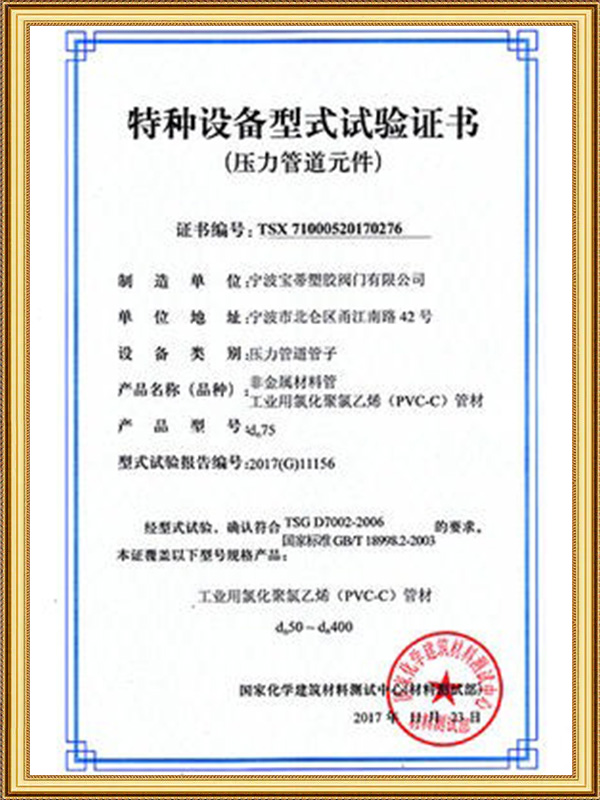
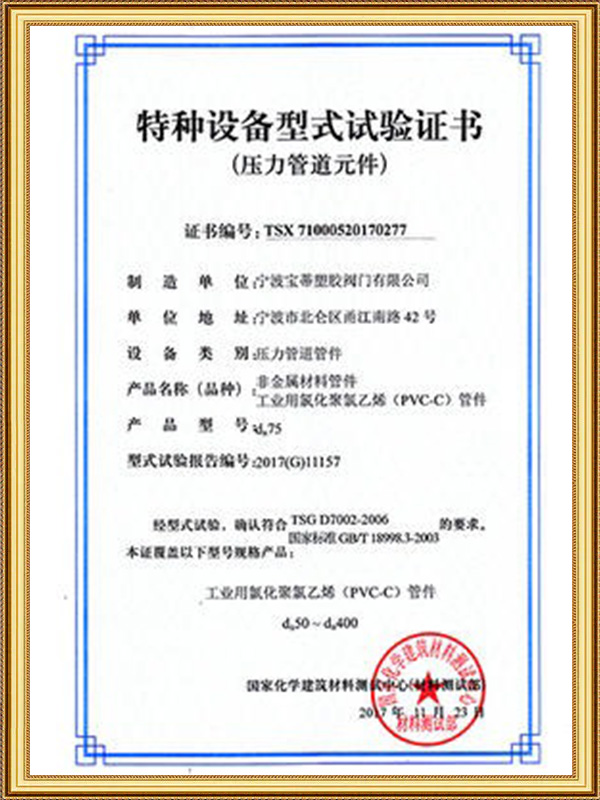
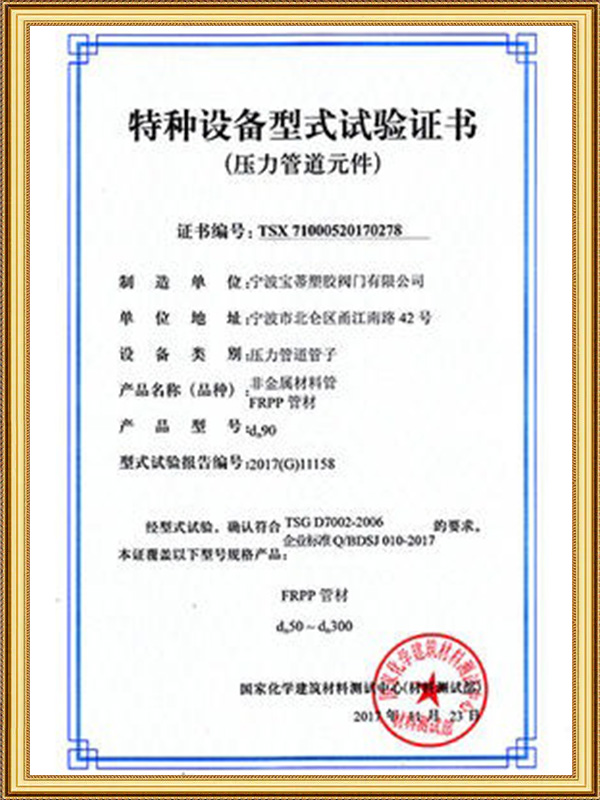
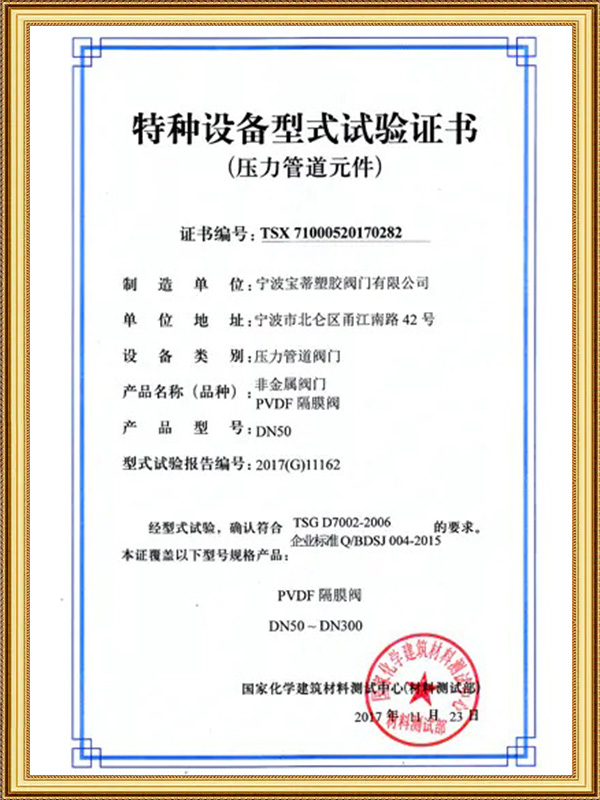
Ningbo Baodi Plastic Valve Co., Ltd. holds a national special equipment pressure piping component manufacturing license, reflecting the importance of pressure performance, dimensional consistency and material control.
Pipe Supports Around Reducing Tees
The main pipeline should be supported on both sides of the tee.
Long unsupported sections can transfer bending load into the central body.
The reduced branch also requires support. A valve, flowmeter or instrument installed on the branch can create significant cantilever load despite the smaller pipe diameter.
Vertical branches may require independent riser supports according to their length and fluid weight.
Thermal expansion can move the main and branch pipes in different directions. Guides and anchors should prevent these forces from concentrating at the tee.
Valve operating torque should not pass directly into Plastic Pipe Fitting Reducing Tees. Large branch valves and actuators should be independently fixed.
Installing Plastic Pipe Fitting Reducing Tees
Confirm All Three Port Sizes
Before installation, verify the dimensions of both main-run ports and the reduced branch.
Nominal size alone may not identify the actual pipe outside diameter or wall series correctly.
Confirm Branch Orientation
The branch direction should match the process function.
Mark the required upward, downward or side-facing position before joining begins.
Prepare the Pipe Ends
Cut all pipe ends square and remove burrs, dust and plastic fragments.
Complete the chamfering, cleaning or heating preparation required by the joining method.
Connect the Main Run
The main-run centerline is normally established first.
Support the tee so the weight of the first pipe does not rotate or distort the fitting.
Connect the Reduced Branch
Mark the branch insertion depth or fusion position.
Avoid allowing excess solvent cement or melted material to enter the smaller bore. Maintain the correct branch angle throughout installation.
Curing and Cooling
PVC and CPVC connections require sufficient curing. PP and PVDF fusion joints require complete cooling.
The fitting should not carry equipment weight or test pressure before all three connections are ready.
Ningbo Baodi Plastic Valve Co., Ltd. has obtained ISO 9001, ISO 14001 and ISO 45001 certifications. Controlled production supports stable fitting dimensions, while correct field installation determines joint reliability.
Pressure Testing and Commissioning
Before testing, inspect the main-run joints, branch joint, supports and branch valve position.
Confirm that bonded joints have cured and fusion joints have cooled.
Fill the system slowly with an approved test liquid. Air should be released from high points, including any upward-facing branch.
Increase pressure in controlled stages and inspect all three connections and the central body.
During commissioning, open the branch valve gradually. Record changes in main-line pressure, branch flow and downstream equipment operation.
Noise, vibration, backflow or unstable dosing may indicate unsuitable branch sizing, valve control or pressure conditions.
Common Problems with Plastic Pipe Fitting Reducing Tees
Main-Run Leakage
Possible causes: Inadequate insertion, contaminated surfaces, incomplete fusion, poor alignment or insufficient support.
Reduced-Branch Leakage
Possible causes: Size mismatch, incorrect joining material, thread overtightening or unsupported branch equipment.
Center Cracking
Possible causes: Combined main and branch loads, restricted thermal expansion, forced pipe alignment or excessive pressure and temperature.
Excessive Branch Noise
Possible causes: High velocity, an undersized branch, severe valve throttling or equipment installed too close to the tee.
Solids Accumulation
Possible causes: Low branch velocity, a downward-facing stagnant branch, infrequent operation or insufficient flushing.
Experience from projects served by Ningbo Baodi Plastic Valve Co., Ltd. shows that repeated tee failures often relate to support, flow control or branch layout rather than the fitting body alone.
Purchasing Considerations for Industrial Buyers
Port Dimensions
The procurement specification should identify the main inlet, main outlet and reduced branch separately.
Actual outside diameter, internal bore, wall series and connection dimensions should be confirmed.
Branch Function
Buyers should state whether the branch is used for distribution, return flow, drainage, dosing, sampling or instrumentation.
The branch purpose influences orientation, size and material requirements.
Process Conditions
Useful information includes the fluid name, concentration, normal and maximum temperature, operating pressure, main flow, branch flow and solids content.
Dimensional Confirmation
Important dimensions include the main socket depth, branch socket depth, center-to-end length, branch center height and overall width.
An approved technical drawing is recommended for prefabricated systems and bulk orders.
Connection Method
The order should identify socket, fusion, threaded or flanged ends.
Combination structures, such as socket main ports with a threaded branch, should be clearly stated.
Batch Consistency
B-end buyers should review branch angle, main-run concentricity, wall thickness, socket dimensions and material identification across production batches.
Consistent dimensions are important for distributors, engineering contractors and skid manufacturers.
Technical Documentation
Project requirements may include dimensional drawings, material information, pressure and temperature data, inspection records and product identification.
These requirements should be agreed before production.
Packaging and Supply Coordination
The reduced branch is more vulnerable to impact and compression than the main ports. Packaging should protect all three connections and clearly identify the size combination.
Ningbo Baodi Plastic Valve Co., Ltd. offers a broad range of industrial thermoplastic valves, pipes and fittings. Its exports to more than 60 countries and repeat-supply capability support project buyers requiring compatible products and stable batch quality.
Inspection, Cleaning and Replacement
Routine inspection should cover both main-run connections, the reduced branch and the central body.
Operators should look for leakage, cracks, discoloration, movement and unsupported branch equipment.
Branches carrying solids or crystallizing chemicals require regular flushing. Infrequently used branches should also be checked for blockage and retained pressure.
Cleaning agents must be compatible with the tee, pipes and valve seals.
A bonded or fusion Plastic Pipe Fitting Reducing Tees with structural damage normally needs to be cut out and replaced. External adhesive cannot reliably restore the original pressure-containing strength.
Maintenance records should identify the main and branch sizes, material, orientation, process fluid, pressure, temperature and branch function.
Typical Applications of Plastic Pipe Fitting Reducing Tees
Chemical Dosing Lines
A reduced branch can introduce a dosing chemical into the main pipeline.
The branch material should be compatible with the chemical concentration before dilution.
Water Treatment Systems
Plastic Pipe Fitting Reducing Tees connect sampling, drainage, backwash and circulation branches.
Branch flow and valve position should be controlled according to system operation.
Pump and Filter Systems
A smaller bypass or instrument line may be connected to a main process pipe.
The branch should not disturb sensitive pump-inlet flow.
Wastewater Systems
Reducing tees connect drains, flushing lines and collection branches.
Solids accumulation and cleaning access require attention.
Tank Connections
A reduced branch may connect a filling, return or sampling line to a larger manifold.
Valve arrangements should prevent unintended flow between tanks.
Process Skids
Compact reducing tees connect instruments, valves and auxiliary equipment within limited frames.
Dimensional stability and branch orientation are important for prefabricated assembly.
Frequently Asked Questions About Plastic Pipe Fitting Reducing Tees
What Are Plastic Pipe Fitting Reducing Tees Used For?
They connect a smaller branch pipe to a larger main pipeline for distribution, return flow, drainage, dosing, sampling or instrumentation.
What Is the Difference Between an Equal Tee and a Reducing Tee?
An equal tee has three ports of the same size. A reducing tee normally has two equal main ports and one smaller branch.
Does a Reducing Tee Control Branch Flow?
No. Branch flow depends on pipe resistance, valve opening, elevation and downstream pressure.
Can the Reduced Branch Be Used as an Inlet?
Yes. Fluid may enter through the smaller branch and combine with the main flow, provided pressure and material conditions are suitable.
Can a Reducing Tee Be Installed in Any Direction?
The fitting can be rotated, but branch orientation should be selected according to whether it serves as a vent, drain, dosing line or equipment connection.
Do Plastic Pipe Fitting Reducing Tees Cause Pressure Loss?
Yes. Flow turning into the reduced branch creates local resistance and turbulence.
Why Is Branch Flow Too Low?
Possible causes include an undersized branch, excessive pipe length, high valve resistance or high downstream pressure.
Why Is the Branch Noisy?
High velocity, severe throttling and an undersized branch can create noise and vibration.
Can Different Plastic Materials Be Connected?
Incompatible materials should not be bonded or fused directly. A suitable transition connection is required.
Should the Smaller Branch Be Supported?
Yes. Branch pipes, valves and instruments should not place excessive load on the tee.
Can a Cracked Reducing Tee Be Repaired?
A cracked pressure-containing tee should normally be removed and replaced. External patching does not restore its original structural strength.
What Information Should Buyers Provide Before Ordering?
Buyers should provide the material, fluid, concentration, pressure, temperature, main size, branch size, flow requirements, branch orientation, connection method, quantity, packaging and technical-document requirements.