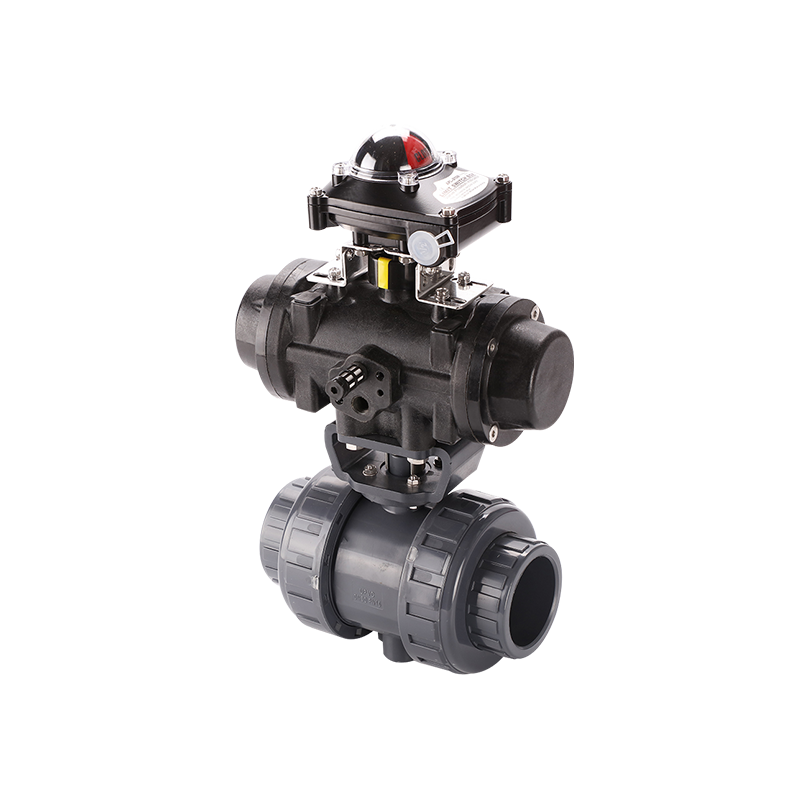
In the field of industrial valve engineering, the internal support mechanism of a manual ball valve fundamentally determines its applicable pressure range, operational torque characteristics, and long-term sealing reliability. The two dominant designs — floating ball and trunnion-mounted ball — differ not merely in geometry, but in their underlying mechanical logic. For engineers responsible for pipeline system design, equipment specification, or procurement evaluation, a precise understanding of both configurations is essential to making technically sound and cost-effective decisions.
The Structural Principle of the Floating Ball Valve
In a floating ball valve, the ball is not fixed by any bearing support structure. It is held in position solely by the compressive contact of two resilient seats on either side, leaving the ball in a state of controlled suspension within the valve body. The stem connects to the top of the ball only to transmit rotational torque; it provides no radial constraint. As a result, the ball retains a limited degree of axial freedom within the valve cavity.
When line pressure is applied, the upstream fluid force pushes the ball slightly toward the downstream seat. This axial displacement increases the contact stress between the ball and the downstream seat, creating what is known as pressure-energized sealing. In principle, the higher the upstream pressure, the tighter the downstream seal becomes — an inherent self-reinforcing characteristic of this design.
This mechanical simplicity translates directly into manufacturing advantages. Floating ball valves require fewer components, involve less complex machining tolerances, and carry lower production costs. For low-to-medium pressure applications — typically Class 150 to Class 600 with nominal diameters up to DN50 — the floating ball valve remains the most cost-efficient solution across a wide range of general service conditions, including utility piping, instrument isolation, and small-bore process lines.
The Physical Limitation of Floating Ball Design
The same structural feature that gives the floating ball valve its sealing advantage also defines its load-bearing ceiling. In this configuration, the downstream seat is the sole structural element carrying the full hydraulic force acting on the ball. That force equals the line pressure multiplied by the cross-sectional area of the ball bore. As pipe diameter increases or pressure rating rises, the total lateral load transferred to the seat grows rapidly — and the seat contact stress escalates accordingly.
Seat materials in floating ball valves — most commonly PTFE, glass-filled PTFE, or reinforced polymer composites — have finite compressive strength limits. Once the contact stress exceeds the material's allowable surface pressure, permanent plastic deformation occurs. The seat begins to extrude into the clearance gaps around the ball, sealing performance deteriorates irreversibly, and operating torque increases beyond predictable limits. This is not a failure mode that can be corrected through tighter manufacturing tolerances; it is a fundamental consequence of concentrating the entire hydraulic load onto a polymer seat element.
This physical constraint explains why floating ball valves are generally not recommended for high-pressure service in large bore sizes, regardless of the nominal pressure class stamped on the valve body.
The Structural Principle of the Trunnion-Mounted Ball Valve
A trunnion-mounted ball valve solves the load-bearing problem by introducing a fixed mechanical support system. The ball is held in place by upper and lower trunnion bearings machined into the valve body and bonnet. These bearings absorb all radial and axial loads acting on the ball, keeping it stationary under pressure. The ball does not move toward either seat under line pressure — its position is structurally constrained at all times.
Because the ball cannot shift axially, the sealing mechanism is reversed. Spring-loaded seats are positioned on both sides of the ball, and pre-compressed springs push the seats toward the ball surface to maintain initial sealing contact. When upstream pressure rises, the fluid pressure acts on the back face of the upstream seat, pushing it further into the ball — again creating a pressure-energized effect. However, since both seats operate independently and symmetrically, contact stress is distributed more evenly and is decoupled from the gross hydraulic load carried by the bearings.
The practical result is that seat contact pressure in a trunnion-mounted valve remains proportional to sealing requirements, not to the total hydraulic force on the ball. Seats are no longer structural load-bearing members in the primary sense. This redistribution of forces allows trunnion-mounted ball valves to operate reliably across high-pressure, large-bore applications — Class 900 and above, DN100 and larger — where floating ball designs would impose unsustainable loads on seat materials.
Pressure Capacity: A Mechanical Analysis
The pressure-bearing capacity gap between the two designs becomes quantitatively clear when examined from a force balance perspective. Consider a DN200 ball valve operating at Class 600 pressure. The total hydraulic force acting on the ball approaches several hundred kilonewtons. In a floating ball valve, this entire force bears directly on the downstream seat contact area — a surface measured in square centimeters. The resulting contact stress far exceeds the yield strength of any commercially available polymer seat material.
In a trunnion-mounted valve of the same size and rating, the trunnion bearings absorb that same force through the valve body structure. The seats experience only the localized spring-energized contact stress necessary for sealing, which remains within acceptable material limits regardless of line pressure. The pressure capacity ceiling of a trunnion valve is therefore governed by the mechanical strength of its metallic structural components — body wall thickness, bearing dimensions, and fastener ratings — rather than by seat material properties.
API 6D, the principal standard governing pipeline ball valves, mandates trunnion-mounted construction for valves exceeding Class 900 or DN150 in recognition of this engineering reality. The standard is not arbitrary; it reflects the physical impossibility of achieving reliable long-term seat integrity in floating ball designs under these conditions.
Operating Torque Behavior Under Pressure
Operating torque is another area where the two designs diverge significantly in behavior. In a floating ball valve, torque increases with line pressure in a near-linear relationship. As upstream pressure pushes the ball harder into the downstream seat, the friction force that must be overcome to rotate the ball rises proportionally. At high pressures or large diameters, this torque can exceed the physical capacity of manual operators, necessitating the use of gear operators or actuators that add cost and complexity.
Trunnion-mounted ball valves exhibit a comparatively flat torque curve. Because the bearings carry the hydraulic load and the seat contact force is spring-determined rather than pressure-determined, the breakaway and running torques do not scale significantly with line pressure. This characteristic makes trunnion valves well suited to frequent manual operation, emergency shutdown applications, and scenarios where consistent actuation force is operationally critical.
Safety Functionality: DBB and Fire Safe Design
The structural independence of the two seats in a trunnion-mounted ball valve enables a safety configuration not achievable in standard floating ball designs: Double Block and Bleed (DBB). With both upstream and downstream seats capable of independently holding pressure, the body cavity between them can be isolated from line fluid on both sides simultaneously. A dedicated bleed port allows this trapped cavity volume to be monitored, vented, or sampled — providing verifiable isolation confirmation without depressurizing the main pipeline.
This feature is a mandatory requirement in many oil and gas pipeline specifications, chemical plant safety standards, and offshore platform design codes. The ability to confirm isolation integrity while the line remains pressurized represents a fundamental operational safety advantage that floating ball valves with their single active seat cannot replicate in the same manner.
Fire Safe design is also more naturally integrated into trunnion-mounted configurations. When polymer seat materials are destroyed by fire exposure, the spring-loaded metal seat rings in a trunnion valve retain residual contact against the ball surface, providing emergency metal-to-metal sealing. API 607 and ISO 10497 test protocols evaluate this behavior under controlled burn conditions. While fire safe floating ball valves exist, achieving compliant performance is structurally more challenging due to the absence of independent seat springs.
Practical Selection Criteria
Neither design is universally superior. Selection must be driven by actual service parameters rather than general preference or cost alone.
Floating ball valves are the appropriate choice for small-to-medium bore, low-to-medium pressure general service applications. Their compact form factor, lower unit cost, and straightforward maintenance make them practical and reliable in utility systems, instrumentation isolation, and standard process piping where pressure and diameter remain within the design's load capacity.
Trunnion-mounted ball valves are the required solution for high-pressure pipelines, large-bore transmission systems, subsea applications, critical process isolation, and any service where DBB functionality, fire safe performance, or predictable low operating torque is specified. Their higher unit cost reflects the engineering complexity of the bearing and seat assembly, and is consistently justified by the reliability and safety performance delivered in demanding service environments.
Common Specification Errors in Engineering Practice
A recurring mistake in valve specification is relying solely on the ASME pressure class designation as the basis for structural type selection, without accounting for the amplifying effect of bore diameter on seat loading. A Class 600 floating ball valve in DN50 performs within well-established design limits. The same pressure class in DN150 or DN200 places seat loads that no polymer material can sustain reliably over an extended service life. Pressure class and bore diameter must be evaluated together when determining whether a floating or trunnion-mounted design is structurally appropriate.
Another common error is specifying trunnion-mounted valves primarily on the basis of low operating torque without fully utilizing the safety capabilities this design enables. DBB verification, cavity pressure monitoring, and fire safe certification are engineering requirements embedded in trunnion valve design — and they represent the primary technical justification for the cost premium in high-integrity industrial applications. Treating these features as optional accessories rather than core functional requirements leads to underspecified safety systems and missed opportunities to align valve selection with overall plant safety philosophy.
Understanding the structural distinction between floating ball and trunnion-mounted ball valve designs — and the mechanical consequences that follow from each — is the foundation of technically rigorous ball valve specification. Both configurations have defined and legitimate roles in industrial pipeline engineering. The objective is always to match the correct design to the actual demands of the service, and to avoid applying cost-driven simplifications where structural integrity and safety function must take precedence.