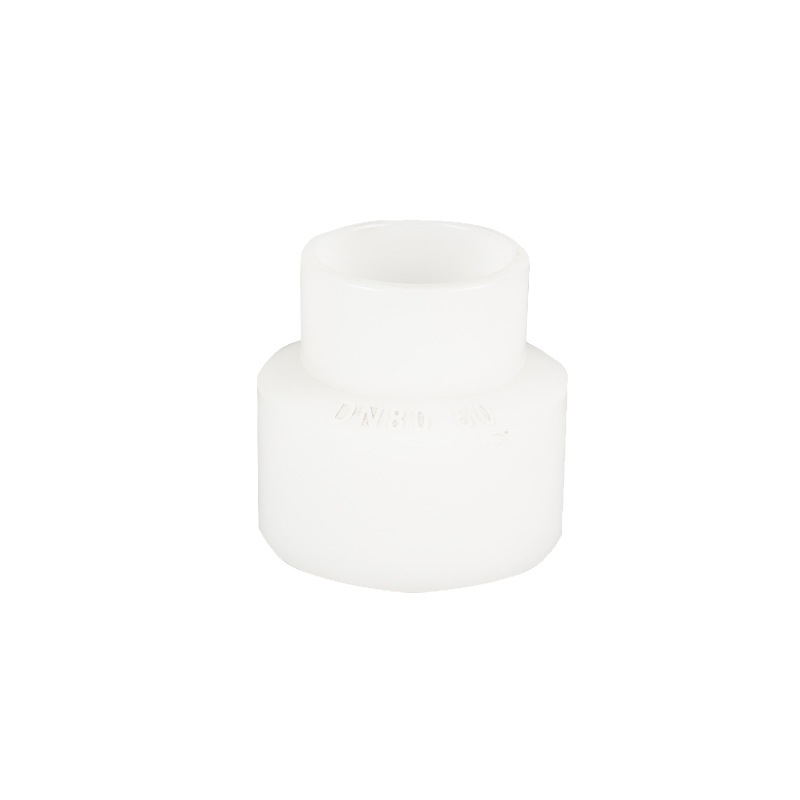
Overview of PVDF Material Properties
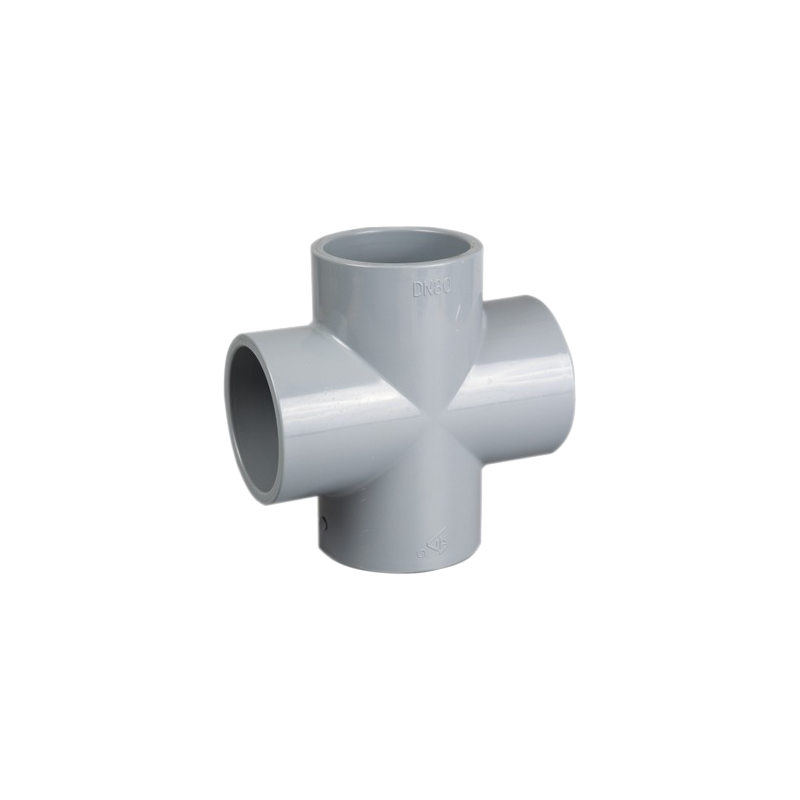
ROUND PVDF EQUAL TEE is made of Polyvinylidene Fluoride (PVDF), a high-performance fluoropolymer. PVDF offers excellent chemical resistance, high temperature stability, and mechanical durability. It is widely used in chemical, pharmaceutical, and food industry piping systems. Under normal conditions, PVDF has good toughness and impact resistance. However, over long-term use and exposure to various environmental factors, its properties may gradually degrade, resulting in aging and brittleness.
Thermal Aging
Exposure to high-temperature fluids or ambient conditions can lead to thermal aging of ROUND PVDF EQUAL TEE. Thermal aging causes polymer chain scission, leading to hardening, reduced toughness, and the formation of microcracks. Long-term operation under stress accelerates microcrack propagation, affecting sealing performance and pressure resistance. Surfaces may show slight yellowing or loss of gloss when temperatures exceed PVDF’s tolerance.
UV and Light-induced Aging
Outdoor installation of ROUND PVDF EQUAL TEE exposes it to ultraviolet (UV) radiation, causing photodegradation. UV exposure breaks chemical bonds on the material surface, leading to surface cracking, chalking, and discoloration. This degradation reduces impact resistance and pressure capacity, particularly in piping systems exposed to continuous sunlight.
Chemical Corrosion-induced Aging
Although PVDF is resistant to many chemicals, prolonged contact with strong oxidizers or concentrated acids and bases can cause chemical corrosion. Corrosion manifests as surface microcracks, pitting, and localized wall thinning. Internal surfaces in contact with aggressive fluids are particularly susceptible. Accumulated chemical damage reduces mechanical strength and may lead to stress cracking.
Mechanical Stress-induced Brittleness
Piping systems impose multidirectional stresses on the tee, including internal pressure, vibration, and thermal expansion. Long-term mechanical stress can lead to stress-induced aging, reducing toughness and causing cracks in high-stress zones. High-pressure or frequently vibrating systems accelerate brittleness, potentially resulting in localized failure or leakage.
Low-temperature Brittleness
At low temperatures, PVDF molecular mobility decreases, and toughness declines significantly. Prolonged exposure to cold conditions can make ROUND PVDF EQUAL TEE brittle, fragile, and less impact-resistant. Low-temperature brittleness is a concern for outdoor winter installations and chilled process piping systems.
Microscopic Manifestations of Aging
Long-term use can cause microstructural changes such as chain scission, crystallinity variation, and microvoid formation. Microcrack propagation is a direct sign of material brittleness, often not visible to the naked eye. Techniques like infrared spectroscopy, scanning electron microscopy, or ultrasonic inspection can detect internal aging, directly affecting pressure capacity and service life.
Prevention and Lifespan Extension
Controlling operating temperature, avoiding direct UV exposure, selecting compatible fluids, minimizing stress concentrations and vibration can significantly extend the service life of ROUND PVDF EQUAL TEE. Regular inspection, especially for microcracks and surface brittleness, helps identify issues early, reducing the risk of system failure.