A plastic valve is defined by how it closes, not by the polymer it is moulded from. Ball, butterfly, diaphragm and check valves are all produced in UPVC, CPVC, PPH and PVDF, and the body material only decides whether the valve survives the medium. The closing mechanism decides whether the valve belongs on that line at all. Put a butterfly disc on a 25 mm slurry line and the seat will erode within months; put a ball valve on a throttling duty and the downstream seat will wash out just as fast.
The table below sets out the four families that cover the overwhelming majority of thermoplastic piping work, followed by a closer look at each design, the body materials behind them, and the purchasing details that decide whether an installation holds up after two or three years of service.
General comparison of the main plastic valve families; pressure and temperature figures reflect common commercial ranges and shift with size, body material and manufacturer.
| Valve type |
Closing action |
Typical duty |
Throttling |
Common bodies |
| Ball valve |
Rotating ball with a through bore |
Isolation, on/off, quick shut-off |
Poor |
UPVC, CPVC, PPH, PVDF |
| Butterfly valve |
Disc rotating on a shaft |
Large bore isolation, compact spaces |
Fair to good |
UPVC, CPVC, PPH, FRPP |
| Diaphragm valve |
Elastomer diaphragm pressed onto a weir or saddle |
Slurries, high purity, corrosive media |
Good |
UPVC, CPVC, PPH, PVDF |
| Check valve |
Ball or flap lifted by flow, closed by backflow |
Backflow prevention, pump protection |
Not applicable |
UPVC, CPVC, PPH, PVDF |
| Foot valve |
Check valve with a strainer at the suction end |
Pump priming, suction lines |
Not applicable |
UPVC, CPVC, PPH |
Ball Valves: Quarter-Turn Isolation With the Widest Selection
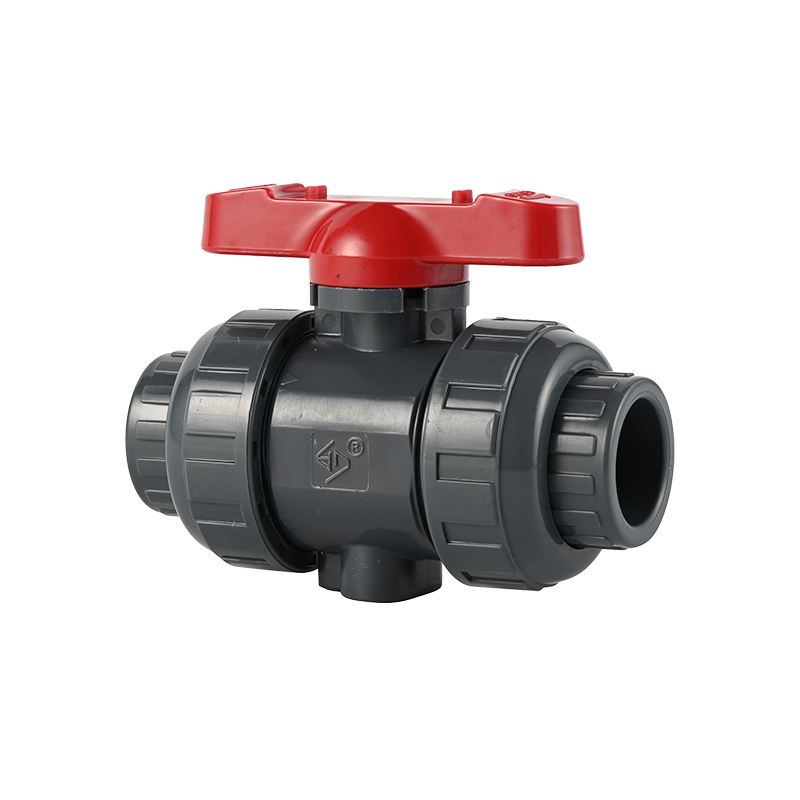
The ball valve is the default isolation valve in thermoplastic piping for a simple reason: a quarter turn of the handle takes the bore from fully open to fully closed, and the pressure drop across a full-port body is close to that of a plain pipe. Inside the body, a sphere sits between two seat rings, usually PTFE, EPDM or FKM, and a stem with two or more O-rings passes through the neck. When the bore lines up with the pipe, flow passes through; when the handle turns 90 degrees, the seats press against the solid side of the sphere and the line is shut.
Four configurations cover most purchase orders:
- One-piece flanged ball valves, where the body and both flanges are moulded or machined as a single part, eliminating separate adaptor flanges and a set of gaskets.
- True-union ball valves, which allow the valve body to be removed from the line without cutting pipe, useful where maintenance access is tight.
- Three-piece ball valves, which open at two joints for seat and ball inspection.
- Three-way ball valves, in horizontal or standard port patterns, used for diverting or mixing two streams.
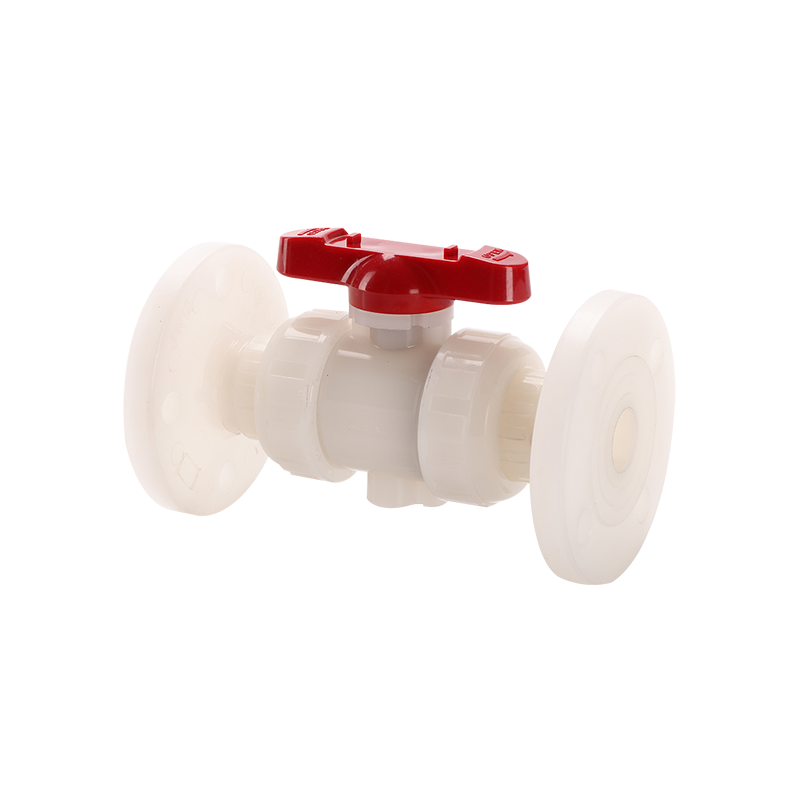 Flanged Plastic Ball Valve for Manual Shut-OffUse this flange-connected manual ball valve for tight shut-off and quick opening; avoid partial opening for flow regulation, where seats and balls can wear.View Product →
Where Ball Valves Win and Where They Fail
They win on tight shut-off, low pressure loss, compact face-to-face length and a torque that stays predictable for years when the medium is clean. They fail when they are asked to regulate flow. Holding a ball valve half open forces the medium through a narrow crescent between the ball and the seat at high velocity; the seat erodes, the ball scores, and the valve that once sealed perfectly starts to weep. If a line needs 30 percent flow, use a diaphragm valve, a globe valve or a properly sized control valve instead.
Two purchasing details deserve attention. First, confirm whether the valve is full port or reduced port, because a reduced-port DN50 body can pass noticeably less than a DN50 pipe. Second, check the stem seal arrangement: a stem with a single O-ring is adequate for low pressure water but marginal for solvent-laden streams under cycling. For aggressive chemical service, CPVC bodies with PTFE seats are common, and a corrosion-resistant industrial CPVC ball valve range covers hot chlorinated water and many acid duties where UPVC would soften.
Torque figures matter as soon as an actuator is involved. A dry valve may break away at one value, but a valve left closed for six months in a crystallising medium can require several times that figure. Always ask for the breakaway torque of the specific size and seat compound before sizing a pneumatic or electric actuator.
Butterfly Valves: The Economic Choice Above DN150
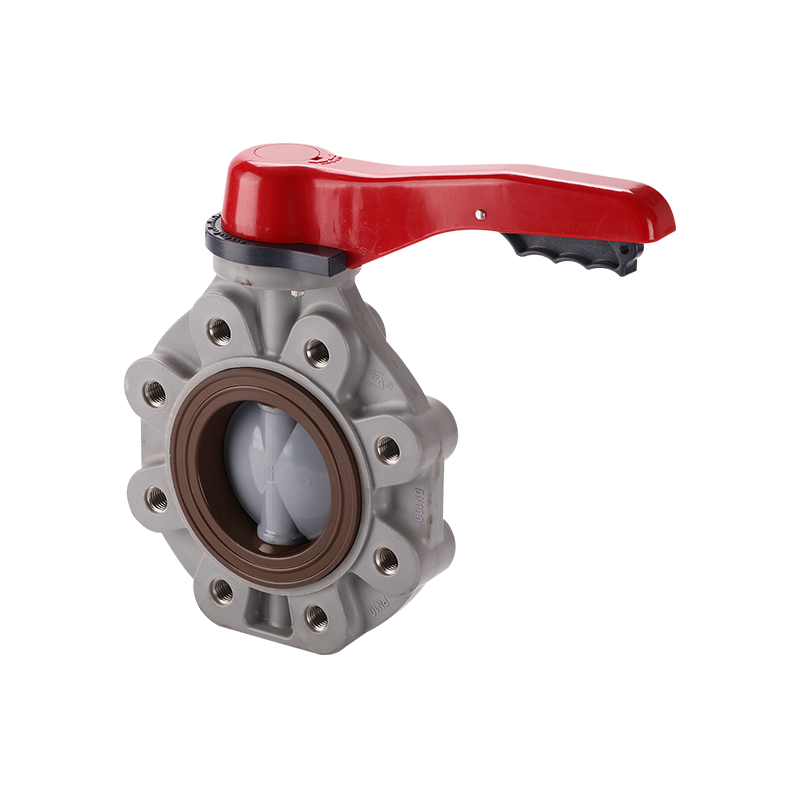
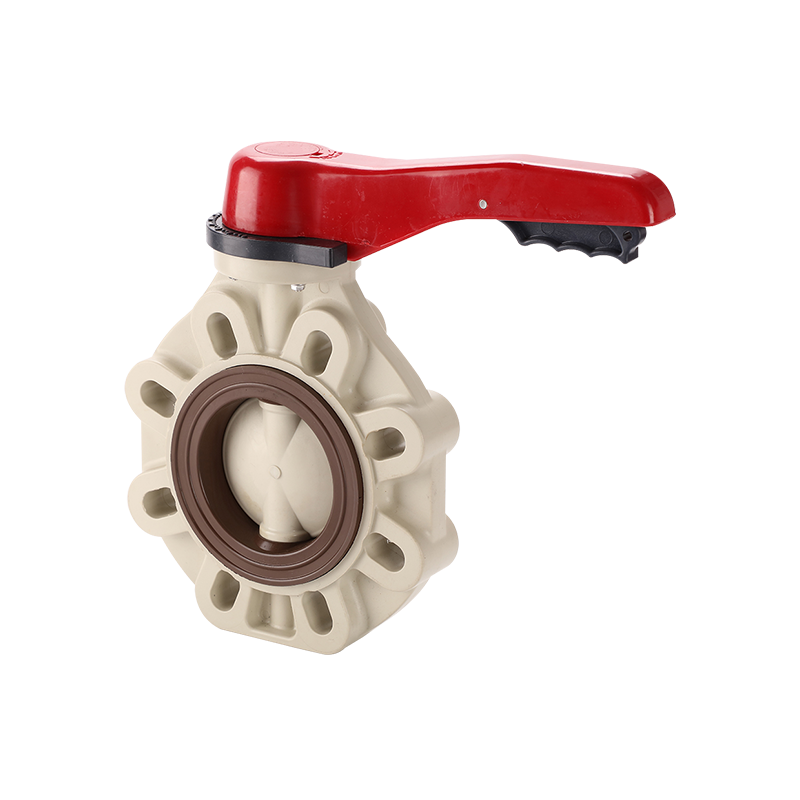
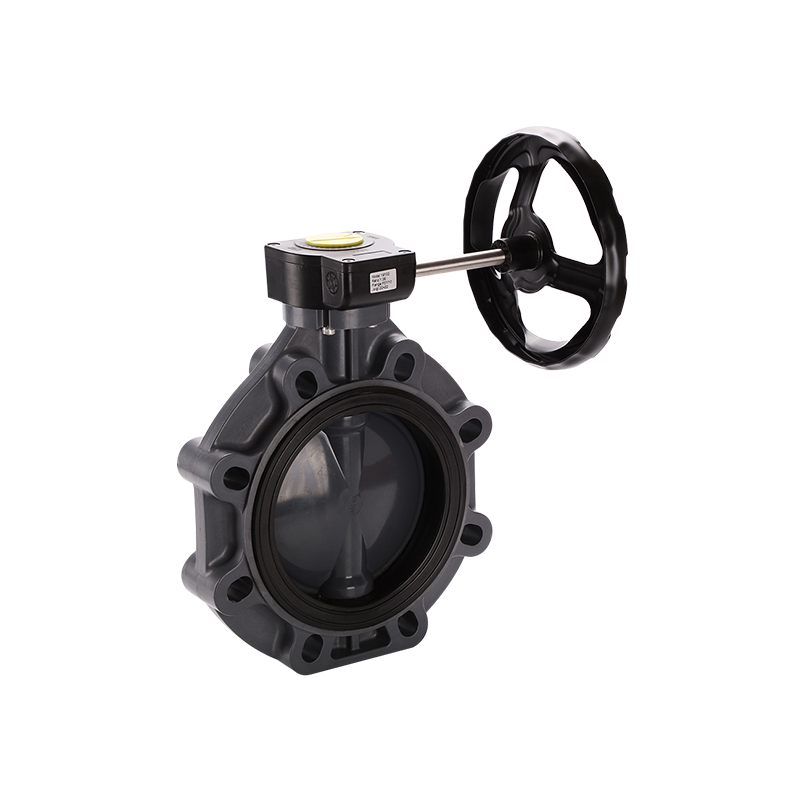
A butterfly valve closes with a disc that rotates about a shaft mounted across the flow path. The disc sits inside a resilient seat, usually EPDM or FKM, bonded into the body or held in a replaceable liner. A quarter turn swings the disc from perpendicular to parallel, and the seat does the sealing. Because the body is short and the disc is light, a DN300 butterfly valve can weigh a fraction of the equivalent ball valve and cost far less in the same material.
Body styles are chosen by how the valve is fixed into the line:
- Wafer style, clamped between two pipe flanges with through-bolts, the most economical and the most common in larger plastic lines.
- Lug style, with threaded inserts in the body lugs so the valve can be bolted to a single flange and the downstream pipe removed for maintenance.
- Flanged style, with integral flanges for lines that must be broken without disturbing the bolts.
- Lever handle operation up to roughly DN150, and worm gear operation above that, where the torque becomes too high for comfortable manual effort.
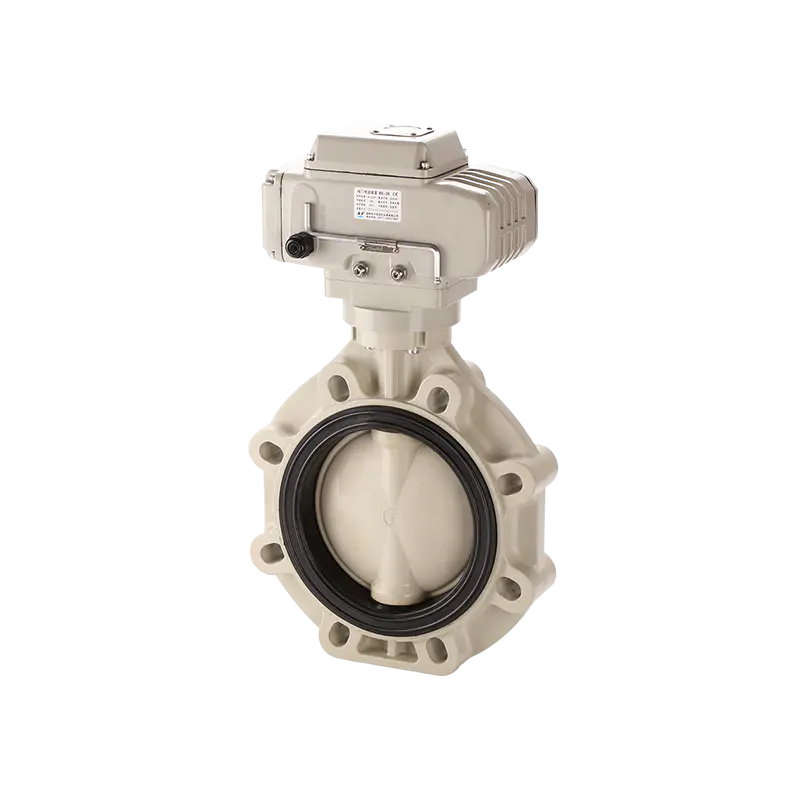
The trade-off is hydraulic. The disc always obstructs part of the bore, so pressure drop at full open is higher than a ball valve, and in the 30 to 70 percent open band the disc generates turbulence that accelerates seat wear and, in severe cases, cavitation. Butterfly valves therefore suit isolation and coarse flow adjustment rather than fine control. A wafer-style plastic butterfly valve with an EPDM seat is a sound choice for cooling water headers and large-bore transfer lines, provided the medium stays inside the seat's temperature window.
When buying, check the seat material compatibility before the price. EPDM swells in many hydrocarbon solvents and degrades in some oils, while FKM handles a wider chemical band but costs more and does not suit every acid. Also confirm the flange drilling standard, because a wafer valve drilled to a different pattern will not bolt up to the pipe flanges on site, and the mismatch is usually discovered during a shutdown.
Diaphragm Valves: No Packing, No Metal in the Flow Path
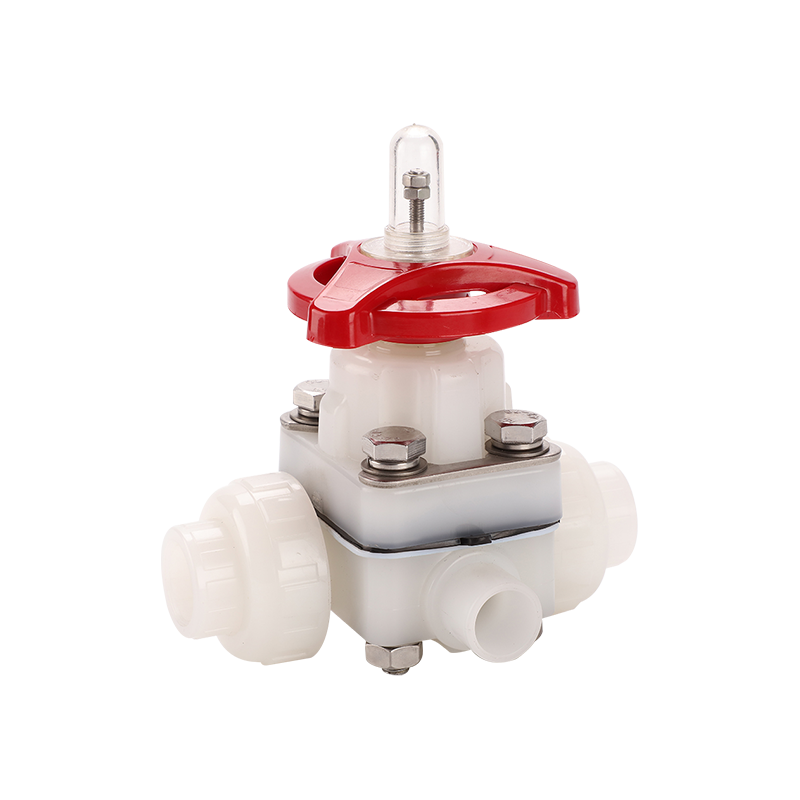
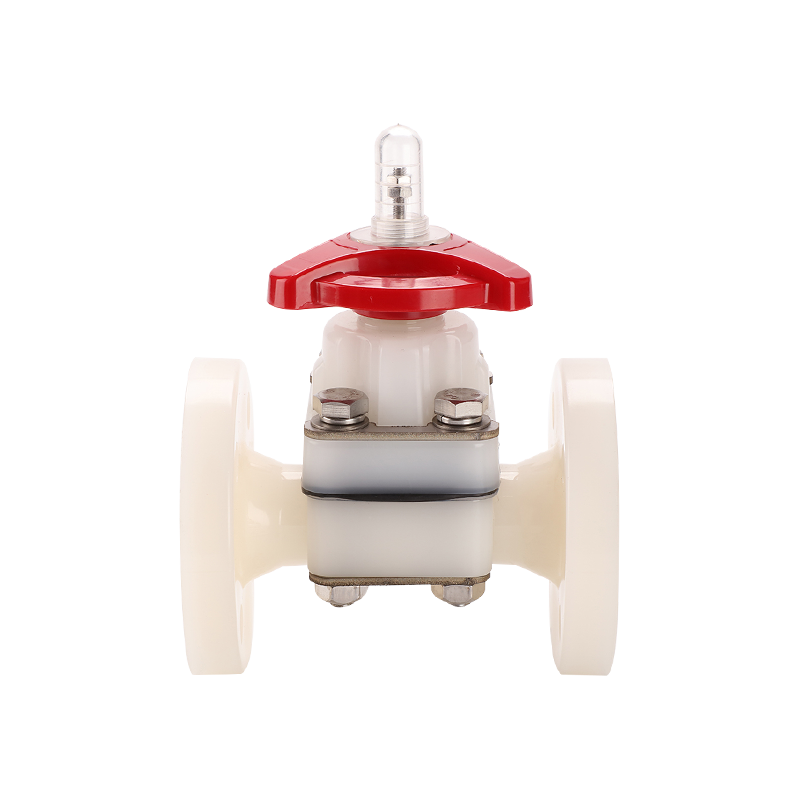
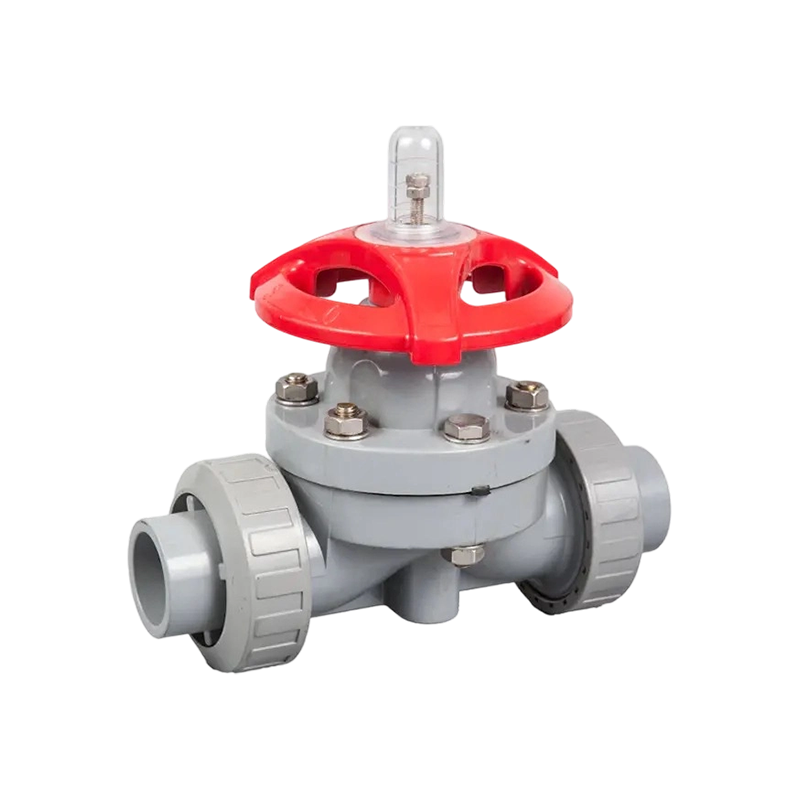
In a diaphragm valve, a flexible diaphragm is pushed down onto a raised weir or a saddle by a compressor attached to the stem. The process fluid touches only the body liner and the diaphragm face, so there is no packing gland to leak, no stem in contact with the medium, and no cavity where solids can collect. That construction is why diaphragm valves dominate slurry lines, high-purity water systems, and chemical duties where a weeping gland would be unacceptable.
Two body geometries cover most requirements. The weir type has a raised saddle that the diaphragm seals against, giving reliable shut-off and reasonably linear throttling. The straight-through type has no weir, so it drains more completely and handles viscous or fibrous media with less risk of clogging, at the cost of a slightly higher closing force.
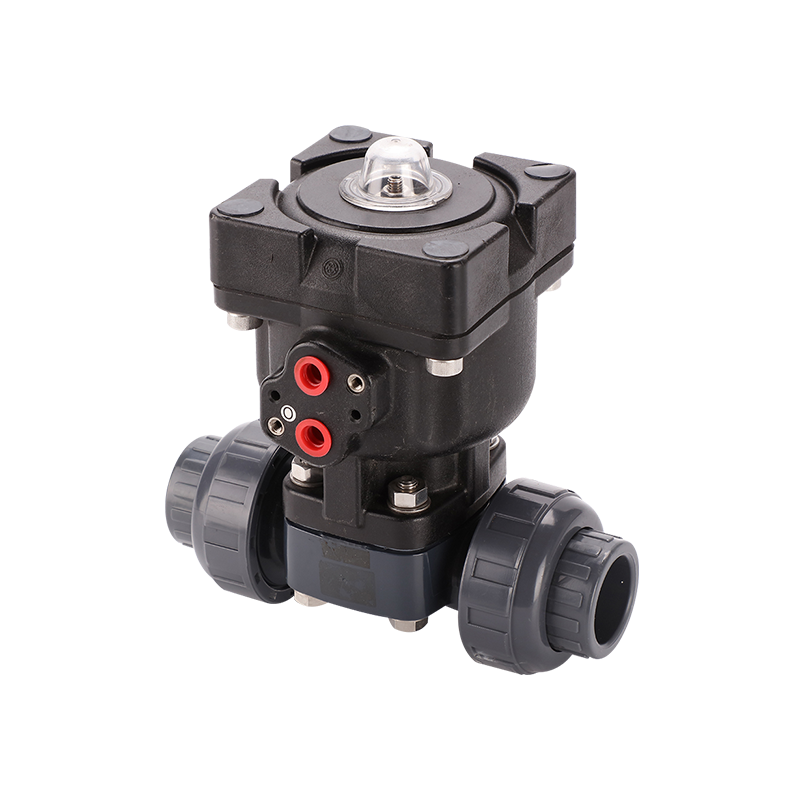
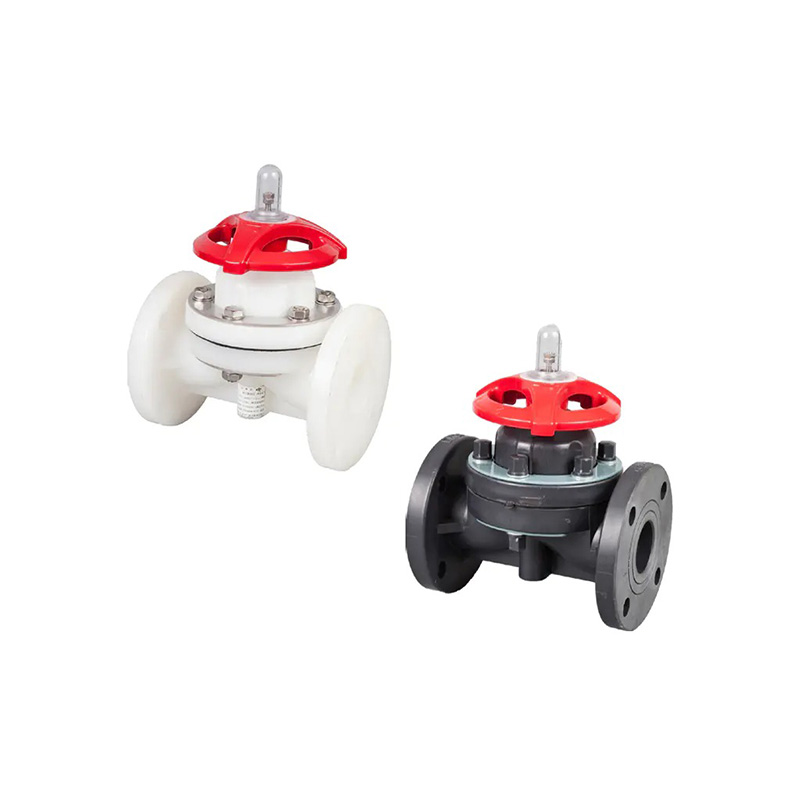 Flanged Plastic Diaphragm Valve for Flow ControlChoose this manual diaphragm valve for reliable sealing and throttling in plastic piping; match diaphragm material to the medium and expected wear.View Product →
Diaphragm Material Decides Valve Life
The body may last fifteen years, but the diaphragm is a wear part. EPDM diaphragms suit water, dilute acids, alkalis and many food-grade duties up to about 80 to 90 degrees Celsius. PTFE-faced diaphragms extend chemical resistance and temperature range considerably and are the usual choice for strong oxidisers and solvents. FKM diaphragms serve hydrocarbon and high-temperature duties. Buying on body price alone and ignoring diaphragm availability is a common mistake: a valve with an inexpensive body but a six-week diaphragm lead time can still stop a plant.
Diaphragm valves also throttle better than ball or butterfly valves, because the diaphragm lifts progressively off the weir and gives a usable relationship between stem travel and flow. They do, however, need the stem to be cycled occasionally; a diaphragm that sits compressed for years can take a permanent set and lose its sealing line. For automated duty, a pneumatic plastic diaphragm valve with a plastic actuator removes the corrosion problem that metal actuators face in fume-laden rooms, while the metal actuator version gives higher closing force where line pressure is high.
Check Valves and Foot Valves: Automatic, Unattended Protection
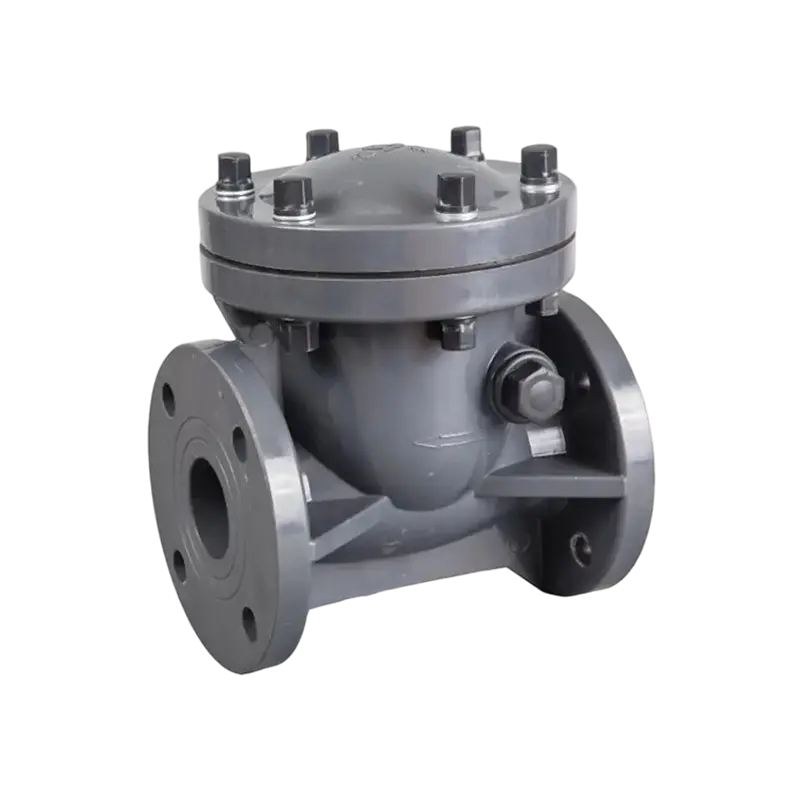
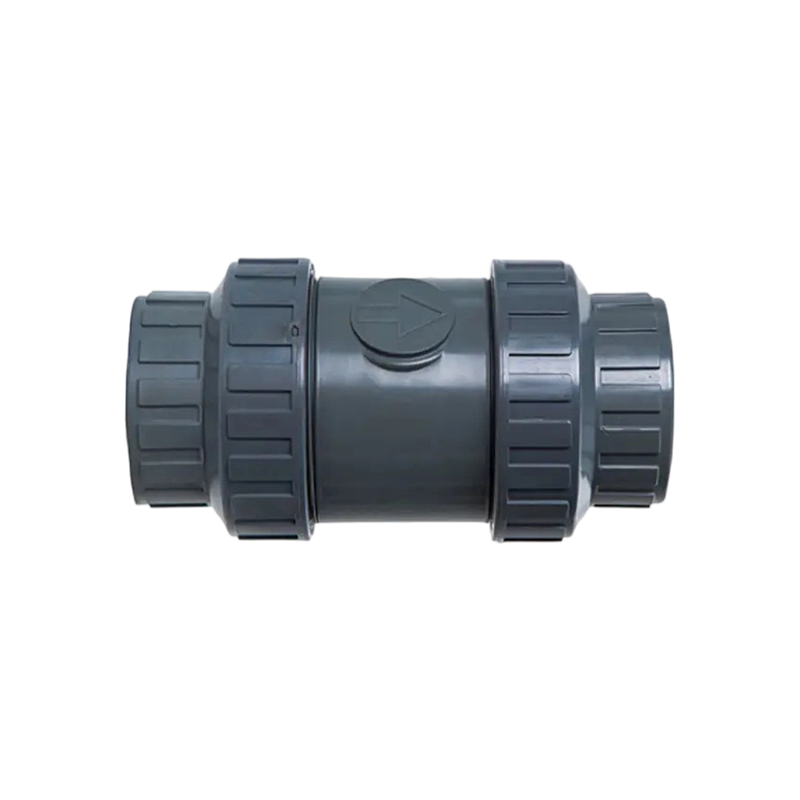
A check valve has no handle. Flow in the forward direction lifts a ball or swings a flap off its seat; reverse flow pushes it back and closes the passage. The purpose is to protect pumps from running backwards, keep a header from draining into a lower vessel, and stop contamination from migrating up a line when pressure is lost.
The main designs used in thermoplastic systems are:
- Ball check valves, union or flanged, where a spherical ball lifts off a seat. Compact, tolerant of dirty media, and available in small sizes down to DN15.
- Swing check valves, where a hinged disc swings out of the flow path, giving the lowest pressure drop but requiring a horizontal installation with vertical upward flow.
- Wafer check valves, clamped between flanges for space-restricted large-bore lines.
- Foot valves, which combine a check valve with a strainer and sit at the bottom of a suction pipe to keep the pump primed.
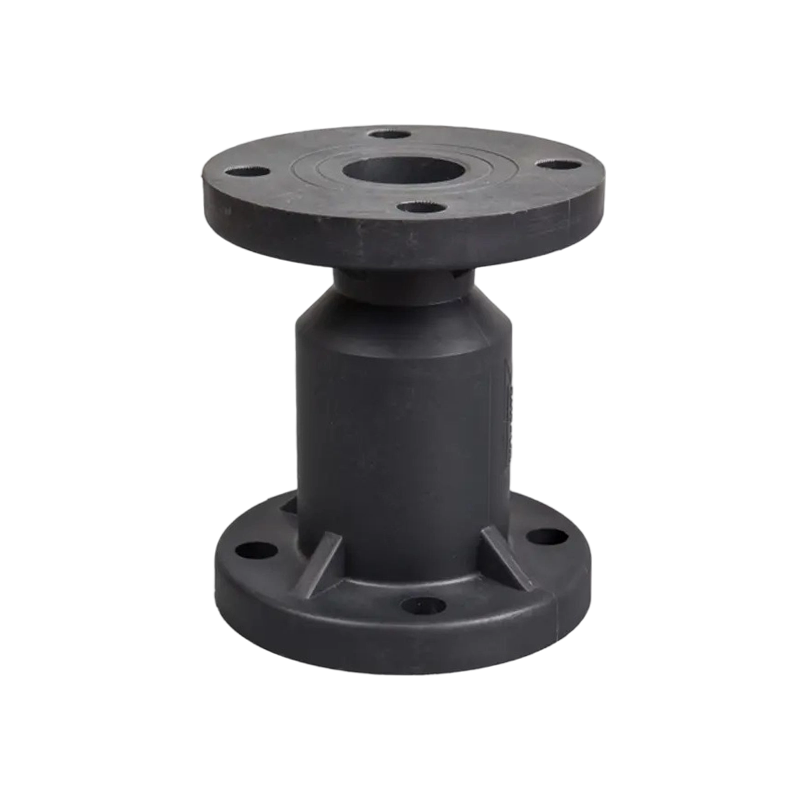
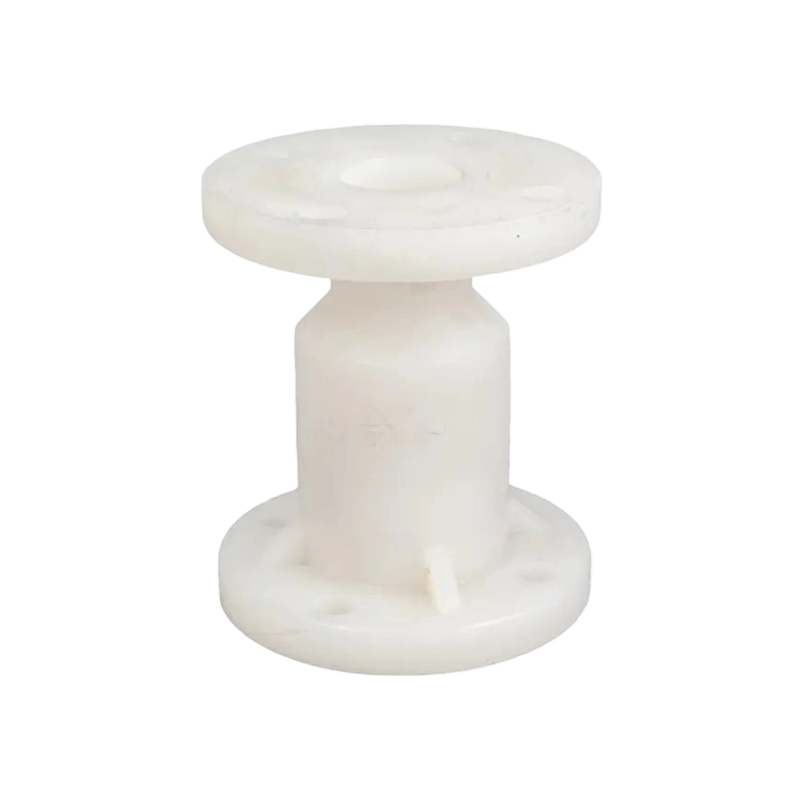 Flanged Ball Check Valve for Particle-Laden MediaThis flanged ball check valve uses a full-spherical ball to reduce blocking in particle-containing media; confirm flow direction during installation.View Product →
Selection comes down to three questions. What is the minimum cracking pressure the system can tolerate? A ball check needs only a small differential to open, while a swing check needs more and may chatter if flow is intermittent. What solids are present? A ball check passes small particles more readily than a swing disc that can jam on debris. And how will it be installed? A vertical line needs a valve designed for upward flow, and a horizontal line needs the disc hinge orientation correct; installing a swing check in the wrong plane is one of the most common causes of a valve that never seals.
Water hammer is the hidden risk. A check valve that slams shut against a reversing column can split a solvent-welded joint several metres away. Where the pumped head is significant, a spring-loaded design closes faster and reduces the surge, and a ball-type plastic check valve with a light spring is often specified for that reason alone.
Other Plastic Valves Worth Knowing
Beyond the four core families, several smaller valve types appear regularly on thermoplastic piping schedules.
Globe and Stop Valves
A globe or stop valve moves a plug along the stem axis onto a seat, so flow turns through the body. The pressure drop is high, but the throttling characteristic is far better than a ball valve, which makes these valves useful for dosing lines, sample points and small-bore regulation.
Gauge Valves
Small needle or diaphragm valves installed between a process line and a pressure gauge. They isolate the instrument for replacement without draining the line, and they cushion the gauge against pressure spikes when closed to a partially open position.
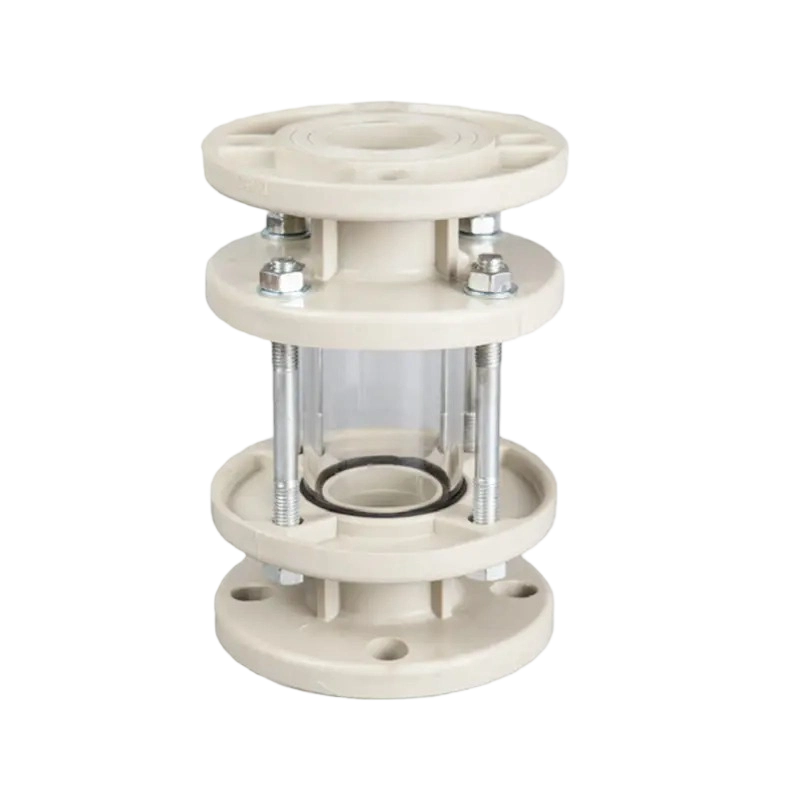
Sight Glasses
Not a valve, but often ordered alongside them: a transparent tube or window in the line that lets an operator confirm flow, colour or the presence of bubbles. Double-layer designs reduce the risk of a single-wall failure releasing the medium.
T-Type Strainers
A basket-style strainer in a plastic body, fitted upstream of valves and pumps to catch debris before it reaches a seat. On new installations, strainers are often the item that protects every other valve on the line during the first weeks of flushing.
Body Materials: UPVC, CPVC, PPH, PVDF and FRPP
Body material is a chemical compatibility question first and a temperature question second. The table below summarises the practical working envelope of the five thermoplastics most used for industrial valves and fittings.
Typical working envelopes for common valve body materials; verify against the specific medium concentration and the manufacturer's pressure-temperature derating chart before ordering.
| Material |
Upper service temperature |
Pressure at 20°C |
Chemical profile |
Relative cost |
| UPVC |
Around 60°C |
10 to 16 bar |
Acids, alkalis, salts; poor with solvents |
Lowest |
| CPVC |
Around 95°C |
10 to 16 bar |
Hot chlorinated water, acids, alkalis |
Moderate |
| PPH |
Around 100°C |
10 bar |
Strong acids and alkalis, good fatigue resistance |
Moderate |
| FRPP |
Around 95 to 100°C |
Up to 16 bar with reinforcement |
Similar to PPH with higher mechanical strength |
Moderate to high |
| PVDF |
Around 140°C |
10 to 16 bar |
Solvents, oxidisers, high-purity service |
Highest |
Typical upper service temperature by body material, degrees Celsius
The chart shows why material choice is rarely about the headline number. PVDF handles the widest temperature band, but it costs several times a UPVC body and is often unnecessary where the medium never exceeds 40 degrees. CPVC sits in the useful middle: it costs more than UPVC but extends the ceiling from 60 to roughly 95 degrees, which is the difference between a valve that survives a hot caustic loop and one that sags after a season. PPH is frequently chosen for aggressive acid service because it resists stress cracking better than PVC under sustained load, while FRPP adds glass reinforcement for lines that must carry higher pressure or span longer supports.
One point is often missed at the quotation stage: elastomer compatibility. The body may be perfectly suited to the medium while the EPDM seat swells 20 percent and jams the ball. Always cross-check the seat and diaphragm compound against the actual chemical, not just the body resin.
Pressure Ratings and Temperature Derating
A valve rated at 16 bar is rated at 16 bar at 20 degrees Celsius, in water, on a test bench. Every thermoplastic loses strength as temperature rises, and the published derating curve is not a formality. A UPVC body that holds 16 bar at 20 degrees may hold only around 40 to 50 percent of that figure at 50 degrees, and less again at 60. CPVC holds its rating higher up the scale, and PVDF higher still, but none of them are flat lines.
Three practical consequences follow. First, size the valve for the temperature it will actually see, not the ambient temperature of the day it was ordered. Second, account for surge: a pump start on a long line can momentarily double the working pressure, and a valve selected exactly at its rating has no margin. Third, remember that solvent-welded joints and threaded connections are usually the weak point before the valve body itself, so a pressure test that fails is not automatically a valve fault.
Cycling also matters. A valve that opens and closes twice an hour for ten years sees a very different life from one that is locked open and only touched during a shutdown. Seat wear, stem seal wear and diaphragm fatigue all scale with cycles rather than with calendar time, which is why maintenance schedules built on operating hours outperform schedules built on months.
Manual Versus Actuated Plastic Valves
Manual operation, by lever, handwheel or gear, remains the most common arrangement. It is inexpensive, needs no air supply or wiring, and gives an operator direct feedback on torque, which is often the earliest sign of a developing problem. Gear operators become necessary above roughly DN200 on butterfly valves and on larger ball valves, where the torque exceeds comfortable hand effort.
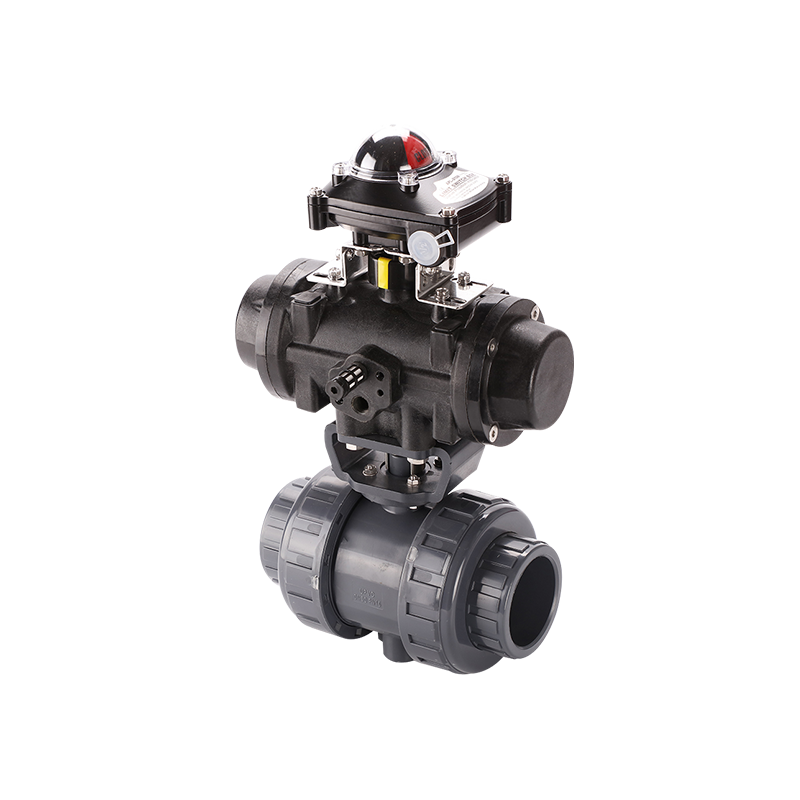
Actuation is chosen when the valve must respond to a signal, sits in an inaccessible location, or needs to close faster than a person can reach it. Pneumatic actuators use plant air, typically at 4 to 6 bar, and offer fast, repeatable stroke with a simple spring-return fail-safe option. Electric actuators run on 24 VDC or mains voltage and suit sites without compressed air, but they are heavier, slower and more expensive per unit of torque.
For both types, the fail-safe position must be decided deliberately. A spring-return actuator can be configured to close on air failure, open on air failure, or hold the last position through a lock-up valve. On a cooling water line, fail-open may be correct; on a chemical feed line, fail-closed usually is. Specifying this after the actuator has been ordered is an expensive correction.
Torque margin is the other recurring issue. Actuators are often sized on the valve's clean, new breakaway torque with no safety factor. A 30 to 50 percent margin above that figure costs little at the ordering stage and prevents the situation where a valve strokes perfectly in the workshop and stalls in service once the medium has dried on the ball.
Sizing, Connection and Installation Details
Connection method shapes both the installation schedule and the maintenance plan.
- Solvent-welded sockets give a permanent, low-cost joint with good pressure capability, but the joint must cure before pressurising, and the valve should be kept cool during welding to protect the seats.
- Threaded connections suit small-bore lines and instruments but offer the least resistance to vibration and thermal cycling.
- Flanged connections allow dismantling and are standard above DN50 on many chemical lines; bolt torque should be applied in a cross pattern to avoid distorting a plastic flange.
- True-union and clamped wafer connections allow a valve to be removed without cutting pipe, which matters on lines that cannot be drained for long.
Support is not optional. Thermoplastic pipe expands roughly five to seven times as much as steel over the same temperature change, and an unsupported valve body carrying the weight of a full pipe will distort, especially in larger sizes. Provide a support within a short distance of each flange, and never use a valve as a pipe anchor.
Orientation rules vary by type. Ball valves work in any orientation, though stem-up is preferred so that solids do not settle on the seats. Diaphragm valves should be installed with the stem vertical where possible. Swing check valves need horizontal installation with vertical upward flow, and most ball checks need vertical or horizontal flow confirmed before the pipe is glued.
Common Failure Modes and What They Reveal
Most field failures trace back to a selection decision rather than a manufacturing defect, and the pattern of failure usually points at the original mistake.
- Seat swelling or softening: the elastomer is incompatible with the medium, even though the body resin was correct.
- Eroded seats and scored balls: the valve has been used for throttling that it was never designed for.
- Diaphragm cracking at the flange fold: excessive closing force, or a diaphragm run past its temperature limit.
- Split solvent-welded sockets near a check valve: water hammer from a fast-closing valve in a long line.
- Stem leakage on a ball valve: O-rings hardened by heat or attacked by solvent, usually on a valve that has been cycled far more than expected.
- Cracked plastic flanges: over-torqued bolts, or a flange bolted metal-to-plastic without a full-face gasket.
Keeping a simple record of the medium, temperature, cycle count and failure mode for each replaced valve turns these events into useful selection data rather than recurring costs.
A Practical Selection Checklist
Working through the following sequence in order avoids most of the mistakes described above.
- Define the medium: chemical name, concentration, and whether solids or suspended particles are present.
- Confirm the continuous and maximum temperature, including cleaning and flushing cycles.
- Confirm working pressure and any surge or water hammer allowance.
- Decide the function: isolation, throttling, backflow prevention or pump priming.
- Choose the valve family that matches the function, then check its pressure loss is acceptable.
- Select the body resin, then independently select the seat and diaphragm compound.
- Check the derated pressure at the actual operating temperature, not the catalogue headline figure.
- Choose manual or actuated operation, and define the fail-safe position if actuated.
- Confirm the connection method, flange drilling standard and face-to-face length against the piping drawing.
- Confirm spare parts availability, particularly diaphragms and seat kits, before the order is placed.
Frequently Asked Questions
What are the different types of plastic valves?
The main types are ball, butterfly, diaphragm, check, foot, globe and gauge valves, plus related items such as strainers and sight glasses. They are distinguished by their closing mechanism rather than their body material, and each type suits a different combination of duty, pressure and medium.
Which plastic valve is best for throttling?
A diaphragm valve is usually the best compromise in thermoplastic systems, because the diaphragm lifts progressively off the weir and gives usable control without the erosion that a partly open ball valve suffers. Globe and stop valves also throttle well on small-bore lines. Ball and butterfly valves are intended for isolation.
Can a plastic ball valve be used for steam?
Not with standard thermoplastic bodies. UPVC tops out around 60 degrees, CPVC around 95 and PPH around 100, all far below saturated steam temperatures. Steam service requires metal valves or a specific high-temperature engineered polymer solution confirmed by the manufacturer for that exact duty.
Why does my check valve keep failing?
Three causes dominate: installation in the wrong plane, so gravity never seats the disc properly; debris from construction held in the seat; and water hammer from a fast-closing valve downstream. Checking orientation and fitting a strainer upstream resolves most repeat failures.
How do I choose between UPVC and CPVC?
Compare the maximum continuous temperature and the chemical resistance. Below about 50 degrees with ordinary acids, alkalis or water, UPVC is usually sufficient and cheaper. Above that, or where chlorinated hot water is involved, CPVC gives a much safer margin and holds its pressure rating higher up the temperature curve.
Should I buy actuated valves factory assembled?
Yes, wherever possible. A factory-assembled unit arrives with the correct mounting kit, a tested stroke and a documented torque figure. Field assembly of a bracket and coupling that were never matched to the valve stem is a common source of misalignment, leakage and premature stem wear.