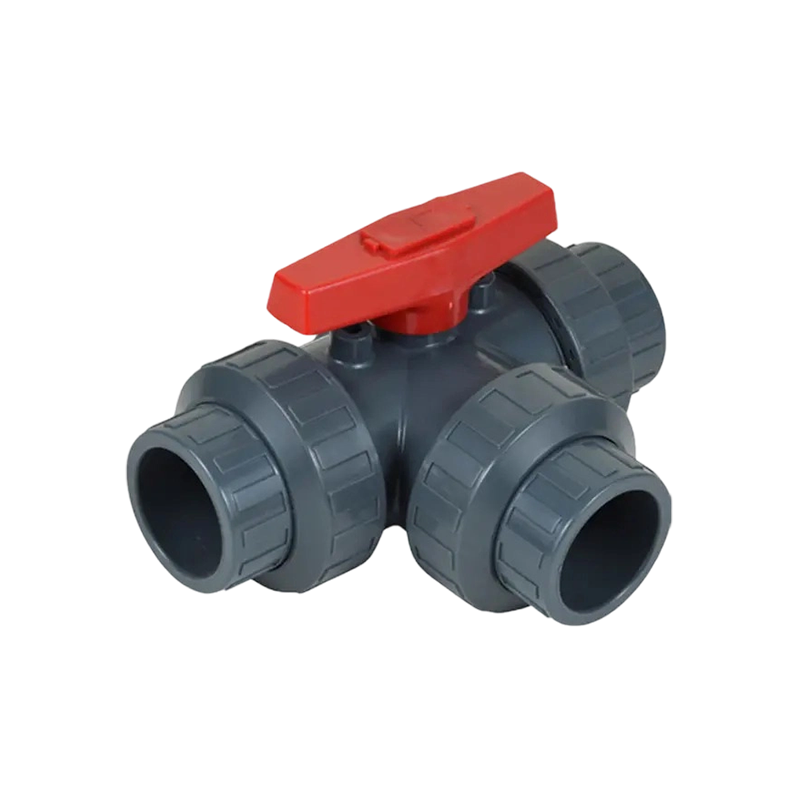
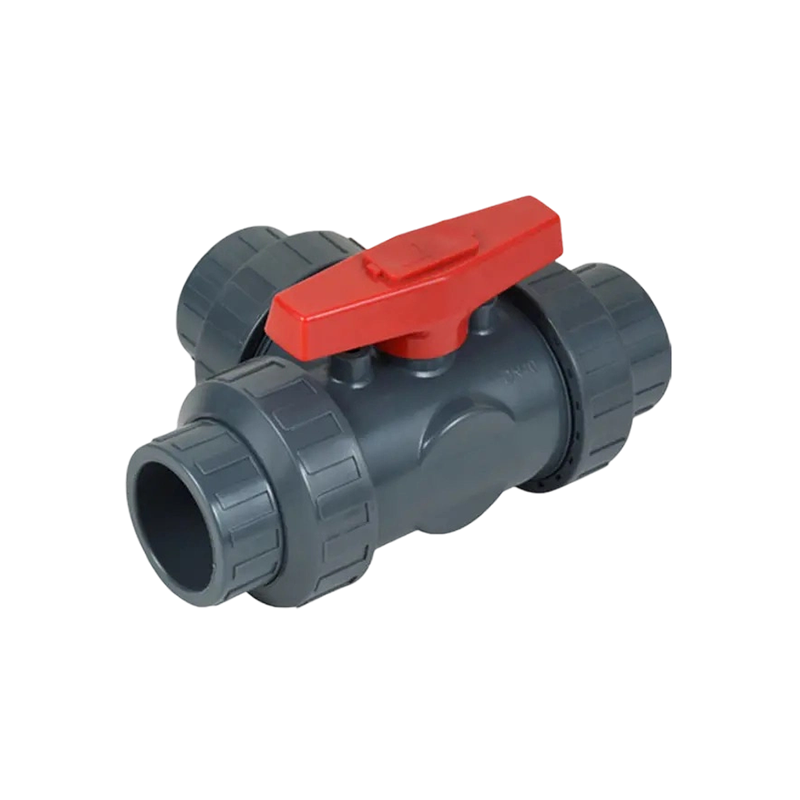
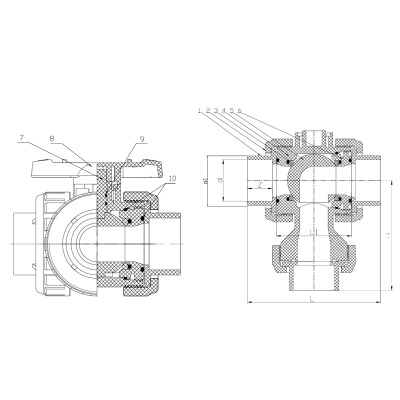
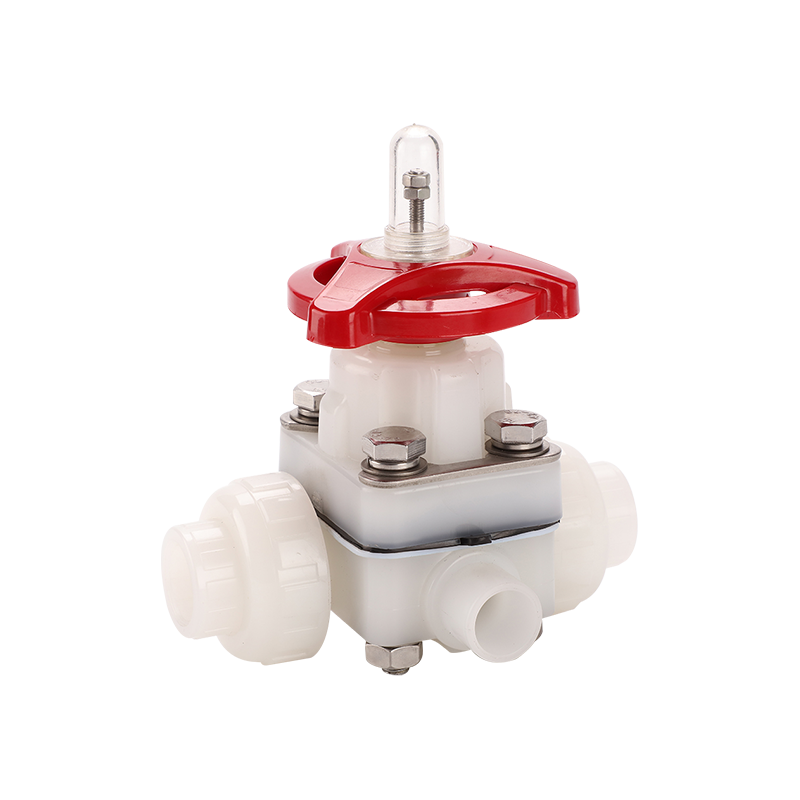
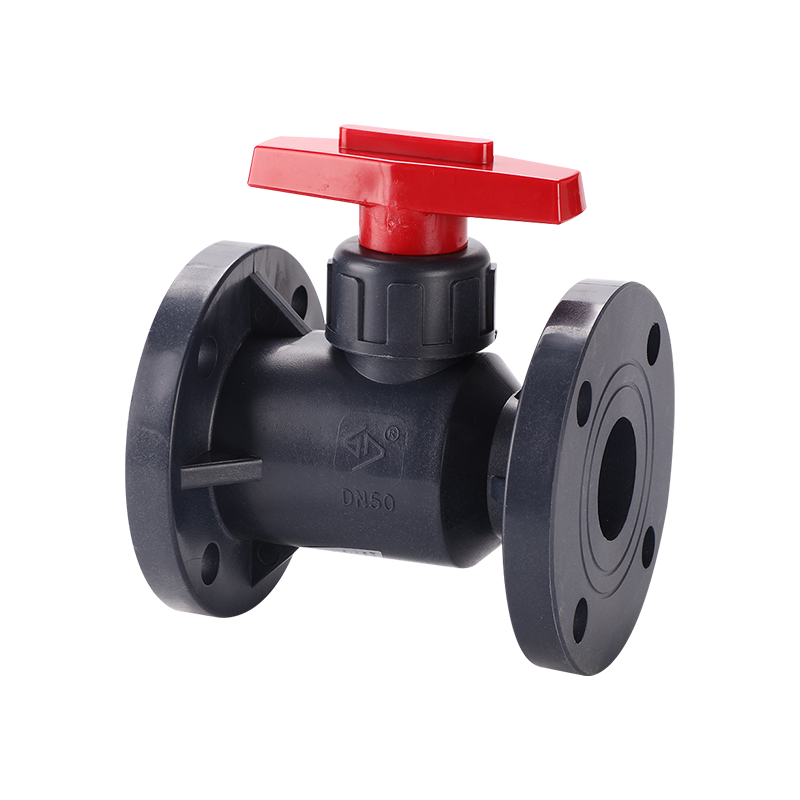
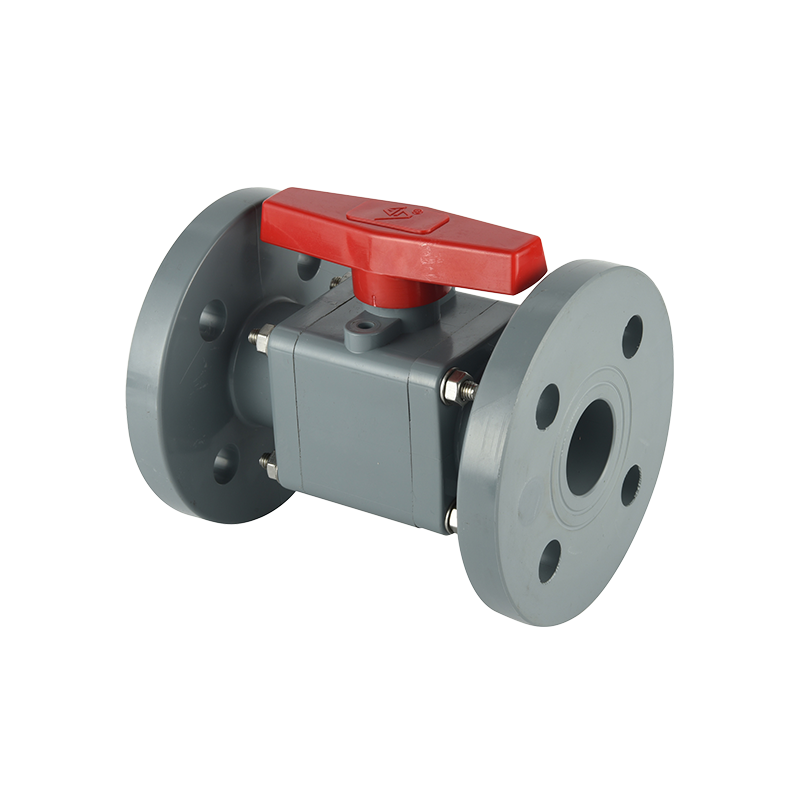
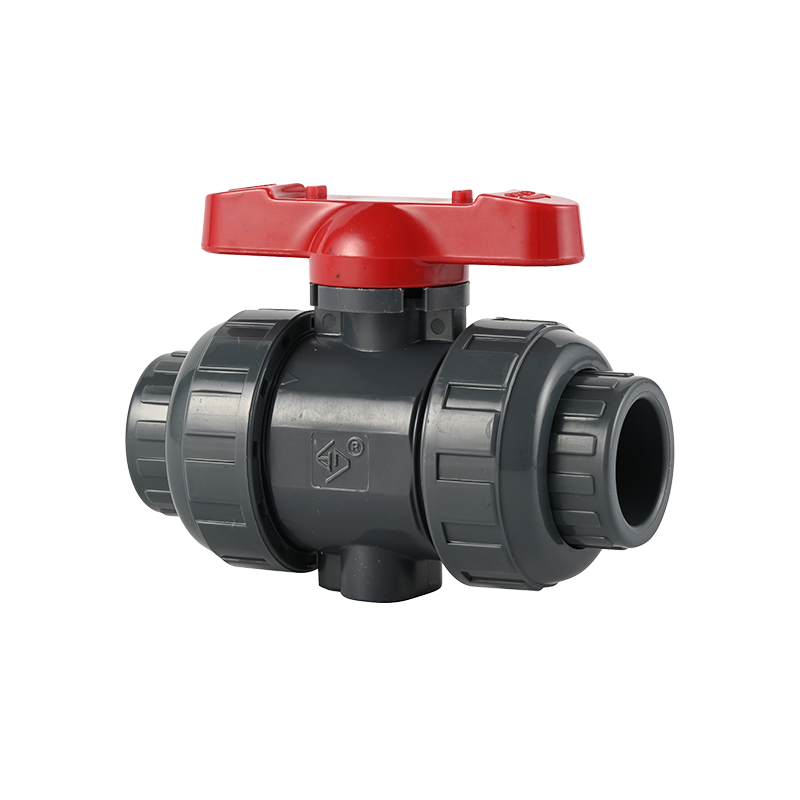
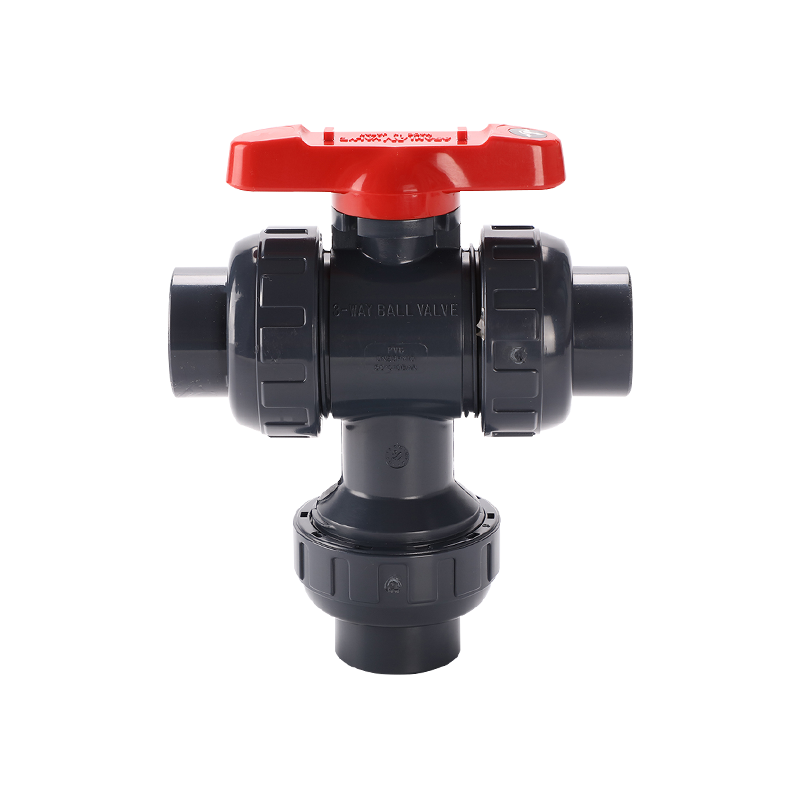
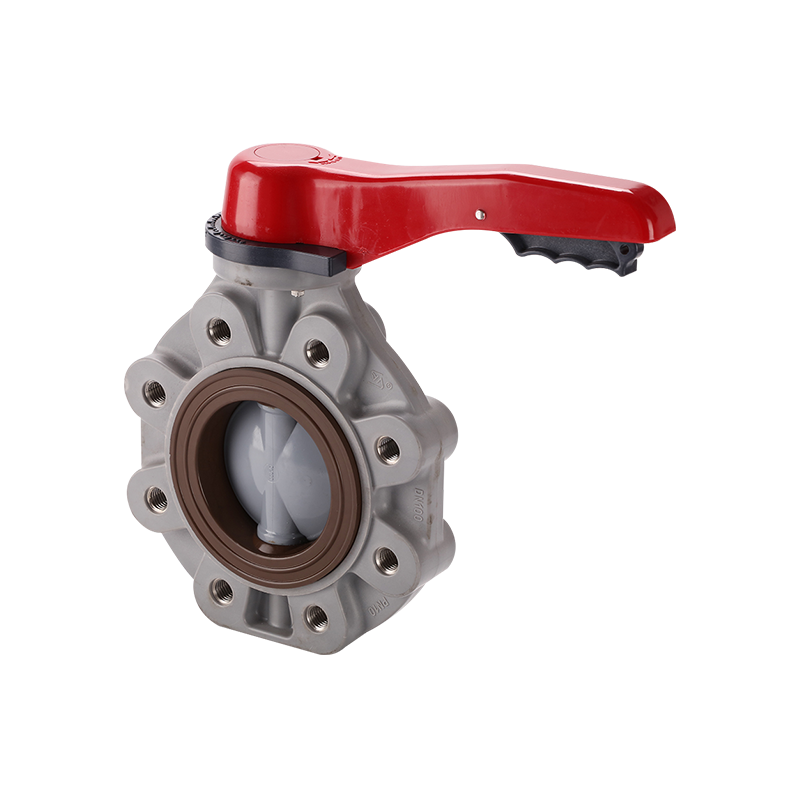
Three-way ball valves (horizontal type) provide the same diverting and mixing functionality as the vertical three-way series, with an L-shaped ball configuration and horizontal port orientation suited to installations where the third connection needs to run in-line with the pipe rather than up or down.
Key characteristics:
• Parts, materials, and dimensions match the vertical three-way ball valve series, so plants specifying both orientations can maintain consistent spare parts and material standards across the installation.
• An L-shaped ball directs flow between two of the three ports at a time, enabling diverting service between horizontally arranged branch lines.
• Body materials are available in UPVC and PPH as standard, with other materials available upon request to match specific chemical compatibility or temperature requirements.
• The horizontal port arrangement suits piping layouts where vertical branch connections are impractical due to overhead clearance or structural constraints.
Choosing between the vertical and horizontal three-way configurations largely comes down to the physical layout of the piping system and where the third connection point needs to route, giving engineers flexibility to fit the valve into the available space without redesigning the surrounding pipe run.
Typical applications include horizontal branch diverting systems, process lines routed along walls or through tight overhead spaces, and any installation where the standard vertical three-way valve's port orientation does not match the available piping geometry. The material options in UPVC and PPH support both general water and chemical service as well as elevated-temperature process lines.