In modern industrial piping networks and building water supply and drainage systems, the performance of piping materials directly determines the safety, service life, and maintenance costs of the system. Faced with a diversified piping market, choosing the most suitable pipe material based on the conveyed medium, pressure requirements, and ambient temperature is a crucial step in engineering design and facility maintenance.
PVC pipe: The Foundation of Water Supply and Drainage Systems
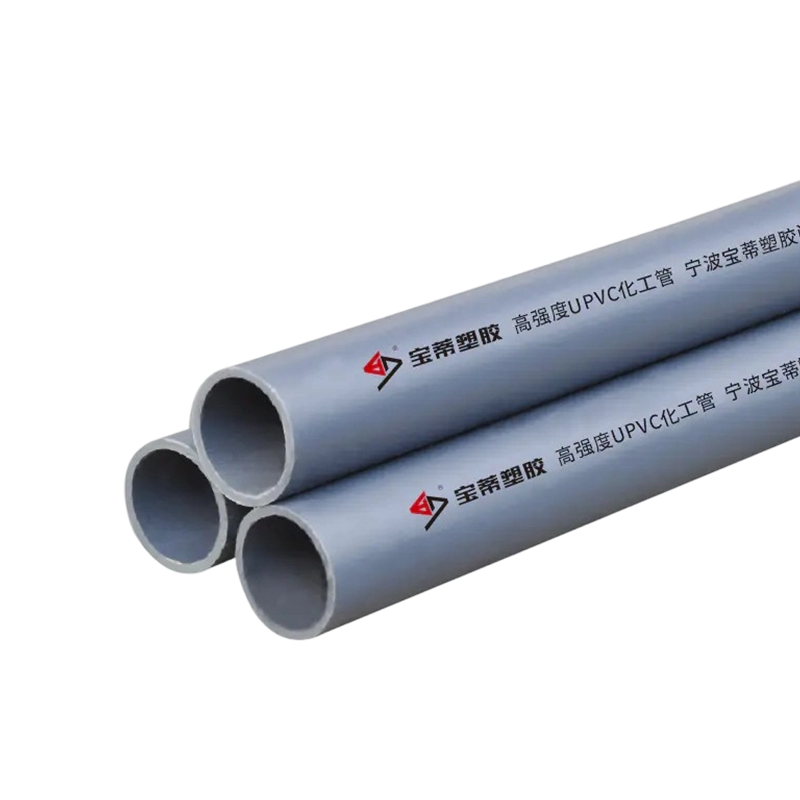
PVC pipe (polyvinyl chloride pipe) holds a dominant position in the field of water supply and drainage due to its excellent chemical stability and cost-effectiveness. Its physical properties are stable, and it has extremely high resistance to acids, alkalis, and salts at room temperature.
Technical indicators: Generally, the rated working temperature is below 60°C.
Engineering advantages: The surface is smooth with minimal friction coefficient, which effectively reduces pressure loss during fluid transmission. It is easy to install and usually connected by solvent welding.
Applicable fields: Mainly used in civil building water supply, drainage, sewage, and low-pressure irrigation systems.
CPVC pipe: Performance Upgrade for High Temperature and Flame Retardancy
CPVC pipe is formed by chlorination modification based on PVC. This material significantly increases the heat deflection temperature, allowing it to maintain structural rigidity in higher temperature environments.
Thermal performance: Can withstand conveying media up to 93°C.
Application characteristics: It not only retains excellent corrosion resistance but also has natural flame retardant and self-extinguishing properties, making it resistant to brittleness and cracking even in high-temperature and high-pressure environments.
Applicable fields: Often used in industrial hot water delivery, fire sprinkler systems, and processes for handling highly corrosive chemical liquids.
HDPE pipe: High Toughness and Engineering Flexibility
HDPE pipe (high-density polyethylene pipe) is known for its superior impact resistance and flexibility. Unlike rigid pipes, HDPE has a very high elongation at break, allowing it to adapt to displacements caused by geological settlement.
Physical characteristics: Has excellent frost resistance and will not become brittle in low-temperature environments.
Connection methods: Usually connected by butt fusion or electrofusion to form an integrated sealed network, fundamentally eliminating leakage risks.
Applicable fields: Widely used in municipal water supply networks, gas transmission, mine sludge discharge, and large-diameter buried drainage systems.
PVDF pipe: The First Choice for Extreme Chemical and High-Temperature Environments
PVDF pipe (polyvinylidene fluoride pipe) is considered a representative of high-purity and high-strength requirements. As a fluoropolymer, its chemical inertness covers almost all industrial chemicals.
Performance limits: Can operate long-term at 140°C, with extremely strong UV resistance and aging resistance.
Purity performance: PVDF is less likely to produce leachables during transportation, making it the preferred material for ultra-pure water transportation in the semiconductor industry.
Applicable fields: Highly corrosive acid and alkali production, semiconductor ultra-pure water systems, and pharmaceutical industry piping.
Black PVC pipe and Material Property Comparison
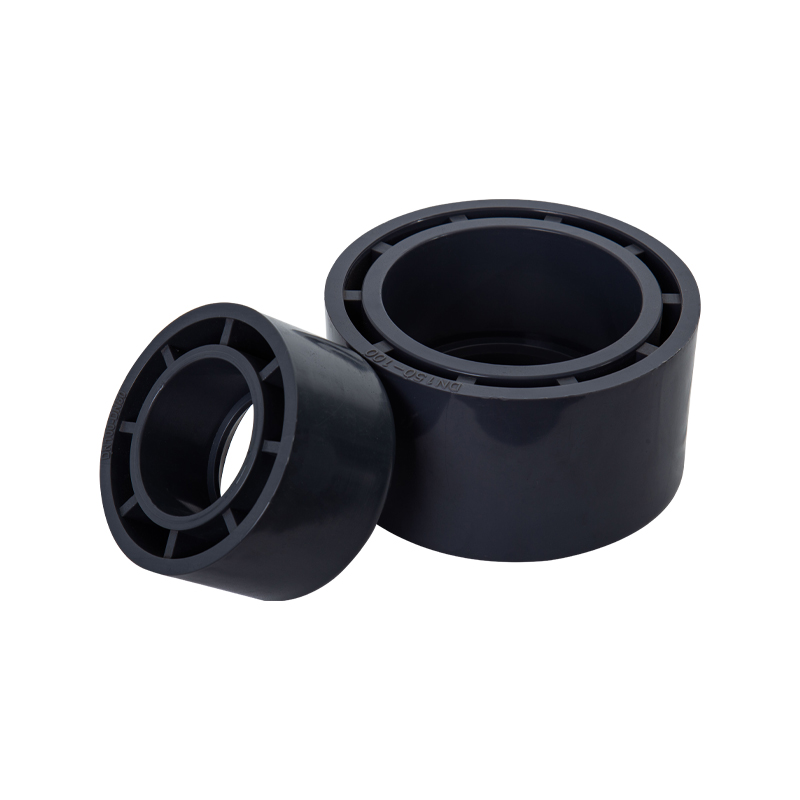
The black PVC pipe commonly found on the market is usually specially formulated with UV stabilizers (such as carbon black) to prevent the material from aging and degrading under long-term outdoor sunlight exposure.
The following data can be used as a selection reference for comparing the core parameters of the above-mentioned pipes in engineering:
| Pipe Type |
Max Working Temp (deg C) |
Corrosion Resistance |
UV Resistance |
Typical Connection |
| PVC pipe |
60 |
Good |
General |
Solvent Welding |
| CPVC pipe |
93 |
Excellent |
General |
Solvent Welding/Flange |
| HDPE pipe |
40-60 |
Superior |
Strong (Black series) |
Butt Fusion/Electrofusion |
| PVDF pipe |
140 |
Very High |
Very Strong |
Hot Melt/Welding |
Technical Selection Considerations
When designing piping network engineering, one must not only focus on the material properties of the pipe itself but also comprehensively consider the following technical dimensions:
Fluid conditions: Clarify the chemical composition, pH value, and maximum operating temperature of the conveyed medium. If the medium contains strong oxidants, PVDF pipe is often the only choice.
Pressure requirements: Select pipes with corresponding wall thickness according to the system pressure rating (PN value). HDPE pipe has unique advantages in handling instantaneous pressure fluctuations.
Environmental conditions: If the pipeline needs to be exposed to outdoor sunlight for a long time, priority should be given to black PVC pipe or other materials with UV-rated grades to prevent embrittlement.
Installation costs and maintenance: In civil projects with limited budgets and stable working conditions, PVC pipe is the cost-effective choice; while in complex working conditions with high pressure and high temperature, CPVC pipe and PVDF pipe can effectively reduce subsequent maintenance downtime.